
How to Finance a Home Addition: A North Texas Homeowner's Guide
Planning that dream master suite in Granbury or a new family room for your Weatherford home is the exciting part. But before you start looking at paint swatches and flooring, it's essential to talk about the money. Getting your financing strategy right isn't just a detail—it's the foundation of your entire project.
For most homeowners in North Texas, the smartest way to pay for an addition is to use the value you've already built in your house. Options like a home equity loan, a HELOC (home equity line of credit), or a cash-out refinance almost always come with better interest rates than other types of loans. Nailing down your financing is the first, most critical step.
Your Financial Foundation: Why Money Comes First
Before you fall in love with architectural plans, you need to know what you can comfortably spend. Securing a loan or line of credit gives you a firm, realistic number to work with. This simple move prevents the frustration of designing a beautiful addition only to find out it's beyond your financial reach.
Especially for homeowners in fast-growing areas like Hood and Parker counties, the equity in your home is a powerful financial tool just waiting to be put to work.
Setting Your Project Up for Success
Tackling the financing question early on forces you to sync your vision with your budget from day one. When you approach a builder with a clear financial plan, they can provide an accurate estimate and a realistic scope of work. It’s what turns a vague "what if" into a concrete, "let's do this" plan.
A solid financing strategy gives you a huge advantage:
It defines your real budget. You'll have a clear spending limit that guides every single decision, from the big structural choices down to the doorknobs.
It empowers your choices. Knowing your budget helps you decide what's a "must-have" versus a "nice-to-have." Maybe you splurge on those custom cabinets for your new Glen Rose kitchen but stick with quality stock options for the guest bath to keep things in check.
It keeps the project moving. When your builder knows your funding is secure, they can schedule crews and order materials with confidence. No more stop-and-go progress while you scramble for funds.
It lowers your stress. Worrying about money is the number one cause of anxiety during a remodel. Having your financing approved from the start brings incredible peace of mind.
Consider this real-world example: A young family in Stephenville wants to add a second story to their home to make room for their growing kids. That’s a massive undertaking with serious structural costs. By securing a construction loan before the first hammer swings, they know they have the capital to cover each major phase without having to pause the project halfway through.
Ultimately, arranging the money isn't just another item on a checklist. It's the strategic first play that ensures your entire project runs smoothly, finishes on time, and stays on budget.
Ready to see what’s possible for your home? A professional consultation can help you clarify potential costs and align your vision with a practical financial plan.
Nailing Down the Real Cost of Your Home Addition
Before you can secure financing, you need a solid number. Lenders don't work with ballpark figures; they need a detailed, builder-backed estimate that shows your project is well-planned and the loan amount makes sense. Miscalculating the cost is a classic mistake that can leave you underfunded and stuck with a half-finished addition.
The final price is much more than a simple cost-per-square-foot calculation. Here in North Texas, major expenses often come from tying the new structure into the old. Think about foundation work on our notorious clay soil, seamlessly connecting a new roofline to your existing one, and running all new mechanical, electrical, and plumbing (MEP) systems. These are the big-ticket items.
The Big Factors That Drive Your Budget
Certain decisions will dramatically swing your total cost. For instance, a simple ground-level family room expansion is a whole different ballgame than adding a second story, which involves complex structural engineering, extensive roofing work, and a much higher price tag.
Here’s a look at what really moves the needle on cost:
Site Prep & Foundation: Is your yard sloped? Do you have rocky soil on your rural property? Just getting the land ready and pouring a proper foundation is a significant cost that varies from one lot to the next.
Structural Design: A basic, rectangular addition is straightforward. But if you’re dreaming of vaulted ceilings, custom archways, or a complex roof design to match your existing home, the labor and engineering costs climb quickly.
Finishes & Materials: This is where you have the most control. High-end custom cabinetry and imported tile will look amazing, but will have a very different impact on the bottom line than quality, in-stock options from a local supplier. The same goes for appliances, windows, and flooring.
A common oversight is forgetting about "soft costs." These are the behind-the-scenes expenses—like architectural plans, engineering reports, and city permits—that can easily add 5-10% to your budget before construction even begins.
Getting an Estimate You Can Take to the Bank
To get a number a lender will take seriously, you must work with a reputable builder to develop a detailed quote. This isn't the final contract, but it's an itemized estimate grounded in your design ideas and current North Texas market conditions for materials and labor.
For a more granular look at this, our guide on how to estimate house building costs in North Texas walks you through every detail.
Finally, every smart budget needs a contingency fund of at least 10-15%. This isn't "extra" money; it’s your safety net for the inevitable surprises, like discovering old wiring that needs to be brought up to code or deciding on a last-minute upgrade. This buffer keeps your project moving forward without derailing your finances.
Comparing Your Top Home Addition Financing Options
Once you have a solid estimate from a trusted local builder, it's time to choose the best way to pay for your project. For most North Texas homeowners, there are several great paths to consider. Each one has its own rules and benefits, so the "right" choice depends on your financial situation and project goals.
This simple flowchart breaks down the core idea behind creating a budget that lenders will love: you start with a professional quote and then build in a smart safety net.
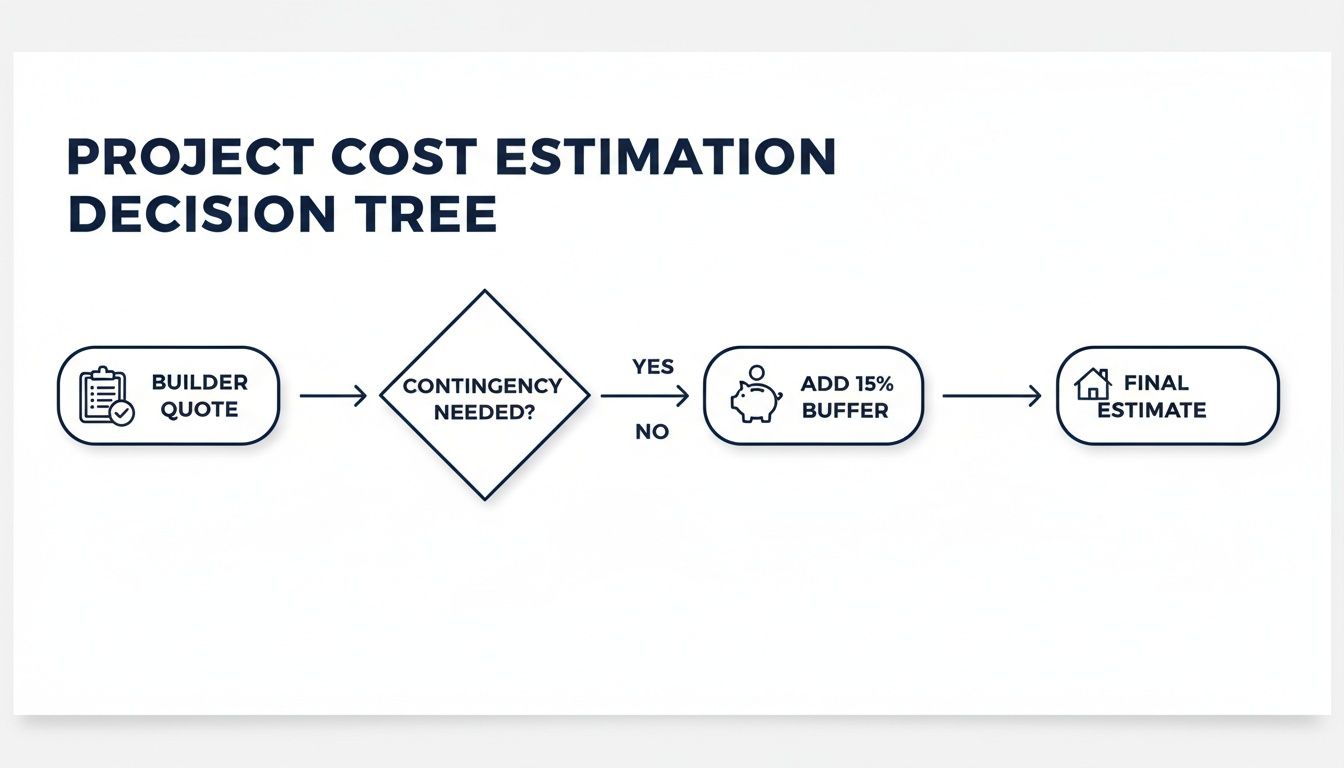
Following this process shows that your final estimate is realistic enough to cover both the planned work and those inevitable surprises. That's exactly the kind of preparedness lenders want to see.
Tapping into Your Home's Equity
Using your home's equity is often the most straightforward and cost-effective way to fund a major project. Your home equity is the difference between your home's current market value and what you still owe on your mortgage. Thanks to strong property values in communities like Granbury and Weatherford, many local families are sitting on a significant amount of it.
Here are the main ways you can put that equity to work:
Home Equity Loan: Think of this as a second mortgage. You borrow a lump sum against your equity and pay it back over a set period with a fixed interest rate. This is perfect for additions with a firm, predictable budget because your monthly payments will never change.
Home Equity Line of Credit (HELOC): A HELOC works more like a credit card. You’re approved for a maximum credit limit and can draw funds as you need them during a "draw period." This flexibility is a huge plus for projects where costs are spread out or the timeline might shift.
Cash-Out Refinance: With this option, you replace your current mortgage with a new, larger one and receive the difference in cash. A cash-out refi can be a fantastic strategy if you can also lock in a lower interest rate on your primary mortgage while funding your addition.
We see a great real-world example of this with retirees in Glen Rose who are adding a first-floor primary suite to age in place. For them, a fixed-rate home equity loan is often the top choice. The predictable monthly payment offers peace of mind and makes budgeting simple, especially for those on a fixed income.
Loans Built for Construction
Sometimes, the sheer scale of a project calls for a different kind of financial tool. This is where construction-specific loans shine.
Construction-to-Permanent Loans are purpose-built for large-scale additions. They start as a short-term construction loan that pays your builder in stages (called "draws") as work is completed. Once the project is finished, the loan automatically converts into a standard, long-term mortgage.
This type of loan is especially helpful for rural property owners building a large addition or a separate guest house on their acreage. Why? Because the loan amount is based on the home's future appraised value after the work is done, not just its current equity.
When a Personal Loan Makes Sense
While not the first choice for a big addition due to higher interest rates, a personal loan can be a great fit for smaller projects. These are unsecured loans, which means your home isn't used as collateral.
This could be a smart move if you're adding a simple screened-in porch or doing a minor bathroom update and don't have enough home equity to borrow against. The application process is typically much faster, but be prepared for interest rates that are significantly higher than equity-based financing.
To make it easier to see how these options stack up, here is a quick comparison table.
Comparing Home Addition Financing Methods
This side-by-side comparison breaks down the most popular ways to finance your addition. It highlights key features to help you choose the right fit for your project in North Texas.
Financing Option | Best For | Interest Rate Type | Key Pro | Key Con |
|---|---|---|---|---|
Home Equity Loan | Projects with a fixed, known cost. | Fixed | Predictable monthly payments. | Less flexibility if costs change. |
HELOC | Projects with a flexible timeline or budget. | Variable | Only pay interest on what you use; flexible. | Variable rates can rise over time. |
Cash-Out Refinance | Funding an addition while refinancing to a better mortgage rate. | Fixed or Variable | Potential to lower your overall mortgage rate. | Involves closing costs on a new mortgage. |
Construction Loan | Large-scale projects where current equity isn't enough. | Fixed or Variable | Loan amount is based on the home's future value. | More complex application and draw process. |
Personal Loan | Smaller projects or when you lack home equity. | Fixed | Fast funding; home isn't used as collateral. | Significantly higher interest rates. |
Ultimately, choosing the right financing is about matching the product to your personal circumstances. A great next step is to have a preliminary chat with your builder about your project's scope. We can help you understand the potential costs, which gives you a much clearer number to take to lenders.
Using Your Home Equity: HELOCs and Refinancing Explained
For most homeowners in communities like Cleburne and Godley, the equity you’ve built in your property is your most powerful financial tool. Thanks to the steady rise in North Texas home values, that equity represents serious borrowing power, making it the most common and sensible way to fund a major home addition.
Let's look at the two most popular ways to tap into it: a Home Equity Line of Credit (HELOC) and a cash-out refinance.
The Flexibility of a HELOC
Think of a Home Equity Line of Credit (HELOC) as a credit card secured by your home. A lender approves you for a maximum amount, and during a "draw period" (usually five to ten years), you can pull funds as needed. You only pay interest on the money you actually use, not the full credit line.
This pay-as-you-go model makes a HELOC perfect for projects where the budget or timeline might shift.
Phased Projects: Planning to add a covered patio now and an outdoor kitchen next year? A HELOC lets you fund each stage without getting multiple loans.
Surprise Costs: It acts as a financial safety net for those unexpected expenses that always seem to pop up during construction.
Lower Initial Payments: Many HELOCs offer interest-only payments during the draw period, which can help your monthly cash flow while the project is underway.
The main thing to watch with a HELOC is the variable interest rate. Your rate can fluctuate over the life of the loan, meaning your payment could go up. It’s a great option, but you need to be comfortable with that potential for change.
When a Cash-Out Refinance Is the Smarter Move
A cash-out refinance works differently. You trade in your current mortgage for a brand-new, larger one and pocket the difference in cash. This can be a brilliant strategy, especially if you can lock in a lower interest rate on your new mortgage than what you're paying now.
A cash-out refi might be your best bet if:
You Can Lower Your Rate: If today's mortgage rates are better than your current one, you can finance your addition and lower your overall housing payment. It's a win-win.
You Prefer One Payment: This approach bundles your project funds and your mortgage into a single, predictable monthly payment.
You Have a Fixed Budget: Since you get the money as a lump sum, it’s ideal when you have a firm, detailed quote from your builder.
The key to a successful cash-out refinance is understanding your home's post-renovation value. Lenders will base the loan on an appraisal, and a well-planned addition can significantly increase that number. For more on this, check out our Texas guide to new construction appraisals.
The tradeoff here is that you’re resetting your mortgage, which involves closing costs and could mean extending the life of your loan. Still not sure which path to take? A quick chat about your project's scope can give you the clarity you need to move forward with confidence.
Getting Your Loan Application Ready for a "Yes"
Once you've zeroed in on the right financing for your North Texas home addition, the next step is getting the lender on board. A solid, well-thought-out loan application can be the difference between a smooth approval and a stressful ordeal. Lenders need to see that your plan is concrete, not just a back-of-the-napkin sketch.
Without a doubt, the most important part of your application package is a detailed construction plan and a line-item estimate from a trusted builder. This document tells the lender exactly what you're building, what it's going to cost, and that you have a professional ready to make it happen.
Setting Yourself Up for Success
Before you even fill out the first form, there are a few things you can do to seriously boost your chances of approval. Think of it as getting your financial house in order before asking for a big loan—it shows the lender you’re a reliable partner.
Check Your Credit Score: Pull your credit report well in advance. This gives you time to dispute any errors or work on improving your score before a lender ever sees it.
Lower Your Debt-to-Income (DTI) Ratio: This is a huge factor. Lenders look closely at your DTI. If you can, pay down some high-interest credit card balances or pay off smaller loans in the months before you apply.
Get Your Paperwork Together: Lenders need a specific set of documents. Having everything organized and ready to go not only saves time but also signals that you’re on top of your game.
Your Lender Checklist:* Recent pay stubs and W-2s (or 1099s if you're self-employed).* At least two years of tax returns.* Statements from your bank and any investment accounts.* A signed construction contract and a detailed budget from your builder.
The Local Lender Advantage
While you can always go to a big national bank, working with a local lender in communities like Granbury or Mineral Wells can be a game-changer. They understand the local real estate market, from property values in Weatherford to typical construction costs in Glen Rose.
What’s even better is that they often have established relationships with local builders. When your lender already knows and trusts your builder’s reputation for quality work, it can make the entire draw and inspection process run much more smoothly.
According to the Mortgage Bankers Association, total single-family mortgage originations are expected to climb to $2.2 trillion by 2026. As the market grows, having a strong application and a solid relationship with your lender and builder becomes even more crucial. You can dig into the latest mortgage origination forecasts to see the trends for yourself.
Bringing Your Home Addition to Life
Taking on a home addition in North Texas is a big decision, but it’s a journey you can start with complete confidence when you have the right strategy. From Granbury to Glen Rose, success really boils down to thoughtful planning and finding a builder you trust.
It all starts with grounding your vision in reality. Get a detailed cost estimate from an experienced local builder—this isn't just a ballpark figure, it's the bedrock of your entire financial plan that lenders require. From there, you can dig into which financing route makes the most sense for you, whether it’s a flexible HELOC for a phased project or the stability of a fixed-rate home equity loan.
From Blueprint to Reality
Once you have your plan and financing choice, pulling together a strong loan application is the final piece of the puzzle. When you walk into a lender's office with your financial documents in order and a professional construction contract in hand, you’re showing them you're a serious, well-prepared borrower. This simple step can make the entire approval process go much more smoothly.
Remember, expanding your home is just as much about smart financial planning as it is about picking out designs and finishes. A solid plan gives you the power to make confident decisions, keeping your project on track and on budget from the first day of demolition to the final walkthrough.
At the end of the day, knowing how to finance a home addition turns what feels like a monumental task into a series of clear, manageable steps. If you’re feeling ready to move past the research phase, our guide on how to plan a home addition in North Texas is the perfect next step.
The best way to get a true feel for your project’s costs and what’s possible is to talk it over with an expert. We offer no-pressure consultations to help homeowners in Granbury, Weatherford, and the surrounding areas explore their options. Schedule a free consultation and let’s start turning your vision into a reality today.
Comments