
What's the Best Flooring for High Traffic Areas in Your North Texas Home?
When you're searching for the best flooring for high traffic areas, you'll quickly see porcelain tile and luxury vinyl plank (LVP) at the top of nearly every list. It's for a good reason—their incredible durability and low-maintenance nature make them perfect for the daily grind. These materials are engineered to handle the chaos of kids, pets, and constant foot traffic, which is why we so often recommend them for homes across North Texas.
Choosing Flooring That Lasts in Your North Texas Home
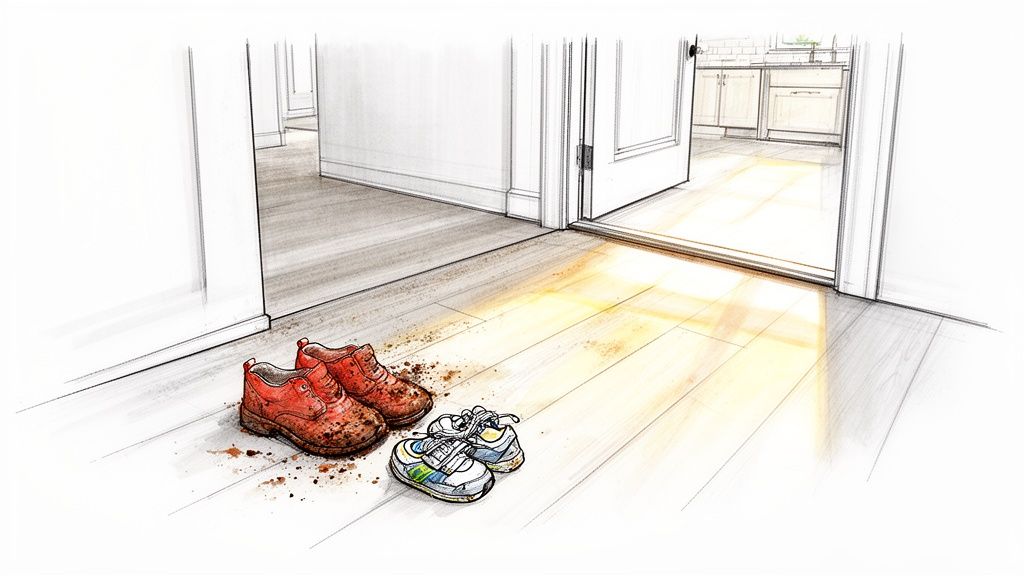
Your floors are quite literally the foundation of your home life, and this is especially true in a busy household. Think about the path from your front door to the kitchen—it sees everything. We're talking muddy boots after a rainy day in Weatherford, spills during a big family get-together in Granbury, and the endless comings and goings of a full life. Picking the right material goes beyond style; it's an investment in a surface that won't buckle under pressure.
Why North Texas Homes Have Unique Needs
Life here in places like Glen Rose and Stephenville comes with its own set of challenges for flooring. The intense Texas sun can fade certain materials, while that fine, reddish soil we all know so well can easily stain and scratch floors that aren't up to the task.
Keep these local factors top of mind when you're making a choice:
Heavy Foot Traffic: Your entryways, hallways, kitchen, and living room take the biggest beating day in and day out.
Kids and Pets: From scratches caused by pet claws to the inevitable dropped toys and spills, you need a floor that’s both tough and simple to clean.
Climate Considerations: Your flooring has to handle our temperature swings and humidity spikes without warping or cracking.
Indoor-Outdoor Living: If your home opens up to a patio or rural property, you’ll need a floor that can take on moisture and all the debris that gets tracked inside.
A smart mudroom design can be a game-changer, acting as the first line of defense to trap dirt. You can check out some incredible floor plans with mud rooms for your North Texas home to see how valuable this feature can be for protecting your floors.
A Quick Look at Top Contenders
To get you started, here’s a rundown of the most popular choices we see for high-traffic zones in our custom homes.
Flooring Material | Key Benefit | Ideal For |
|---|---|---|
Porcelain Tile | Extreme Durability | Entryways, kitchens, bathrooms, mudrooms |
Luxury Vinyl Plank (LVP) | Waterproof & Resilient | All areas, especially for families with kids/pets |
Engineered Hardwood | Authentic Wood Look | Living rooms and bedrooms with moderate traffic |
Polished Concrete | Industrial & Tough | Barndominiums, workshops, modern living spaces |
Each of these materials brings a different mix of performance, style, and value. In this guide, we'll dive into each one, giving you the practical, real-world insights you need to make the right call for your home.
A Look at the Top Flooring Options for Your Busiest Rooms
When you’re picking out flooring for the high-traffic zones in your home, you're looking for that perfect mix of durability, style, and value. Here in North Texas, we also have to think about how different materials will stand up to our unique climate and lifestyle. Let’s put the top contenders side-by-side and see what each one really brings to the table.
It helps to think in terms of real-world situations. Picture a bustling family kitchen in a Glen Rose farmhouse or a clean, simple entryway for a retiree's new build in Cleburne. When you can visualize how these floors perform in settings you know, it’s much easier to imagine them in your own home.
Quick Comparison of High-Traffic Flooring Options
To get a quick read on how the most popular choices stack up, here’s a high-level overview. This table is designed to help you weigh the factors that matter most—from the initial investment to long-term resilience—so you can zero in on the best fit for your family.
Flooring Type | Durability Rating (1-5) | Average Cost (Per Sq Ft Installed) | Water Resistance | Best For |
|---|---|---|---|---|
Porcelain Tile | 5 | $15 - $25 | 100% Waterproof | Kitchens, bathrooms, entryways, mudrooms |
Luxury Vinyl Plank | 4.5 | $7 - $12 | 100% Waterproof | All high-traffic areas, especially with pets/kids |
Engineered Hardwood | 3.5 | $9 - $16 | Moderate | Living rooms, bedrooms, offices |
Polished Concrete | 5 | $5 - $12 | High | Barndominiums, workshops, modern open-concept homes |
This chart is a great starting point, but the real decision-making happens when you dig into the details.
What Really Sets Them Apart for North Texas Homes
While the table gives you the basics, the little differences are what truly matter. For instance, the cost of flooring is just one part of a bigger project. If you're tackling a full renovation, knowing your North Texas kitchen remodel cost breakdown helps you allocate your budget smartly for materials like these.
Here are the key differentiators I always point out to clients:
Porcelain Tile is, without a doubt, the king of durability. It just doesn't care about tracked-in red clay, dog claws, or a dropped cast-iron skillet. The trade-off? It feels colder and harder underfoot, which is something to consider if you have small kids or spend hours standing in the kitchen.
Luxury Vinyl Plank (LVP) gives you nearly the same water and scratch resistance as tile, but it’s a whole lot more forgiving. That slight bit of give makes it more comfortable to stand on and much quieter—a huge plus in an open-concept Granbury home where sound tends to travel.
Engineered Hardwood delivers that classic, warm look of real wood but is built to better handle the humidity swings we get around Weatherford. It’s a fantastic choice for living rooms and bedrooms, but its moderate water resistance makes it a gamble for spill-prone kitchens or muddy entryways.
For many of the North Texas families I work with, the choice often boils down to Tile vs. LVP. Tile is the "forever floor" with unmatched longevity, while LVP offers incredible, budget-friendly performance that looks amazing and feels great under your feet.
In the end, it really comes down to the specific room and what you value most. Are you after ultimate, bulletproof durability, or is comfort and cost-effectiveness higher on your list? Answering that question is the first and most important step toward finding the perfect floor for your home.
The Unbeatable Durability of Porcelain Tile
When our clients in North Texas ask for the toughest, longest-lasting flooring for their high-traffic areas, one material consistently comes out on top: porcelain tile. It’s earned its reputation as the gold standard for a reason. For spaces like kitchens, entryways, and mudrooms that see constant foot traffic and daily abuse, porcelain offers a level of durability other materials just can't touch.
Think about a custom home in Granbury with a beautiful, seamless flow from the living room out to the pool deck. Porcelain is one of the very few materials that can handle the intense Texas sun without fading and endure a constant stream of wet feet without warping, staining, or buckling. It's a true investment in a surface that will look just as incredible in ten years as it does the day it's installed.
Why Porcelain Excels in Busy Homes
So, what gives porcelain its incredible strength? It all comes down to how it's made. It starts with a denser, more refined clay that gets fired at significantly higher temperatures than standard ceramic tile. This intense process creates a material that is exceptionally hard, virtually non-porous, and resistant to almost anything life can throw at it.
For families in Weatherford or Glen Rose, this translates to real-world peace of mind. You simply don't have to worry about the common culprits of floor damage:
Scratches: Pet claws, furniture being scooted across the floor, and dropped keys are no match for porcelain’s hard-glazed surface.
Dents and Chips: A dropped pot in the kitchen or a heavy backpack hitting the floor in the mudroom won’t leave a lasting mark.
Moisture Damage: Because it's non-porous, porcelain is completely waterproof. This makes it the ideal choice for bathrooms, laundry rooms, and any entryway where rain and mud get tracked inside.
This chart really puts its resilience into perspective against other popular choices.
As you can see, porcelain tile clearly leads the pack, which is why we so often recommend it for areas that demand maximum performance day in and day out.
In fact, independent testing consistently confirms its superiority. Consumer Reports crowned porcelain tile the absolute champion for high-traffic zones, giving it top marks for resisting scratches, dents, stains, and even sun fading—far outperforming both solid and engineered wood. When installed correctly by a skilled team, high-quality porcelain can easily last 50 years or more, making it a smart, long-term investment for a custom build or remodel.
Understanding the Cost and Maintenance
While porcelain tile does have a higher upfront cost—typically ranging from $15 to $25 per square foot installed—it’s crucial to see this as a one-time investment. The final price tag can shift based on the complexity of the tile design, the size of the tiles, and the intricacy of the layout. For instance, large-format tiles or a detailed herringbone pattern will naturally require more labor and planning.
The real value of porcelain tile isn't just in its sheer toughness, but in its incredibly low maintenance. Unlike hardwood that needs periodic refinishing or special care, porcelain simply requires regular sweeping and mopping to keep it looking brand new.
This minimal upkeep is a huge plus for busy families and retirees alike. You won't be spending your weekends worrying about special cleaners or treatments. A simple cleaning routine is all it takes to maintain its beauty for decades, freeing up your time to actually enjoy your North Texas home.
Making the Right Choice for Your Space
Ultimately, choosing porcelain tile is about prioritizing longevity. It's for the homeowner who wants to select a floor and never have to think about replacing it again. As a bonus, its cool-to-the-touch surface is a welcome feature during our long, hot Texas summers.
When you're ready to explore how this incredibly resilient material can work in your home, we can walk you through the design possibilities. We’ll help you select a style that perfectly complements your vision and stands up to your lifestyle for years to come.
Luxury Vinyl Plank: The All-Around Performer
While porcelain tile might be the undisputed champion of brute force, Luxury Vinyl Plank (LVP) is the versatile, all-around performer that’s winning over North Texas homeowners. It has quickly become the go-to choice for countless families we work with, blending incredible resilience with a warmth and comfort that tile just can’t replicate. It’s the practical, beautiful solution for a busy modern household.
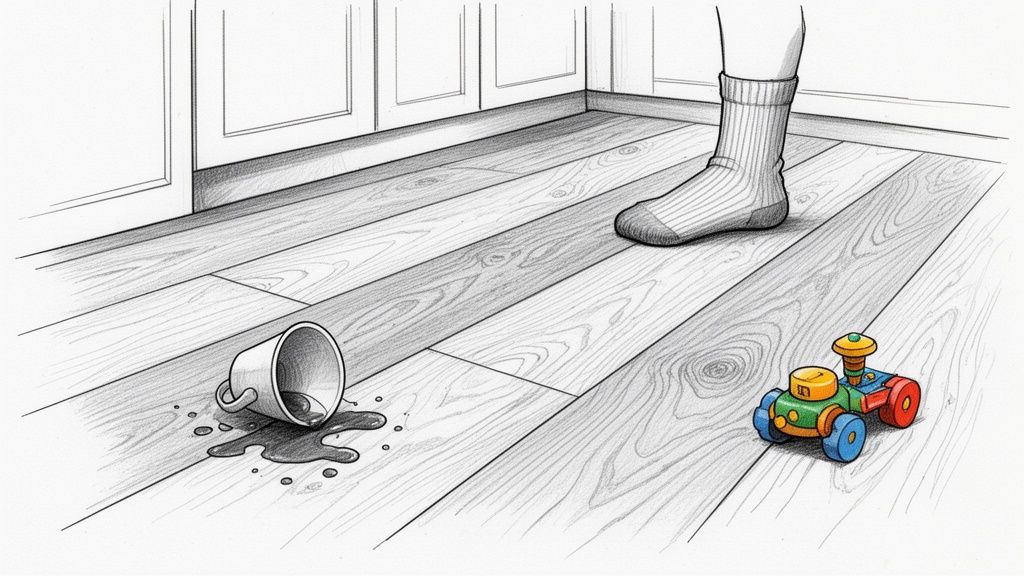
We saw this play out perfectly in a recent family home remodel in Stephenville. They wanted the authentic look of hardwood for their open-concept kitchen and living area but needed something that could stand up to two active kids, a golden retriever, and frequent get-togethers. LVP was the ideal fit, giving them the aesthetic they craved with the 100% waterproof peace of mind that’s non-negotiable in a high-traffic home.
Understanding the All-Important Wear Layer
The real secret to LVP's toughness isn't the plank itself—it's the transparent wear layer on top. This is the invisible shield that takes all the abuse, protecting the beautiful design layer from daily life. Its thickness is measured in mils (one-thousandth of an inch), and when you're talking about high-traffic areas, a few mils make a world of difference.
For our clients in Granbury, Weatherford, and the surrounding areas, we always steer them toward a specific range to make sure their investment holds up:
12 mil Wear Layer: This is a solid starting point for rooms with moderate traffic, like bedrooms or a formal living room. It provides good, reliable protection from everyday scuffs.
20 mil Wear Layer: This is what you want for the home's main arteries—the entryway, kitchen, hallways, and family room. A 20 mil wear layer is commercial-grade, offering superior resistance to deep scratches, dents, and the constant wear from foot traffic.
Choosing a product with a beefy wear layer is the single most important decision you can make to ensure your LVP floors look fantastic for years, not just a few months.
The beauty of modern LVP is that it has completely closed the gap between function and style. You no longer have to compromise, choosing between a floor that looks good and one that can take a beating. Today’s printing and embossing technologies create stunningly realistic wood and stone visuals that are tough enough for any North Texas family.
LVP vs. The Competition: Cost and Comfort
When you put LVP up against traditional hardwood or porcelain tile, its unique advantages really shine. Hardwood has that timeless appeal, but it’s vulnerable to scratches and water damage—a constant source of stress with kids and pets. Porcelain is incredibly durable, but it can feel cold, hard, and unforgiving, which is a real drawback for families with toddlers or for anyone who spends hours standing in the kitchen.
LVP hits that perfect middle ground. It's noticeably softer and warmer underfoot than tile, which makes a huge difference in day-to-day comfort. It also has inherent sound-dampening qualities, helping to quiet the echo in today's popular open-concept layouts.
Its performance is so impressive that it stands shoulder-to-shoulder with top-tier materials. The best flooring for high traffic areas always involves balancing durability with your budget, and LVP with a 12-20 mil wear layer is a true game-changer. It offers incredible resistance to foot traffic, stains, and dents while being completely waterproof—perfect for spill-prone homes. In durability tests, a high-quality LVP performs nearly as well as porcelain but can cost 30-50% less to install, making it a brilliant choice for savvy homeowners. To see how it stacks up, you can find more insights on LVP's durability here.
This blend of affordability, comfort, and rugged performance is exactly why LVP remains one of the most popular flooring selections for our custom builds and remodels. It’s the flooring that truly lets you live your life without worrying about your floors.
Engineered Hardwood and Other Durable Alternatives
While porcelain tile and luxury vinyl plank get a lot of attention for their durability, they aren't the only smart choices for a North Texas home. Sometimes, the best flooring for a high-traffic area is the one that strikes the perfect balance between looks, location, and your family's lifestyle. Materials like engineered hardwood, modern laminate, and even polished concrete each bring something unique to the table.
For many homeowners we work with in Granbury and Weatherford, nothing beats the warmth and timeless beauty of real wood in a living room or bedroom. It's a non-negotiable. That's where engineered hardwood really shines—it delivers that authentic look without the typical headaches solid wood can cause in our humid climate.
Engineered Hardwood for Stable Beauty
Think of engineered hardwood as a fantastic hybrid. It's built with a top layer of real, solid hardwood—like hickory, oak, or maple—that’s bonded to a core of high-quality plywood layers. This cross-layered construction is its secret weapon, giving it incredible stability.
Unlike solid wood, which can swell and shrink with the big humidity swings we get in North Texas, engineered hardwood holds its shape. This makes it a much better choice for installation over the concrete slab foundations that are standard in most of our local builds.
Best Use Cases: It’s a perfect fit for living rooms, home offices, and master bedrooms. These are often busy spots, but they don't face the same moisture risks as a kitchen or entryway.
Cost and Longevity: Installed costs typically run from $9 to $16 per square foot. Its lifespan is all about the thickness of that top wood layer. A quality plank can often be sanded and refinished once or twice, giving it a life that spans decades.
For a retiree's forever home in Godley, engineered hardwood in the main living area provides that cozy, upscale feel underfoot while standing up to visiting grandkids. It’s classic style with modern performance.
Modern Laminate: A Budget-Friendly Contender
Laminate flooring has come a long, long way. Forget the unconvincing imitations of the past; today’s high-quality laminate uses advanced printing to create unbelievably realistic wood and stone looks, complete with embossed textures that mimic natural grain. It's a tough, budget-conscious option that holds up surprisingly well in busy households.
Its construction is simple but effective: a high-density fiberboard core, a photographic image layer, and a clear, durable wear layer on top. While it’s not completely waterproof like LVP or tile, many modern laminates offer excellent water resistance, easily handling everyday spills if you wipe them up promptly.
The real secret to laminate’s toughness is its exceptional scratch resistance. The aluminum oxide topcoat used on premium laminate is one of the hardest surfaces out there, often outperforming both LVP and engineered hardwood against scratches from pet claws and dragged furniture.
This makes it a practical workhorse for a family with large dogs or active kids in a Stephenville home remodel. You get a beautiful floor that can take a beating without breaking the bank, usually costing $6 to $11 per square foot installed.
Polished Concrete: The Ultimate Utilitarian Choice
If you're looking for something truly indestructible and unique, you can't beat polished concrete. This option has become incredibly popular in modern barndominiums, functional workshops, and open-concept homes on rural North Texas properties. It’s not just a subfloor; it's a finished surface that’s durable, low-maintenance, and surprisingly stylish.
The process involves grinding the concrete slab with progressively finer diamond-polishing tools until it hits the perfect level of sheen. We can even add dyes and stains to create a huge range of colors and artistic effects, from a simple industrial gray to a rich, mottled brown that looks like natural stone.
For a rural property owner, the benefits are obvious:
Extreme Durability: It is virtually impossible to scratch, chip, or dent.
Easy Maintenance: A quick sweep and an occasional damp mop are all it needs. No grout lines, no planks to worry about.
Thermal Mass: The concrete stays cool in the Texas heat, which can help passively cool your home during our scorching summers.
For a barndominium in Glen Rose that serves as both a living space and a hobby area, polished concrete provides a seamless, tough-as-nails floor that can handle everything from muddy boots to heavy equipment without a fuss. It’s the ultimate expression of practical, modern design.
Each of these materials has its place, filling a need where tile or LVP might not be the perfect fit. When you’re ready to explore these alternatives, our team at Gemini Homes can help you weigh the pros and cons to find the ideal foundation for your specific lifestyle.
How to Choose the Right Flooring for Your Home
Picking the perfect floor, especially for the high-traffic spots in your house, can feel like a massive undertaking. But it doesn't have to be. It really boils down to asking yourself three simple questions. Your answers will cut through the noise and point you straight to the right material for your lifestyle here in North Texas.
First, What Is Your Budget?
Let's start with the most practical filter: your budget. It’s easy to get focused on the price per square foot of the material itself, but don't forget to account for installation costs, which can swing wildly depending on the flooring type and the prep work involved.
For instance, installing porcelain tile in a Cleburne kitchen remodel might run $15-$25 per square foot because it demands specialized labor. A top-tier Luxury Vinyl Plank in that same kitchen, however, could be closer to $7-$12 per square foot installed, potentially freeing up thousands for countertops or appliances. Nailing down your total investment upfront helps us guide you to choices that look fantastic without stretching your finances.
Second, Who Lives in Your Home?
The daily life inside your home is the true test of any floor. What works for a quiet couple might be a complete nightmare for a family with a golden retriever and two toddlers.
Families with Kids and Pets: If you're a busy family in Granbury, you need something that can handle chaos. Durability and effortless cleanup are your top priorities. This is where porcelain tile and LVP with a substantial wear layer are absolute lifesavers, standing up to scratches, spills, and endless foot traffic.
Retirees or Empty-Nesters: Someone building their forever home in Godley might lean more toward comfort and classic aesthetics. In this case, engineered hardwood provides that warmth and timeless beauty for a living room, but it’s still tough enough to handle visiting grandkids.
Third, What Is Your Tolerance for Maintenance?
Be honest with yourself about how much time you’re willing to spend on upkeep. Some floors are incredibly low-maintenance, while others need a bit more TLC to stay beautiful.
Think of it this way: a polished concrete floor in a Weatherford barndominium basically just needs a quick sweep and an occasional mop. Porcelain tile is almost as simple. On the flip side, while stunning, other materials require more specific care routines to look their best for years to come.
There’s no such thing as the single "best" floor—only the best floor for your home. For that bustling family kitchen, the bulletproof, waterproof nature of porcelain tile is an obvious champion. But for the quiet retiree's study, the warmth and character of engineered hardwood is the perfect fit. Our goal is to align the material's inherent strengths with the realities of your day-to-day life.
By working through these questions, you’re already building the confidence to make a great choice. When you're ready to discuss the options for your project, the Gemini Homes team is here to give you a personal consultation and help you find the perfect foundation for your life.
A Few Final Questions on High-Traffic Flooring
Choosing the right floor is a big decision, and it’s normal to have a few lingering questions. As a builder here in North Texas, we hear the same concerns from homeowners all the time. Let’s clear up a few of those common questions so you can move forward with confidence.
How Does the North Texas Climate Affect My Flooring Choice?
The climate here in Texas is a huge deal for flooring. That intense summer sun can fade certain materials, especially natural hardwoods, if they're sitting in front of a big, west-facing window day after day.
But the real challenge is humidity. Our weather swings from bone-dry winters to incredibly muggy summers, and that makes solid wood expand and contract. Over time, this can lead to unsightly gaps or even "cupping," where the edges of the boards curl up. That’s why we often steer clients toward materials with better dimensional stability—think porcelain tile, LVP, or engineered hardwood. They’re built to handle those shifts without warping.
What Is the Most Scratch-Resistant Flooring for Dogs?
If you have dogs, scratch resistance is everything. Hands down, porcelain tile is the toughest option out there. Its surface is fired at extreme temperatures, making it incredibly hard and almost impossible for dog claws to scratch.
High-quality LVP with a thick wear layer—and I mean 20 mil or higher—is another fantastic choice. You might also be surprised by how tough modern laminate is, thanks to its super-hard aluminum oxide topcoat. While nothing is truly scratch-proof, these three give you the best shot at keeping your floors looking new.
When you're picking the best flooring for high traffic areas that also have to stand up to pets, the two things to obsess over are surface hardness and the quality of the protective top layer. Get that right, and you'll avoid a lot of future headaches.
Is LVP a Better Choice Than Laminate for Durability?
We get this one a lot, and honestly, it depends on what kind of durability you need. If moisture is the enemy, LVP is the clear winner. It's 100% waterproof, which makes it perfect for kitchens, bathrooms, laundry rooms, and mudrooms. Laminate might be water-resistant, but its fiberboard core will swell and get permanently damaged if water sits on it for too long.
On the other hand, a premium laminate floor often has a harder surface that’s more resistant to scratches than many LVP options. So, for a busy living room where spills aren't a major concern, a good laminate might actually give you better protection from daily wear and tear, often for a bit less money.
How Much Should I Budget for Flooring Installation?
Installation costs can really swing depending on the material you choose and what kind of shape your subfloor is in. For a typical project here in the Granbury area, you can use these numbers as a rough starting point:
LVP & Laminate: Usually runs $2 - $4 per square foot.
Engineered Hardwood: Expect to pay $4 - $7 per square foot.
Porcelain Tile: This is more labor-intensive, so it costs more, typically $7 - $12+ per square foot.
Remember to build these costs into your total project budget from the start. If you're thinking about how new floors fit into a bigger picture, our guide to planning your home remodels can help you see how it all comes together.
Ready to talk about what makes sense for your home? The Gemini Homes team is here to walk you through the options and help you choose a beautiful, long-lasting floor that fits your family’s lifestyle. Get in touch with us today.
Comments