
How to plan a home addition: A North Texas homeowner's guide
Planning a home addition is about more than just tacking on a new room. It's about looking at how your family truly lives and making your space work for you. This process starts by defining your vision—getting crystal clear on why you need more room—and then grounding that vision in reality by figuring out what's actually possible on your North Texas property.
Defining Your Vision and Checking Project Feasibility
Before you spend a single second on Pinterest or start sketching layouts, you need to nail down the purpose of your project. A successful home addition solves a specific problem and genuinely improves your day-to-day life. Getting this right from the beginning saves you from making expensive changes later and ensures the finished space is one you'll actually use and love.
This early planning stage has two parts: first, clarifying your vision, and second, seeing if that vision can work with the physical realities of your home and land.
Clarifying the “Why” Behind Your Addition
Start by asking detailed questions about what your household needs, not just for today but for the next five or ten years. Are you a growing family in Granbury who desperately needs a playroom that can one day morph into a teen hangout? Or maybe you're a retiree in Glen Rose looking to add a first-floor master suite so you can comfortably age in place.
Consider these kinds of real-world scenarios:
For Growing Families: The goal is often straightforward—another bedroom or a bigger, open-concept living area. But think deeper about the function. Is this new space for loud, energetic play, quiet homework sessions, or family movie nights?
For Retirees or Multi-Generational Living: Here, the focus usually shifts to accessibility. This could mean a ground-floor addition with wider doorways, a zero-entry shower, and an easy, direct path to the main living areas.
For Rural Property Owners: If you have land to work with out near Weatherford or Stephenville, your options expand. Maybe you're dreaming of a detached guest house, a much larger garage with a workshop, or a sprawling back porch to take in those North Texas sunsets.
Once you’ve got a clear "why," grab a piece of paper and make two lists: your must-haves (e.g., a walk-in closet is non-negotiable) and your nice-to-haves (e.g., heated bathroom floors would be amazing). This simple exercise is incredibly valuable when it’s time to talk design and budget.
Grounding Your Dream in Reality
With a vision starting to take shape, it's time for a reality check. A quick, preliminary feasibility study can save you the heartache of falling in love with a plan that just won’t work. This is where local knowledge of North Texas building codes and land quirks is absolutely critical.
This flowchart gives you a simple visual for the key steps in checking if your project is doable, from the initial idea to the structural nuts and bolts.
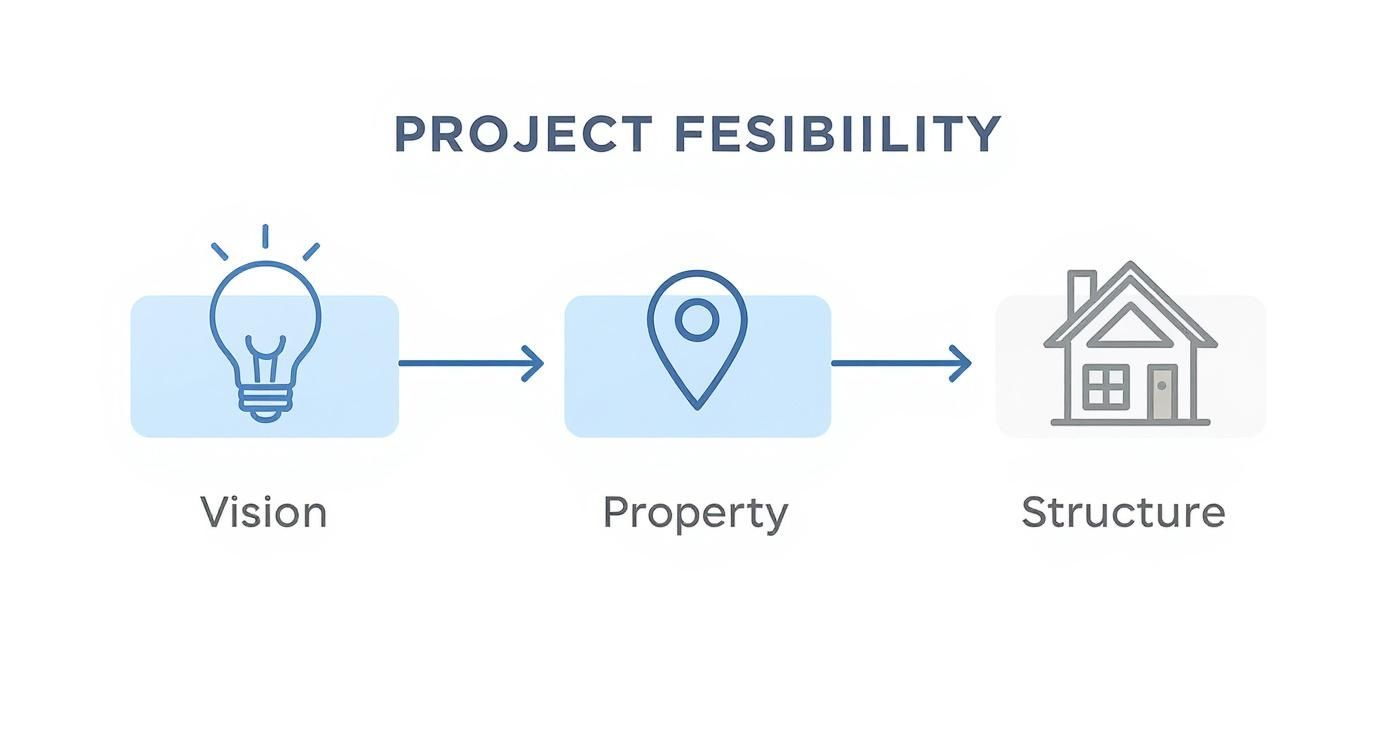
Your big idea has to pass through the filters of your property's limitations and your home's existing structure before it can become a real, buildable project.
Here are the key things to investigate on your property:
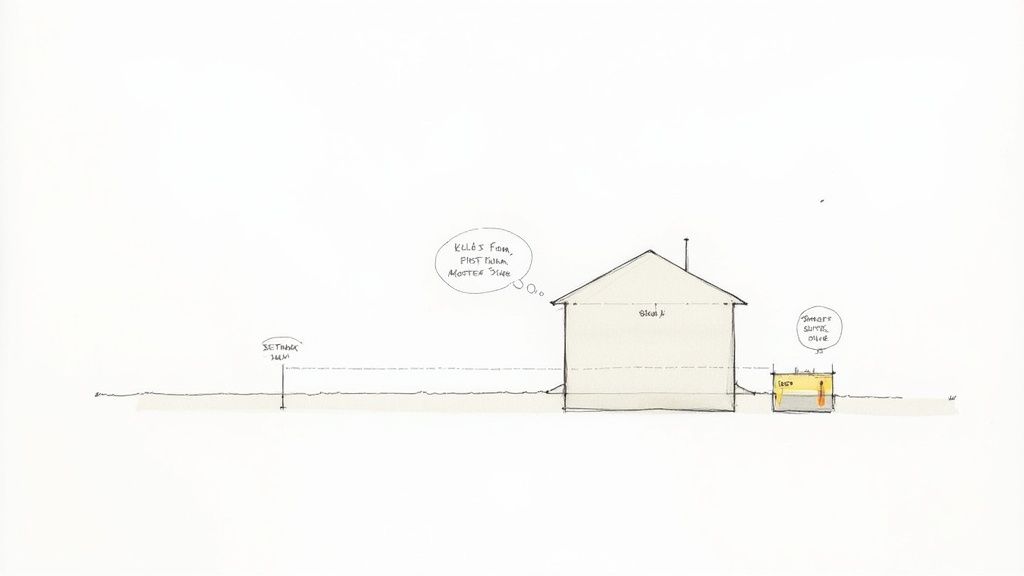
Property Lines & Setbacks: Every city, including Granbury and Weatherford, has setback rules that say how close you can build to your property lines. You'll need an official property survey to know exactly where those lines are.
Utilities & Septic Systems: If you're on a rural lot, the location of your septic tank and drain field is non-negotiable. You absolutely cannot build over them. You also have to pinpoint where all underground water, gas, and electrical lines are buried.
Zoning & Local Codes: Your local city or county will have rules about building height, lot coverage (the percentage of your land that can be covered by buildings), and other details.
Existing Home Structure: Can your home’s foundation and frame support an addition? Tying a new structure into a brick home creates different challenges than it does with a siding home. An experienced builder can tell you how the new roofline can be seamlessly integrated with the old one, a common stumbling block.
Thinking through these initial steps gives you a solid foundation for the entire project. For a deeper look at what comes next, you can check out our homeowner’s guide to the timeline of construction.
Getting Real About Your North Texas Addition Budget
With your vision clear, it's time to tackle the budget. Forget generic online cost calculators; they rarely paint an accurate picture for our area. The true cost of an addition in places like Granbury or Weatherford is driven by specific local factors—from labor rates and our unique soil conditions to choosing materials that can stand up to the relentless Texas sun.
This isn't just a local trend. Planning a major project today means navigating a completely different financial landscape than just a few years ago. Between 2019 and 2023, the U.S. remodeling market exploded by 51%, jumping from roughly $404 billion to $609 billion. This surge was fueled by homeowners leveraging rising equity to invest in their properties. If you're interested in the data, Harvard's Joint Center for Housing Studies published an insightful in-depth housing report on the topic.
Where Does the Money Actually Go? A Cost Breakdown
The final price tag is a mosaic of different expenses. Understanding these pieces helps you see what you're paying for. A simple ground-floor room addition is one thing, but a complex second-story addition in Glen Rose will have a totally different cost structure because of the heavy-duty structural work involved.
Here’s a look at the major expenses you should anticipate:
Architectural & Engineering Fees (5% to 15% of total cost): Professional plans are non-negotiable. You'll need them for permits, and they ensure your addition is structurally sound and blends beautifully with your existing home.
Permits & Fees: These costs vary by city and county but are essential for keeping your project legal and up to code.
Site Work & Foundation: This covers everything from excavation to pouring the concrete slab. Here in North Texas, our clay soil often demands more robust foundation engineering, which can add to this line item.
Framing, Roofing & Siding: This is the skeleton of your new space. Material choices here can make a huge difference. For example, opting for native Texas stone instead of a standard brick veneer will significantly impact your budget.
MEP (Mechanical, Electrical, Plumbing): Extending HVAC ducts, running new wiring, and adding plumbing for a bathroom or kitchen are all substantial costs.
Insulation & Drywall: In our climate, this is critical for energy efficiency and keeping those summer cooling bills in check.
Finishes (20% to 30% of total cost): This is where the project comes to life—flooring, paint, windows, doors, and light fixtures. The choices you make here directly influence your final ROI. For a deeper dive, check out our guide on maximizing your home remodel return on investment.
Smart Ways to Fund Your Project
Unless you’re paying cash, you'll need to figure out financing. Homeowners around here typically lean toward two popular options, each with its own pros and cons.
A Home Equity Line of Credit (HELOC) functions like a credit card secured by your home's equity. You draw funds as you need them and only pay interest on what you use, which is fantastic for managing cash flow during construction.
On the other hand, a cash-out refinance replaces your current mortgage with a new, larger one, and you pocket the difference. This can be a smart move if you can lock in a lower interest rate than your current one, but it does reset the clock on your loan term.
The Contingency Fund: Your Project's Safety Net
Here in North Texas, especially when working with older homes, surprises are the rule, not the exception. A contingency fund of 10% to 20% of your total budget isn't just a suggestion—it's an absolute necessity.
Think of this fund as insurance against the unexpected. You might open up a wall and discover hidden water damage, find out your existing electrical panel can't handle the new load, or run into a tricky soil issue during excavation. Without a contingency fund, these common setbacks can derail your project or force you to cut corners on your vision.
Designing a Seamless and Functional Space
Now for the fun part: designing your new home addition. This is where the ideas in your head start taking shape on paper. The goal isn't just tacking on more square footage. It's about creating a space that feels like it was always there, making your whole home look and work better.
A great addition flows so naturally into the existing house that you can't tell where one ends and the other begins. That means thinking about how the new room will affect the light, traffic patterns, and the overall vibe of your home.
Creating an Intuitive Layout and Flow
The best additions feel like a natural extension of your home, not a clunky, bolted-on extra. As you imagine walking from your kitchen into the new family room, should it be a wide-open connection? Or would a distinct hallway better separate a quiet home office?
Here are a few design strategies to consider:
Follow the Light: In sunny North Texas, we want to maximize natural light. Think carefully about where you place windows and doors to brighten the new room without turning your existing living room into a cave.
Match the Architectural Bones: Pay attention to details like ceiling heights and the style of your baseboards and trim. Keeping these consistent makes the old and new spaces feel like they belong together.
Plan for Down the Road: How might your family's needs change? That ground-floor addition planned as a playroom today could easily become an accessible in-law suite later if you plan for a nearby bathroom and wider doorways now. For more inspiration, check out these 10 master suite addition ideas for your North Texas home.
Choosing Materials That Work for North Texas
Picking the right materials is about more than looks. It's about choosing products tough enough to handle everything our climate throws at them, from blistering summer heat to a sudden hailstorm. Getting this right means a more comfortable home, lower energy bills, and fewer maintenance headaches.
Where to Splurge: Don't cut corners on high-quality, energy-efficient windows and great insulation. These are true investments that will pay you back for years with lower utility bills.Where to Save: You can often find fantastic, budget-friendly options for interior finishes like light fixtures, paint, and door hardware without compromising the structural quality of your project.
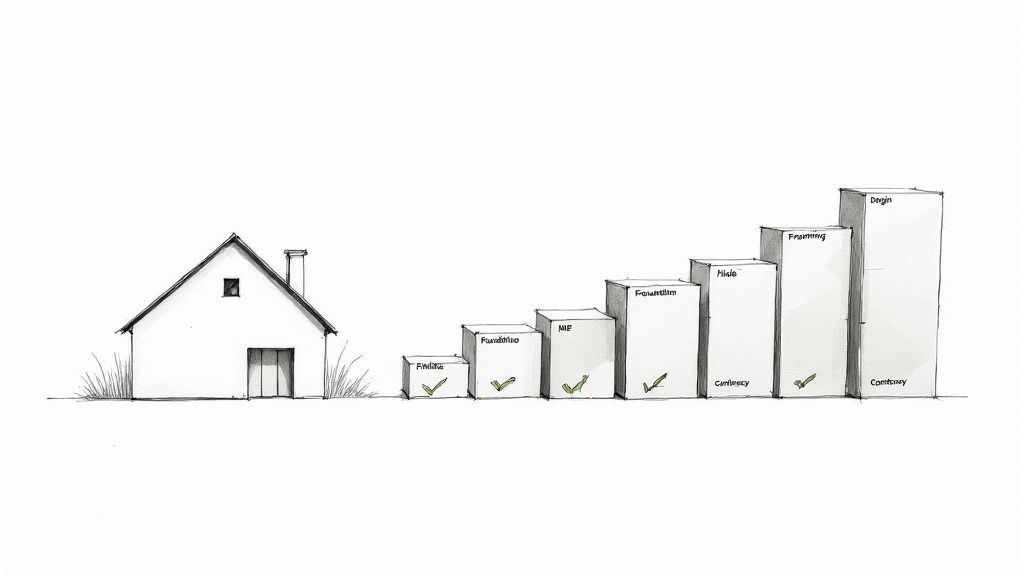
Making smart material choices is crucial. Here's a quick look at some common building materials we use in the Granbury and Weatherford areas.
Comparing Common Building Materials for North Texas Homes
This table breaks down some popular options for siding, roofing, and windows, comparing them on cost, durability, and suitability for our unique climate.
Material Type | Average Cost (Per Sq. Ft.) | Durability/Lifespan | Maintenance Needs | Best For |
|---|---|---|---|---|
Siding: Fiber Cement | $10 - $15 | 50+ years | Low; repaint every 10-15 years | Resisting rot, insects, and hail damage, making it a top choice for North Texas. |
Siding: Brick Veneer | $15 - $25 | 100+ years | Very Low; occasional cleaning | The classic Texas look with excellent durability and insulation properties. |
Roofing: Architectural Shingles | $5 - $8 | 25-30 years | Low | A cost-effective and reliable option that holds up well against sun and wind. |
Roofing: Metal | $9 - $16 | 50+ years | Very Low | Superior hail resistance and energy efficiency by reflecting solar heat. |
Windows: Double-Pane Vinyl | $30 - $55 | 20-30 years | Low | A great balance of cost, insulation, and durability for our climate. |
Windows: Double-Pane Wood/Clad | $50 - $90+ | 30+ years | Moderate (exterior) | A high-end aesthetic with excellent insulation, but it requires more upkeep. |
What works best often comes down to balancing your budget with your long-term goals for durability and maintenance. A well-thought-out design plan is the roadmap for your entire project.
Navigating Permits and Building Codes
Dealing with permits and building codes can feel like diving into a sea of red tape, but it’s absolutely non-negotiable. These rules aren't just bureaucratic hurdles; they are in place to protect you, your family, and the long-term value of your home. Cutting corners here can lead to failed inspections or even having to tear down your brand-new addition.
Here in North Texas, every city and county—from Hood County to Parker County—has its own specific requirements. The good news? An experienced local builder will handle this entire process for you. Still, knowing the basics helps you understand the timeline and appreciate the detail involved.
The Permitting Journey in Our Area
Getting the green light from the city means submitting a comprehensive application package that includes:
Detailed Architectural Plans: The official blueprints showing everything from the foundation depth to the roof pitch.
A Recent Site Survey: A critical map showing your property lines, where your current house sits, and the precise footprint of the new addition.
Structural Engineering Documents: For complex additions, an engineer's sign-off is required to verify the new structure can be safely integrated with your existing home.
I’ll never forget a homeowner we consulted with near Granbury. They’d hired a less-experienced crew who never bothered with a proper survey and ended up building the new exterior wall 18 inches over the neighbor's property line. It was a costly, heartbreaking mistake that was 100% avoidable.
Key Building Codes That Impact Your Addition
If permits are the permission to build, building codes are the instructions on how to build correctly. Your builder manages the nitty-gritty, but several key codes will directly influence your addition’s design and comfort.
Building codes are not just suggestions; they are the minimum standards for safety and quality. A good builder doesn't just meet these codes—they exceed them to ensure your home addition is built to last for generations.
For a home addition here in North Texas, some of the most important codes cover:
Structural Integrity: This is all about building a solid foundation on our infamous expansive clay soil, dictating the thickness of your concrete slab and the size of support headers.
Energy Efficiency: State codes require specific R-values for insulation in walls and attics, plus minimum standards for window performance to keep your home comfortable and your energy bills in check.
Electrical and Plumbing Safety: These detailed rules specify everything from the type of wiring used to proper plumbing ventilation, ensuring your home is safe and functions perfectly.
Seeing these regulations as a safety net, rather than a hassle, changes your perspective. It’s all part of ensuring you end up with a high-quality, durable, and safe space for your family.
Finding and Working with the Right Builder
This is the single most important decision you'll make. Choosing your builder isn't just about hiring a contractor; it's about finding a partner who can take what's on paper and make it a real part of your home. Get this right, and the process is exciting and collaborative. Get it wrong, and a dream project can quickly become a nightmare.
With the median age of homes in the U.S. now at 41 years, more homeowners are choosing to add on rather than move. The National Association of Home Builders (NAHB) is forecasting a 5% increase in residential remodeling for 2025, which you can read about in these home remodeling activity trends. All this demand means the best builders are busy, making your vetting process even more critical.
Where to Look for Trusted Local Builders
Before you hit Google, start with the people and places you already trust. When it comes to finding a great builder in our communities, word-of-mouth is still king.
Ask People You Know: Talk to friends, family, or coworkers right here in North Texas who’ve recently done an addition. Ask the important questions: How was the communication? Did the project stay on budget? And the big one—would you hire them again?
Talk to the Pros at the Supply House: The folks at the local lumberyard in Granbury or Stephenville are an incredible resource. They see which builders are busy, professional, and pay their bills on time.
Do Some "Drive-By" Research: Keep an eye out for addition projects in your neighborhood. A clean, organized job site with a professional sign out front is often a great indicator of a builder who takes pride in their work.
Vetting Your Shortlist of Candidates
Once you have a few names—three to four is a good number—it's time to do your homework. This is where you separate the true professionals from the rest.
My Two Cents: A builder's willingness to be transparent is everything. If someone gets defensive or hesitates when you ask for proof of insurance or a list of references, that's a huge red flag. Just walk away.
Here’s your non-negotiable checklist for every potential builder:
License and Insurance: Ask to see a physical copy of their general liability insurance and workers' compensation policy. This is critical to protect you from liability if someone gets hurt on your property.
Real, Local References: Don't just get a list of names—actually call them. Talk to their past clients in Hood or Parker counties about the whole experience. Was the quality what they expected? Crucially, how did the builder handle the inevitable hiccups?
A Look at Their Work: Review their portfolio of completed projects. Does their work match the style and quality you envision? If you're planning a modern farmhouse addition, a builder whose portfolio is filled with traditional brick homes might not be the right aesthetic fit.
Making Sense of the Bids and the Contract
After your interviews, you'll start getting bids. The impulse is to go for the lowest number, but that's often a trap. A lowball bid could be missing key costs like permit fees, site cleanup, or realistic allowances for flooring and fixtures. Instead, do an apples-to-apples comparison of what's actually included in each proposal.
Once you’ve made your choice, the final piece is the contract. It needs to be incredibly detailed, leaving zero room for interpretation.
At a minimum, your contract must include:
A Detailed Scope of Work: This should clearly list all work to be done and specify the materials being used.
A Firm Total Price: Be wary of contracts with vague "allowances," which are notorious for causing budget overruns.
The Payment Schedule: Payments should be tied to specific, completed milestones (e.g., foundation poured, framing complete), not just dates on a calendar.
A Projected Timeline: This should lay out an estimated start date, key project phases, and a target completion date.
Building a solid relationship with your contractor is key to turning a complex project into a genuinely rewarding experience.
Answering Your Big Questions About Home Additions
When you're considering a project this big, a million questions start swirling. That's completely normal. Here are a few of the most common ones we hear from homeowners in Granbury, Weatherford, and all over North Texas, with straight-shooting answers based on our years of building right here.
"So, How Long Is This Actually Going to Take?"
The most honest answer is: it depends. But to give you a real-world ballpark, a well-planned addition in our area typically takes somewhere between 4 and 8 months from our first design chat to your final walkthrough.
Here’s a rough breakdown of how that time gets spent:
Planning & Design (1-2 months): We nail down the layout, you pick out materials, and we get the official plans drawn up.
Permitting (Around 1 month): We submit the plans to the city or county for approval. This timeline is largely out of our hands and depends on how backed up their office is.
Construction (3-5 months): This is when the hammers start swinging. A straightforward ground-floor room will be on the quicker side. A more involved second-story addition will naturally take longer.
It's also important to be realistic. A particularly wet spring or delays for a specialty tile you picked can stretch things out a bit.
"What's the Real Cost Per Square Foot Around Here?"
It's impossible to give a flat number without knowing your project, but as a general guide, homeowners in the Granbury and Glen Rose areas should plan on a budget of $150 to $300+ per square foot.
That's a wide range, I know. A simple room addition using standard, builder-grade materials might fall into that $150-$200 zone. But a master suite with custom cabinetry, high-end fixtures, and complex roofline work can easily climb past $300 per square foot.
Remember that cost per square foot is a starting point, not a final quote. Things unique to your property—like tricky site access for equipment or challenging soil that requires more foundation work—will absolutely play a role in the final number.
"Can We Still Live Here While You're Building?"
For most projects, yes, you absolutely can. A professional builder's job is to make the process as painless as possible. We go to great lengths to seal off the work area from the rest of your house with plastic barriers and use dust control measures to keep the mess contained.
That said, you have to be prepared for the reality of living in a construction zone. There will be noise, especially during demolition and framing. You should also expect a few planned utility shutdowns when we need to tie into your existing systems, which we always schedule with you well in advance.
If we're completely gutting your kitchen or the project cuts through the heart of your home, you might want to plan a short stay with family. We’re always upfront about these logistics so you can figure out what’s best for your family.
"How Do We Make Sure the Addition Doesn't Look 'Tacked-On'?"
This is probably the most important question of all. A great addition should look like it was always part of the house. Getting that seamless look all comes down to smart, professional design from the very beginning.
Here’s what it takes to get it right:
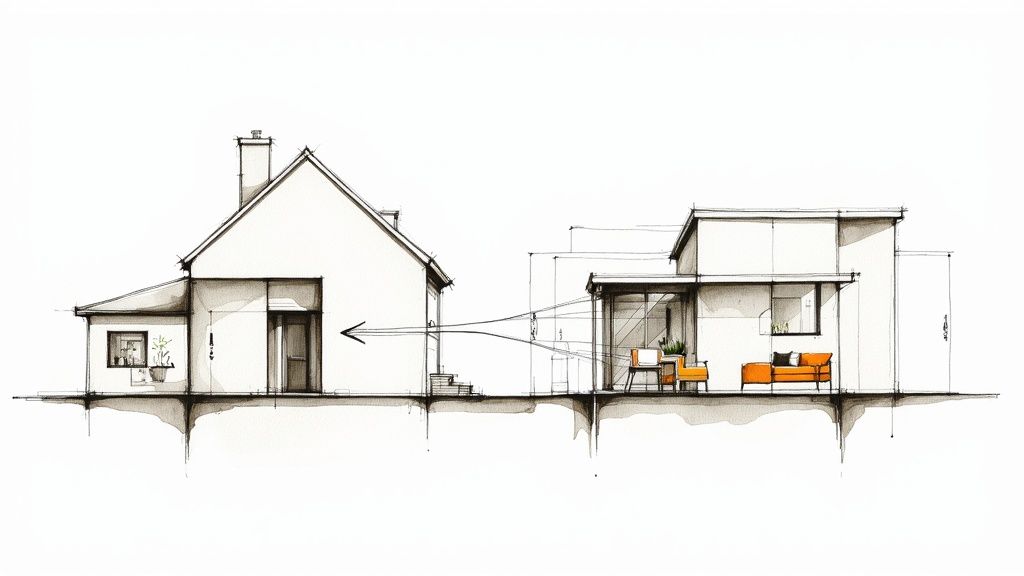
Matching the Architectural DNA: The new roofline needs the same pitch as the old one. We'll match window styles, trim details, and exterior materials like brick or siding as closely as possible.
Creating a Natural Interior Flow: The transition from the old space to the new should feel effortless. We do this by matching ceiling heights and carrying the same flooring through.
Getting the Scale and Proportion Right: A giant, boxy addition on the back of a classic bungalow is always going to look wrong. A good designer respects the character of the original home, ensuring the new part is proportional and balanced.
Our goal is to enhance your home's character and curb appeal, not just add square footage. That thoughtful approach is what ensures your investment meets your family's needs and adds real, lasting value to your property.
Planning an addition is a big undertaking, but you don't have to figure it all out by yourself. If you're ready to see what's possible for your home, the team at Gemini Homes is here for a clear, no-pressure chat to answer your questions and help you get started. Let's talk about your project.
Comments