
Your Granbury Guide to Wheelchair Accessible Bathroom Design
When we talk about planning a bathroom that works for everyone, it’s not about checking off boxes on a clinical-looking list. It’s about creating a beautiful, comfortable space for real life. A well-thought-out wheelchair accessible bathroom design is one of the best ways to boost daily independence and add lasting value, whether you're building your forever home in Granbury or remodeling an existing one in Weatherford.
Designing for Comfort and Independence
Creating a truly accessible bathroom means looking past the bare minimum requirements. The real goal is to understand how the space will be used every single day and design it to remove barriers, minimize risks, and give people back their self-sufficiency. For many families we work with across North Texas, this is about planning for the future and making sure their home stays comfortable for every stage of life.
This forward-thinking mindset is at the heart of "universal design" and "aging in place." Forget the cold, institutional feel. The aim is to create a welcoming, stylish bathroom that just happens to work beautifully for everyone, no matter their mobility level. We’ve seen this play out in custom homes from Glen Rose to Stephenville, where a few smart decisions in the design phase made all the difference down the road.
It's More Than Just the Measurements
While we’ll dive into the specific dimensions you need, the big idea is to create a space that feels open and is effortless to move around in. This often means looking at the bathroom in the context of the rest of the house. A remodel in an older Granbury ranch home might involve widening the doorway from the master bedroom. On the other hand, a new build on a piece of land out in the country gives us a blank slate to get the layout perfect from the start.
A properly planned accessible design delivers some huge benefits:
Real-World Safety: Features like quality non-slip flooring and correctly placed grab bars drastically cut down the risk of falls—a major concern for seniors and anyone with mobility challenges.
Dignity and Independence: A bathroom that works for the user empowers them to manage their own personal care routines without needing help. That sense of independence is priceless for emotional well-being.
A Smart Investment: As more people in North Texas plan for multi-generational living, homes with accessible features are becoming a hot commodity. They simply appeal to a much broader pool of future buyers.
A common myth is that accessible design looks sterile or ugly. The truth is, today’s market is full of stunning fixtures, elegant tile, and clever layouts that create a space that’s both barrier-free and beautiful. It's about making smart choices, not compromises.
Ultimately, investing in a wheelchair accessible bathroom is an investment in quality of life. For more ideas on making your entire home safer and more comfortable for the long haul, take a look at our guide on aging-in-place home modifications for North Texas homes.
Mastering the Layout for Maximum Accessibility
The single most important decision you'll make in a wheelchair-accessible bathroom remodel is the layout. Long before you start looking at tile or faucets, getting the spacing right is absolutely non-negotiable. It’s the foundation that makes the difference between a room that's a source of daily frustration and one that genuinely fosters independence.
As a builder for families across North Texas—from Granbury to Weatherford—I've seen how the technical numbers in the ADA guidelines can seem intimidating. But they aren't just arbitrary rules; they’re based on the real-world physics of how a wheelchair moves.
The Two Most Important Numbers in Accessible Design
At the core of any functional layout are two key measurements: the turning radius and the clear floor space. Get these right, and you ensure someone can not only get into the room but can actually use everything inside it, comfortably and safely.
The 60-Inch Turning Radius: This is the gold standard. Picture a 60-inch (or 5-foot) diameter circle on your floor plan. A person in a wheelchair needs this much clear, unobstructed space to make a full 180-degree turn. This is absolutely critical for repositioning to approach the sink, toilet, or shower. In a new build on a piece of rural property, we can design this in from day one. In a remodel, it often means borrowing space from an adjacent closet or completely reconfiguring the room.
The 30x48-Inch Clear Space: Think of this as a personal parking spot. In front of every single fixture—the sink, the toilet, and at the shower entrance—you need a clear rectangular space of at least 30 inches by 48 inches. This is the minimum space required for a person to approach from the front or side for a safe transfer.
These numbers aren't just a U.S. thing anymore; they've become a global benchmark. International guidelines often echo the U.S. ADA’s call for a 30 x 48-inch clear space and that 60-inch turning circle. For North Texas families planning their "forever home," a 5-foot turning radius and roll-in showers are now baseline features, not special add-ons.
The infographic below shows how these foundational layout decisions cascade down to every other choice you'll make.
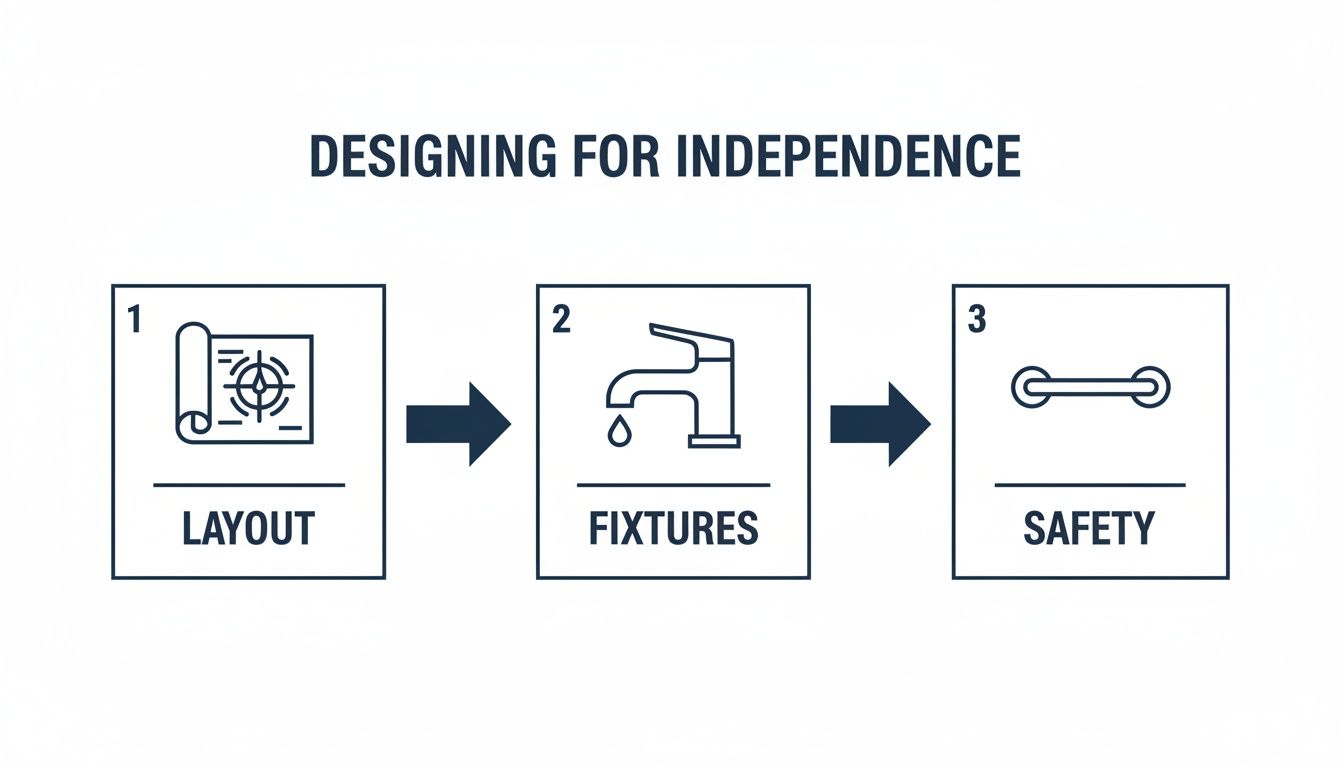
It all starts with a solid layout. That plan then informs every fixture you select and every safety feature you install.
To help you visualize these critical dimensions, here’s a quick-reference guide. We use these numbers as a starting point for every accessible bathroom we design, blending ADA guidelines with practical residential needs.
Essential Dimensions for Your Accessible Bathroom
Feature | Recommended Dimension | Why It Matters |
|---|---|---|
Doorway Width | 36 inches | Provides comfortable clearance for most wheelchairs without scraping knuckles. |
Turning Radius | 60-inch diameter | The "gold standard" for allowing a 180-degree turn without a multi-point turn. |
Clear Floor Space | 30 x 48 inches | Essential "parking space" needed in front of each fixture (sink, toilet, shower). |
Toilet Centerline | 16-18 inches from side wall | Gives enough room on one side for grab bars and space on the other for transfers. |
Sink Height | Max 34 inches from floor | Allows a user to roll their knees underneath the sink for easy access. |
These measurements are the building blocks of your design. A good builder will work with you to see how they can be adapted to your specific space and needs.
Roll-In Shower vs. Transfer Shower
The shower is usually the main event in an accessible bathroom. Your choice between a roll-in and a transfer design really comes down to the user's mobility level and, of course, the space you have to work with.
A roll-in shower is the ultimate solution. It has a zero-threshold entry, meaning the bathroom floor just continues right into the shower. No curb, no lip, no barrier. This allows someone to roll directly into the space. We recently built one for a modern farmhouse in Glen Rose, and the seamless look made the whole bathroom feel bigger and more luxurious. The key is expert floor sloping and drain placement to keep water where it belongs.
A transfer shower, on the other hand, is for someone who can safely move from their wheelchair to a shower bench. It will have a very low curb (no more than half an inch high) and either a built-in bench or dedicated space for a freestanding one. It's a fantastic option for smaller bathrooms where a true roll-in might not fit.
Don't forget: even a small bathroom can feel incredibly open and functional with the right choices. A zero-threshold shower, a wall-mounted sink, and a wider doorway can completely transform a tight, frustrating space.
For homeowners in older North Texas houses where every square foot counts, smart layout planning is everything. If you're wrestling with a compact footprint, our team has put together some creative smart bathroom remodel ideas for small spaces in North Texas that can help you make the most of it.
Thinking through these spatial needs at the very beginning saves so much time, money, and frustration down the road. A builder who knows this stuff can look at your current bathroom and help you visualize how these dimensions will translate into a real, livable room that truly serves your family.
Selecting Accessible Fixtures and Finishes
Once your layout is locked in, it's time for the fun part: picking the fixtures and finishes. This is where the real personality of your bathroom comes through, proving that an accessible space can also be a beautiful one. For homeowners across North Texas, from Godley to Glen Rose, this step is all about choosing components that make the bathroom a joy to use every single day.
The market for accessible products has exploded, and beautiful design is now front and center.
In fact, wheelchair-accessible bathroom design is fueling a massive global market for accessible accessories. This segment, which covers everything from stylish grab bars to comfort-height toilets, is projected to hit around USD 7.2 billion by 2025. For folks in places like Granbury and Weatherford, this trend is great news. It means features like roll-in showers and lever-handle faucets are now mainstream, value-adding elements, not just niche afterthoughts. You can dig into the specifics by exploring insights on this growing global market.
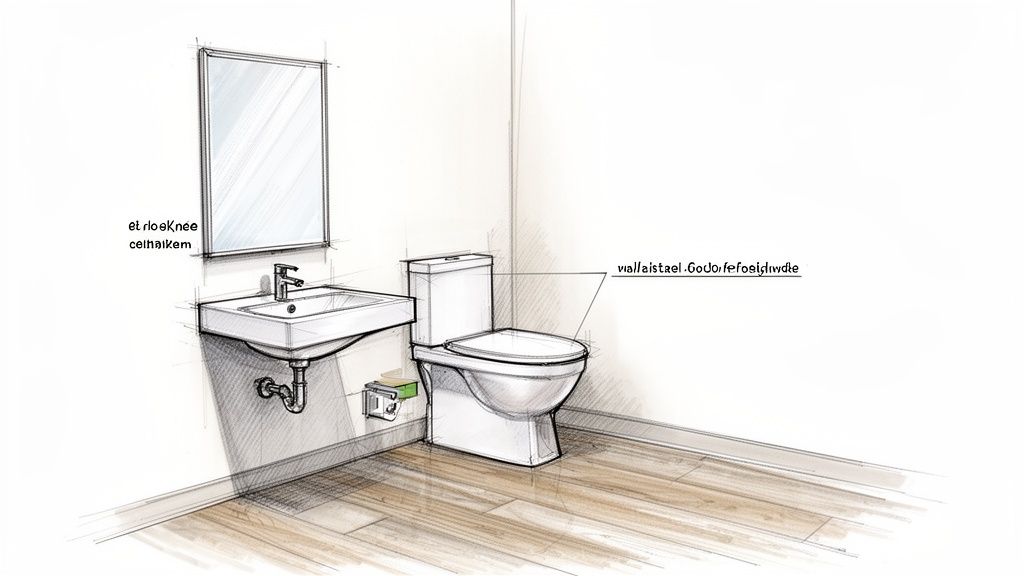
The Sink and Vanity Area
The sink is one of the most-used fixtures in the bathroom, so getting it right is a top priority for daily comfort. A traditional cabinet-style vanity is often a major barrier, preventing a wheelchair user from getting close enough to the basin.
Here’s what to look for instead:
Wall-Mounted Sinks: This is my go-to recommendation. By mounting the sink directly to the wall, you leave the floor underneath completely open, creating the knee clearance needed to roll right up to the basin.
Console Sinks: These are a fantastic, stylish alternative. They sit on an open frame that also provides that crucial knee space while adding a touch of elegance.
Vanity Height: To ensure comfort for a seated user, the top rim of the sink or counter should be no higher than 34 inches from the finished floor.
Don't forget the faucet. Knobs that require tight gripping and twisting can be a real struggle for anyone with limited hand strength. Single-lever or touchless faucets are the way to go—they’re simple to operate and come in countless finishes to match any style you can dream up.
The Toilet
Choosing the right toilet is a game-changer for safety and independence. A standard-height toilet is almost always too low, making transfers from a wheelchair difficult and risky.
A "comfort-height" toilet is one of the simplest and most impactful upgrades you can make. These models are typically 17 to 19 inches high—much closer to the height of a standard wheelchair seat—which makes a world of difference for safer, easier transfers.
Beyond the toilet itself, remember the space around it. As we covered in the layout section, having enough clear floor space on at least one side is non-negotiable for transfers and for installing grab bars where they’re needed most.
Flooring: Non-Slip Safety and Style
Flooring is a critical safety decision in any bathroom, but it's absolutely paramount in an accessible design. The goal is to find a material with a high coefficient of friction (COF), which is just a technical way of saying it has great grip, even when wet.
We recently worked with a family in Godley who wanted the warm look of hardwood without the risk. We found a beautiful wood-look porcelain tile with a subtle texture. It gave them the rustic farmhouse vibe they loved with the durability and high-traction surface they needed for total peace of mind.
Other excellent choices for non-slip flooring include:
Matte-finish porcelain or ceramic tile
Luxury vinyl tile (LVT) with a textured surface
Small mosaic tiles, where the extra grout lines naturally add more grip
Lighting and Surfaces
Finally, let's pull the whole environment together. Good lighting is key. I always recommend a layered approach: combine a general overhead light with dedicated task lighting at the vanity and inside the shower. This strategy gets rid of shadows and dramatically improves visibility.
And don't overlook the small details. Placing light switches at a lower, more accessible height—around 48 inches from the floor—is a simple adjustment that makes a huge difference.
For countertops and shower walls, think low-maintenance. Grout-free options like solid-surface panels or quartz look clean and modern, and they cut down on cleaning chores—a welcome bonus for any homeowner.
Working with a local builder can help you sort through all these choices. We can source fixtures and finishes that not only meet every accessibility standard but also perfectly reflect your personal style, making sure your new bathroom is a perfect fit for your North Texas home.
Making Your Bathroom Truly Safe and Usable
It’s one thing to get the layout and fixtures right, but it's the small, thoughtful details that really make an accessible bathroom work. These are the features that transform a functional space into one that’s truly safe, comfortable, and easy to use every single day. This is about thinking through every interaction, from reaching a light switch to grabbing a towel.

This is where a custom builder’s experience really comes into play, especially for homes here in Granbury and across North Texas. We've learned that getting these details right during the construction phase saves a world of frustration—and money—down the line.
Grab Bars: Your Most Important Safety Feature
Grab bars are probably the single most critical safety element in an accessible bathroom. But just screwing a bar into the drywall is asking for trouble. For a grab bar to do its job, it needs to be anchored into something solid.
That’s why we always install blocking inside the walls during the framing stage. Blocking is simply solid wood reinforcement placed between the wall studs right where the grab bars will go, typically around the toilet and inside the shower. With proper blocking, those bars can support hundreds of pounds of force, providing rock-solid support when you need it most.
Installation is only half the battle; placement is everything. We position grab bars to support natural movements, like sitting, standing, or balancing in the shower. A typical setup includes a horizontal bar behind the toilet and another on the adjacent wall, usually installed between 33 and 36 inches off the floor.
Smart Shower Seating Solutions
A secure place to sit in the shower is a must for safety and comfort. Today's options are both beautiful and incredibly functional.
Built-In Benches: For a seamless, high-end look, a custom-tiled bench is a fantastic permanent solution. It can be built to match your shower walls, giving the whole space a spa-like feel. We often incorporate these into new custom homes in Glen Rose and Weatherford for clients who are planning for their retirement years.
Fold-Down Seats: If you're tight on floor space, a wall-mounted, fold-down seat is a brilliant alternative. These are incredibly sturdy when in use but fold up flush against the wall when you don’t need them, keeping the floor clear for a wheelchair's turning radius. You can find them in materials ranging from elegant teak wood to modern solid surfaces.
It's the Little Things That Count
True accessibility is found in the details. It’s about solving those minor but persistent daily obstacles. Think about how many times a day you use switches, outlets, and storage—making those elements accessible is a total game-changer.
We make a point to place light switches and electrical outlets lower on the wall, usually around 42 to 48 inches from the floor, so they’re easy to reach from a seated position. Using large, rocker-style switches instead of standard toggles also helps, as they can be operated with an elbow or the side of a hand if needed.
Standard vanities with deep cabinets are often a real pain to use. We solve this by designing custom storage solutions like:
Roll-out shelves that bring the contents to you.
Pull-down shelving in upper cabinets.
Open shelving under the sink for quick access to towels and supplies.
Even something as simple as the toilet paper holder matters. You’d be surprised how often this gets overlooked. User research has shown that poorly designed details can render a space unusable. For instance, one study found that in 80% of audited accessible stalls, bulky, large-roll dispensers were used that many people struggled to operate. A simple, user-tested, single-roll holder placed within easy reach is a small detail that makes a huge difference. You can dive deeper into how these details impact usability by exploring the full research findings on accessible design.
When you’re ready to see how these features can be built into your own home, talking with an experienced local builder can help you turn these ideas into a solid plan.
Budgeting Your Remodel with a Local Texas Builder
Alright, let's talk numbers. Planning a beautiful and functional wheelchair-accessible bathroom is a real investment—not just in your home's value, but in your family's daily quality of life. For folks here in Granbury, Weatherford, and across North Texas, getting a handle on the costs upfront is the key to planning a smooth project.
One of the first questions we always get is, "So, what's this going to cost me?" The honest answer is: it depends. A simple project where we're just swapping out fixtures is a world away from a full tear-out that involves moving walls to get that crucial 5-foot turning radius.
What Really Drives the Cost of Your Remodel
The final price tag on your project is a mix of a few major components. When you know what pushes the cost up or down, you and your builder can be smart about where you allocate your money.
Here are the main factors influencing the budget on North Texas remodels:
Structural Changes: This is almost always the biggest variable. If we need to widen a doorway to the required 32-36 inches, move plumbing to accommodate a new layout, or open up walls to add solid blocking for grab bars, that's going to involve more skilled labor and materials.
The Shower System: A custom-tiled, zero-threshold roll-in shower is a game-changer, but it's also a significant part of the budget. Its cost is tied to its size, the intricacy of the tile work, the type of linear drain needed for perfect water management, and the fixtures you choose. In our experience, a properly built roll-in shower can run anywhere from $8,000 to $20,000+.
Fixtures and Finishes: You have a wide range of options here. A sleek, wall-mounted sink with a touchless faucet costs more than a standard pedestal sink. The same goes for comfort-height toilets, designer grab bars that don't look institutional, and high-quality non-slip porcelain tile.
Labor and Permits: You're not just paying for materials; you're investing in the expertise of the crew. Good craftsmanship matters. Plus, any significant project in counties like Hood or Parker will need permits and inspections to ensure everything is safe and up to code.
A detailed quote from a builder you trust shouldn't just be one big number. It should break down these costs so you see exactly where your money is going—from demolition and framing to plumbing, electrical, and the final paint touch-ups.
Working with Your Builder on a Realistic Budget
A great local builder is your partner in this process. Their job is to help you find that sweet spot between your dream bathroom and what you're comfortable spending. They can offer smart suggestions, like using swing-clear hinges to gain an extra couple of inches at a doorway instead of reframing it.
Here are a few tips to make that partnership work:
Be Clear About Your Priorities: Let your builder know what's non-negotiable. Is the roll-in shower the absolute must-have? Or is achieving that full turning circle the main goal? This helps them focus the budget on what will make the biggest difference for you.
Ask for a Line-Item Quote: This detailed breakdown is incredibly helpful. If the total is higher than you expected, you can sit down together and pinpoint areas to adjust. Maybe you can select a more cost-effective tile that still looks great, without ever compromising on safety or core function.
Plan for the Unexpected: In remodeling, especially with older homes, surprises happen. We always tell our clients to build a contingency fund of 10-15% of the total project cost into their budget. That way, if we open a wall and find old, corroded plumbing, it’s a problem we can solve without derailing the entire project.
Choosing the right person for the job is the single most important decision you'll make to keep your project on time and on budget. For more on that, take a look at our guide on how to choose a home builder in North Texas.
At the end of the day, a well-planned accessible bathroom isn't just another expense. It's a lasting improvement that brings independence, safety, and peace of mind for years.
Common Questions on Accessible Bathroom Design
When you're planning a project as important as a wheelchair-accessible bathroom, a lot of questions pop up. Here in North Texas, we hear similar concerns from homeowners all over, from Granbury to Weatherford and beyond. Let's walk through some of the most common ones.
Do I Have to Follow ADA Guidelines in My Home?
This is probably the number one question we get. The simple answer is no. The Americans with Disabilities Act (ADA) sets the rules for public and commercial buildings, not for your private home.
But here’s the thing: while you're not legally bound by them, the ADA guidelines are an incredible playbook for good design. They’re the result of years of research into what actually works for someone with mobility challenges. We treat them as a best-practice starting point for every project because they give us proven, real-world dimensions for things like turning radiuses and clear floor space.
How Wide Does a Bathroom Door Really Need to Be?
For comfortable wheelchair access, the bare minimum clear opening for a doorway is 32 inches. In our experience, though, you should really shoot for 36 inches if the framing allows.
That extra space is the difference between a tight squeeze and a comfortable entrance. It saves scraped knuckles and makes navigating into the bathroom, especially from an angle, feel far less restrictive.
What Is the Difference Between a Roll-In and a Transfer Shower?
The choice here really depends on the user's level of mobility and the bathroom's layout.
A roll-in shower is exactly what it sounds like. It has no curb or threshold at all, so the bathroom floor just continues right into the shower stall. This design allows someone to roll their wheelchair directly into the shower, offering the greatest level of independence.
A transfer shower is built for someone who can safely shift from their wheelchair to a shower bench. These have a very low curb—we're talking half an inch max—and are typically equipped with a built-in or fold-down seat.
Can an Accessible Bathroom Still Look Stylish?
Absolutely! This is one of the biggest misconceptions out there. The days of cold, clinical-looking accessible bathrooms are long gone. The market today is filled with beautiful, high-end fixtures that merge great design with universal function.
Think about it: you can now get designer grab bars in matte black or brushed bronze that also function as towel bars. Sleek, wall-mounted sinks look incredibly modern while also creating the knee clearance you need. You can find gorgeous non-slip porcelain tiles that look just like hardwood or natural stone. A well-planned accessible bathroom should feel like a retreat, not a hospital room.
Your accessible bathroom can and should reflect your personal style. The goal is to create a space that is first and foremost a comfortable part of your home—it just happens to be incredibly safe and functional, too.
For our clients on rural properties near Glen Rose or Stephenville, this often means blending rustic, farmhouse charm with modern accessibility. It's proof that you never have to sacrifice aesthetics for safety.
Planning a project that feels right for your family starts with a simple conversation. If you have more questions or you're ready to explore a wheelchair-accessible bathroom design for your North Texas home, our team is here to help you build a space that delivers comfort and independence for years to come. Learn more about our remodeling process and schedule a free consultation.
Comments