
A Guide to Home Builders Warranties in North Texas
- scott shipp
- Feb 12
- 12 min read
When you buy a brand-new car, you expect it to come with a warranty. It’s a promise from the manufacturer that if something goes wrong, they’ll make it right. A home builder warranty works on the same principle, but for what is likely the biggest investment of your life: your new custom home.
What Is a Home Builder Warranty?
Think of a builder warranty as your builder's written promise to stand behind their work. It’s a formal agreement that protects you from defects in materials, workmanship, and the major structural parts of your home for a specific amount of time.
This isn't just some legal document you file away and forget. A solid warranty is a direct reflection of a builder's integrity and confidence in the homes they build. It gives you a clear process for getting things fixed, whether it’s a sticky door in the first few months or a more serious structural issue years down the road. For anyone building their dream home in Granbury or on a rural North Texas property, that peace of mind is priceless.
Why Warranties Matter More Than Ever
Unexpected home repairs are stressful and expensive. A 2024 report revealed a startling statistic: 83% of U.S. homeowners had to pay for an unexpected repair, a huge jump from 46% just the year before. You can dive into the full report on why read more about recent home warranty trends.
For families building a new home in places like Glen Rose or Weatherford, a good warranty acts as a crucial financial shield against these kinds of surprise costs.
A builder who is proud of their work will always back it up with a clear, comprehensive warranty. It’s a sign of transparency and a long-term commitment to you and your home, ensuring that your investment is protected from day one.
Most quality builders in North Texas structure their warranties in layers. The most common format is the "1-2-10" warranty, which breaks down coverage for different parts of your home over different timelines. Let's look at what that means.
Breaking Down the “1-2-10” Warranty
If you spend any time talking to North Texas builders about home warranties, you’re bound to hear the term “1-2-10.” It’s the gold standard for new home coverage, and it breaks down your protection into three clear phases.
Think of it as a safety net with multiple layers. Each layer protects a different part of your home for a different length of time, giving you a clear roadmap of what’s covered from the day you get your keys to a decade down the road.
The First Year: Workmanship Coverage
Your first year is when the warranty is at its broadest. This is your one-year workmanship and materials warranty, and it covers all the fit-and-finish details you see and touch every day. It’s designed to catch any hiccups in craftsmanship that only become apparent once you’re actually living in the space.
For example, maybe a few months after moving into your new Stephenville home, the paint on the trim starts to peel, or a cabinet door just won't close right. That’s exactly what this warranty is for.
It typically covers things like:
Drywall: Nail pops, noticeable cracks, or issues with seams.
Trim and Millwork: Gaps in the crown molding or baseboards that shouldn't be there.
Flooring: A floor tile that comes loose or a hardwood plank that starts to warp because of installation.
Paint: Significant blistering or peeling that wasn’t caused by you.
The Two-Year: Systems Protection
Next up is the two-year systems warranty. This layer moves beyond the cosmetic and protects the vital organs of your home—the major systems that keep it comfortable and functional. In our Texas heat, knowing your HVAC, plumbing, and electrical systems are covered is a huge deal.
This part of the warranty specifically addresses defects in how these major distribution systems were installed or the materials used. If a faulty wiring job makes an outlet go dead, or a leaky pipe under the sink is traced back to a bad installation, your builder is on the hook to fix it within this two-year period.
The Ten-Year: Structural Guarantee
Finally, we get to the big one: the ten-year structural warranty. This is the ultimate long-term peace of mind, protecting the very skeleton of your house against major structural defects—the kind of serious problems that could make a home unsafe.
This coverage is especially critical here in North Texas, where our expansive clay soil can put a lot of stress on a foundation over the years. If a major crack appears in your foundation eight years after you move in and it threatens the home’s integrity, this is the warranty that has your back.
It covers the heavy hitters and load-bearing components, such as:
Foundation walls and footings
Beams, girders, and columns
Load-bearing walls
Roof framing systems
This timeline helps visualize how these three distinct coverage periods work together.
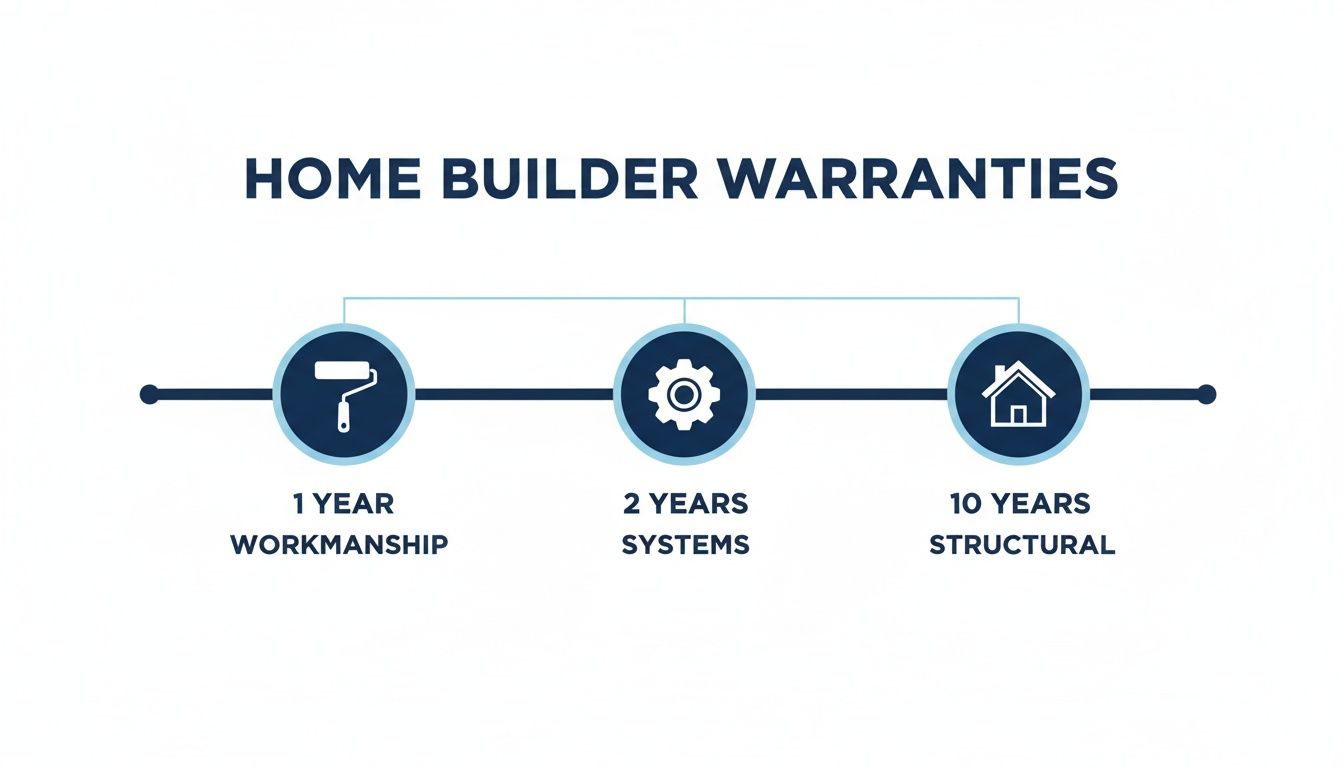
As you can see, your protection evolves. It starts with the surface-level details, transitions to the critical systems behind the walls, and ends with a decade of security for the core structure of your home. Understanding this progression lets you know your builder stands behind their work for the long haul.
What Your Builder Warranty Actually Covers
You’ve got the 1-2-10 timeline down, but true peace of mind comes from knowing exactly what’s protected during each period. A quality home builder warranty isn’t just a piece of paper; it's a detailed roadmap of your builder’s commitment. Especially when you're building a custom home in places like Glen Rose or Godley, a thorough warranty is what separates a good builder from a great one.
A vague warranty is a red flag. A great one, on the other hand, spells everything out clearly, leaving no room for interpretation. Let's dig into the specifics of what's typically covered.
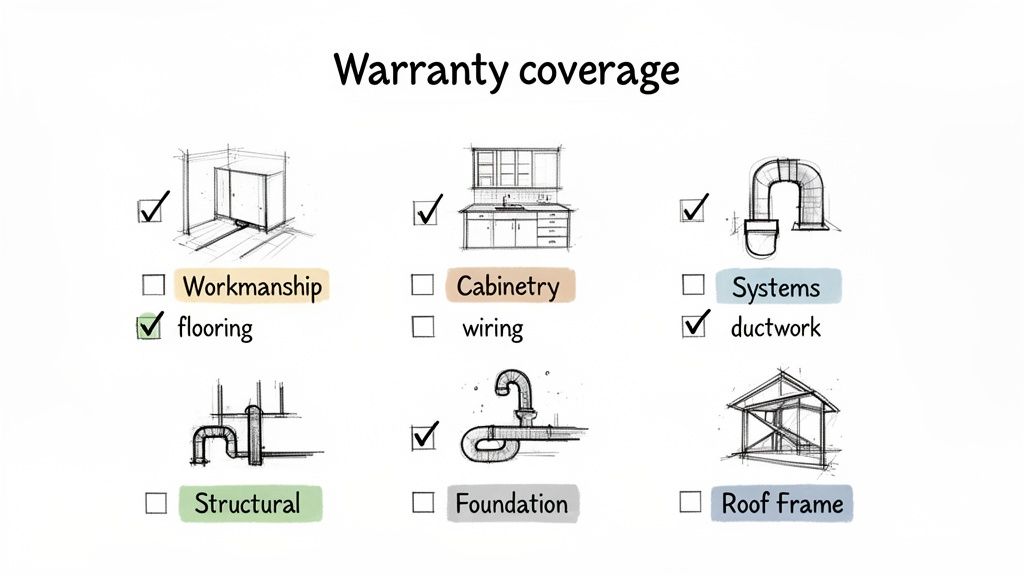
Year One: Workmanship and Materials
Think of the first year as the "settling in" period for your home's fit and finish. This part of the warranty is all about the craftsmanship and the materials you see and touch every day.
Flooring: Covers issues like a tile that comes loose or a hardwood board that buckles due to improper installation.
Cabinetry and Countertops: A cabinet door that won't hang straight or a countertop seam that’s separating would fall under this coverage.
Interior and Exterior Paint: This isn't for minor scuffs. It's for widespread peeling or blistering caused by poor surface prep.
Siding and Trim: Protects you if siding was installed poorly and is now coming loose, or if exterior trim has developed unnatural gaps.
Year Two: Systems Coverage
The two-year warranty dives deeper, covering the hardworking systems tucked away behind your walls. These are the critical networks that keep your home running comfortably and safely.
Electrical Wiring: This covers issues with the wiring inside the walls, like a faulty connection causing an outlet to stop working.
Plumbing Pipes: If a leak from a hidden pipe is due to an installation defect, your warranty kicks in.
HVAC Ductwork: This focuses on the ducts themselves, ensuring there are no issues preventing proper airflow throughout the house.
The Ten-Year Structural Promise
This is the big one. The final and longest part of your warranty is your ultimate safety net against major structural failure. It covers the core load-bearing components—the very skeleton of your North Texas home.
A structural defect isn't just a cosmetic crack in the drywall. It's a serious problem that threatens the stability and safety of your entire home. This coverage is for the kind of major issue that could make a house unsafe to live in.
Typically, this decade-long promise covers:
Foundation: Protection against major cracks or shifting that could compromise your home's integrity.
Load-Bearing Walls: This refers to the essential framing members that support the weight of your roof and upper floors.
Roof Framing: The rafters and trusses that form the structural backbone of your roof fall under this coverage.
The financial stakes here are incredibly high. U.S. new home builders paid out a massive $1.071 billion in warranty claims in a single year. You can read more about recent home warranty trends and what they mean for homeowners. That number alone shows just how vital a solid warranty is—it protects your family from problems that could otherwise cost a fortune to fix.
So, What's Not Covered in a Builder Warranty?
Knowing what your home builder warranty covers is a great first step, but understanding what it doesn't cover is arguably more important. A warranty is a specific guarantee from your builder on their work and materials, not a bumper-to-bumper insurance policy.
Being crystal clear on the exclusions right from the start saves headaches down the road and clarifies where your responsibilities as a homeowner begin. Your builder is on the hook for the craftsmanship and major systems they installed, but they aren't responsible for things out of their control—like a classic North Texas hailstorm, everyday upkeep, or things you add to the house later.
Normal Wear and Tear
This is the biggest category of exclusions. A new home is pristine, but it's meant to be lived in. A warranty is for defects, not for the natural aging process of a home.
Here are a few classic examples of normal wear and tear:
Minor scuffs on the walls or dings on the baseboards from moving furniture.
Hairline cracks in drywall or concrete from the house settling—these are normal and not a structural concern.
The paint on the sunny side of your Cleburne home fading from our intense Texas sun.
Carpet fibers getting matted down in the main hallway.
Homeowner Maintenance (or Lack Thereof)
A builder warranty comes with the expectation that you'll do your part to take care of the home. It’s a partnership. If a problem arises from neglected routine maintenance, the builder isn't going to cover the repair. This is especially true for rural properties around here that might have septic or well systems needing specific attention.
Your builder's job is to deliver a home built to a high standard. Your job is to maintain it. Skipping your responsibilities can easily void a portion of your warranty.
Common maintenance-related issues that won't be covered include:
Water damage from gutters you never cleaned out, causing rain to back up under the roofline.
Foundation problems that develop because you let the soil dry out and pull away from your Tolar home, failing to maintain proper drainage.
An HVAC system that fails because the air filters were never changed.
Exterior paint that peels after you went too aggressive with a pressure washer.
Other Common Exclusions
Beyond daily living and upkeep, a few other big items fall outside the builder’s responsibility.
Natural Disasters: Damage from tornadoes, hail, floods, or "acts of God" are not covered by a builder warranty. This is what your homeowners insurance is for.
Manufacturer Warranties: Appliances like your oven, dishwasher, or microwave come with their own separate warranties directly from the manufacturer. Pro tip: register those appliances the week you move in!
Work Done by Others: If you hire a different contractor to add a deck and their work causes a problem with the original structure, your builder’s warranty won’t cover that damage.
Getting a handle on these boundaries helps you protect your investment and know who to call when something goes wrong—the builder, your insurance agent, or a handyman. When in doubt, just ask your builder.
So You Found an Issue: Navigating the Warranty Claim Process
Finding a problem in your brand-new custom home can be disheartening, but this is exactly what the warranty is for. Having a clear process to follow transforms that moment of stress into a straightforward plan of action, ensuring your Granbury home gets back to the high standard you signed up for.
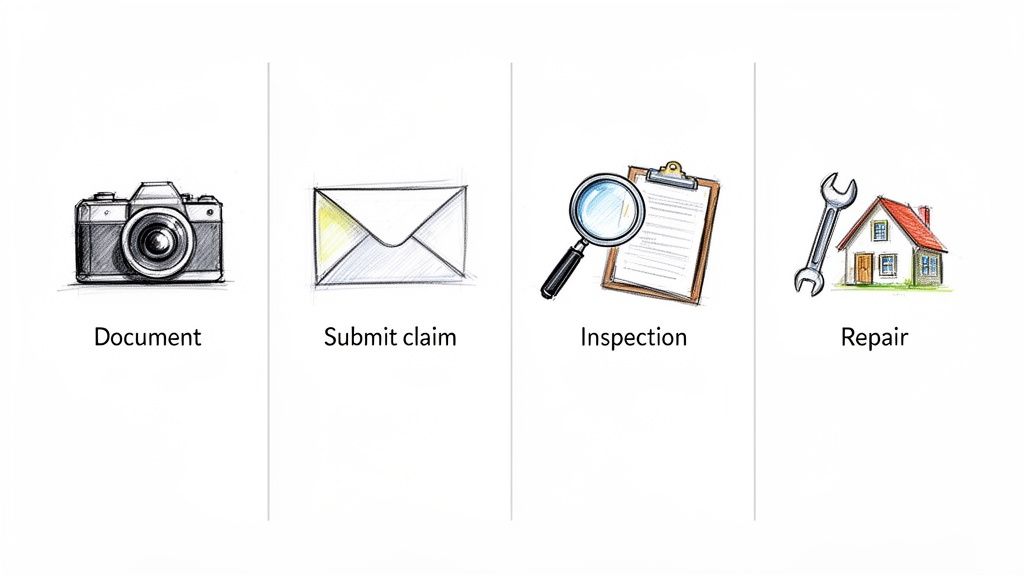
The second you notice something that isn't quite right—a sticky door in your Weatherford house or a leaky faucet in your Glen Rose kitchen—it’s time to get organized. A proactive approach is your best friend here and will make for a much smoother resolution.
Your Step-by-Step Guide to Filing a Claim
Following these four steps keeps everything documented, transparent, and moving in the right direction.
Document Everything Thoroughly: Before you even pick up the phone, take clear photos and videos of the issue from different angles. Jot down a detailed description of the problem, noting when you first saw it and any helpful context.
Submit a Formal Written Claim: While a quick phone call is a good start, you absolutely need a paper trail. Always follow up with a formal written claim via email or letter. In your message, clearly explain the issue, attach your photos, and explicitly state you're making a claim under your home builder warranty.
Cooperate with the Inspection: The builder will schedule a time for their team or a trade partner to inspect the problem. Being flexible and providing easy access helps them accurately diagnose the root cause and get things rolling.
Schedule and Complete the Repair: Once your builder approves the claim, they'll coordinate the repair work. Make sure you understand the timeline for the fix and what, if anything, you need to do to prepare for the crew.
The Importance of a Responsive Builder
A warranty is only as good as the builder who backs it up. A builder who communicates clearly, responds quickly, and treats the process like a partnership makes all the difference. It shouldn't feel like a fight.
Handling a claim is pretty simple when you're working with a builder who is genuinely committed to their craft. But if communication ever breaks down, it’s good to know what your options are. For a deeper dive into that topic, check out our guide on construction dispute resolution for North Texas homeowners.
If you have questions about how a warranty claim works for a new custom home, our team is always here to give you straight answers and the support you need.
Key Questions to Ask Your Builder About Their Warranty
Before you sign on the dotted line, the builder's warranty deserves just as much scrutiny as the floor plan. Asking sharp questions now is the best way to separate the truly professional builders from the pack and protect your investment.
This conversation is about more than just a piece of paper. It reveals a builder’s confidence in their own work and their commitment to you long after the final walkthrough. A great warranty isn’t just about promises; it’s about a clear, reliable process for when you need help. A builder who genuinely stands behind their product will welcome your questions and give you straight answers.
Questions to Vet Your Potential Builder
Walk into your builder meetings armed with these questions. The quality of their answers will tell you everything you need to know.
Can I review a complete copy of the warranty before signing anything? A transparent builder won’t hesitate to share the full document. If they’re vague or refuse, that's a massive red flag.
Is the warranty backed by a third-party insurer? Many reputable builders use a third-party company to handle their 10-year structural warranties. This is a huge plus, as it means you’re covered even if the builder were to go out of business.
Who is my point of contact for warranty claims? You need to know exactly who to call or email when an issue pops up. Will you be dealing directly with the owner, a project manager, or a dedicated warranty specialist?
What’s your step-by-step process for filing and resolving a claim? Ask them to walk you through it, from the moment you first report an issue to the final repair. A well-defined system shows they take their long-term responsibilities seriously.
Asking these questions isn’t about being difficult—it’s about being a savvy, informed homeowner. A builder who answers with confidence and clarity is demonstrating the kind of service and peace of mind you should expect.
Getting these answers upfront tells you about more than just the warranty; it tells you about the builder’s character and business practices. For more advice on this topic, check out our guide on the top 10 questions to ask custom home builders in North Texas.
Protecting Your New North Texas Home
A home builder's warranty isn't just another piece of paper you sign at closing. Think of it as your builder’s handshake—a promise that they stand behind their work long after the moving trucks have pulled away from your new Granbury home.
This warranty is your safety net and a tangible reflection of your builder's commitment to quality. For a major investment like a custom home, that peace of mind isn't just a nice perk; it's absolutely essential. It tells you you’ve chosen a partner who cares about the lasting quality of your home, especially here in the demanding North Texas climate.
Your Foundation of Confidence
A good warranty is the true foundation of your confidence in the entire project. It's the assurance that the beautiful craftsmanship you fell in love with is built to last, protecting you from potential defects in everything from the paint and trim to the core structural elements that keep your family safe.
A strong warranty isn’t just about a builder’s willingness to fix problems. It's about their confidence that you won't have problems to begin with. It speaks volumes about the quality of their materials, their crew, and their entire process.
Of course, the best warranty claim is the one you never have to make. That's why it's so important to be thorough before you even get the keys. A detailed final inspection can catch small issues before they grow. For a step-by-step guide, check out our article, Your Ultimate New Construction Home Inspection Checklist for North Texas.
Building a new home is a huge milestone. With the right builder and a solid warranty in your corner, you can enjoy it with complete confidence, knowing your investment is protected for years to come.
At Gemini Homes, we see a strong warranty as a fundamental part of a great building experience. If you're considering a new home in the Granbury area and want to learn more about the robust protection we provide with every project, we’d love to talk. Get in touch with us today.
Comments