
Visualize Your Dream Home With Interactive Floor Plans
Tired of trying to decipher a jumble of lines on a traditional blueprint? Interactive floor plans are the answer. Think of them as a dynamic, clickable digital model that lets you truly feel your home's layout before we even break ground. It’s like taking a virtual tour of your future home in Granbury or Weatherford, right from your own computer.
What Are Interactive Floor Plans
Traditional blueprints are a necessary part of the process, but let's be honest—they don't tell the whole story. It’s incredibly difficult to get a real sense of a room's scale and flow from a flat, 2D drawing.
That's where an interactive floor plan comes in. It closes the gap between the architect's drawing and the 3D reality, turning an abstract concept into a model of your home that you can actually understand and explore. It's an essential tool we use to make sure we’re all on the same page and that the final build in North Texas is exactly what you dreamed of.
Instead of just staring at lines, you get to actively engage with the design. This technology gives homeowners the confidence to make smart, informed decisions early on, which is key to avoiding expensive changes later. If you want to see just how big of a leap this is, check out our guide on how to read a traditional floor plan.
A Comparison: Static Blueprints vs Interactive Floor Plans
To really grasp the difference, it helps to see the two approaches side-by-side. One is a static document; the other is a living, breathing preview of your future home.
Feature | Static Blueprints | Interactive Floor Plans |
|---|---|---|
Visualization | 2D lines and symbols, requires interpretation | 2D/3D views, virtual tours, realistic feel |
Interaction | None; view-only | Clickable, explorable, customizable views |
Understanding | Can be difficult for clients to visualize space | Intuitive and easy to grasp scale and flow |
Feedback | Changes are marked up, slow communication | Instant visual feedback, easier collaboration |
Furniture Planning | Guesswork based on dimensions | Drag-and-drop virtual furniture placement |
Decision-Making | Relies on imagination, higher risk of regret | Builds confidence, reduces uncertainty |
As you can see, interactive plans aren't just an upgrade—they change the entire conversation, making the design process more collaborative and far less stressful.
More Than Just A Blueprint
This digital tool is about so much more than just getting the dimensions right; it’s about creating a connection. When you can see how the morning sun might pour into your Glen Rose kitchen or how your furniture will fit in the living room, you start to build a real emotional bond with the space.
It transforms the project from a stack of papers into a place you can already see yourself living in. The benefits aren't just a feeling, either—they're backed by solid data.
This infographic shows just how powerful these tools are in the home-building and buying journey.
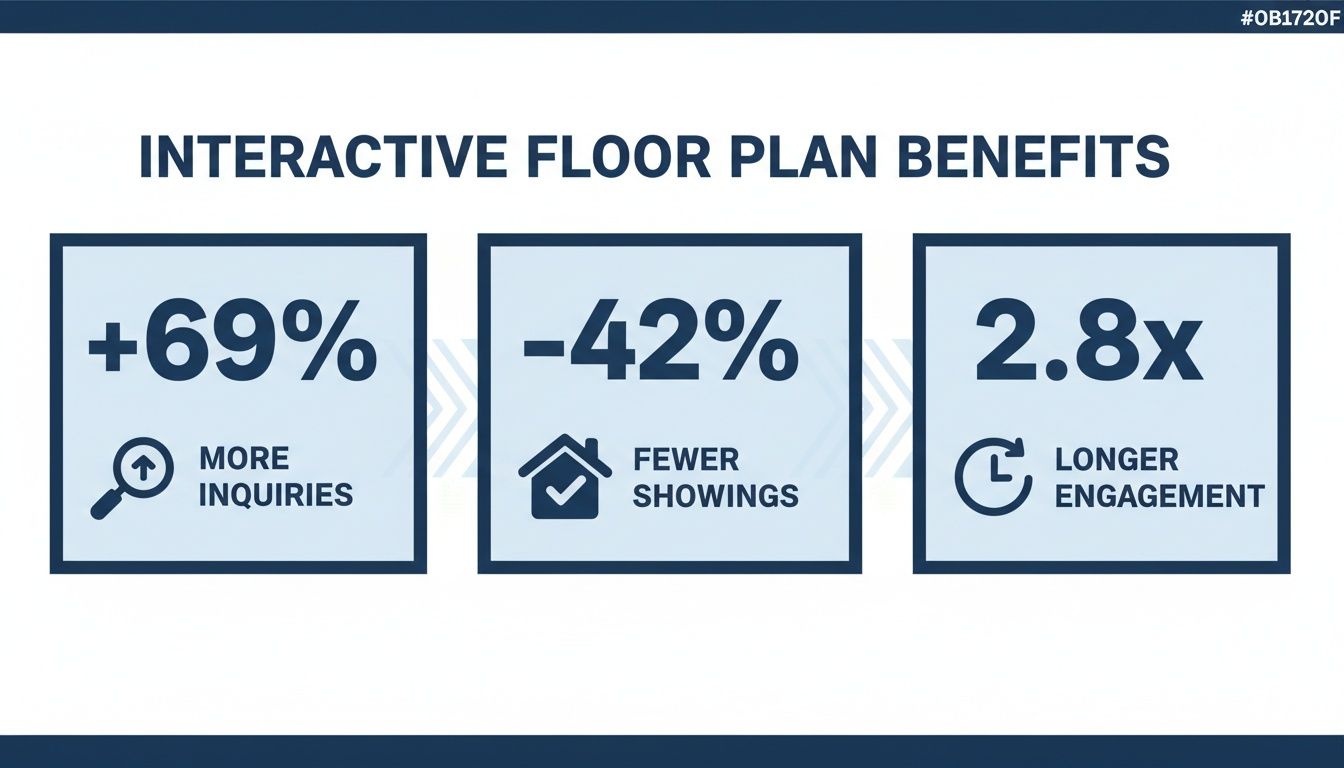
The numbers speak for themselves. Properties showcased with interactive floor plans get a 69% spike in inquiries and need 42% fewer physical showings. Most telling, however, is that people spend 2.8 times longer exploring these dynamic layouts.
That extended engagement, which you can read more about at Property Renders, is what gives homeowners the clarity and confidence to move forward. It’s this deep understanding that helps us get everything right long before the first foundation is poured.
Our Collaborative Design Process in North Texas
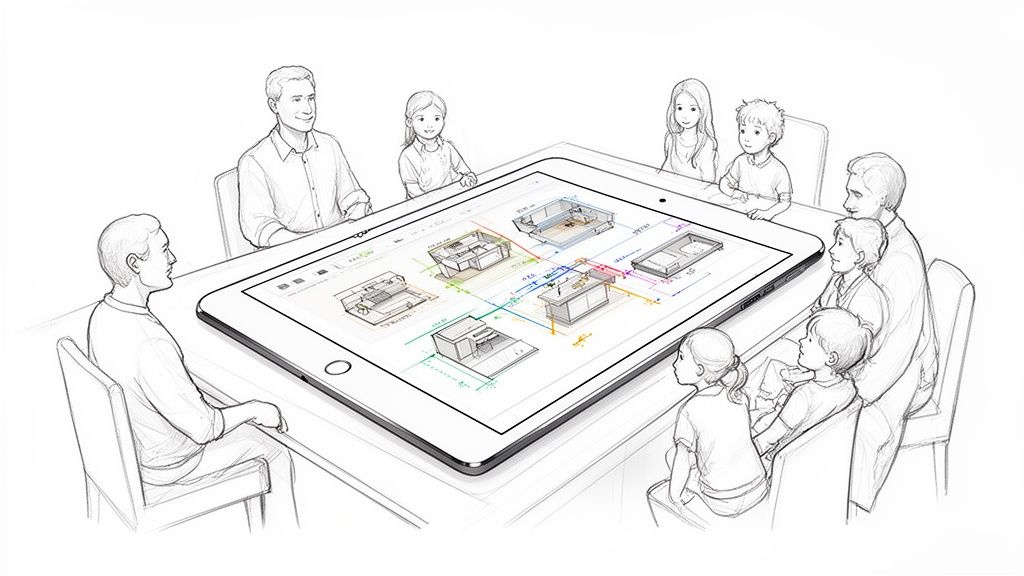
From the moment you walk into your first design meeting with us, we’re not just talking about your vision—we’re building it together in a shared digital space. Instead of handing you a static drawing and asking you to imagine the rest, we use interactive floor plans as our central tool. This turns the design phase into an engaging, hands-on workshop where you’re right there with us.
Picture this: you're a family who just bought a beautiful piece of land in Stephenville. In our first session, we load up your initial ideas. Right away, you can start asking "what if...?" and see the answers unfold on the screen in real-time.
It’s a completely different conversation. Instead of saying, “I think this will work,” we can show you precisely how a design choice will feel and function in your daily life, long before we ever break ground.
You’re not just a spectator; you're an active co-designer. We make every decision with total clarity, making sure the home we ultimately build is a true reflection of your family’s life.
Bringing Your Ideas to Life
Let's stick with our Stephenville family's story. They're excited about a big kitchen island but worried it might make the space feel cramped. On a traditional blueprint, figuring that out is pure guesswork.
With an interactive plan, we can drop in three different island sizes right there during the meeting. You can virtually walk around each one, checking the clearance for opening the dishwasher or imagining the kids running past. After a few minutes, the family knows the medium size is the perfect fit—a decision made with confidence, not hope.
Next, we look at the great room. Will their beloved sectional sofa fit?
Drag and Drop: We can place a to-scale model of their actual furniture right into the plan.
Test the Flow: We’ll immediately see how it affects the walkway from the hall to the back patio.
Visualize the View: They can even check the line of sight to the TV from every single seat.
This simple step prevents that awful moving-day discovery when a cherished piece of furniture just doesn't work in the new home.
Perfecting Every Last Detail
Our collaborative process goes way beyond furniture. We can model how the morning sun will stream through the primary bedroom window, helping you orient the room just right. Then, we can take a virtual walk-through to check small but crucial details.
Is there an outlet exactly where you need to plug in a bedside lamp? Does the pantry door swing the right way, or will it bang into the refrigerator? These are the kinds of details that are easy to miss on paper but become impossible to ignore in an interactive model. By working together in this digital environment, we fine-tune your home until every doorway, light switch, and window is exactly where it needs to be.
Real Benefits for Your Custom Home or Remodel
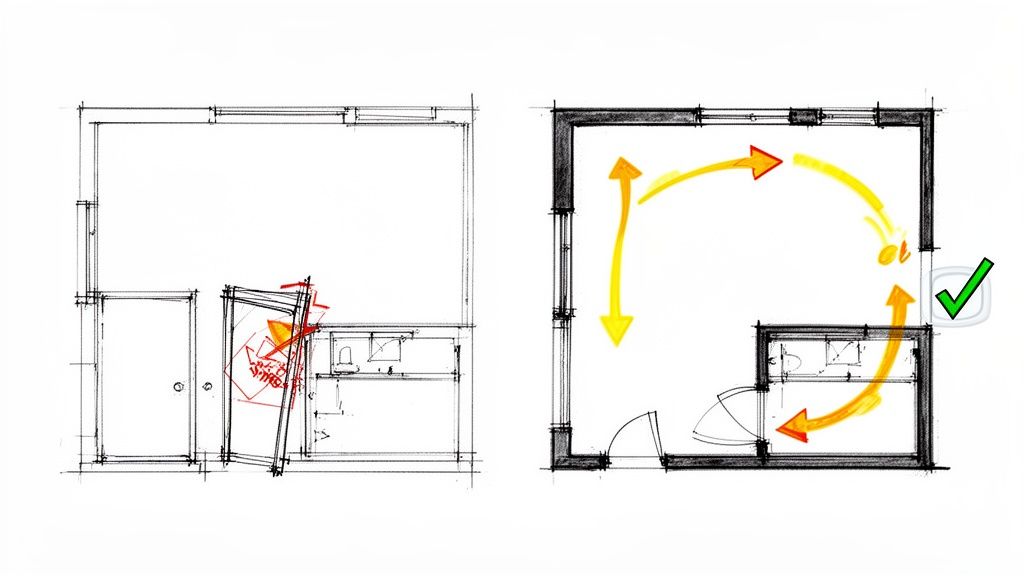
This isn't just about cool tech; an interactive floor plan delivers tangible value, real savings, and ultimately, a better home. It’s one thing to look at lines on paper, but it's another thing entirely to actually feel the flow of a room before a single 2x4 is cut.
We’ve all seen it happen. A layout looks perfect on a static blueprint, but in the real world, it feels awkward or cramped. An interactive plan lets you walk the path from the garage to the kitchen with imaginary groceries, or test whether a hallway feels more like a corridor than an inviting space. Catching these potential bottlenecks and clunky transitions early on is priceless.
Prevent Costly Changes and Delays
Hands down, the biggest win is catching design conflicts while they're still just pixels on a screen. Adjusting a digital blueprint costs next to nothing. Making that same change after your home in Godley or Cresson is already framed? That can easily add thousands of dollars and weeks of delays to your project.
Think of it like this: moving a wall on a screen is a few clicks of a mouse. Moving that same wall once it’s built involves demolition, reframing, and rerouting electrical and plumbing. That’s a direct hit to your budget and your timeline.
An interactive floor plan is your best insurance policy against expensive change orders. It allows us to solve problems digitally, ensuring the construction process is smooth, efficient, and stays on budget.
This "measure twice, cut once" approach protects your investment and takes a massive amount of stress out of the entire building experience.
Real-World Examples from North Texas
We see the impact of this planning on every project. For instance, a recent client in the Granbury area was reviewing their interactive model and had a lightbulb moment about their primary suite. They realized that by tweaking the bathroom layout just slightly, they could fit in a much larger walk-in closet without adding a single square foot to the home's footprint.
This was a huge win for them. Catching this during the design phase made it a simple adjustment. Had they noticed it after framing was complete, it would have become a major, costly ordeal.
Visualize, Then Validate: They could see the new layout instantly and confirm it was exactly what they wanted.
No Added Costs: The change was made long before any materials were ordered or labor was scheduled.
Achieve Your Vision: In the end, they got a space that truly worked for their lifestyle, not one they had to settle for.
The engagement these tools create is also telling. Data shows that viewers are 3.4 times more likely to save listings with interactive features and 2.7 times more likely to share them. In the luxury market, an incredible 78% of properties now feature this format, which speaks volumes about its importance in communicating a vision clearly. You can read more about these trends and their impact on the custom home market.
How to Get the Most From Your Interactive Plan
An interactive floor plan is an incredible tool, but it's only as good as the feedback you give us. Once we've put together the initial design, it's your turn to step inside and really live in the space, at least virtually. This isn't just about a quick glance; it's a chance to do a thoughtful walkthrough and make sure every detail works for your life.
To get this right, we encourage our clients in Tolar, Bluffdale, and across North Texas to treat it like a test drive. Don't just look at the rooms—move through them. Start at the front door and trace your steps to the kitchen. Imagine you're hauling in groceries from the garage. Is the path to the pantry direct and easy, or are you navigating a maze?
A Checklist for Reviewing Your Plan
Think of this virtual walkthrough as a way to check the flow and function against your real-life routines. A house can look stunning on paper, but if it doesn't work for your family, it's not a success. Use these prompts to dig into the layout from a truly practical standpoint.
Test Your Daily Paths: How do you get from your bedroom to the coffee maker in the morning? Is the path from the back patio to the kitchen direct enough for summer cookouts? Envisioning these small, repetitive movements is what makes a layout feel effortless.
Consider Furniture and Space: Use the software to drop in pieces of your furniture. Does your king-sized bed leave enough room for nightstands and a comfortable walkway? Is that heirloom dining table going to feel grand or cramped in the space we’ve designated?
Think About Sightlines: Stand in the kitchen. Can you keep an eye on the kids in the living room or playing out back? When you walk through the front door, what's your first impression? Great sightlines are one of the secrets to making a home feel open and connected. We talk a lot more about this in our practical guide to decorating an open floor plan.
Key Questions to Ask During Your Review
As you explore, your interactive plan becomes a launchpad for great conversations with our team. Now is the time to ask every question and request changes while they are still just simple digital tweaks. The more you ask, the more dialed-in your final design will be.
Here are a few questions we often hear from families building in the Granbury area that might get you thinking:
"Can we see what this looks like with darker wood floors and maybe different kitchen cabinet colors?""How will this layout accommodate aging-in-place features down the road, like wider doorways or a curbless shower?""What would it look like if we made the windows on the back of the house bigger to really capture that Glen Rose view?"
Think of your interactive plan as our shared, collaborative workspace. Use it to explore every single possibility. This process ensures the design doesn't just check the boxes—it truly makes your life better. It’s this deep dive that gives you the confidence to sign off, knowing the home we’re about to build is the one you’ve always wanted.
Designing for Your North Texas Lifestyle
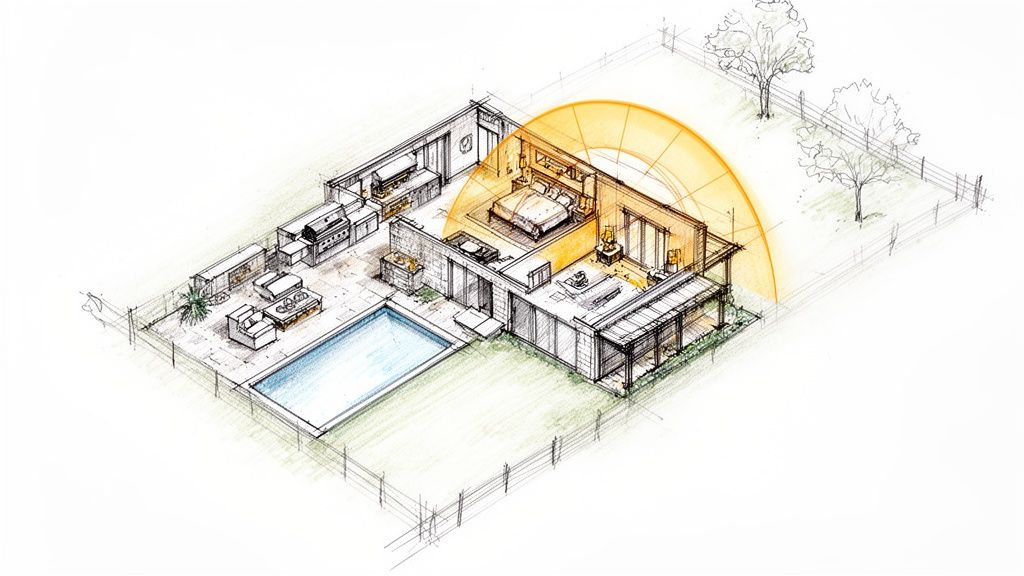
Your home should be a direct reflection of how you actually live. Here in North Texas, that often means embracing wide-open spaces, planning for big family get-togethers, and making the most of our beautiful natural surroundings. An interactive floor plan is the best tool we have to ensure your new custom home or remodel is perfectly suited to your life, whether you’re in the heart of Granbury or on a sprawling property near Glen Rose.
It’s all about moving beyond generic layouts and designing a space that genuinely supports your day-to-day. For a growing family, we might model an open-concept living area where the kitchen flows right into the great room, creating the perfect hub for holidays. If you're building on rural acreage, we can use the model to orient the entire home to maximize views of the rolling hills or position windows to catch the best light.
Tailoring Your Home to Every Stage of Life
No two families are the same, and your home design should reflect your unique needs. Interactive plans make it incredibly simple to model specific features for different stages of life.
For Retirees: We can design and walk through universal design elements right from the start. This means you can see exactly how a curbless, walk-in shower will look and feel in the primary bathroom or confirm that doorways are wide enough for future accessibility needs.
For Families with Unique Needs: Are you thinking about a space that can serve multiple generations? Our guide to dual master suite floor plans covers some popular layouts, and we can easily model any of them in an interactive plan to see what works for you.
For Outdoor Enthusiasts: We can map out an expansive outdoor kitchen and pool area, making sure the flow from your main living space is both beautiful and functional. It’s the key to seamless indoor-outdoor living.
This kind of detailed planning is especially important given the significant investment our clients are making. For Gemini Homes' custom build and remodel clients, interactive floor plans are how we demonstrate the quality and attention to detail we promise, helping you truly see your dream long before we break ground. You can find more insights on how these tools transform the process.
“We used the interactive plan to design our back patio and pool area. Being able to see how it connected to our living room was a game-changer. We ended up adding a large sliding glass door that completely transformed the space. It’s now our favorite part of the house.”– The Thompson Family, Weatherford, TX
This is what it's all about—seeing the real-world impact that comes from getting the design right before you build.
Let's Build Your Vision, Together
So, what's the bottom line? Interactive floor plans aren't just a gimmick or some fancy new tech; they're the bedrock of a modern, transparent, and genuinely client-focused building experience. For us, it’s a non-negotiable part of how we ensure the home we build for you in Granbury or Weatherford is a true reflection of your vision.
This approach takes the guesswork out of the equation. It helps us sidestep the kind of expensive surprises that can completely derail a project and, most importantly, it keeps you in control. It's a key part of our deep commitment to craftsmanship and open communication. Across the home building industry, the data is clear about how these tools boost buyer engagement. As a custom builder, we see that firsthand in a better, more collaborative experience for our clients. You can read more about the benefits of interactive plans at PropertyRender.com.
Your Partner in Building
We believe that building or remodeling your home in North Texas should be an exciting journey, not a stressful one. From our first chat to the final walkthrough, interactive plans give you the clarity and confidence to actually enjoy the process, turning abstract ideas into a concrete vision you can see, explore, and perfect.
When you can virtually walk through your home before a single nail is hammered, you gain an incredible level of confidence in every decision. It’s the difference between hoping for the best and knowing you’re getting it right.
This tool makes us true partners. We can work together, refining every last detail until the layout perfectly fits how your family lives. It ensures that when we finally hand you the keys, your new home already feels like yours—because you’ve been walking through it for weeks.
Answering Your Questions About Interactive Floor Plans
Planning a custom home brings up a lot of questions, especially around the design process. Getting clear answers is key to feeling confident about the path ahead for your family's new home. Here are a few of the most common things we get asked by our clients across Granbury, Weatherford, and North Texas.
How Much Do Interactive Floor Plans Add to the Cost?
This is usually the first thing people want to know, and the answer tends to be a pleasant surprise. When you partner with Gemini Homes for a custom build or a major remodel, the cost of creating your interactive floor plan is simply part of our design and pre-construction service. We don't see it as an optional extra; we see it as a fundamental tool for getting your project right the first time.
Think of it this way: a small investment in meticulous digital planning upfront can easily save you thousands of dollars by catching issues before they become expensive, on-site changes. It's all about ensuring total clarity and efficiency from day one.
What's the Difference Between a 3D Rendering and an Interactive Plan?
That's an excellent question, and it's easy to get the two confused. While they're both great for helping you visualize the final product, they do very different jobs.
A 3D Rendering is a static, picture-perfect image. It’s like a professional photograph of a single room or the front of your house, designed to show you exactly how materials, colors, and lighting will look.
An Interactive Floor Plan, on the other hand, is a dynamic model of your entire home. You can actually walk through the rooms, see how the layout flows, and even test out different furniture arrangements. It's less about a single pretty picture and more about truly understanding the space.
Can I Ask for Changes After I See the Plan?
Absolutely! In fact, that's the whole point. An interactive plan isn't a final command—it's a collaborative blueprint. We fully expect and encourage you to give feedback and request adjustments. When we show new construction options to our clients in places like Glen Rose, these plans are meant to spark conversation. They help you truly feel the space before a single shovel hits the dirt. You can find more details on how this technology improves visualization on PropertyRender.com.
How Long Does It Take to Get the First Draft?
The timeline depends on how complex your project is, but typically, you'll see the first version of your interactive plan within a couple of weeks of our initial design meeting. That first model is our shared starting point. From there, we’ll work closely with you, refining and tweaking it until it's just right.
If you’re ready to see how this process can bring certainty and excitement to your custom home or major remodel, let's schedule a time to talk about your vision.
Comments