
The Ultimate House Building Timeline for Your Custom Home
- scott shipp
- Jan 10
- 16 min read
So, you’re thinking about building a custom home in North Texas. It’s an exciting prospect, but the big question on everyone's mind is always, "How long is this actually going to take?"
The honest answer? In our area, a custom home build typically takes anywhere from 10 to 18 months, from the very first design sketch to the day you move in. This isn't like buying a spec home; it’s a much more personal, detailed journey tailored to your family and your land.
Your Guide to the Custom Home Building Timeline
Building a one-of-a-kind home in places like Granbury or Weatherford is incredibly rewarding. Knowing what to expect, however, is the secret to a low-stress project and making smart decisions along the way.
While building practices have certainly gotten faster over the decades, a modern custom home still requires a significant time investment. For a family building in our area, you can realistically plan on several months for upfront planning, followed by 6 to 12 months of actual construction. The exact duration hinges on your home's size, the complexity of the finishes, and of course, unpredictable factors like North Texas weather and subcontractor schedules.
To get a sense of how much construction has changed over time, the OSHA Education Center offers some great insights into the evolution of the industry.
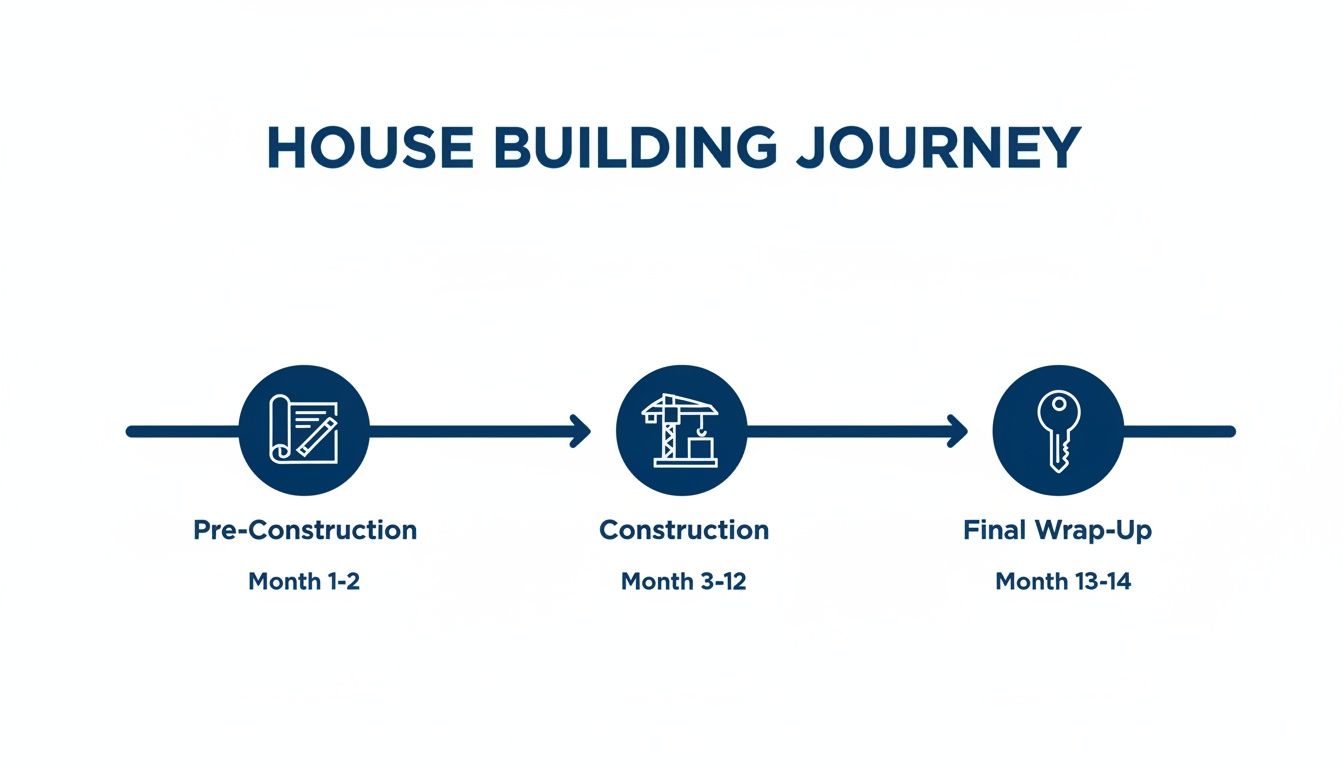
At its core, the entire process unfolds in three distinct stages that you'll work through side-by-side with your builder.
The Three Major Stages of a Custom Build
Pre-Construction: This is mission control for your project. Your vision gets translated into a real, buildable blueprint. This phase covers architectural design, engineering, budgeting, and securing all the necessary permits from local authorities, whether you're in Hood or Parker County.
Active Construction: This is where the magic happens and you see tangible progress. It kicks off with moving dirt and continues through pouring the foundation, framing the structure, installing mechanical systems, and completing all the exterior and interior finishes.
Final Wrap-Up: This is the home stretch. It involves passing final inspections, doing the final walkthrough with your builder to create a "punch list" of any remaining items, and officially closing on your new home. Once every last detail is perfected, you get the keys!
This visual gives you a great overview of how the journey is broken down and how each phase leads to the next.
While the hands-on building takes up the biggest chunk of time, the pre-construction phase is what truly sets the tone for the entire project. Getting this part right is crucial for a smooth and predictable build.
Key Takeaway: A custom build is a marathon, not a sprint. Investing ample time and thought into the pre-construction phase is the single best thing you can do to ensure the rest of the process goes as smoothly as possible.
To give you a clearer picture, here’s a quick breakdown of what you can expect for each stage of a custom home project here in North Texas.
At-a-Glance Custom Home Timeline in North Texas
Phase | Typical Duration | Key Activities |
|---|---|---|
Pre-Construction | 2–6 months | Design development, floor plan finalization, engineering, budgeting, securing financing, and submitting for permits. |
Site Work & Foundation | 2–4 weeks | Clearing the land, grading, utility trenching, forming and pouring the concrete slab or foundation. |
Framing | 3–6 weeks | Erecting the structural skeleton of the home, including walls, floors, and the roof system. |
Exterior & "Rough-Ins" | 4–8 weeks | Installing windows, doors, roofing, and siding. Simultaneously, plumbers, electricians, and HVAC pros run pipes, wires, and ductwork. |
Interior Finishes | 8–16 weeks | Hanging drywall, painting, installing flooring, cabinets, countertops, light fixtures, and plumbing fixtures. This is the longest interior phase. |
Final Wrap-Up | 2–4 weeks | Final inspections, punch list walkthrough, final cleaning, landscaping, and closing. |
This table provides a solid framework, but remember, every custom project is unique. The key is open communication with your builder from day one.
Laying the Groundwork with Pre-Construction Planning
Before a single shovel hits the dirt, the most crucial part of building your custom home gets underway. This is the pre-construction phase, and you can expect it to take anywhere from two to six months. Think of this as creating the master recipe for your home—every single decision made here will directly impact the final cost, schedule, and overall success of your project.
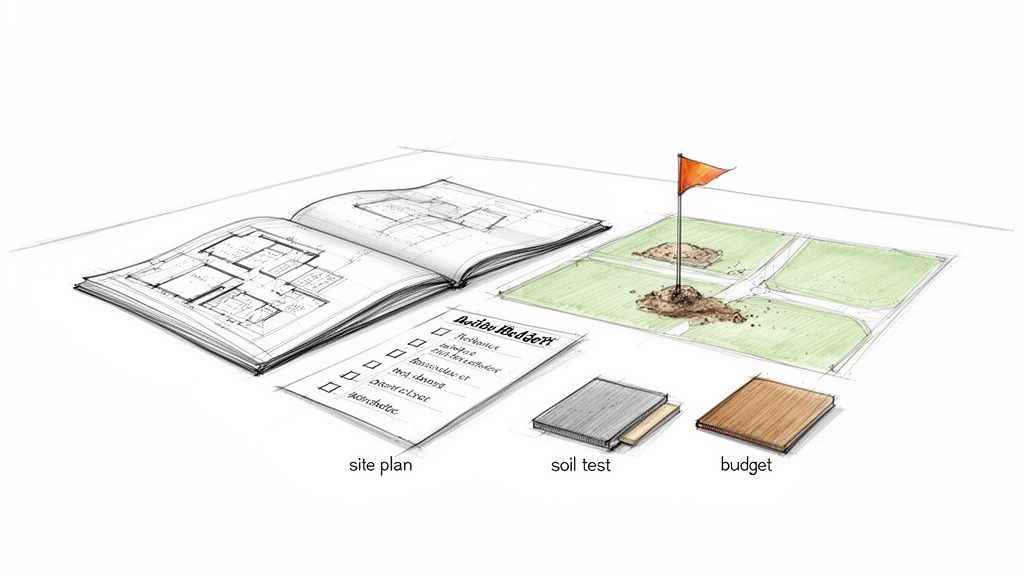
This is where your vision, whether it’s a sprawling family home on acreage in Glen Rose or a quiet retirement spot in Granbury, gets translated into a detailed, buildable plan. It’s a true collaboration between you, your builder, and your architect or designer. We're moving from dreams and ideas to a concrete set of blueprints that nail down every last detail.
From Blueprint to Budget
With a solid design in hand, the next step is building out a transparent and complete budget. A good North Texas builder will walk you through this process, breaking down every cost. This isn't just a ballpark guess; it’s a detailed, line-item budget that accounts for everything from the concrete in the foundation to the final coat of paint. You can dive deeper into this critical step in our guide on how to estimate house building cost in North Texas.
At the same time, essential engineering is happening behind the scenes. Here in our slice of Texas, understanding the soil is non-negotiable. The expansive clay soils common in areas from Weatherford to Cleburne demand specific foundation engineering to ensure your home remains stable for decades. Your builder will also be mapping out site logistics, figuring out utility connections, and planning for property access.
Expert Tip: This phase is your single best opportunity to control costs and prevent delays. A change order to move a wall on paper costs nothing. Moving that same wall after it's been framed can cost thousands of dollars and add weeks to your timeline.
Navigating Selections and Permitting
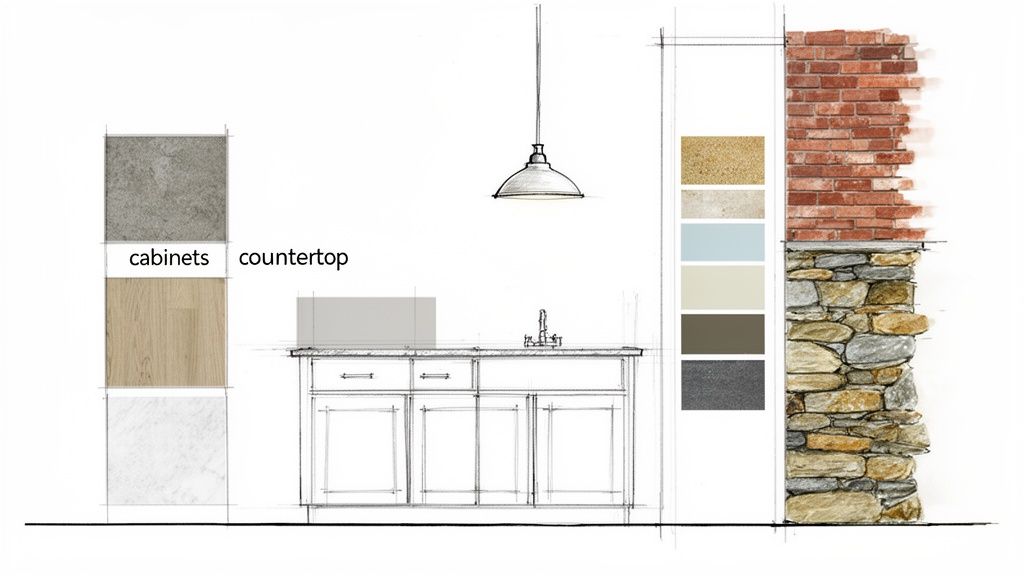
Once the structural plan and budget are set, you get to move on to the fun part: making material selections. While this is one of the most exciting stages for homeowners, it also has a massive impact on the house building timeline.
Here are a few key selections to lock in during pre-construction:
Exterior Finishes: Choosing your brick, stone, siding, and roofing.
Windows and Doors: These items often have long lead times, so ordering them early is a must.
Major Interior Elements: Finalizing cabinet layouts, flooring, and core plumbing fixtures.
Making these decisions upfront gives your builder the green light to place orders and schedule tradespeople well in advance. In a busy market like North Texas, this is what keeps a project moving forward without frustrating and costly pauses.
The final hurdle in the pre-construction stage is the permitting process. Your builder will take the finished plans and submit them to the right city or county office—whether that’s in Hood, Parker, or Johnson County—for approval. This can sometimes take several weeks as officials check the plans for compliance with local building codes. An experienced local builder knows exactly how to prepare a thorough submission package, which minimizes the back-and-forth that can delay your start date.
Today's digital tools, like 3D modeling, have made this planning stage much more efficient. They allow us to create incredibly detailed virtual models of your home, helping us spot potential issues and letting you "walk through" the space before construction begins. It’s no surprise that homeowners who finalize their plans early and avoid major change orders see their projects move along much faster.
Watching Your Home Take Shape During Construction
After months of planning on paper, this is where the magic really happens. The construction phase is where blueprints finally turn into walls, rooms, and a real home. In North Texas, you can expect the actual construction to take anywhere from six to twelve months as your empty lot is transformed.
Think of this part of the process as a carefully managed sequence, where one trade’s work has to finish before the next can begin. It’s an incredibly exciting time to watch, but it also requires a good dose of patience. Progress can feel slow and methodical, and it's always at the mercy of factors like weather and city inspections.
Let’s break down how this critical part of the house building timeline actually unfolds on the ground.
Breaking Ground and Pouring the Foundation
The first real sign of progress is the arrival of heavy machinery. This initial work is all about creating a solid, stable base for your home and usually takes two to four weeks.
It all kicks off with site work. Bulldozers and excavators will clear the land, grade it to ensure water drains away from the house, and dig out the footprint for the foundation. If you’re building on a rural property out near Glen Rose or Stephenville, this is also when a temporary construction driveway might be put in, or connections are made for a well and septic system.
Next up is the single most important structural piece of your home: the foundation. Here in North Texas, our notorious expansive clay soil is the biggest challenge. Your builder will be working off a precise engineering plan to pour a reinforced concrete slab that’s designed to handle that soil movement. This involves setting up complex forms, laying a grid of steel rebar, and placing all the plumbing "stubs" that will eventually service your kitchen and bathrooms.
Local Consideration: North Texas weather is the boss during this stage. A week of heavy spring rain can shut down all foundation work, turning your job site into a mud pit. A good local builder knows to build buffer days into the schedule for this very reason.
Framing the Skeleton of Your Home
Once the concrete foundation has cured and passed its first inspection, the framers come in. This is easily the most dramatic part of the build, taking about three to six weeks. In just a few weeks, that flat slab of concrete explodes into the recognizable shape of a house.
The framing crew gets to work putting up the home’s skeleton, which includes:
Walls and Floors: They'll build all the interior and exterior walls that bring your floor plan to life.
Roof System: Rafters and trusses are installed to create the roofline you designed.
Sheathing: The exterior walls and roof get covered in plywood or OSB (oriented strand board), which adds structural stability.
This is the first time you’ll be able to physically walk through the rooms you’ve only seen on a screen. You can stand in your future kitchen, look out the empty frame that will be your living room window, and finally get a true feel for the scale and flow of your home. It’s a huge milestone.
Getting "Dried-In" and Roughing-In the Systems
With the frame up, the next big push is to protect the structure from the elements. We call this getting "dried-in," which means installing the roof, windows, and exterior doors. As soon as the home is weathertight, the crucial interior work can start without any risk of rain damage.
This flows right into the mechanical, electrical, and plumbing (MEP) rough-in. This complex, behind-the-scenes stage takes four to eight weeks and requires a team of specialized trades working around each other.
Here’s what’s happening inside your walls:
Plumbers run all the water supply lines and drain pipes.
HVAC technicians install all the ductwork for your heating and air conditioning.
Electricians pull miles of wire from the main electrical panel to every future outlet, switch, and light fixture.
It’s called a "rough-in" because it’s all about getting these systems in place before the walls are closed up with insulation and drywall. Once this massive puzzle is complete, everything has to be inspected by the city or county. An inspector will walk the site to make sure all the plumbing, electrical, and mechanical work is up to code before giving the green light to move on to finishes.
Bringing the Vision to Life: Interior and Exterior Finishes
Now the heavy lifting is done. The bones of the house are solid, and the focus shifts from the structural skeleton to the soul of your home. This is the finishing stage, where your personal style truly begins to shine through. This part of the journey typically takes three to four months and is a whirlwind of details.
This is arguably the most exciting part of the entire house building timeline for homeowners. Drywall is up, the guts of the house are hidden away, and all those selections you agonized over months ago finally start appearing. It’s a flurry of activity, with painters, tilers, and carpenters often working alongside each other to bring it all together.
The Method to the Madness: The Interior Sequence
Inside the house, everything happens in a very specific order. You can't install flooring before the drywall and paint are done (unless you love a mess), and you can't set a toilet before the tile is down. Think of it like a carefully choreographed dance.
The typical sequence looks something like this:
Trim & Doors: Finish carpenters install all interior doors, baseboards, window casings, and any crown molding.
Cabinetry: Your kitchen and bathroom cabinets are set in place. This is a huge visual milestone—it's the moment your kitchen starts to feel real.
Painting: With the woodwork installed, painters apply primer and the first coats of paint to walls, ceilings, and trim.
Hard Surfaces: Tile setters start their magic on bathroom floors, shower surrounds, and kitchen backsplashes. Around the same time, flooring crews will begin laying down hardwood, LVP, or other hard-surface flooring.
Once these foundational layers are complete, the pace really picks up as the final, detailed pieces fall into place.
Adding the Sparkle: Final Interior Details
With the major surfaces done, your house quickly transforms. The kitchen suddenly looks functional, and the master bathroom starts to feel like a retreat.
Countertop fabricators will arrive to make a precise template, then return a week or two later to install the granite or quartz. Shortly after, the plumber is back to do the "plumbing trim"—setting sinks, faucets, and toilets. The electrician follows right behind, installing all your light fixtures, ceiling fans, switches, and outlets, finally bringing light and life to every room.
Expert Tip: Material lead times are the biggest wildcard in this phase. That special-order tile or a high-end appliance package can easily have a 12 to 16-week lead time. This is exactly why locking in your selections early is so critical to keeping the project moving smoothly.
Finishing the Look: Exterior & Curb Appeal
While the interior is buzzing with activity, crews are also putting the finishing touches on the outside of your home. Depending on your design, masons might be laying beautiful, locally sourced Austin stone or classic brick. For a family building a modern farmhouse in Weatherford, this might mean crisp white board-and-batten siding paired with a striking dark metal roof.
The final exterior steps are all about creating that perfect curb appeal. This is when the concrete is poured for your driveway, walkways, and patios. To complete the picture, landscapers come in to grade the yard for proper drainage, lay down sod, and install the plants and trees that will anchor your home to the property.
For those of you on larger, rural properties in places like Glen Rose or Tolar, this stage could also include final grading for long driveways, installing gates, or finishing out a matching barn or workshop. Every choice helps create a cohesive look that feels right at home in the North Texas landscape.
Managing the Twists and Turns of Your Timeline
Even the most perfect-on-paper plan will meet the real world. Building a home is a dynamic process, and a realistic house building timeline is all about knowing how to handle the inevitable curveballs.
Understanding what can stretch your schedule is the secret to staying on track. For anyone building in Granbury, Weatherford, or anywhere in North Texas, a few specific challenges pop up time and time again. A seasoned builder sees these coming and bakes contingencies into the schedule from day one.
Unpredictable North Texas Weather
Our weather here is famous for its drama. A solid week of spring thunderstorms can bring all foundation work to a dead stop, turning a well-oiled schedule into a frustrating waiting game. On the flip side, that blistering summer heat can mess with concrete curing times and limit how long crews can safely work outside.
We can't change the weather, but an experienced builder knows how to manage its impact. This means building "buffer days" into the schedule for critical outdoor phases and having a Plan B to pivot to interior work if the forecast looks ugly.
Supply Chain and Subcontractor Scheduling
The North Texas construction market is hot. With so much building happening, labor and materials are in extremely high demand, which can create bottlenecks. A few years ago, we could get trades on-site in a few days; now, it’s not uncommon for some to be booked out 4–12 weeks in advance, especially in high-growth areas. Check out the latest construction spending trends from the U.S. Census Bureau to see the data for yourself.
This pressure trickles down to your project, showing up as long lead times for things like windows, HVAC equipment, or specialty materials.
The solution is to make decisions early and work with a builder who has deep local roots. When you lock in selections during pre-construction, your builder can get long-lead-time items ordered months ahead of schedule. A builder with a solid reputation also has a go-to network of subcontractors they can rely on, even when things get busy.
Permitting Delays and Change Orders
Before a single shovel hits the dirt, your plans have to get the green light from the local city or county. In busy areas like Parker or Hood County, permitting offices can get swamped, sometimes tacking on unexpected weeks to your pre-construction phase.
The other major wildcard—and the one you have the most control over—is the change order. It might seem simple to move a wall or add a window after framing is up, but the ripple effects are huge. It can trigger new engineering reviews, stop all progress while plans are redrawn, and throw the entire trade schedule into chaos.
Key Takeaway: The single most effective way to protect your timeline is to finalize every decision before construction begins. An extra week of planning upfront can save you months of delays and thousands of dollars down the road.
To really get a handle on this critical part of the process, check out our guide on mastering construction change order management.
The table below breaks down these common hurdles and shows how a strong builder-homeowner team can tackle them head-on.
Common Timeline Factors and How to Manage Them
Factor | Potential Timeline Impact | Homeowner & Builder Solution |
|---|---|---|
Weather | 1-4 week delays | Build buffer days into the schedule; be flexible with sequencing exterior vs. interior tasks. |
Material Delays | 2-12 week delays | Finalize all material selections during pre-construction to allow for early ordering of long-lead-time items. |
Subcontractor Availability | 1-8 week delays | Work with a builder who has established, long-term relationships with trusted local tradespeople. |
Change Orders | 1-6 week delays (per change) | Invest time in detailed planning; finalize the design completely before breaking ground. |
Ultimately, the best tool for navigating any challenge is simply open and honest communication. A quick conversation with your builder can provide clarity and ensure everyone is working together toward the same goal.
Almost There: The Final Stretch to Move-In Day
The finish line is finally in sight, and you can practically feel the keys in your hand. This last phase is all about the little details that turn a house into your home. It usually takes about two to four weeks and involves a series of official sign-offs, careful reviews, and final tweaks to make sure everything is perfect.
At this point, the heavy equipment is long gone. The focus shifts entirely to precision and making sure your new home meets not only your expectations but also the strict building codes here in North Texas.
Getting the Official Green Light: The Certificate of Occupancy
Before you can legally move in, the city or county has to give its final blessing. An inspector will come out for one last comprehensive look, checking everything from wiring and plumbing to safety features. They're making sure every bit of work was done to code.
Once your home passes this crucial inspection, the building authority issues a Certificate of Occupancy (CO). Think of this as the home’s official birth certificate—it’s the document that legally certifies the property is safe and ready to be lived in. You can't move in without it.
The Final Walkthrough and the "Punch List"
With the CO secured, it's time for one of the most important moments of the entire project: your final walkthrough with the builder. Together, you'll go through the house room by room, looking closely at every detail. The goal here is to create a "punch list," which is simply a list of any minor fixes or adjustments that need to be made.
This is your chance to spot the small stuff that makes a big difference. You might notice things like:
A paint scuff on a wall that needs a quick touch-up.
A cabinet door that hangs just a little crooked.
A tiny scratch on a light fixture.
An interior door that sticks when you try to close it.
Expert Tip: A great builder wants you to be picky here. While a short punch list is a testament to their team's quality work, their real goal is to make you happy. Don't feel bad about pointing things out—that’s exactly what this meeting is for.
To make sure you don't miss anything, it helps to go in with a plan. Our guide is a fantastic new construction home inspection checklist for North Texas that can help you feel confident and prepared for your walkthrough.
Cleanup, Closing, and Handing Over the Keys
While the crew is busy knocking out the items on your punch list, the final cleanup begins. All leftover materials and debris are hauled away, and the inside of the home gets a professional deep clean. The property goes from being an active construction zone to the clean, beautiful home you’ve been dreaming of.
The very last step is the closing. You'll meet to settle up the final financial details with your lender and the builder. Once the papers are signed and the funds are transferred, that incredible moment finally arrives—you get the keys to your new custom home.
Frequently Asked Questions About Building a Home
If you're thinking about building a home, you've probably got a lot of questions. That’s completely normal. Here are some of the most common things we hear from families building in Granbury, Weatherford, and across North Texas, along with some straight-to-the-point answers.
Can I Make Changes After We've Started Building?
The short answer is yes, but it comes with serious caveats. Any change you make once we've broken ground is documented as a change order, and it will almost always impact your budget and your move-in date.
A minor tweak might not be a big deal. But something substantial, like deciding to move a wall or reconfigure a bathroom, can bring things to a screeching halt. We might have to pause work while new plans are drawn up, permits are revised, and subcontractors are rescheduled. To keep your project on budget and on schedule, the absolute best thing you can do is lock in every single detail before the first shovel hits the dirt.
How Much Do Weather Delays Really Affect the Timeline?
Here in North Texas, the weather is the one thing no one can control. Heavy spring rains can turn a job site into a mud pit, stopping all foundation and excavation work for days. On the flip side, the blistering summer heat can affect how concrete cures and limit the hours crews can safely work.
Any builder worth their salt will have some buffer days built into the schedule, especially for the early, weather-dependent phases. But even with the best planning, an unusually long stretch of bad weather is going to cause delays. When that happens, good communication is everything. Your builder should be upfront about the impact and how they plan to get back on track.
A fully custom home, designed from scratch, typically takes 10-18 months due to the in-depth design, engineering, and selection process. A semi-custom home, which starts from a builder's existing plan that you modify, can shorten the overall timeline by a few months.
When Do I Need to Finalize My Material Selections?
In a perfect world, every single one of your material selections—from flooring and light fixtures to countertops and paint colors—would be finalized before construction begins.
This gives your builder a huge advantage. It means they can order items with long lead times, like custom windows or cabinetry, so they arrive right when they're needed. Being decisive and making your choices early is one of the biggest contributions you can make to keeping the project running smoothly and avoiding frustrating delays.
Building a home is a marathon, not a sprint, and having the right team in your corner makes all the difference. If you're ready to talk about your vision and want a realistic timeline for your specific project, we're here to help you get started. Explore our process at https://www.geminihomesgranbury.com to see how we can bring your dream to life.
Comments