
The Essential Fall Home Maintenance Checklist for North Texas Homeowners
- scott shipp
- Jan 16
- 17 min read
As the relentless Texas summer finally gives way to cooler breezes, homeowners from Granbury to Glen Rose can breathe a collective sigh of relief. But this welcome shift signals a critical time for home prep. Fall isn't just for enjoying milder weather; it's the prime season to prepare your property for the unpredictable winter ahead. A comprehensive fall checklist home maintenance plan is your best defense against costly surprises, protecting your home’s value and ensuring your family stays comfortable and safe through the colder months.
North Texas weather can swing wildly, from pleasant autumn days to sudden freezes that wreak havoc on unprepared homes. Neglecting routine tasks like gutter cleaning or sealing drafts can lead to major issues like roof leaks, foundation damage from improper drainage, or skyrocketing energy bills. For owners of custom homes, ranches in rural Hood County, or properties with extensive outdoor living spaces, these seasonal preparations are even more crucial for safeguarding a significant investment.
This guide is a strategic, step-by-step plan tailored for our unique North Texas climate and local building styles—from historic homes in Weatherford to modern barndominiums in the surrounding countryside. We’ll cover everything you need to inspect, repair, and prepare before the first frost arrives, clarifying when a simple DIY fix is sufficient versus when it’s time to call a professional.
1. Inspect and Clean Gutters and Downspouts
Of all the tasks on your fall maintenance checklist, managing your gutters is one of the most critical in North Texas. As our oak, pecan, and elm trees shed their leaves, your gutters can quickly become clogged. This seemingly minor issue can lead to major problems. A gutter system is designed to channel thousands of gallons of rainwater away from your home's foundation. When it's blocked, water overflows, which can cause foundation damage, wood rot along the fascia, and even create a welcoming environment for pests.
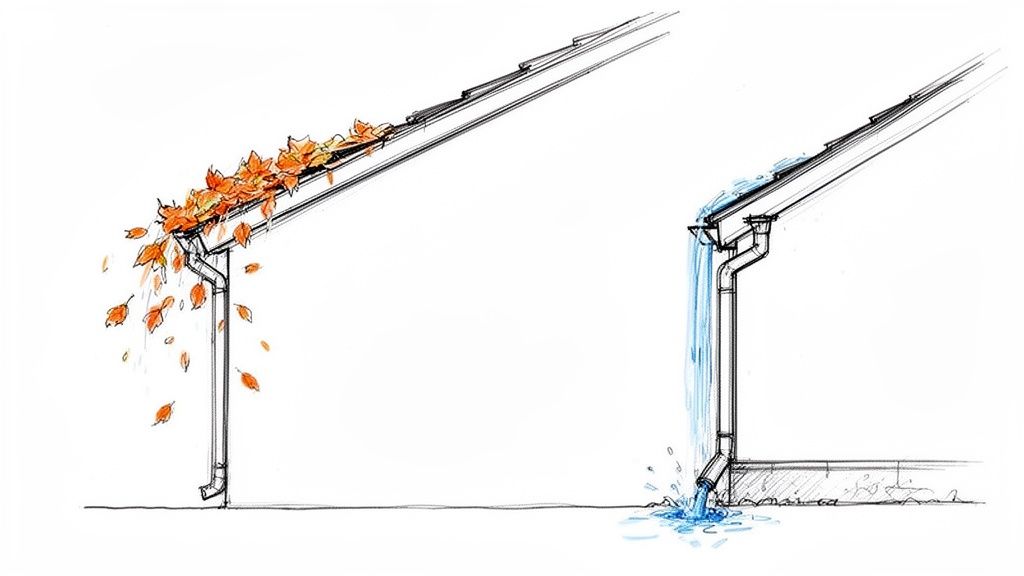
During North Texas's unpredictable winter, a clogged gutter can also lead to ice dams. These ridges of ice form at the edge of your roof and prevent melting snow or rain from draining properly. The backed-up water can seep under your shingles and into your home, causing significant damage to your roof, attic, and interior walls. This is a common but preventable issue for local homeowners.
Gutter Maintenance Tips for North Texas Homes
Timing is Key: Plan to clean your gutters after most of the leaves have fallen, typically from late October through November in the Granbury and Weatherford areas.
Safety First: Before getting on a ladder, inspect it to ensure it's stable and have someone spot you. For steep or two-story roofs, hiring a professional service is the safest choice. Professional cleaning can range from $150 to $350, depending on your home's size and height.
Check the Flow: After removing debris, flush the gutters and downspouts with a hose. This clears out small particles and confirms that water is flowing freely, discharging at least 4-6 feet away from your foundation.
Consider Upgrades: If you live on a heavily wooded lot, investing in high-quality gutter guards can significantly reduce debris buildup, saving you time and effort in the long run.
While inspecting, you might notice sagging gutters or damaged fascia. If you find issues beyond a simple cleaning, it’s a good idea to get a professional assessment to prevent costly repairs after a winter storm.
2. Roof Inspection and Repair
Your roof is your home's primary shield against the elements, and in North Texas, it takes a beating. The transition from intense summer heat and hail storms to the windy, wet conditions of winter can expose hidden vulnerabilities. A thorough roof inspection is a non-negotiable part of any fall home maintenance plan, designed to catch minor issues before they escalate into major leaks or structural damage.
Fall is the ideal time to address damage from the summer storm season. From Weatherford to Glen Rose, hail is a common culprit, leaving behind cracks, dents, and missing granules that compromise a shingle's integrity. Identifying and repairing this damage promptly not only prevents leaks when winter rains arrive but also positions you to handle any necessary insurance claims before deadlines expire. For example, after a significant hailstorm in Granbury last year, we worked with several families who discovered storm damage during their fall inspection, allowing them to file claims just in time.
Roof Maintenance Tips for North Texas Homes
Schedule Strategically: The best time for an inspection is early fall, after the summer storm season has passed but before the weather turns cold and damp. This gives you a clear window to complete any needed repairs.
Ground-Level Assessment: You can spot many potential problems safely from the ground. Use binoculars to look for missing or cracked shingles, dark streaks indicating algae, and damaged flashing around chimneys, vents, and skylights.
Document Everything: Keep a detailed record of your roof's condition, including photos. This documentation is invaluable if you need to file an insurance claim. If you suspect storm damage, understanding the North Texas roof insurance claim process is a crucial first step.
Prioritize Professional Help: While a ground check is useful, only a qualified professional should get on your roof. They can safely assess its condition, identify subtle signs of wear, and provide a detailed estimate for repairs, ensuring the work is done correctly.
A proactive approach to roof maintenance is far less expensive than reacting to an emergency leak in the middle of a winter storm.
3. Check and Seal Windows and Doors
As crisp autumn air arrives in North Texas, so do the drafts that find their way into our homes. Checking and sealing your windows and doors directly impacts your comfort and your utility bills. Gaps in caulk and worn-out weather stripping allow expensive heated air to escape and chilly drafts to enter, forcing your HVAC system to work overtime.
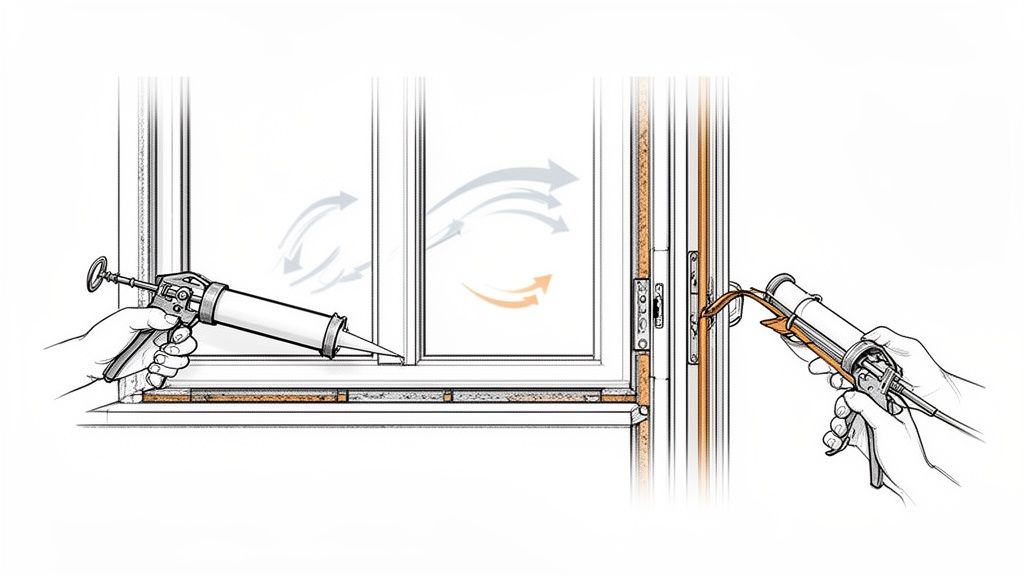
This task is particularly important for the diverse housing stock around Granbury and Weatherford. Many charming older homes can lose significant heat through original windows and doors. Even in new custom homes, the intense Texas sun can cause sealant materials to shrink and crack over time. A few hours spent sealing these gaps can translate to substantial savings on winter heating costs—often 10-20% according to the Department of Energy.
Window and Door Sealing Tips for North Texas Homes
Perform a Draft Test: On a breezy day, close all windows and doors. Carefully move a lit incense stick around the frames and sashes; watch for the smoke to be drawn into or pushed away from gaps.
Choose the Right Sealant: Use a high-quality, paintable, silicone-based caulk for exterior gaps. It offers the flexibility needed to withstand North Texas's temperature swings. For moving parts like the bottom of a door, install new weather stripping.
Proper Preparation is Key: For the best seal, completely remove any old, cracked caulk with a utility knife before applying a fresh bead. The surface must be clean and dry.
Watch the Weather: Plan your sealing project for a dry day when the temperature is expected to stay above 50°F. This ensures the caulk can cure properly and create a durable bond.
Addressing drafts is one of the most cost-effective ways to improve your home's energy efficiency. If you find significant rot or damage around your window frames, it may indicate a larger issue that needs a professional assessment.
4. Service HVAC System and Replace Filters
Your home’s HVAC system is the unsung hero of North Texas comfort. Adding an HVAC service to your fall checklist is a proactive step that ensures your furnace is ready for the first cold snap. A professional tune-up addresses potential issues, cleans critical components, and verifies that the system operates safely, preventing costly breakdowns and high energy bills. The cost of a tune-up, typically $80-$150, is a small price to pay to avoid a no-heat emergency.
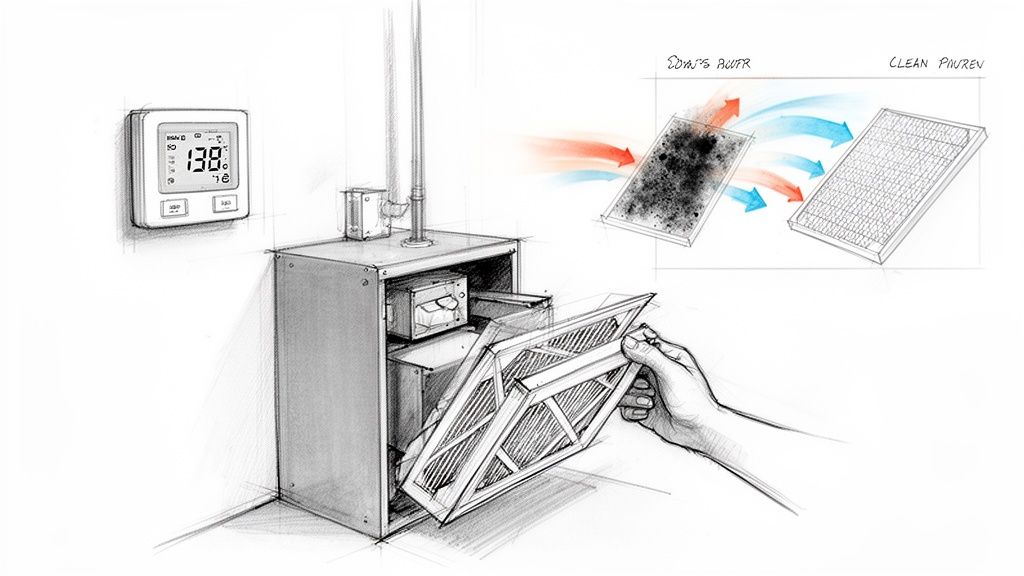
From high-efficiency systems in new custom homes around Weatherford to specialized units on rural ranches, every HVAC system benefits from seasonal maintenance. During the transition from cooling to heating, a technician can spot worn parts, check for carbon monoxide leaks, and ensure your ductwork is delivering heat effectively. For families with young children or retirees, ensuring the system is safe and reliable is a top priority.
HVAC Maintenance Tips for North Texas Homes
Schedule Early: Book your professional HVAC service in September or early October. HVAC contractors in the Granbury area get extremely busy once the first cold front arrives.
Filter Diligence: Replace your furnace filter at least every 90 days, or monthly if you have pets or allergies. A clean filter can improve efficiency by 5-15%.
Clear the Area: Keep the area around your indoor furnace and outdoor unit clear of debris, leaves, and storage items. Ensure all vents inside are unblocked by furniture or rugs for optimal airflow.
Consider a Plan: Ask your HVAC company about annual service plans. These often provide priority scheduling and discounts, offering peace of mind throughout the year.
A professional inspection can also identify other energy-saving improvements. For instance, ensuring your ductwork is properly sealed and insulated is highly effective. You can discover how insulating HVAC ducts in our North Texas guide can lead to significant comfort and savings.
5. Trim Trees and Remove Dead Branches
The majestic oak and pecan trees that define properties in Granbury and Glen Rose are a beautiful asset, but they also require attention. Fall is the perfect time to prune these trees, removing dead or weakened branches before the harsh North Texas winter sets in. Heavy ice, snow, and high winds can easily snap compromised limbs, sending them crashing onto your roof, vehicles, or power lines.
This proactive maintenance isn't just about preventing damage; it's also about preserving the health and longevity of your valuable trees. Removing dead wood prevents decay from spreading and allows the tree to direct its energy toward healthy growth. For rural acreage and ranch properties with numerous mature trees, a professional assessment can be a crucial investment in property safety. The cost for a professional arborist can range from a few hundred dollars for simple pruning to over a thousand for large, complex jobs.
Tree Maintenance Tips for North Texas Homes
Professional Assessment: Before you start cutting, consider having a certified arborist inspect your trees. They can identify disease, structural weaknesses, and recommend a strategic pruning plan.
Safety First: For any branches you can't reach safely from the ground with a pole saw, hire a professional. This is especially true for branches near power lines.
Know What to Cut: Focus on removing dead, damaged, or diseased limbs first. Also, trim branches that are crossing or rubbing against each other, as this creates wounds that can invite pests.
Protect Your Home: Pay special attention to branches hanging over your roof. Trimming them back not only prevents impact damage during a storm but also reduces leaf buildup in your gutters.
Avoid Over-Pruning: A good rule of thumb is to never remove more than 25% of a tree's canopy in a single season. Aggressive "topping" can stress the tree and lead to weak growth.
Proper tree care is a critical step in protecting your largest investment. If a winter storm does cause tree damage, having a trusted partner who can navigate both the repairs and the insurance claim process is invaluable.
6. Inspect Foundation and Address Cracks
In North Texas, our relationship with the soil is complex. The expansive clay soil common throughout the Granbury and Weatherford areas swells with moisture and shrinks dramatically during dry spells. This constant movement puts immense stress on your home's foundation, making a fall inspection crucial. As cooler, wetter weather arrives, existing issues can worsen, turning small cracks into significant structural problems.
Addressing foundation concerns early protects your home's structural integrity. Overlooking signs of settling or water intrusion can lead to a cascade of issues, from sticking doors to severe damage that requires expensive hydraulic piering. On a recent remodel in Aledo, we discovered that what the homeowner thought was a minor crack was actually a sign of significant moisture issues that, once corrected, solved several other "mystery" problems inside the house.
Foundation Inspection Tips for North Texas Homes
Walk and Watch: Regularly walk the perimeter of your home and inspect the basement or crawl space. Look for new cracks in the concrete slab or brick veneer. Mark any small cracks with dated tape to monitor for growth.
Know Your Cracks: Vertical cracks are often due to normal concrete curing, but horizontal cracks can indicate hydrostatic pressure and require immediate professional assessment. Any crack wider than a quarter-inch warrants a call to a structural engineer.
Manage Moisture: The single most important factor is consistent soil moisture. Ensure your downspouts and grading direct all water at least 4-6 feet away from your foundation. During dry fall periods, consider using a soaker hose to maintain a stable moisture level around your home's perimeter.
Professional Assessment: Don't guess when it comes to your foundation. An engineer can distinguish between normal settling and a problem that needs correction, providing a clear path forward before you engage with a repair company. An initial consultation typically costs between $300 and $700.
If your inspection reveals related issues like poor drainage or cracked siding, it may be time to consult with a contractor who understands the unique challenges of North Texas properties.
7. Clean and Inspect Exterior Walls and Siding
The humid climate in North Texas can encourage the growth of algae, mildew, and mold on siding, brick, and stone. Beyond being an eyesore, this buildup can trap moisture against your home’s surfaces, leading to deterioration. A thorough cleaning and inspection in the fall prevents long-term damage before winter arrives.
Neglecting this task allows moisture to penetrate small cracks. When temperatures drop in Granbury and Weatherford, this trapped water can freeze and expand, turning minor flaws into significant problems like cracked brick mortar or warped siding. This proactive step protects the integrity of your exterior and maintains your home's curb appeal, which is especially important for custom homes that feature high-quality materials.
Exterior Wall Maintenance Tips for North Texas Homes
Use the Right Pressure: Not all surfaces can handle high-pressure washing. Use a low-pressure setting or a soft-wash technique for materials like cedar, stucco, or older brick to avoid causing damage.
Test First: Always test your cleaning solution and pressure washer on a small, inconspicuous area first to ensure it doesn't cause discoloration.
Work from Top to Bottom: Wash your home from the top down and always direct the spray at a downward angle. This prevents water from being forced up and behind siding panels.
Inspect While You Clean: As you work, look for cracked caulk around windows, damaged siding panels, or areas where mortar may be crumbling. These are weak points where moisture can infiltrate.
Treat Mold and Mildew: If you find significant mildew, pre-treat the area with an appropriate cleaner before washing. This ensures the growth is killed at the root.
While cleaning, you might uncover issues that require professional attention, such as wood rot. If the problems seem extensive or involve areas you can't safely reach, it’s best to consult an expert.
8. Test Sump Pump and Assess Drainage
While North Texas isn't known for constant basement flooding, our intense downpours can quickly overwhelm a home's drainage system. A sump pump is your last line of defense against groundwater intrusion, protecting your foundation and any finished lower-level spaces. Including this check in your fall maintenance routine ensures this critical piece of equipment is ready for winter and spring storms.
A failed sump pump during a heavy storm can lead to thousands of dollars in damage. For properties in lower-lying areas around Lake Granbury or along the Brazos River, a functional sump pump is a necessity. This autumn task is about proactive protection for your home's structural integrity.
Sump Pump and Drainage Tips for North Texas Homes
Perform a Manual Test: The easiest way to check your sump pump is to pour a five-gallon bucket of water into the sump pit. The pump should activate automatically, expel the water, and shut off smoothly. If it fails to turn on or makes unusual noises, it needs professional attention.
Inspect the Discharge Line: Ensure the pump's discharge pipe is clear of obstructions and directs water at least 4-6 feet away from your foundation. Confirm the line is graded to drain completely to prevent freezing during a hard winter freeze.
Plan for Power Outages: North Texas storms can often knock out power. A battery backup system or a connection to a home generator is a smart investment that provides uninterrupted protection.
Clear the Pit: Before you test the pump, remove any dirt, gravel, or debris from the bottom of the sump pit. This sediment can clog the pump's intake and cause it to burn out prematurely.
If your pump test reveals issues or you notice signs of moisture in your crawl space or basement, it's a clear signal to act. Addressing drainage problems in the fall prevents a mid-winter emergency.
9. Winterize Outdoor Faucets and Irrigation Systems
A sudden North Texas cold snap can be devastating to your home's exterior plumbing. One of the most critical tasks on any fall checklist is winterizing your outdoor faucets and irrigation systems. When water freezes inside a pipe, it expands with incredible force, easily bursting metal and plastic lines. This can lead to silent leaks inside your walls or a major flood in your yard.
In the Granbury and Weatherford areas, where many properties have extensive landscaping, the risk is even greater. Ranch properties often rely on complex irrigation networks that need protection. Taking a few proactive steps in the fall prevents expensive emergency calls to a plumber in the dead of winter.
Winterization Tips for North Texas Homes
Timing is Key: The best time to winterize is after your final lawn watering but before the first hard freeze, which typically occurs in November in North Texas.
Disconnect and Drain: Remove all garden hoses from your outdoor spigots. Drain them completely and store them in a garage or shed.
Shut Off the Supply: Locate the interior shut-off valve for each exterior faucet (usually in a basement or crawl space). Turn it off. Then, go outside and open the faucet to let any remaining water drain out.
Irrigation Systems: For sprinkler systems, you must shut off the main water supply and drain the lines. Many modern systems require a professional to "blow out" the lines with an air compressor to ensure no water is left to freeze. This service typically costs between $75 and $200.
Add Protection: For extra security, install insulated foam covers over your outdoor faucets. They are inexpensive and provide an excellent thermal barrier.
Protecting your outdoor plumbing is a simple task that offers significant peace of mind. If you are unsure how to locate your shut-off valves, bringing in a professional is a wise investment.
10. Inspect and Repair Deck and Outdoor Living Structures
Your deck, pergola, and other outdoor living spaces are extensions of your home, and they need seasonal attention to endure North Texas weather. Fall provides the ideal window to inspect these structures before the cycle of winter moisture can cause hidden damage. A thorough inspection now prevents minor issues like a loose board from escalating into major structural problems.
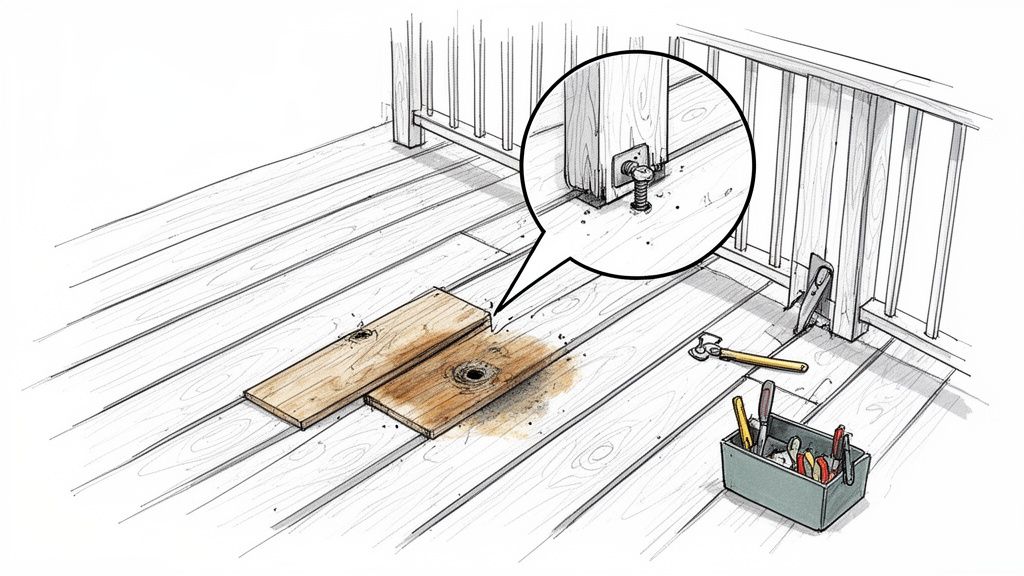
Exposure to the intense Granbury sun and heavy spring rains can weaken wood fibers and degrade sealants. If left unaddressed, this deterioration accelerates during winter. Moisture can seep into unprotected wood, leading to rot, or freeze within cracks, compromising the structural integrity of posts and railings. This is a critical task, especially for retirees who spend a lot of time outdoors or families who use their decks for entertaining.
Outdoor Structure Maintenance Tips for North Texas Homes
Perform a Physical Inspection: Walk the entire deck, feeling for soft spots that indicate rot. Firmly push on all railings and posts to check for any wobble or movement.
Check the Foundation: Inspect the footings and support posts where they meet the ground. Look for signs of soil erosion or settling.
Examine All Surfaces: Look for gaps between deck boards and check stair treads to ensure they are securely attached. Clear all leaves and debris from between boards to prevent moisture traps.
Seal and Protect: If your sealant or stain is faded, fall is the perfect time to clean the surfaces and reapply a protective coat. This crucial step prevents moisture penetration. You can learn more about which materials last longest in our climate by exploring a deck building materials comparison for your North Texas home.
If your inspection reveals significant structural movement or widespread rot, it’s best to get a professional assessment. Addressing these problems before winter will prolong the life of your outdoor space and keep it safe.
10-Point Fall Home Maintenance Comparison
Task | Implementation complexity | Resource requirements | Expected outcomes | Ideal use cases | Key advantages |
|---|---|---|---|---|---|
Inspect and Clean Gutters and Downspouts | Low–Medium (DIY possible; working at heights) | Ladder, gloves, scoop, hose; optional professional service | Clear drainage; reduced foundation/fascia damage; fewer ice dams | Fall leaf season; wooded properties; pre-winter rain | Low-cost prevention; protects foundation and exterior trim |
Roof Inspection and Repair | Medium–High (roof access; pros recommended) | Roofing contractor, inspection tools, replacement materials | Detects leaks and damage; extends roof life; insurance documentation | After storms; older roofs; pre-winter maintenance | Prevents interior water damage; supports claims and resale |
Check and Seal Windows and Doors | Low (DIY friendly; attention to detail) | Caulk, weatherstripping, basic tools; dry weather | Reduced drafts; improved energy efficiency; lower heating bills | Drafty rooms; older homes; pre-heating season | Inexpensive; immediate energy and comfort gains |
Service HVAC System and Replace Filters | Medium (professional recommended for full service) | Filters, HVAC technician, diagnostic tools | Reliable heating, improved air quality, better efficiency | Before heating season; unpredictable climates | Prevents breakdowns; improves air quality and efficiency |
Trim Trees and Remove Dead Branches | Medium–High (may need arborist and equipment) | Pruners/chainsaw, arborist, debris removal | Reduced branch-fall risk; healthier trees; protected structures | Mature trees near roofs/power lines; storm-prone periods | Prevents property damage; improves tree health and safety |
Inspect Foundation and Address Cracks | Medium–High (may require engineer/professional repair) | Inspection tools, structural engineer, foundation contractors | Early detection of settling/cracks; protects structural integrity | Homes on clay soil; visible cracks; older foundations | Prevents major structural failure; protects home value |
Clean and Inspect Exterior Walls and Siding | Low–Medium (DIY or pro; care required) | Pressure washer/soft-wash supplies, cleaners, ladder or pro | Removes mold/soiling; detects siding damage; preserves finish | Humid/rainy areas; pre-paint or pre-winter inspection | Improves curb appeal; prevents moisture-related decay |
Test Sump Pump and Assess Drainage | Low–Medium (simple tests; repairs may need pro) | Sump pump, water for test, check valve, battery backup | Confirms pump function; reduces flood risk; better drainage | Finished basements; low-lying lots; before rainy season | Inexpensive test; prevents catastrophic flooding |
Winterize Outdoor Faucets and Irrigation Systems | Low–Medium (DIY possible; complex systems need pros) | Shutoff valves, drain tools, air compressor for irrigation | Prevents frozen/burst pipes; protects irrigation equipment | Pre-freeze; homes with irrigation, pools, outdoor plumbing | Low-cost prevention; avoids costly water damage repairs |
Inspect and Repair Deck and Outdoor Living Structures | Medium (inspection skills; some structural repairs need pros) | Hand tools, replacement materials, contractor for major work | Safer decks, extended lifespan, early repair of defects | Outdoor living areas; pre-winter; after heavy use/storms | Prevents failures; preserves outdoor investment and safety |
Your Partner in Protecting Your Granbury-Area Home
Navigating this fall home maintenance checklist is one of the most powerful actions you can take as a Granbury-area homeowner. It's an investment not just in your property's value, but in the long-term health, safety, and comfort of the place you call home. Completing these tasks is about shifting from a reactive mindset—fixing problems as they arise—to a proactive one where you prevent them from ever happening. This approach protects your home from the specific challenges of a North Texas winter, from sudden freezes to high winds that test the integrity of your roof.
Think of this checklist as a strategic annual review of your home's core systems. By dedicating a few weekends this autumn to tasks like cleaning gutters, sealing air leaks, and servicing your HVAC, you are directly contributing to lower utility bills, a more comfortable home, and the prevention of costly failures down the road. It’s the difference between a minor caulk repair now and a major water damage restoration project later.
From Checklist to Action: The True Value of Maintenance
The real power of this fall checklist home maintenance guide lies in its ability to reveal the bigger picture. As you inspect your property, you might notice patterns. Perhaps the sealant around your windows is consistently failing, suggesting it’s time for an upgrade. Or maybe the annual deck staining is becoming a losing battle against rot, indicating a more durable composite material might be a better long-term investment.
This process transforms routine maintenance into a strategic plan for your home's future. It helps you identify which components are performing well and which are nearing the end of their service life. This knowledge is invaluable, especially for families in growing communities like Weatherford and Glen Rose, retirees settling into their forever homes, or ranchers managing multi-structure properties. It allows you to budget intelligently for future upgrades and remodels, ensuring your home continues to meet your family’s needs for years to come.
Key Insight: Proactive fall maintenance is not just about avoiding winter damage; it's about gathering critical information to make smarter, more cost-effective decisions about your home's long-term care and improvement.
Knowing When to Call for Professional Expertise
While many tasks on this checklist are well within the reach of a determined DIY homeowner, the most critical takeaway is recognizing your limits. Certain jobs carry risks to both your personal safety and your home’s structural integrity. Tasks involving heights, complex electrical or HVAC systems, or potential storm damage are best left to seasoned professionals.
If your roof inspection reveals more than just a few loose shingles, or if you uncover foundation cracks that seem to be worsening, it’s a clear signal to call for a professional assessment. A misdiagnosis could lead to far more significant problems. Similarly, if your annual deck check-up uncovers widespread rot or unstable supports, a simple repair may no longer be sufficient. This is where a trusted local contractor becomes your most important partner. An expert can provide a definitive diagnosis, outline clear solutions, and help you navigate complex processes like an insurance claim. Investing in professional help for these critical areas is the wisest decision you can make.
When your fall maintenance uncovers a need for expert roof repair, a significant remodel, or a brand-new outdoor living space, our team is here to help. Contact Gemini Homes for a professional consultation to discuss how we can protect and enhance your North Texas property.
Comments