
Deck Building Materials Comparison: Choosing the Best for Your North Texas Home
Building a deck in North Texas isn't just about adding value to your home; it's about crafting the backdrop for your family's lifestyle. When it comes to a deck building materials comparison, the whole conversation boils down to one central question: what's more important to you, upfront cost and appearance or long-term maintenance and durability? Your answer will shape how you use and enjoy your outdoor space for decades.
Choosing the Right Deck Material for North Texas Weather
Let's be honest, the North Texas climate is tough on building materials. Between the scorching summer sun in Weatherford and the damp, humid seasons around Lake Granbury, your deck will take a beating. This guide offers a straightforward, side-by-side look at the most popular decking options available today, from classic pressure-treated pine to high-tech composite and PVC. We'll get into the real-world costs, how each one holds up to our weather, and what it takes to keep them looking great.
My goal is to give you the clarity you need to pick a material that truly fits your life. Maybe you need a splinter-free surface for the kids to run around on, a zero-fuss retreat for your retirement years, or something tough enough for a sprawling rural property in Glen Rose. It’s the same mindset we apply to any outdoor project, which you can read more about in our homeowner’s guide to extending your covered patio in North Texas.
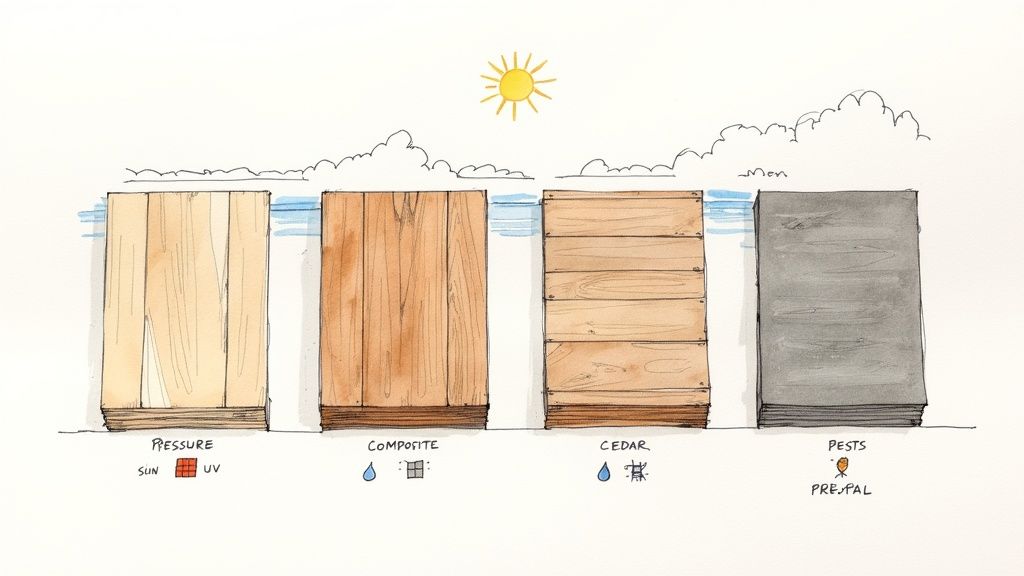
A Quick Comparison of Decking Materials for North Texas
Choosing the right decking material for a North Texas home is a significant decision. Here, our decks face a gauntlet of intense UV rays, punishing summer heat, and high humidity—not to mention a host of pests ready to move in. It’s no wonder homeowners are investing so heavily in their outdoor living spaces; the decking market is even projected to hit $24.57 billion by 2033, a trend you can explore in more detail in this market growth analysis.
This section is your starting point—a high-level look at the most common options we work with: pressure-treated lumber, cedar, composites, PVC, and aluminum. Think of it as a quick reference guide to see which material aligns with your vision for maintenance, aesthetics, and budget before we dive into the details.
Wood vs. Synthetic Decking: A Real-World Gut Check
The real deck building materials comparison isn’t just about numbers on a spreadsheet; it’s about picturing your deck on a scorching August afternoon in Weatherford. While natural wood has an undeniable rustic charm, a dark-stained cedar deck can feel like a hot plate under that intense Texas sun. On the other hand, many lighter-colored synthetics stay surprisingly cooler to the touch.
There's no denying wood's popularity. The U.S. wooden decking market is massive, pulling in about $2 billion in revenue for 2024. You can learn more about the trends driving the wooden decking industry to see why it remains a top choice. But for homeowners here in North Texas, maintenance is a serious commitment, not a casual weekend task.
Think about your family. If you have kids or grandkids running around barefoot, the risk of splinters from pressure-treated pine is a genuine concern. It's a problem that PVC and composite materials completely solve right out of the box.
Key Insight: Your decision isn't just about initial cost versus long-term upkeep. It's about how the material will feel, look, and perform during a Granbury summer, a Glen Rose rainstorm, and years of family gatherings.
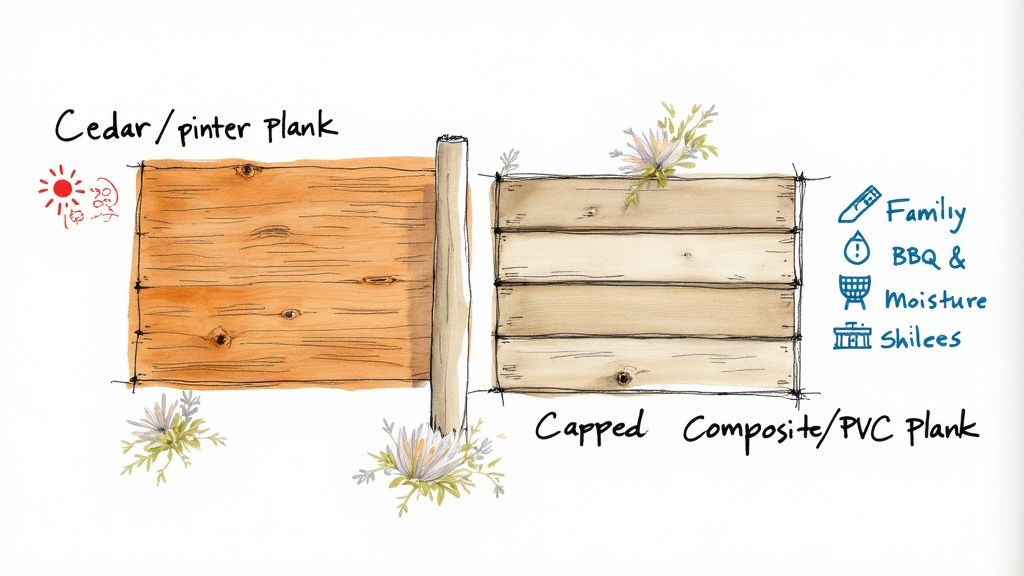
Breaking Down Composite and PVC Decking
In North Texas, composite and PVC decking have become the go-to materials for homeowners who want a beautiful deck without constant upkeep. But it's crucial to understand the subtle differences between them, as the right choice really depends on your lifestyle and location.
Capped Composite: The All-Around Performer
Traditional composite, a simple blend of wood fibers and plastic, has largely been replaced by its much-improved successor: capped composite. This material takes that same core and wraps it in a protective, high-performance shell—think of it as a built-in defense system. That outer cap makes all the difference, especially for busy family homes in communities like Granbury, as it resists the stains, scratches, and fading that plagued older composites.
Cost Factor: While more expensive than pressure-treated wood upfront, it often saves money over its lifetime by eliminating the need for yearly staining and sealing.
Best For: Families with children, homeowners who want low maintenance without sacrificing a wood-like appearance.
PVC: The Waterfront Champion
For homes with pools or those beautiful lakefront properties around Granbury, 100% PVC decking is in a class of its own. Because it’s made entirely of plastic with no organic wood fillers, it’s completely impervious to moisture. This means you get zero mold or mildew growth, which is a game-changer in our humid climate.
The demand for these low-maintenance materials is surging. In fact, North America is projected to drive 32% of the growth in the composite decking market. You can read a detailed forecast of the composite decking market on prnewswire.com to see just how popular these options have become.
No matter which synthetic material you choose, remember that proper installation is non-negotiable. Here in Texas, with our dramatic temperature swings, ensuring the correct gapping between boards is essential for the long-term stability and beauty of your deck.
When you’re building a forever home here in North Texas, you start looking at materials that are built to last a lifetime. That's where top-tier options like aluminum and exotic hardwoods come into the picture.
Aluminum decking is the king of durability, especially for our climate. It’s surprisingly lightweight but incredibly strong. Plus, it’s completely fire-resistant—a huge plus for anyone building on a rural property in places like Glen Rose or Palo Pinto County. It laughs at pests and will never rot. Many aluminum systems even feature interlocking boards that create a waterproof seal, giving you a dry, usable patio space under a second-story deck.
Then you have exotic hardwoods like Ipe. There's a dense, luxurious quality to Ipe that no other material can quite capture. Its durability is legendary, but that performance comes with a serious upfront investment. It's also so hard that it requires specialized tools and know-how for installation. These are truly the peak performance options for homeowners who want the absolute best and are ready to invest in a deck that will outlast almost anything else.
Matching Your Decking Material to Your Texas Lifestyle
Enough with the specs—let's talk about how this all plays out in real life. The perfect decking material isn't about what’s universally "best"; it's about what fits how you actually live, whether that’s hosting weekend barbecues on Lake Granbury or enjoying a quiet retirement in Weatherford.
For young families: The splinter-free surface of capped composite is often a non-negotiable. The peace of mind that kids can run around barefoot without injury makes the initial savings of pressure-treated pine a distant second thought.
For rural property owners: If you own a rural property out in Glen Rose, the superior pest and fire resistance of aluminum delivers a kind of security you just can't put a price on.
For retirees and low-maintenance seekers: For anyone who truly wants a "set-it-and-forget-it" deck, PVC is the undisputed champion. No staining, no sealing, just occasional cleaning.
As you move into more premium options, the decision-making process shifts, often guided by your long-term investment goals.
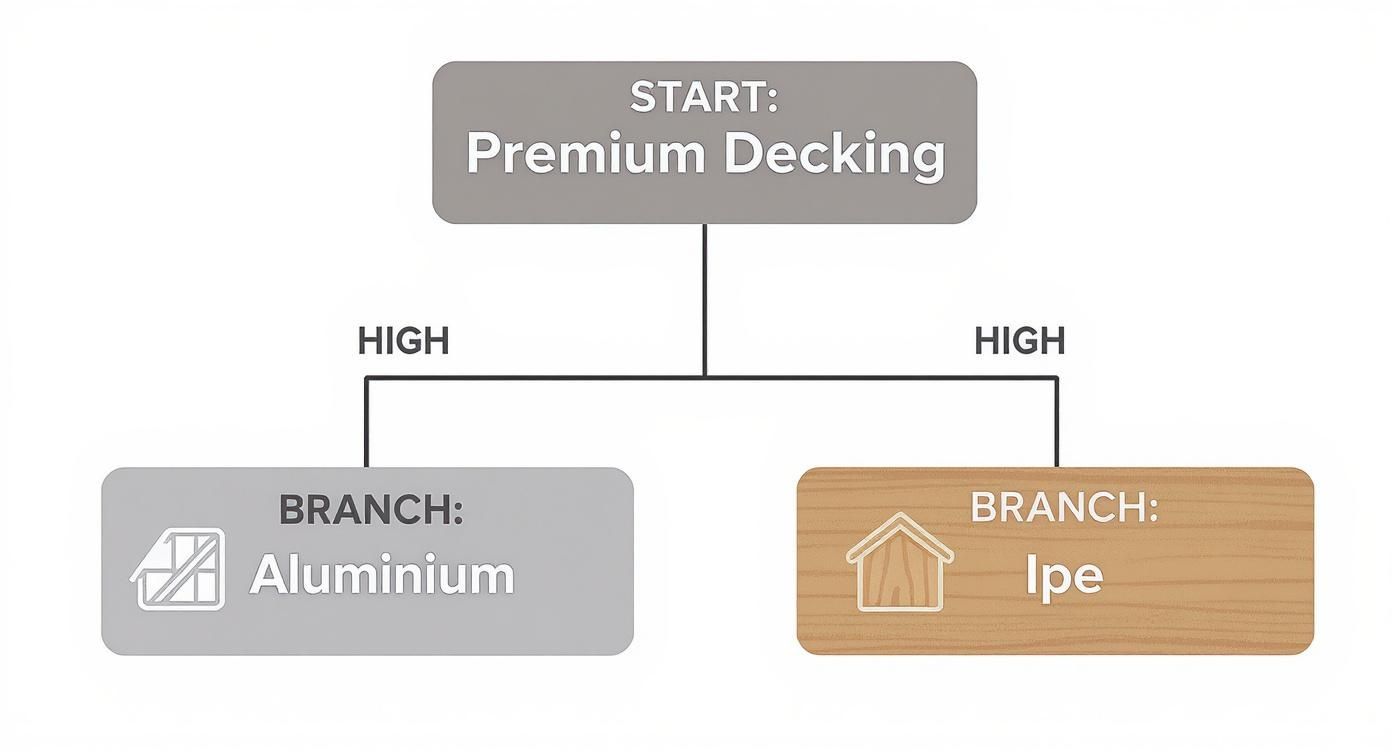
This visual breaks it down nicely. For those top-tier projects, the choice often boils down to a key question: do you prefer the modern, indestructible feel of aluminum or the timeless, classic luxury of Ipe hardwood?
Thinking through these scenarios is a core part of creating a space that works for you, something we explore further in our guide to 10 outdoor living space design ideas.
Your Top Decking Questions, Answered
When you’re planning a new deck for your home in Granbury, Weatherford, or anywhere in North Texas, you're bound to have questions. It’s a big investment, and you want to get it right. We've heard just about every question in the book, so here are some straight-up answers to the most common ones we get from homeowners.
Which Decking Material Stays Coolest in the Hot Texas Sun?
This is easily one of the most important questions for any North Texas backyard. The simplest rule of thumb is that lighter colors will always stay cooler than dark ones, no matter what material you choose. But beyond color, some materials just handle the heat better.
Aluminum is fantastic in this regard because it dissipates heat quickly instead of soaking it up and radiating it back at you for hours. If you're leaning toward composite or PVC, picking a light tan, beige, or soft gray will make a world of difference for bare feet compared to those trendy dark espresso or charcoal shades. Of course, traditional wood with a light-colored stain also stays pretty comfortable.
What Is the Real Cost Difference Between Wood and Composite?
Looking at the initial price tag, pressure-treated pine is always going to be the cheaper option upfront. But that's only part of the story. The lifetime cost of a wood deck can easily climb past that of a composite one, especially in our climate.
Wood demands a lot from you. It needs to be thoroughly cleaned and re-stained every 1-3 years, and that's a recurring expense in both time and money. Over a 25-year lifespan, those maintenance costs really start to stack up.
A composite deck, on the other hand, just needs a simple cleaning with soap and water every now and then. That higher initial investment often pays for itself by giving you a lower total cost of ownership, saving you thousands of dollars and countless weekends over the life of your deck.
How Do I Choose Between Capped Composite and PVC Decking?
This decision often boils down to two things: your budget and where the deck is going.
Capped Composite: This is the sweet spot for most homeowners in places like Weatherford and Aledo, offering a great balance of performance and price. Its tough PVC shell gives it excellent protection against stains and fading, making it a perfect all-around choice for a family deck.
PVC Decking: Because it contains zero wood fibers, this material is 100% waterproof. That makes PVC the undefeated champion for poolside decks, docks on Lake Granbury, or any spot that’s constantly wet. It gives you the ultimate peace of mind against rot and mold.
Are Some Materials Better for Resisting Termites and Pests?
Absolutely, and this is a huge deal in our part of the country. All the synthetic options—composite, PVC, and aluminum—are your best defense. Since they don’t contain any organic material for pests to feast on, they are incredibly resistant to termites and other wood-boring insects.
While pressure-treated lumber is treated with chemicals to ward off pests and cedar has some natural insect-repelling oils, neither is completely bulletproof over the long haul. If you want maximum protection and one less thing to worry about, synthetic materials are the way to go.
Turning Your Vision into Reality
Picking the right decking material is a huge first step, but it’s the design and craftsmanship that truly bring your dream deck to life. All the research in the world won't matter without a builder who knows how to handle your chosen material, especially within the unique demands of our North Texas climate.
If you’re ready to move from planning to building, we're here to help. Contact our team today to discuss the details of your project and find the perfect fit for your outdoor living space in North Texas.
Comments