
Finding Custom Home Builders Near Me in North Texas
Deciding to build a custom home is a huge step—probably one of the biggest you'll ever take. You're not just picking a house from what's available; you're creating one from the ground up, right here in North Texas, that’s a perfect fit for your family, your lifestyle, and your future.
Why Build a Custom Home in North Texas
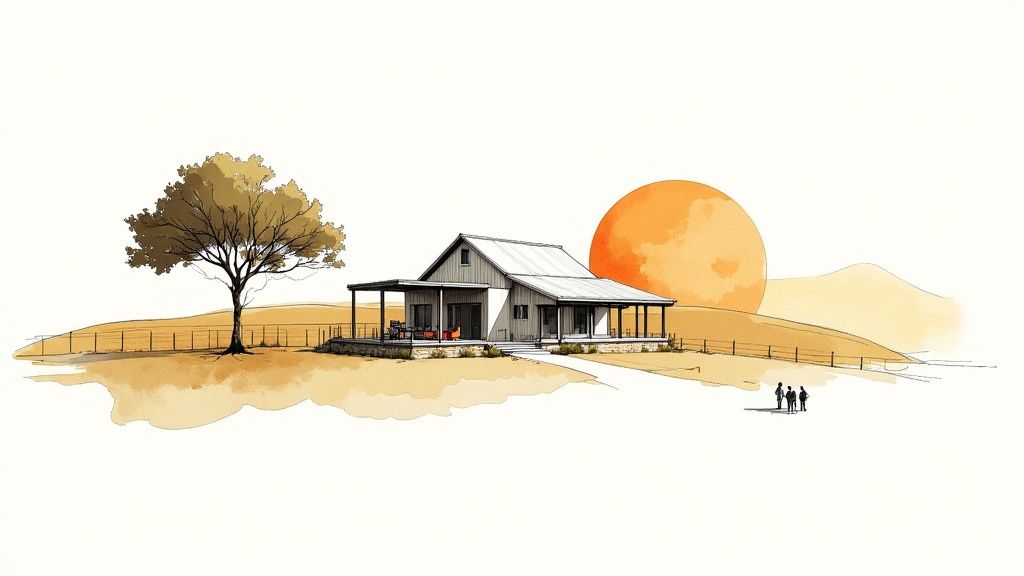
Building a custom home in places like Granbury, Weatherford, or Glen Rose is about more than just a house. It’s about crafting a way of life. For most folks who own land out here, the number one reason is freedom.
It’s the freedom from restrictive HOAs telling you what you can and can't do. It’s the freedom to place your home just right on your property to capture the perfect sunset view over the rolling hills. It's the chance to finally have a space that truly works for the way you live, not the other way around.
For example, a retiring couple might design a single-story modern farmhouse with wide doorways and zero-step entries for easy aging-in-place. A young family with acreage might need a two-story home with a dedicated playroom and a durable mudroom that can handle all the dirt tracked in after a day exploring. That’s a level of personalization you’ll never find in a spec home.
A Home Designed for Your Life, Not Someone Else's
A custom build gives you the power to invest in what actually matters to your family. You get to call the shots on where the budget goes. Maybe that’s a chef’s kitchen for big holiday get-togethers, an ultra-efficient insulation package to keep those Texas utility bills down, or a sprawling back porch for enjoying the cool evenings.
This desire for a home that fits like a glove is why so many people are choosing to build. The market for custom homes is growing, and according to reports from sources like HTF Market Insights, North America is at the heart of it all. People want quality, sustainability, and smart home features designed from the start.
Ultimately, building custom is about creating a legacy—a place where your family can put down roots, make memories, and truly feel at home.
Before you get too far down the road, it's helpful to pause and think through the big picture. Here are the main considerations for building in our part of the world.
Key Considerations for Your North Texas Custom Home
Consideration | Why It Matters in North Texas | Example Action |
|---|---|---|
Land & Site Prep | The soil (clay is common!), slope, and existing trees on your lot heavily influence your foundation, layout, and overall cost. | Get a soil report and a topographical survey done before you finalize your home's design and placement. |
Local Regulations | Each county and city (from Hood to Parker) has its own set of building codes, permits, and septic/well requirements. | Your builder should be an expert in local codes, but you can check with your county's planning and development department. |
Weather Resiliency | We get it all: intense sun, high winds, and the occasional hailstorm. Your materials need to be able to handle it. | Discuss options like impact-resistant roofing, durable siding like HardiePlank, and energy-efficient windows with your builder. |
Lifestyle & Layout | How do you want to live? An open-concept plan is great for entertaining, while a more traditional layout offers privacy. | Make a list of "must-haves" vs. "nice-to-haves" for your floor plan. Think about traffic flow and daily routines. |
Taking time to think through these points now will save you countless headaches and potential budget surprises later. It helps you and your builder get on the same page from day one.
So, what are the core advantages you gain by going custom?
Total Control Over the Design: From the floor plan and architectural style down to the doorknobs, every single choice is yours.
Making the Most of Your Land: You can orient the house to maximize views, save that beautiful old oak tree, and build in a way that feels natural to the property.
Quality You Can See: You hand-pick the builder, which means you have a say in the materials and the craftsmanship. No cutting corners.
Budget That Works for You: While it's a major investment, you decide where the money goes. You can splurge on the kitchen and save on the guest bathroom—it's your call.
Ready to start talking about what's possible on your piece of Texas? Our team is here to help you understand the process with a friendly, no-pressure chat.
How to Find and Research Local Builders
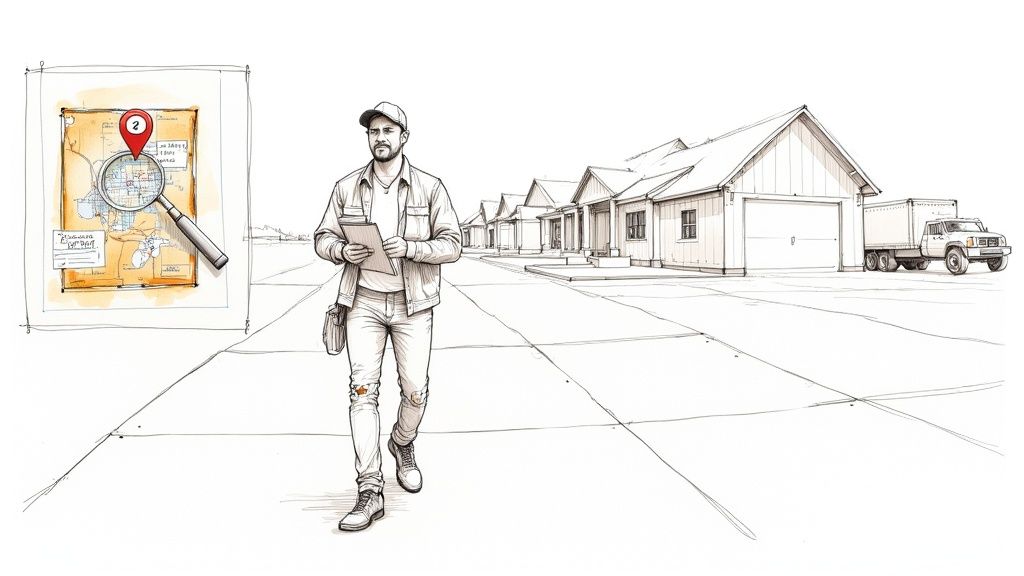
Finding the right custom home builder in North Texas isn’t about just Googling "builders near me" and picking the first name that pops up. The truly great builders—the ones who become partners in your vision—are usually found through good old-fashioned local intel and a bit of legwork.
Your first goal is to create a shortlist of three to five highly qualified candidates. With over 456,000 home building businesses in the U.S., the market is incredibly fragmented. A smart, structured search is the only way to find a real pro who understands how to build in our unique area.
Start by Talking to Local Experts
Before you even open a web browser, talk to the people who see the home building industry from the inside out. They have invaluable, firsthand knowledge of who consistently delivers quality and who has a rock-solid reputation around Granbury and Weatherford.
Here’s who to ask for recommendations:
Real Estate Agents Specializing in Land: These agents know which builders really understand the unique challenges of building on acreage in Hood and Parker counties and can point you toward the ones with proven track records.
Local Builders Associations: Groups like the Parker County Builders Association are fantastic resources. Their members are typically established, licensed, and deeply invested in the local community.
Architects and Designers: If you’re already working with an architect, they’ll have a trusted list of builders they know can execute their plans flawlessly. Their professional opinion is worth its weight in gold.
And don't underestimate the power of simply driving around. See a new home going up in Aledo or Stephenville that you love? Jot down the builder's name from the sign out front. It’s the most direct way to find someone whose style already matches your own.
Dig Deeper with Online Research
Once you have a few names, it's time to head online. A builder’s website and digital presence speak volumes about their professionalism and the pride they take in their work.
The first stop should be their portfolio. Don't just scroll through the pictures; really study them. Look for consistency in craftsmanship from one project to the next. Are the trim work and finish details sharp? Do they showcase a versatile range of styles, or are they masters of a specific look, like a modern farmhouse or Hill Country traditional? You can see the kind of detail and variety you should look for by exploring our portfolio of new home builds.
Expert Tip: Pay close attention to the quality of the photos. A builder who invests in professional photography for their finished homes is proud of their work and serious about their business. Grainy, poorly lit cell phone pictures can be a subtle but telling red flag.
Next, vet their reputation. Check for testimonials on their website, but then cross-reference those with reviews on Google, Houzz, and Facebook. You're looking for patterns. Do multiple clients mention great communication, accurate budget management, or creative problem-solving? One cranky review isn't a dealbreaker, but a recurring theme of missed deadlines or poor communication absolutely is.
Verify Their Credentials and Professional Standing
This step is non-negotiable. Before a builder even makes your final list, you have to verify their credentials. This is all about protecting your investment and ensuring you’re working with a legitimate, responsible professional.
Here's your verification checklist:
Insurance: Confirm they carry both general liability insurance and workers' compensation. Any legitimate builder will happily provide a certificate of insurance. This is what protects you from liability if an accident happens on your property.
Local Experience: How long have they been building homes in North Texas? A builder with deep roots in places like Glen Rose or Cleburne will have established relationships with the best local subcontractors and suppliers—a massive advantage for your project.
References: Ask for a list of recent clients. It’s also a great idea to ask for a client from a few years back to see how their work holds up over time.
The Final Vetting Tool: The Drive-By
Last but not least, go see their work in the real world. Ask a potential builder for the addresses of a recently completed home and another one that's currently under construction. A quick drive-by can reveal more than any photo gallery ever will.
When you look at a job site, is it clean and organized? A tidy site is a great sign of a builder who respects the project and prioritizes safety and efficiency. At the finished home, look at the curb appeal and overall craftsmanship. Does the quality hold up in person? This simple step gives you an unfiltered look at a builder's true standards.
Interviewing Builders and Spotting Red Flags
Once you've narrowed your list, it's time for the interviews. This is your opportunity to look past the beautiful portfolios and get a real feel for how they operate. Think of it less like a sales meeting and more like a crucial fact-finding mission. You’re looking for a partner, not just a contractor.
A great builder will welcome your questions and give you clear, honest answers. They understand this is one of the biggest investments you'll ever make, and they want you to be completely confident in your choice. This is especially important today, as more and more families want to be deeply involved in the building process.
In fact, custom homes now make up about 19% of all new single-family houses built in the U.S., a trend that really underscores the need for a builder who sees this as a partnership.
Questions That Go Way Beyond Price Per Square Foot
Of course, you need to talk about cost, but that’s just one piece of the puzzle. The real insights come from asking questions that reveal a builder’s day-to-day process, their communication style, and their overall integrity. If you get vague or evasive answers here, pay close attention.
Here are a few questions I always recommend asking potential builders:
"Can you walk me through your change order process?" * What you want to hear: A detailed, documented system. It should involve a written request from you, a clear cost breakdown for the change (including any impact on the schedule), and your signed approval before they start the work. This shows they’re organized and serious about keeping your budget on track. * What’s a red flag: A casual, "Oh, we'll just figure it out as we go." That’s a surefire way to end up with budget overruns and frustrating arguments down the line.
"How do you keep your clients updated on progress and budget?" * What you want to hear: They should have a specific system. Maybe it's a scheduled weekly phone call, a project management app with daily photo uploads, or regular on-site walkthroughs. The important thing is that they have a proactive, consistent way to keep you in the loop. * What’s a red flag: Vague promises like, "We'll be in touch." If they can’t tell you exactly how they communicate, you can bet you’ll be the one chasing them for updates throughout the build.
"What specific warranties do you offer on your work?" * What you want to hear: Look for a builder who provides a clear, comprehensive written warranty. Typically, this includes a one-year warranty on workmanship, a two-year warranty on major systems (like plumbing and HVAC), and a ten-year structural warranty. They should have no problem giving you a sample document to review. * What’s a red flag: Any hesitation to talk about warranties or offering only a verbal promise. A warranty is a builder's way of saying they stand behind their quality. A refusal to put it in writing is a serious concern.
For a more comprehensive list, check out our guide on the top 10 questions to ask custom home builders in North Texas. It dives even deeper into what to listen for in their answers.
Builder Interview Red Flag Checklist
Sometimes, what a builder doesn't say is just as telling as what they do. Trust your gut. If a conversation feels off or you feel like you're being pushed into a corner, that’s your instinct telling you to dig deeper. Your relationship with your builder is a long-term partnership, so feeling comfortable and respected from day one is non-negotiable.
Use this checklist during your interviews to spot potential issues before signing a contract.
Red Flag | What It Could Mean | Your Next Step |
|---|---|---|
High-Pressure Sales Tactics | They may be desperate for work or prioritize sales over quality and client satisfaction. | A great builder’s reputation sells itself. Walk away from anyone rushing you. |
Vague or Evasive Answers | They might be hiding something, lack experience, or are simply disorganized. | Press for specific, concrete examples. If they still can’t provide them, be wary. |
No Clear Communication Plan | You'll likely be left in the dark, leading to frustration and misunderstandings. | Insist on a defined communication schedule and method. If they resist, it's a bad sign. |
Discourages Talking to Past Clients | They could be trying to hide a history of unhappy customers or project failures. | Politely insist. A confident builder will gladly provide multiple recent references. |
A "Too Good to Be True" Low Bid | The price may be based on low-quality materials, or they plan to make up for it with expensive change orders. | Ask for a detailed, line-item bid to see exactly where the costs are allocated. |
Hesitates to Show Their License/Insurance | They might not be properly licensed or insured, putting you at significant financial and legal risk. | This is non-negotiable. Ask to see proof of their license and general liability insurance. |
Remember, a builder's professionalism during the interview process is a direct reflection of how they will manage your entire project. If they are disorganized or unprofessional now, don't expect that to change once construction begins. A well-connected North Texas builder will also have strong, established relationships with local suppliers and craftspeople, which is a huge asset for keeping a project running smoothly.
Key Takeaway: How a builder handles the interview process tells you everything you need to know. If they’re disorganized, evasive, or unprofessional before you’ve even signed a contract, you can expect those same headaches during the build.
Getting a Handle on North Texas Building Costs and Timelines
For most families thinking about a custom home, the two biggest questions are always: "How much is this going to cost?" and "How long will it take?" Let's pull back the curtain on the budget and schedule for building in our area, breaking down the major factors that will shape your project. Knowing what to expect makes the whole journey feel a lot less overwhelming.
First, let's talk about the myth of "price per square foot." While it’s a term you'll hear often, it's a deceptive number. It’s an average that completely ignores the unique prep work your land might need or the specific finishes you've been dreaming of. The true cost of your home is a blend of preparing the site, the complexity of your home's design, and the level of materials you choose.
What Really Drives the Cost of a North Texas Build
When you're building on your own lot in a place like Granbury or Weatherford, the costs start long before we ever pour a foundation. Preparing a rural site is a huge factor, and it's one that often catches first-time builders by surprise.
You'll need to account for a few key site-specific expenses:
Land Clearing and Grading: Getting your homesite ready by removing trees, clearing brush, and leveling the ground can cost anywhere from $2,500 to $15,000+, depending on your acreage and how rugged the terrain is.
Utility Installation: For rural properties, you'll have to budget for running electricity to the homesite, installing a septic system (often $10,000-$20,000), and possibly drilling a well (which can be $8,000-$15,000 or more).
Foundation Work: North Texas is known for its expansive clay soil. This means your home needs a specifically engineered foundation to prevent shifting and cracking. This is a non-negotiable investment in your home's long-term stability and absolutely not the place to cut corners.
Once the land is prepped, the design of the house itself takes center stage. A home with a complex roofline full of different pitches and gables is naturally going to cost more than a simple, clean design. In the same way, a sprawling one-story home can sometimes cost more than a compact two-story with the same square footage because of its larger foundation and roof footprint.
How Your Finishes and Selections Shape the Budget
This is where your personal taste directly impacts the bottom line, and honestly, it's where much of the budget's flexibility lies. The cost difference between a home filled with standard, builder-grade finishes and one with high-end, custom selections can easily be hundreds of thousands of dollars. It’s all about deciding where you want to invest.
Just look at these examples:
Cabinetry: A large kitchen outfitted with custom-built, solid wood cabinetry can easily cost $30,000-$50,000+. On the other hand, quality semi-custom or stock options might be just a fraction of that price.
Flooring: Luxury vinyl plank is a fantastic, durable choice that's very popular right now. But if your heart is set on wide-plank, hand-scraped hardwoods throughout the house, both the material and labor costs will jump significantly.
Windows and Doors: That stunning, wall-sized sliding glass door that seamlessly connects your living room to the patio? It can be ten times the cost of a standard sliding door. It's an incredible feature, but it comes with a price tag to match.
My Advice From the Field: The best thing you can do is be completely transparent with your builder about your total budget from the very beginning. A good builder acts as your guide, helping you allocate your money where it counts. We can show you where to save without sacrificing quality and where a little splurge will bring you the most joy and value in the long run.
Mapping Out a Realistic Project Timeline
Knowing the construction timeline is just as crucial as setting the budget. From the day we break ground to your final walkthrough, building a custom home around here generally takes between 10 to 16 months. Keep in mind, this doesn't include the initial design and permitting phase, which can tack on another 3 to 6 months before we even move any dirt.
Before you even get to that point, the builder interview process is your critical first step. This simple visual breaks down the essential flow of finding the right partner for your project.
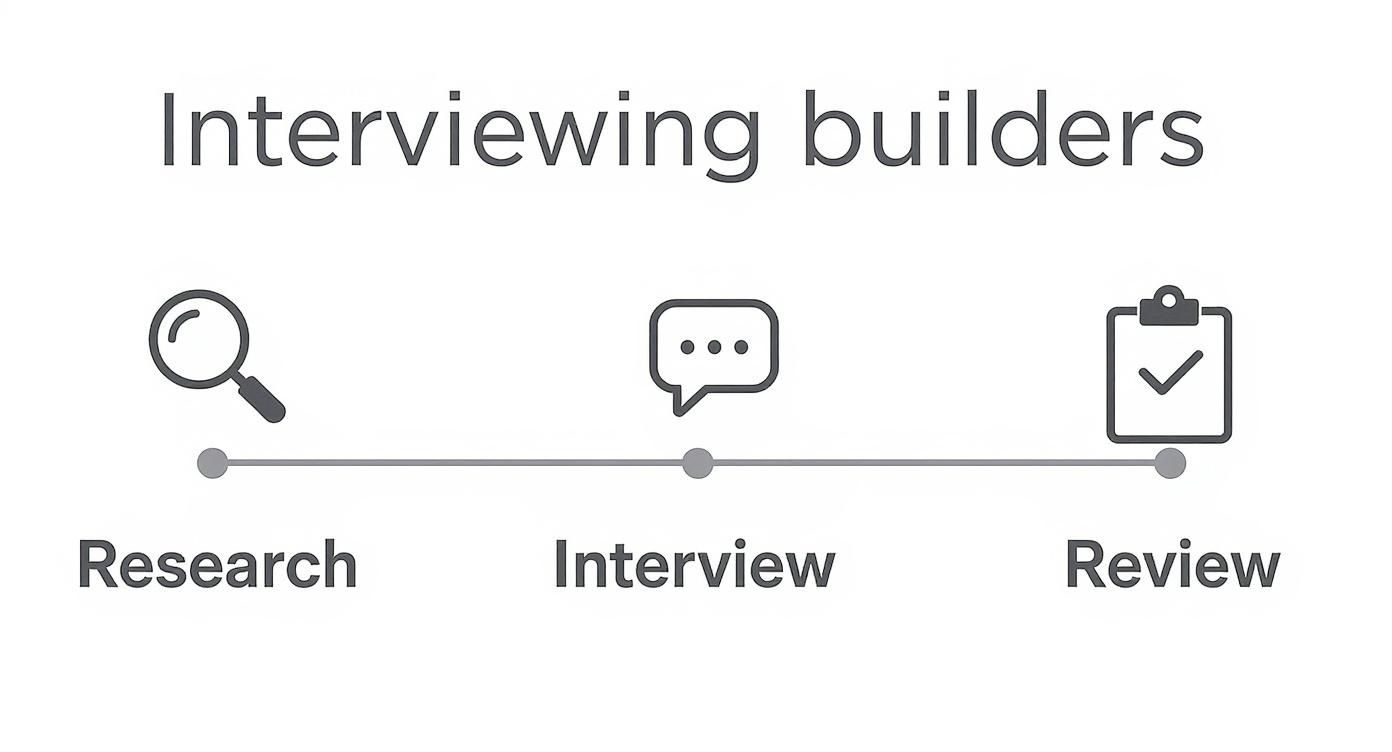
Following this path ensures you move from broad research to in-depth interviews and a final, confident review of your top choices before you sign on the dotted line.
It's also smart to plan for potential delays—they happen. Here in North Texas, the spring storm season can throw a wrench in foundation and framing schedules with heavy rain. On a larger scale, national supply chain hiccups can affect the delivery of specific windows, appliances, or materials. A seasoned builder anticipates these challenges, communicates openly about them, and has backup plans ready to keep your project moving forward.
For a more detailed look at what happens at each stage, check out our in-depth homeowner's guide to the construction timeline. It provides a clear roadmap from the initial site work to the final punch list, so you'll know exactly what to expect at every turn.
Making Your Final Choice and Signing the Contract
You’ve put in the work, you've talked to several builders, and now a few bids are sitting on your kitchen table. The natural impulse is to immediately scan for the lowest number. But hold on—the bottom-line price is often the least important part of the story.
This is where you need to do a true apples-to-apples comparison. It’s about digging into the fine print.
One builder’s bid might look higher, but it could include generous allowances for high-end flooring or premium kitchen countertops. A competing bid that seems like a bargain might have rock-bottom allowances, virtually guaranteeing you’ll face expensive overages the moment you pick out finishes you actually love. A professional, transparent bid will spell out everything, from brand names to material specs.
Beyond the Numbers: It's About Chemistry
Think of this decision as choosing a business partner for the next 12 to 18 months. The connection you felt (or didn't feel) during those initial meetings is a huge factor.
Did they listen more than they talked? Were they patient when explaining the complex parts of the process? You're going to be navigating challenges and making hundreds of decisions together. You need a partner you genuinely trust and can communicate with openly. If your gut is sending you a warning signal about someone, it’s probably right.
A Quick Tip on Communication Styles Pay attention to how a builder communicates. One might give you their direct cell and encourage you to call or text anytime. Another might prefer all communication to go through a project manager during business hours. Neither is wrong, but you have to decide which approach works for you.
The Final Due Diligence: Reference Checks
It's time to pick up the phone and call those references. This is your single best opportunity to get an unfiltered look at what it's really like to work with this builder. Don't just ask if they were "happy." You need to ask targeted questions that get to the heart of the matter.
Here are a few questions I always recommend asking past clients:
"How did the builder handle surprises?" Issues always come up. You want to know if they were a good problem-solver.
"How close was the final cost to the initial budget?" If there were overages, what caused them? How were they communicated?
"Was the project finished on time?" Delays happen, but you want to understand how the builder managed the schedule and kept them in the loop.
"Knowing what you know now, would you hire them again without a second thought?" The hesitation—or lack of it—in their voice will tell you everything.
The Dotted Line: Understanding the Contract
After all that, you've made your decision. Great! But don't let the excitement cause you to rush through the final step: the contract. This is the legal blueprint for your entire project, designed to protect both you and the builder.
Before you sign anything, confirm the contract includes these critical elements:
A complete set of architectural plans and specifications
A detailed scope of work (what is and isn't included)
The final price and a clear payment schedule tied to milestones
A projected construction timeline
A clear, written process for handling change orders
All warranty details and information on how disputes are resolved
Read every single line. If a term or clause is confusing, don't be shy—ask for clarification until you understand it completely. Absolute clarity now prevents major headaches later.
Choosing your builder is the single most critical decision you’ll make on this journey. If you’re weighing your options in the North Texas area or just want a second opinion, our team at Gemini Homes is here to help you move forward with confidence.
Got Questions? We've Got Answers
Once you start seriously thinking about building a custom home, the big-picture ideas give way to very specific, practical questions. It's a natural part of the process. We get calls every day from folks in Granbury, Weatherford, and all over North Texas who are trying to figure out the same things.
Here are a few of the most common questions we hear, with straight-up answers from our years of experience building here.
How Long Does This Actually Take?
From the day we pour the foundation to the day we hand you the keys, a good rule of thumb for the construction itself is 10 to 16 months. A highly complex design might take longer, and our wild Texas weather can throw a wrench in the schedule now and then. Permitting times also vary by county, which can add a little time upfront.
But don't forget about the crucial work that happens before we break ground. You'll want to budget an additional 3 to 6 months for the pre-construction phase. This is where we nail down the architectural plans, handle the engineering, make your material selections, and get all the necessary permits in place.
Cost-Plus vs. Fixed-Price Contracts: What's the Difference?
Understanding your contract is key to feeling comfortable with your budget. You’ll almost always encounter one of two types:
Fixed-Price Contract: Just like it sounds. We agree on a total price for the home before we start. This gives you absolute certainty on the final number, which is a huge stress reliever for many people.
Cost-Plus Contract: This is more of an open-book approach. You pay the actual costs for labor and materials, plus a set fee or percentage for our management and overhead. It offers incredible transparency and makes it easier to change things on the fly, but the final price isn't locked in.
A builder worth their salt will walk you through the pros and cons of both. We’ll help you figure out which one makes the most sense for your project and your peace of mind.
A great builder will be an open book about their pricing structure. Their goal is to find the right fit for your project and financial comfort, ensuring there are no surprises down the road.
Do I Need to Own My Land Before I Talk to a Builder?
Ideally, yes, you should own your lot before we get too far into the design and pricing. There's a simple reason for this: we can't give you a truly accurate bid until we can walk your specific property in a place like Glen Rose or Aledo and see what we're working with.
When we can get our boots on your ground, we can assess real-world factors that dramatically affect the cost, like:
How much site prep, clearing, and dirt work is needed?
How far do we need to run utilities, and what will that cost?
What kind of foundation does the soil and slope of your land require?
The good news is that you don't have to go it alone. Many of the best local builders, including us, are happy to consult on a piece of land you're thinking about buying. It's a small step that can save you from a world of expensive headaches later on.
Ready to talk about your vision for a custom home in North Texas? The team at Gemini Homes is here to answer your questions and help you take the next confident step. Let’s start the conversation about what’s possible on your land.
Comments