
Your North Texas House Construction Timeline: A Step-By-Step Guide
So, you're thinking about building a custom home in North Texas. The first question on nearly everyone's mind is, "How long is this going to take?"
Let's get right to it. From the day you first sit down with an architect to the day you get the keys, you're typically looking at a timeline of 9 to 18 months. That's a wide range, we know. The final number depends on everything from the complexity of your dream home to the specific permitting quirks in counties like Hood or Parker, not to mention our famously unpredictable Texas weather.
A solid, well-thought-out plan is your single best tool for making the whole process feel less like a rollercoaster and more like a steady march toward home.
A Quick Look At A Typical North Texas Custom Home Timeline
To give you a better feel for the journey, we've mapped out the major stages of construction. Think of your builder as a guide, breaking down a massive undertaking into a clear, step-by-step process. This table provides a high-level snapshot of what to expect, whether you're building in Granbury, on rural acreage near Glen Rose, or right in Weatherford.
Construction Phase | Average Duration |
|---|---|
Phase 1: Planning & Design | 2 - 6 Months |
Phase 2: Permitting & Site Prep | 1 - 3 Months |
Phase 3: Foundation | 2 - 4 Weeks |
Phase 4: Framing | 3 - 6 Weeks |
Phase 5: Exterior & Roofing | 2 - 4 Weeks |
Phase 6: Rough-in (Plumbing, Electrical, HVAC) | 2 - 4 Weeks |
Phase 7: Insulation & Drywall | 3 - 5 Weeks |
Phase 8: Interior Finishes | 4 - 8 Weeks |
Phase 9: Exterior Finishes & Landscaping | 3 - 6 Weeks |
Phase 10: Final Walk-Through & Closing | 1 - 2 Weeks |
This bird's-eye view sets the stage for the more detailed breakdown we'll get into, giving you a framework for understanding how all the pieces come together.
Over the last hundred years, home construction has gotten dramatically faster. Things we take for granted now, like power tools and cranes, shaved years off the process. More recently, tools like computer-aided design (CAD) have been a game-changer, letting us find and fix issues on screen before they cause problems on-site. This alone can cut delays from change orders by 30-40%. If you're curious, you can learn more about the history of building innovations that shape how we build today.
This simple chart breaks the entire journey into its three fundamental stages: planning, building, and the final push to move-in ready.
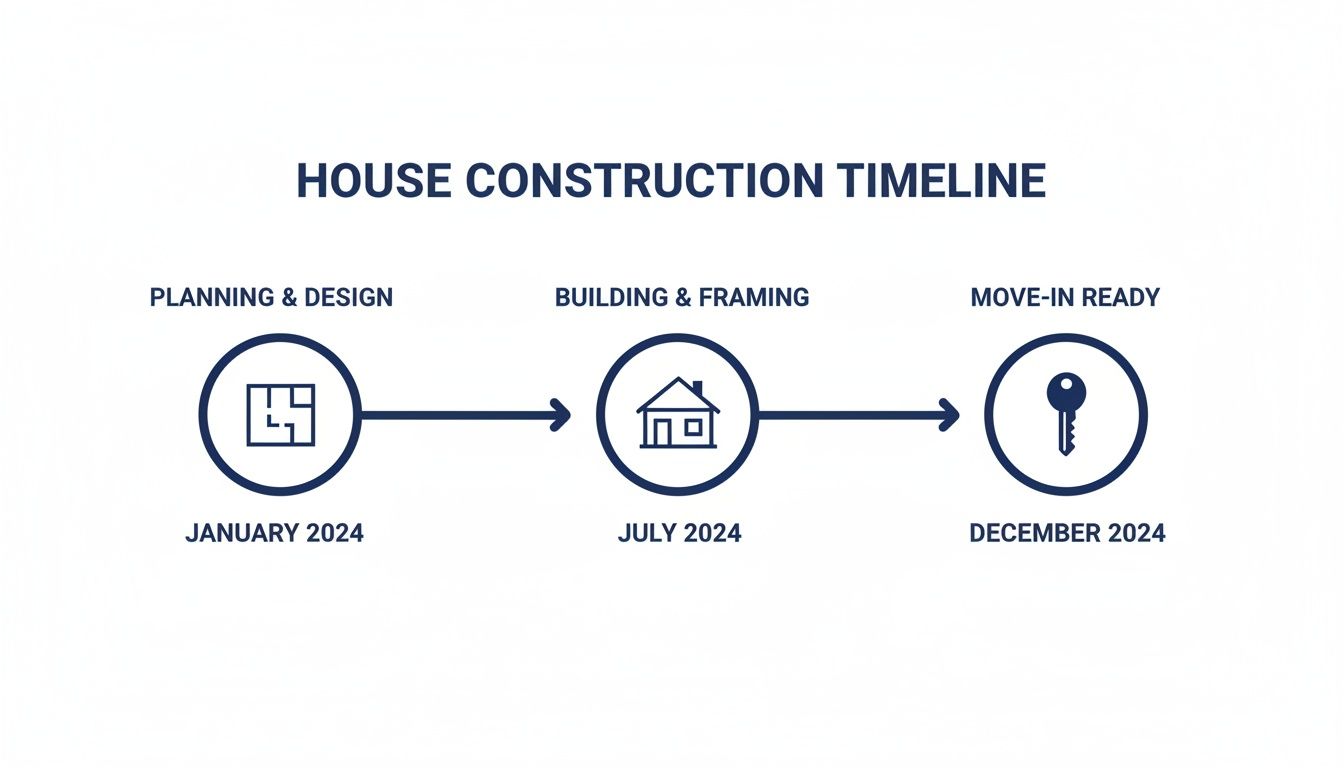
As you can see, a huge chunk of time is spent in the planning phase before a single shovel of dirt is moved. That's not wasted time—it's the investment that makes the rest of the build go smoothly.
What Stretches or Shrinks Your Timeline?
Several factors can hit the accelerator or the brakes on your project. Knowing what they are from the get-go helps everyone set realistic expectations.
Project Complexity: This is the big one. A straightforward, 2,500-square-foot home on a flat lot in Glen Rose is just going to move faster than a 5,000-square-foot, multi-level home on a tricky piece of rural land with a steep grade. The cost difference is substantial, not just in materials but in the specialized labor and engineering required for a complex site.
The Speed of Your Decisions: The quicker you and your builder can lock in selections—from flooring and fixtures to paint colors and countertops—the sooner materials can be ordered. This helps you get ahead of potential supply chain snags that can stall a project for weeks.
Permits and Inspections: The time it takes to get a building permit approved can be wildly different from one North Texas city to another. A seasoned local builder knows the people and the processes at the local planning office and can navigate that bureaucracy far more efficiently.
A well-defined plan is the most effective tool for managing your house construction timeline. By making decisions early and working with a builder who anticipates local challenges, you can keep the process moving forward with confidence.
Laying The Groundwork With Pre-Construction Planning
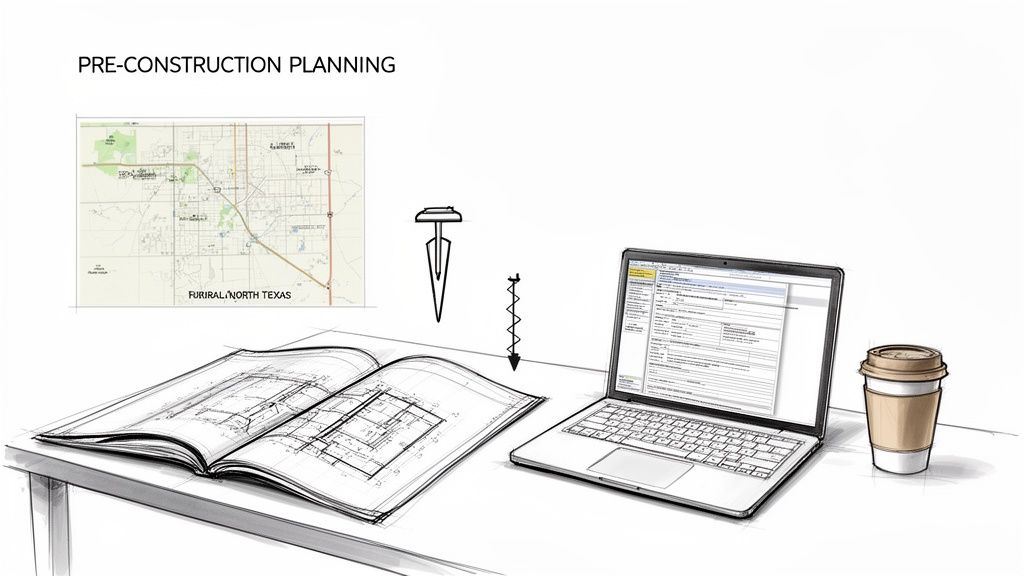
This is where your vision starts becoming a reality. The pre-construction phase is, without a doubt, the most important part of the entire process. It sets the tone for everything that follows, long before we ever move a single scoop of dirt. It’s all about intense collaboration, meticulous planning, and making the big decisions that will define your budget and timeline.
Think of it like planning a detailed road trip. You wouldn't just hop in the car and start driving; you'd map your route, figure out your stops, and book your hotels. Building a home is no different. We nail down every detail upfront to make sure the journey is as smooth as possible, which is the single best way to avoid frustrating delays and surprise costs later on.
From Ideas to Blueprints
The first real step is getting all those ideas out of your head and onto paper. We’ll sit down and talk through everything—your lifestyle, your family's needs, and the look and feel you're going for. Are you a growing family in Weatherford that needs a playroom that can one day become a teen hangout, or are you building your forever home in Granbury and need everything on one floor for easy aging-in-place? Now is the time to think about how rooms flow together, where to put windows to catch that perfect Texas sunrise, and how you’ll truly live in the space.
This conversation is what fuels the creation of the architectural plans, which we’ll tweak and refine until they’re a perfect reflection of your dream.
Making Selections and Finalizing the Budget
Once the floor plan is set, the real fun begins: picking out all the finishes and fixtures. This means everything from the stone and siding on the outside to the flooring, cabinets, countertops, light fixtures, and even the doorknobs on the inside.
Making these decisions before construction is a non-negotiable for a smooth build. Here's why:
Secures Accurate Pricing: It lets us get solid, real-world quotes from our suppliers and trade partners. The result is a budget you can actually trust, minimizing the risk of unexpected overages.
Prevents Delays: We can order all your materials well ahead of time, getting in front of potential supply chain headaches for things like custom windows or special-order tile.
Reduces Stress: It saves you from having to make snap decisions in the middle of construction, which is a recipe for regret and going over budget.
For instance, finding out the tile you absolutely love for the master bath has a 12-week lead time is a simple scheduling adjustment during planning. Finding that out after the drywall is up is a full-blown crisis.
Navigating Permits and Site Evaluation
With plans and selections locked in, the next major step is getting the building permits. This process can look very different across North Texas. The paperwork trail in a city like Weatherford is a world away from securing septic and well permits for a property out in rural Parker County. This is where having a local builder who knows the ins and outs of each municipality is a huge advantage.
The pre-construction phase is all about turning unknowns into knowns. By investing time in meticulous planning, you transform ambiguity into a clear, actionable blueprint that guides every subsequent step of the build.
At the same time, we'll be doing a deep dive on your property with a thorough site evaluation. This often involves soil testing, which is crucial on Texas land. A soil test out in Glen Rose might turn up expansive clay that demands a specially engineered foundation—a discovery that absolutely changes both the timeline and the cost. Finding the right partner to guide you through this is critical, and our guide on how to choose a home builder in North Texas can help you do just that.
Bringing Your Home To Life With Site Prep And Framing
After all the planning and paperwork, this is where the real work begins. The move from blueprints to breaking ground is one of the most rewarding parts of the entire process because you finally get to see your vision start taking shape. It all starts with turning that empty piece of land into a clean slate for your future home.
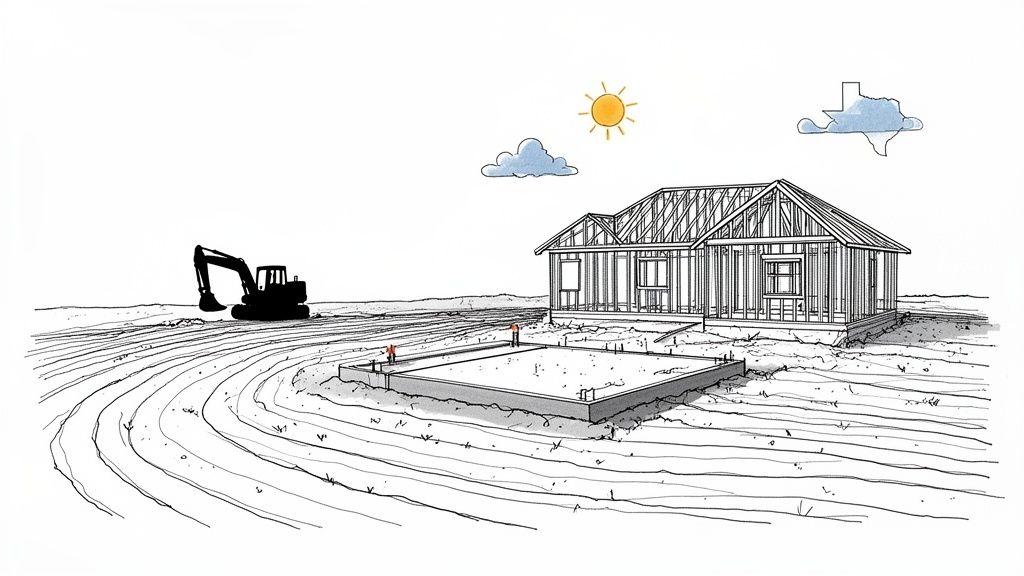
The first order of business is site preparation. We clear the lot of any trees, rocks, or debris and then get to work grading the property. This isn't just about leveling the ground; it’s about shaping the land to ensure water flows away from your future home—a critical step to prevent drainage headaches down the road. For rural lots in places like Glen Rose or Stephenville, this is also when we coordinate getting essential utilities like water and electricity brought to the site.
Pouring The Foundation
Next up is the foundation—literally the bedrock of your home. Here in North Texas, a slab-on-grade foundation is the go-to for good reason. It’s a practical, sturdy, and cost-effective solution that works well with our local soil. Pouring concrete is a bit of a dance with the weather, though. A sudden downpour can bring everything to a halt, so any experienced builder has one eye on the crew and the other on the forecast, looking for that perfect window to pour.
This is one of those steps you simply can't rush. A properly poured and cured foundation prevents a world of future problems. Once that concrete hardens, however, the pace of the project really starts to accelerate.
The Excitement Of Framing
If you ask homeowners what their favorite part of the build was, most will say it’s the framing. It’s pure magic. One day, you have a flat slab of concrete, and seemingly overnight, the skeleton of your home appears. The walls shoot up, the roof trusses are set in place, and for the very first time, you can walk through the rooms and get a real sense of the space.
This is the moment your blueprints leap off the page and become a three-dimensional reality. There's nothing quite like standing in your future kitchen or looking out from the exact spot where your living room window will be. It makes all that early planning feel completely worthwhile.
Once the home is framed and "dried in"—meaning the roof, exterior sheathing, and windows are installed—the interior is protected from the elements. This is a major turning point that allows electricians, plumbers, and other trades to start their work inside, no matter what the unpredictable Texas weather is doing.
Unexpected economic events can throw a major wrench in construction schedules, as we saw during the 2007-2008 financial crisis. The crash brought U.S. housing starts to a decade low by 2009, with financing delays and labor shortages stretching average completion times by a staggering 20-50%. Projects that should have taken months dragged on for a year or more, a harsh reminder of how much external factors can impact a build. You can see more data on U.S. housing trends on Statista.com.
Meticulous site management is critical to navigating these variables. A good builder keeps the lot organized and the schedule tight. For anyone building on their own land, understanding this part of the journey is key, and our guide on how home builders build on your lot in North Texas digs even deeper into these logistics.
Installing Your Home’s Core Systems
Now that your home is framed up and shielded from the wild Texas weather, the action moves inside. This is what we call the “rough-in” stage, where all the hidden guts of your home are carefully put into place. It might not be as dramatic as watching the frame shoot up, but this is where your house gets its functionality.
Think of it like giving your home its circulatory, nervous, and respiratory systems. Our trusted, licensed trade partners get to work, weaving the complex networks that will soon be hidden behind your walls.
What Happens During The Rough-In Stage
This part of the build is a carefully choreographed dance of specialized crews laying the foundation for your home’s essential services. Here’s what’s happening behind the scenes:
Plumbing: Our plumbers run all the water supply and drain lines through the walls and floors, mapping out the future locations of every sink, shower, toilet, and appliance.
Electrical: The electricians pull what seems like miles of wire to every spot you designated for an outlet, switch, or light. They'll also set up the main electrical panel, the future nerve center of your home.
HVAC: The HVAC crew installs the furnace and air handler and then builds the intricate web of ductwork that will keep you cool in the summer and warm in the winter.
Low-Voltage Wiring: This covers all the modern necessities—wiring for your internet, home security, integrated speakers, or any other smart home features you've planned for.
This is your last, best chance to make changes easily. If you suddenly realize you need an extra outlet by the bed or a floor plug for a lamp in the living room, now is absolutely the time to say something. Adding it now costs a fraction of what it would after drywall is up.
The Inspection Gauntlet
Once the rough-ins are done, everything comes to a halt for a series of make-or-break municipal inspections. An inspector from Granbury, Weatherford, or your local city will walk the site to ensure every single detail meets current building codes. They scrutinize everything from the thickness of the wiring to the proper slope on the drain pipes.
Passing these "four-way" inspections—plumbing, electrical, HVAC, and framing—on the first try is a major victory. It’s a stamp of approval on quality craftsmanship and is critical to keeping the project on schedule and avoiding frustrating delays.
Failing an inspection means the trade partner has to fix the issue and get back in line for a re-inspection, a process that can easily tack days, or even weeks, onto the timeline. This is where a builder's solid relationships with top-tier, reliable tradespeople truly shine.
Insulation and The Magic of Drywall
With the city’s blessing, we move on to insulation. This is a hugely important step for ensuring your home is comfortable and energy-efficient, especially during our scorching North Texas summers. High-quality insulation in your walls, attic, and even around the ductwork makes a massive difference in your monthly utility bills. To really dig into this, our guide on insulating HVAC ducts in North Texas is a great resource for maximizing comfort and savings.
Finally, the drywall arrives. This is a truly transformative moment in the build. The open, skeletal frame suddenly resolves into clearly defined rooms. You can physically stand in your kitchen, walk down a real hallway, and get the first true sense of your home’s flow. It's the point where a construction site officially starts to feel like your home.
Adding The Finishes That Define Your Style
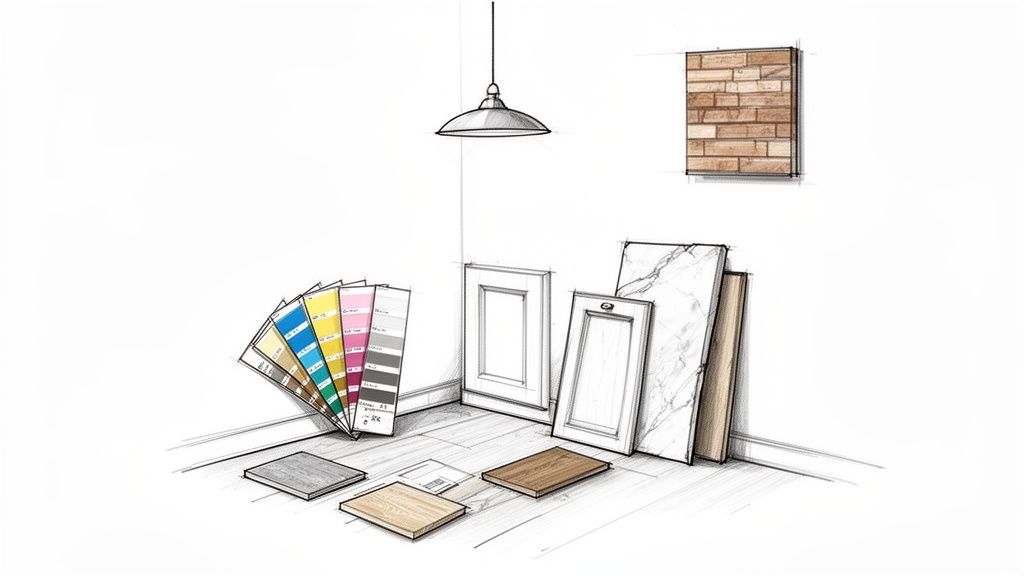
Once the wiring, plumbing, and HVAC are hidden behind fresh drywall, we get to the most exciting part of the construction timeline. This is where a house truly starts to feel like your home. All those samples and swatches you agonized over months ago finally come off the mood board and into reality, transforming the structure into a space that’s a direct reflection of your style.
On the outside, crews start putting the "skin" on the house. This might be classic brick, rustic Texas limestone, or modern siding—materials chosen not just for their curb appeal but for their ability to stand up to our intense North Texas sun and unpredictable weather. Inside, a different kind of transformation begins with detailed trim work. Baseboards, door casings, window sills, and crown molding are all carefully installed, giving each room a sense of character and a polished, finished feel.
From Blank Canvas To Finished Space
With the trim set, the painters can finally come in and lay down the colors that will define the mood of every room. Right after that, the hard surface flooring goes in. Maybe it's tough-as-nails luxury vinyl plank for a busy family in Weatherford, or perhaps it’s hand-scraped hardwoods for a more traditional look in Granbury.
Then come two of the biggest milestones: cabinets and countertops. It’s a huge moment when your kitchen and bathroom vanities are set in place. Shortly after, the granite, quartz, or marble you picked out is templated and installed. Suddenly, you can truly visualize yourself living and working in these critical spaces.
The finishing stage is a testament to the power of planning. Every single material, from the tile for the backsplash to the doorknobs on the closets, arrives on-site right when it’s needed. That’s only because those decisions were locked in months ago. This careful sequencing is what keeps the project moving and prevents frustrating, costly delays.
This level of detailed coordination is a modern advantage. After World War II, a massive housing boom saw the U.S. reach 1.9 million housing starts in 1959 alone. This incredible demand pushed builders to find new efficiencies like prefabrication, proving how smart processes can dramatically shorten timelines. You can read more about the history of the housing market on BuiltByWinterHomes.com.
Material Choices For The Texas Lifestyle
Here in North Texas, choosing the right finishes is about more than just what looks good—it's about what lasts. It’s about being practical.
Here are a few examples of smart selections we often discuss with clients:
Durable Flooring: If you’re building on a ranch near Glen Rose, you need flooring that can handle dirt, boots, and pets without a second thought. Engineered hardwood, luxury vinyl plank (LVP), and porcelain tile give you the beautiful look of natural materials with far more resilience.
Sun-Resistant Exteriors: The Texas sun is no joke. We always guide homeowners toward exterior paints and siding with high UV resistance. It makes a huge difference in preventing premature fading and cutting down on long-term maintenance.
Long-Lead-Time Items: Some specialty items just take time. That handcrafted tile from a small studio, a specific high-end appliance, or custom-milled trim can easily have lead times of 12-16 weeks. A good builder spots these items a mile away and gets them ordered while the house is still being framed so they don’t hold up the entire schedule later on.
The very last touches involve installing all the light fixtures, plumbing fixtures—like sinks, faucets, and toilets—and appliances. With each installation, the project gets one step closer to the finish line, turning a well-built house into your personal sanctuary.
Crossing The Finish Line: Your Final Walkthrough and Move-In Day
You're almost there. After months of decisions and watching your home take shape, the excitement is probably through the roof. This last leg of the journey is all about the little details that turn a construction site into your home, culminating in that amazing moment you get the keys.
Getting the Official Green Light
Before you can even think about unpacking boxes, the city or county has to give its final stamp of approval. Inspectors will come out one last time to make sure everything is built to code and, most importantly, is safe for you and your family.
Once they've signed off on everything, the municipality issues a Certificate of Occupancy (or CO). This is the golden ticket—the official document that declares your new house a legally livable home. You absolutely cannot move in without it, making it a non-negotiable final step.
The Punch List: Your Chance for a Final Review
With the CO secured, your builder will walk you through the finished home. This is your chance to inspect every nook and cranny and create what we in the industry call a "punch list." It’s just a running list of small things that might need a quick fix or a touch-up before you officially sign off.
Now is not the time to be timid. A great builder expects you to be meticulous and wants you to be thrilled with the final product. Go slow, be thorough, and don't hesitate to point things out.
Here’s a good checklist to start with:
Paint and Drywall: Look for scuffs, uneven spots, or tiny nail pops on the walls and ceilings.
Doors and Windows: Make sure every single one opens, closes, and locks smoothly without sticking.
Fixtures and Faucets: Turn on every faucet and shower. Check for drips, leaks, and good water pressure.
Flooring: Scan for any scratches, chips, or gaps in the hardwood, tile, or carpeting.
Appliances: Fire up every appliance to confirm it's connected and working as it should.
Think of the final walkthrough not as a complaint session, but as a collaborative final check. It's about ensuring the craftsmanship is exactly what you both agreed on, down to the last detail.
From Closing Paperwork To Your Front Door
After your builder has addressed every item on the punch list to your satisfaction, the house gets a thorough, professional cleaning. Next up is the closing table, where you'll sign the last of the paperwork. This is the official moment when ownership transfers from the builder to you.
Then comes the best part of the whole process: getting the keys to your new home. All those months of planning and watching the progress in Granbury or Weatherford have led to this one incredibly rewarding moment. It's time to open your front door and start your next chapter.
Frequently Asked Questions About The Home Building Timeline
Building a new home brings up a ton of questions, especially when it comes to the timeline. To help you get a clearer picture of the road ahead, we've put together some straight-to-the-point answers to the questions we hear most often from homeowners right here in North Texas.
How Does Building A Barndominium Or Outdoor Living Space Affect The Timeline?
That's a great question, and one we're getting a lot more lately as "barndos" and custom outdoor spaces have taken off across North Texas.
For a barndominium, the steel shell can often go up much faster than a traditional wood frame. But don't let that initial speed fool you. The real time commitment is in the interior finishing—the plumbing, electrical, drywall, and all the details that make it a home. That part of the process is nearly identical to a custom home, so the total build time really depends on the complexity of your interior design.
Outdoor living projects are a completely different animal. They're usually much quicker, taking anywhere from a few weeks to a few months. A simple cedar pergola for your backyard in Weatherford might be a one or two-week job. On the other hand, if you're planning an elaborate outdoor kitchen with a custom gunite pool in Granbury, you're looking at closer to 3-4 months. That accounts for all the moving parts: excavation, running utilities, masonry work, and the weeks-long process for the pool's plaster to cure properly.
What Are The Most Common Construction Delays In North Texas?
Even the most meticulously planned project can hit a snag. Around here, the big three culprits that can throw a wrench in the schedule are weather, permitting, and material availability.
We all know about Texas weather. Our intense spring storm season can bring all exterior work—from pouring the foundation to putting on the roof—to a grinding halt. Even the blistering summer heat can slow things down for worker safety. Then there's permitting, which can be a real wild card. The process in a larger city is completely different from getting septic and well permits for a rural build out in Hood or Parker County.
The biggest wildcard in recent years has been the supply chain. A proactive builder mitigates this by ordering long-lead-time materials—like custom windows or specific appliance models—months in advance to prevent them from becoming a bottleneck.
Finally, supply chain issues have been a major headache for everyone. A single backordered appliance or a specific type of window can cause a domino effect, delaying everything that comes after it. This is where having a builder with solid supplier relationships and the foresight to order critical items early makes all the difference.
How Can I Help Keep My Home Build On Schedule?
You have more power than you think to keep your project moving forward. The single biggest thing you can do? Be decisive.
Finalizing all of your selections—from the flooring and paint colors to the light fixtures and faucets—before the first shovel hits the dirt is the most effective way to prevent delays.
Here’s why that’s so important:
It Keeps the Ball Rolling: Once a decision is made, materials get ordered. If you're still deciding on tile, the tile setter can't start, and that can stall progress for days or even weeks.
It Prevents Costly Do-Overs: Changing your mind after something is already installed almost always leads to tear-out and rework. That costs both time and money, pushing back every single trade that follows.
It Builds Momentum: A steady flow of decisions lets your builder line up subcontractors and keep the project humming along from one phase to the next without any awkward pauses.
Just as important is clear and timely communication. Show up for scheduled meetings, ask questions as soon as they pop into your head, and respond to your builder promptly. When you do, you become a true partner in getting your home built on time and on budget.
At Gemini Homes, we believe a clear plan and open communication are the keys to a successful build. If you're ready to start your own home-building journey in Granbury, Weatherford, or anywhere in North Texas, we're here to help you map out every step with confidence. Contact us today for a free consultation.
Comments