
A Homeowner's Guide: How Home Builders Build on Your Lot in North Texas
So, you’ve found the perfect piece of land in North Texas and have a vision for the home you want to build on it. Choosing a builder to bring that vision to life is an incredible opportunity. It puts you in complete control, allowing you to create a space that’s a true reflection of your family's lifestyle, right down to the last detail.
This isn't like buying a house in a pre-planned subdivision where your choices are limited. It’s a journey that starts with your dream and ends with a home built just for you, on your own slice of Texas.
Your Land, Your Dream: The On-Your-Lot Building Process
Building a custom home, whether in Granbury, Weatherford, or Stephenville, is a deeply personal adventure. It’s the process of weaving your family’s needs and future into the very fabric of your home. You're in charge of everything from the overall floor plan to the style of the doorknobs.
The difference between this and buying a production home is night and day. You're not just a buyer; you're a co-creator.
Total Personalization: You call the shots on layout, style, and finishes. Imagine a sprawling modern farmhouse kitchen perfect for big family gatherings in Glen Rose, or a single-story layout with wide doorways designed for aging-in-place. Every choice is yours.
Building Equity from Day One: When you build on land you already own, you start building equity from the get-go. The home’s value is directly tied to your specific design choices and location, not a cookie-cutter model.
A Clear Roadmap: A good builder provides a clear, logical path—from evaluating your land to finally handing you the keys. They manage the complexities so you can focus on the exciting decisions.
This approach is more popular than you might think. Custom homes built on private lots accounted for 19% of all new single-family construction over the last year. This trend shows a clear desire among families for a more personalized living experience. For landowners in North Texas, this growth means more builders have the experience to handle unique projects, from barndominiums to homes on sprawling rural acreage. You can learn more about the custom home market's growth from recent industry reports.
This journey really boils down to three core ideas.
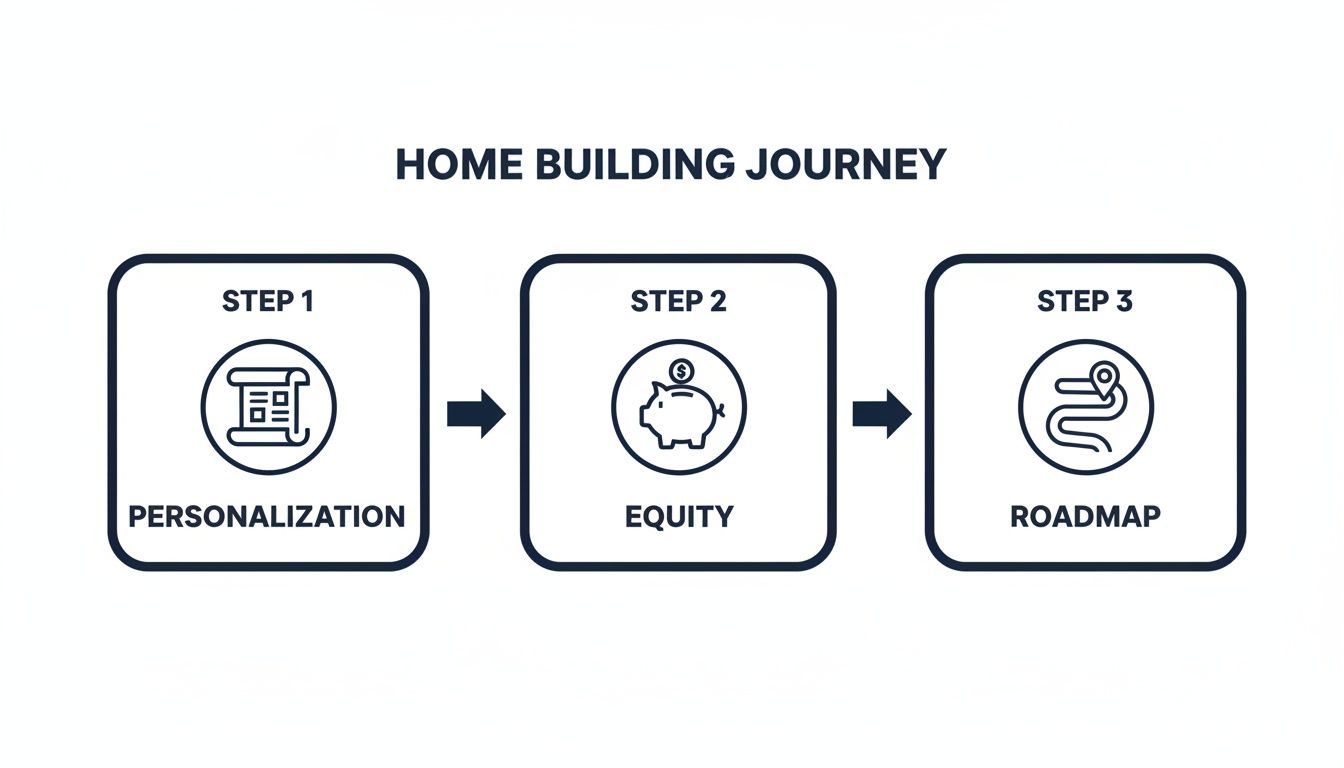
A successful build is a powerful mix of your personal vision, a smart financial investment, and a well-defined plan to get it all done. The best first step is often the simplest: have a conversation. Talk through your ideas with a builder who truly knows the local area.
Evaluating Your North Texas Land for a Custom Home
Before a single shovel hits the ground, the most critical work begins. You must understand your land—it’s the true foundation of a successful build, especially here in North Texas, where the terrain can hold more than a few surprises. A thorough evaluation ensures the beautiful lot you fell in love with can actually support the home you’ve been dreaming of, saving you from expensive, last-minute headaches.
That first site walk with your builder is about a professional set of eyes identifying potential challenges and opportunities you might not see. A lot that looks perfect at first glance might be hiding issues that only a trained eye can spot. This due diligence is non-negotiable for anyone planning a custom build on their own land.
The Land Itself: Soil, Slope, and Site Prep
The ground beneath your future home dictates everything, from the type of foundation you’ll need to your site preparation budget. In areas we build in often, like Granbury and Weatherford, the soil can be notoriously tricky. We see two common extremes: expansive clay soil that swells and shrinks dramatically with moisture, or tough, rocky ground that’s a challenge to excavate.
This is why a geotechnical report, or soil test, is essential. It tells your builder exactly what’s underground, allowing them to engineer a foundation that won’t shift, crack, or fail. For example, we worked with a family building near Glen Rose whose property had a significant amount of rock just a foot below the topsoil. Catching this upfront allowed us to factor in the extra excavation work and prevented a $15,000 surprise mid-project.
Don’t just look at the land; look into it. A soil test isn’t an optional expense—it’s a critical investment that protects your home’s structural integrity for decades.
Beyond the dirt, consider these other physical factors:
Topography and Drainage: How does the land slope? Where will rainwater naturally flow? Proper grading is crucial for directing water away from your foundation, which is a major concern during those intense North Texas thunderstorms.
Tree Clearing: Are there magnificent old oak trees you want to preserve? Mapping them out early helps position the home correctly and allows you to accurately budget for clearing any unwanted brush and trees.
Access: Can large trucks and heavy construction equipment get to the build site? If your lot is tucked away, you might need to budget for a temporary construction driveway.
Utilities and Legal Restrictions
Next are the practicalities of getting services to your property and understanding legal building constraints. This is especially true if you're building on rural acreage outside of city limits.
Will you connect to city water and sewer, or will you need a well and septic system? Drilling a water well can easily cost $8,000 to $15,000 or more, depending on depth, and a septic system’s design is entirely dependent on soil percolation tests. You’ll also need to contact local utility providers to see how far their lines run. Extending electricity just a few hundred feet can add thousands to your site prep costs before you’ve even started.
Here’s a checklist we use to cover all the bases when evaluating a property.
North Texas Lot Readiness Checklist
Use this checklist to assess the key factors of your property before starting a custom home build.
Checklist Item | Why It Matters in North Texas | Who to Contact |
|---|---|---|
Soil Conditions | Expansive clay and rock are common and heavily influence foundation design and cost. | Geotechnical Engineer |
Water Source | Determines if you need to budget for a well (drilling, pump, etc.) or just a city tap fee. | Local Water Utility, Well Drilling Company |
Wastewater System | Septic systems require specific soil types (percolation test) and acreage. | Septic Designer, County Health Department |
Power Access | Rural lots may require expensive trenching or new poles to connect to the grid. | Local Electric Cooperative or Provider |
HOA/Deed Restrictions | Can dictate home size, exterior materials, setbacks, and even landscaping. | Homeowners Association, County Clerk's Office |
Zoning & Setbacks | Defines how close to property lines you can build and what the land can be used for. | City or County Planning & Zoning Department |
Flood Plain Status | Building in a flood plain requires special permits, foundation types, and costly flood insurance. | |
Site Access | Is there a clear, stable path for concrete trucks and material deliveries? | Your Builder, Excavation Contractor |
Taking the time to check off these items will give you a much clearer picture of your total project costs and timeline.
Finally, check all legal restrictions. Your county’s planning and zoning department can confirm local ordinances, required setbacks, and flood plain information. Don’t forget to read through the property's deed for any specific restrictions that might limit the size, style, or even the exterior materials of your new home. A trusted local builder who knows the area can be your guide through this process, helping you ask the right questions to make sure your land is ready.
How to Find the Right On-Your-Lot Home Builder

Choosing a builder is the single most important decision you'll make in this entire process. You’re not just hiring a contractor; you’re bringing on a partner who will turn your vision into a real, physical home for your family.
This is especially true when building on private land in North Texas. You need someone with the technical expertise and a deep understanding of the unique challenges and opportunities that come with building on a raw piece of property. The right builder for an on-your-lot project is a specialist. They should have a portfolio packed with homes built on all kinds of terrain, from rocky hillsides near Glen Rose to wide-open rural properties outside Stephenville. If you have a lakeside lot in Granbury, you want a builder who has already dealt with waterfront construction.
Production Builder vs. True Custom Builder
It's crucial to understand the two main types of builders you'll encounter.
A production builder operates in large subdivisions, offering a limited menu of floor plans and finishes. They are masters of efficiency and volume, but that model often falls apart when faced with a one-of-a-kind project on a unique piece of land.
A true custom builder, on the other hand, thrives on these projects. They expect every homesite to be different and have systems to handle whatever your land throws at them—from engineering a foundation for our tricky expansive soil to coordinating a new well and septic installation. For a project as personal as this, a local, family-owned firm often provides a more responsive and hands-on experience.
Want to dive deeper into this? You can check out our guide on what defines a custom home.
Your builder should feel like a trusted advisor, not a salesperson. The relationship must be built on clear communication and a shared commitment to quality. They need to be your advocate from the first conversation to long after you've moved in.
Vetting Your Potential Building Partner
Once you have a shortlist, the interview process is your chance to dig into how they operate, their communication style, and what you can honestly expect during the build.
Here are some essential questions to ask any potential home builders who build on your lot:
How do you handle communication? A well-organized builder will have a clear system, often using project management software to track progress and decisions. Ask about regular, scheduled updates—it’s a great sign.
Can you provide references from recent on-your-lot clients? This is non-negotiable. Speaking with past clients, especially those in your area like Weatherford or Cleburne, gives you the real story.
What does your warranty cover? A quality builder always stands behind their work. Make sure you understand exactly what’s covered under their structural and workmanship warranties.
How do you manage the budget and changes? A transparent builder will have a straightforward process for handling change orders. You should know the cost and schedule impact before any new work begins.
Finding the right builder takes time, so don't rush it. This due diligence ensures you have a partner you can trust to bring your dream home to life, exactly where you want it.
Budgeting and Financing Your On-Your-Lot Build
Building your dream home starts with a realistic financial plan. Getting a handle on the true cost of a custom home can feel overwhelming, but when you break it down into clear, manageable pieces, the whole picture comes into focus. When you bring a builder onto your lot, the budget is about much more than just the house itself; it’s a comprehensive plan that must account for everything from preparing the land to professional services.
Breaking Down Your Project Costs
It helps to think of your total budget in three distinct buckets. Every one is critical, and a good builder will help you understand what goes into each one from the start.
Land Preparation: This is everything needed to get your raw land ready for a house: clearing trees, grading the site for proper drainage, and bringing in utilities. For a rural property around Granbury or Stephenville, this is often where the biggest unknowns lie. Drilling a water well or installing a septic system can easily run from $8,000 to over $20,000, depending on your soil and required depth.
Hard Costs: This is the most straightforward part. It’s all the physical materials and labor needed to build your home: concrete for the foundation, lumber for framing, roofing, windows, and so on.
Soft Costs: These are the indirect expenses that are just as important. This covers architectural design fees, engineering reports, and the permit fees required by the city or county.
Focusing only on hard costs is a common mistake and a surefire way to get hit with budget surprises. A trustworthy builder will provide a detailed estimate that covers all three areas.
Funding Your Build with a Construction Loan
Building a custom home isn't typically funded with a regular mortgage. Instead, you'll likely use a construction loan. These are short-term loans designed specifically to cover construction costs. The funds are paid out in stages, or "draws," as the project reaches specific milestones. For instance, a draw might be released after the foundation is poured, then another after the house is framed. The lender sends an inspector to verify the work is complete before releasing money, a system that protects you and ensures the project stays on schedule and budget.
A contingency fund isn't a "nice-to-have"—it's an absolute must for any custom build. We always advise our clients to set aside 10-15% of their total construction cost. This buffer is for the unexpected, like hitting rock during excavation or deciding you want that upgraded countertop last-minute.
The appraisal process for a new build is also different from an existing home. The appraiser reviews your blueprints, material specifications, and land to estimate what the home will be worth after it's finished. If you want to dive deeper, we wrote a detailed Texas guide to new construction appraisals that explains it all.
Making smart material choices also has a huge impact on your budget and the home's long-term value. A durable standing seam metal roof, popular here for withstanding Texas weather, costs more upfront than shingles but adds serious value and saves on maintenance. The same goes for high-efficiency windows—they may increase the initial budget, but they'll lower your energy bills for as long as you own the home.
From Blueprints to Breaking Ground
Once your budget is set and your builder is chosen, the real fun begins. This pre-construction phase is where your dream is translated onto paper. We move from ideas to detailed blueprints and technical specs that will guide every step of the build. Getting every detail nailed down now saves a world of headaches and unexpected costs later on.
This stage is all about collaboration. You’ll work side-by-side with your builder and their design team to refine the floor plan until it’s a perfect fit for your family’s lifestyle. This is also when you'll finalize all material selections—from the stone on the fireplace to the style of the windows. We’re creating a comprehensive playbook for your home, leaving no room for guesswork.
Finalizing Plans and Securing Permits
With a full set of architectural plans, your builder will take the lead on submitting them for permits. Whether you’re building in Parker County or Hood County, navigating the local permitting office can be a complex process. Each municipality has its own quirks and timelines. An experienced local builder who’s in these offices regularly knows the people and the process, which can make a huge difference in getting approvals without unnecessary delays.
While permits are under review, a proactive builder is already lining up top subcontractors and placing orders for materials with long lead times, like windows or trusses. This kind of planning keeps a project running smoothly once work begins.
The time between finalizing plans and breaking ground is anything but quiet. It's when your builder meticulously lines up all the dominoes—permits, materials, and skilled trades—so that once the first one falls, the project moves forward seamlessly.
Preparing Your Lot for Construction
Once permits are approved, you’ll see the first signs of progress. Site preparation is the literal foundation of your home and involves a few critical steps.
Clearing and Access: First, we clear the build site of any trees or brush. Then, we create a temporary construction entrance so heavy equipment can get in and out without tearing up the property.
Grading and Excavation: The land is then graded to set the correct elevation for the house. This is crucial for ensuring water drains away from your foundation.
Foundation Pad Prep: Finally, the ground where the house will sit is excavated and prepped for the foundation with absolute precision.
Each step sets the stage for a smooth, efficient build. This initial site work usually takes a few weeks. For a complete picture of what to expect, check out our homeowner's guide to the construction timeline.
When the site is prepped and you see the foundation forms staked out, you know the exciting part is just around the corner.
Got Questions About Building on Your Lot in North Texas? We've Got Answers.

If you're considering building a custom home on your own land, you likely have many questions. We’ve pulled together some of the most common things we hear from families in the Granbury and Weatherford areas to give you straight, practical answers.
How Long Does It Really Take to Build a Custom Home on My Own Lot?
The honest answer is: it depends. The timeline for any custom home hinges on the complexity of your design, your land's readiness, and even the unpredictable Texas weather.
As a general rule, once blueprints are locked in, the pre-construction phase (permitting and site prep) can take 2 to 4 months. Once we break ground, the actual construction of a custom home in North Texas typically takes anywhere from 9 to 18 months. A good builder will give you a realistic schedule based on your specific project, not a generic estimate, and be upfront about potential delays.
Can I Bring My Own House Plans, or Do I Have to Use Yours?
Absolutely, bring them! Most true custom home builders are excited to work with plans you already have, whether it's a full set from an architect or a well-thought-out sketch. That's the perfect starting point.
The magic is in the collaboration. We'll review your plans to ensure they're practical for your specific lot and budget, perhaps suggesting a few tweaks to save money, improve the layout, or better account for the North Texas climate. Our job is to bring your vision to life, not force you into one of our boxes.
The best partnerships start with flexibility. Your builder should be able to adapt to your plans, not the other way around. This collaborative approach is what makes the final home a true reflection of you.
What Are the Biggest Unexpected Costs When Building on Rural Land?
When building in the country—in places like Glen Rose or Stephenville—the most common budget surprises are almost always tied to site development. These are crucial costs that must be handled before a single wall goes up.
Be prepared for these potential expenses:
Water Well Drilling: The final cost is unknown until you start drilling, as it depends entirely on how deep you must go to find a reliable water source.
Engineered Septic System: Your soil dictates the design. Challenging soil conditions often require more complex and expensive septic systems, as determined by county regulations.
Utility Connections: Getting electricity from the road to your build site can cost thousands per pole. The same goes for other utilities if they aren't already at your property line.
Driveway Construction: That long, beautiful driveway you’re imagining? Building it to last on a large piece of land can be a major line item that many people forget to budget for.
An experienced local builder will flag these potential costs during your initial site evaluation, helping you create a budget without nasty surprises.
What Happens If We Want to Make Changes During Construction?
It happens on almost every custom project! A professional builder won't panic—they'll have a clear "change order" process. Here’s how it works: you request a change, and your builder documents exactly what you want. They then provide a detailed breakdown of any new costs and how the change might affect the timeline. Nothing happens until you sign off on that change order. This transparent system keeps everyone on the same page about the budget and schedule.
Ready to talk about the vision for your new home? The team at Gemini Homes is here to answer your questions and provide a no-pressure consultation to get you started. Let's build your dream, together.
Comments