
Your Essential North Texas Fall Home Checklist Maintenance Guide
- scott shipp
- Feb 8
- 19 min read
As the intense Texas heat finally gives way to cooler breezes, fall in North Texas is a welcome relief. From Granbury to Weatherford, it’s the perfect time to enjoy the outdoors before winter arrives. It's also the most critical season for home maintenance. Taking proactive steps now prevents costly surprises later, ensuring your home remains a safe and comfortable sanctuary through the colder months and potential ice storms. This comprehensive fall home checklist maintenance guide is tailored specifically for our region, addressing the unique challenges posed by our expansive clay soils, unpredictable fall storms, and the harsh transition from sweltering summers to chilly winters.
We'll walk you through ten essential tasks, offering practical advice, DIY vs. pro insights, and real-world examples to help you protect your biggest investment. This isn't just a generic list; it's a strategic plan designed for the realities of owning a home in North Texas. We’ll cover everything from securing your roof against high winds to protecting your foundation from moisture and winterizing your prized outdoor living spaces.
Whether you own a historic home in Stephenville, are managing a ranch in Glen Rose, or just finished a custom build on acreage, this plan will empower you to tackle fall maintenance with confidence. Following these steps helps safeguard your property’s value, improves energy efficiency, and provides peace of mind, letting you enjoy everything the beautiful Texas autumn has to offer.
1. Clean and Inspect Gutters and Downspouts
Your home's gutter system is its first line of defense against water damage, channeling rainfall safely away from your foundation, siding, and landscaping. As a key part of your fall home checklist maintenance, cleaning out leaves, twigs, and sediment prevents blockages that can lead to costly repairs, especially with the heavy autumn storms we often see from Granbury to Weatherford.
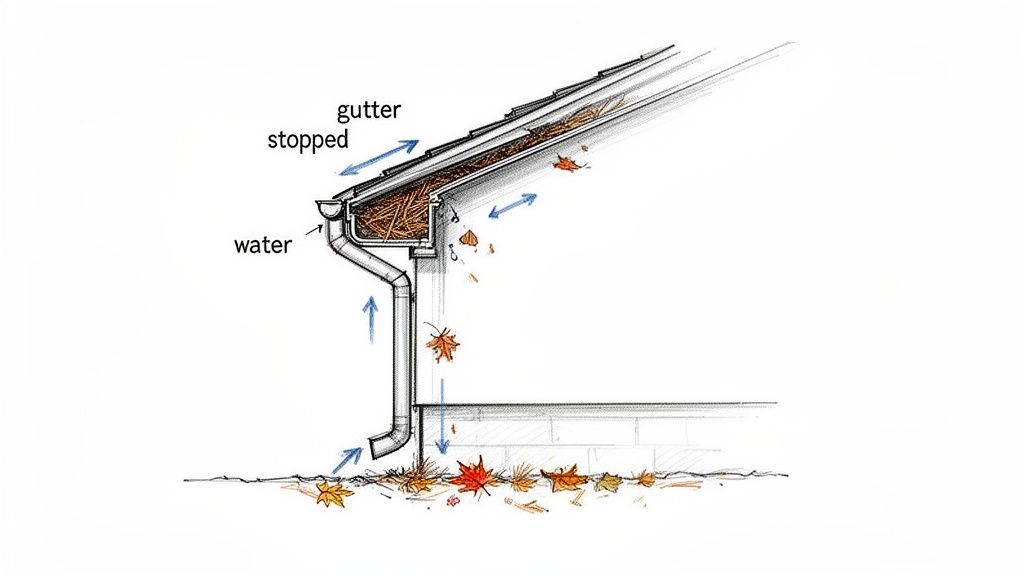
When gutters overflow, water saturates the soil around your foundation, which can cause shifting and cracking over time. It can also seep behind fascia boards, leading to wood rot, or even penetrate your attic and walls, creating a breeding ground for mold and mildew. This is especially true for North Texas properties with mature oak and pecan trees that shed an enormous amount of leaves each fall.
Actionable Gutter Maintenance Tips
To keep your system functioning properly, follow these steps:
Timing is Key: Plan to clean your gutters in late October or early November, after the majority of leaves have fallen but before the first hard freeze.
Safety First: For single-story homes, use a sturdy ladder and have a spotter. For multi-story homes or properties with steep rooflines, hiring a professional is the safest and most effective option. Professional cleaning services in the Granbury area typically range from $150 to $350, depending on the home's size and complexity.
Inspect and Clear: Remove all debris from the gutters and flush them with a hose to ensure water flows freely. While you're up there, check for rust, holes, or sagging sections that may need repair.
Check Downspouts: Ensure downspouts are clear and extend at least 4 to 6 feet away from the foundation to direct water away from your home's base.
A critical but often overlooked step is ensuring your downspouts discharge water far enough from your slab or pier and beam foundation. Proper drainage is a fundamental element we emphasize in every Gemini Homes custom build to protect the home’s structural integrity for decades.
This simple task prevents significant water-related issues, preserving your home's value and structural health through the wet winter months. If you notice persistent issues like sagging or leaks, it might be time for a professional assessment.
2. Inspect and Seal Roof for Damage or Leaks
Your roof is the primary shield protecting your home from the elements, and a thorough inspection is a non-negotiable part of your fall home checklist maintenance. Before North Texas winter brings colder temperatures, ice, and wind, identifying and addressing vulnerabilities like missing shingles, cracked flashing, or deteriorated sealant is critical. A small, undiscovered leak can lead to significant interior water damage, mold growth, and compromised structural integrity.
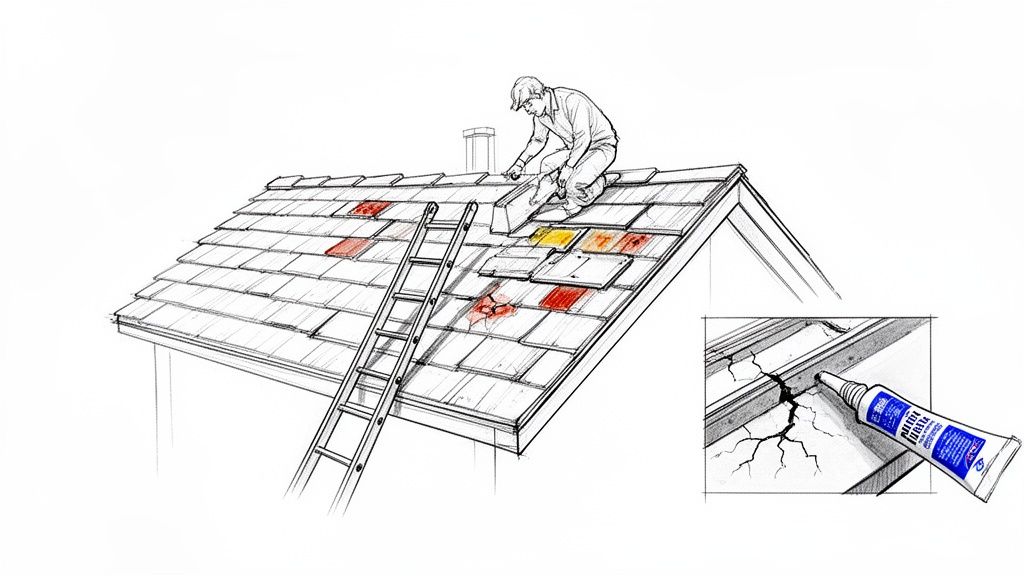
From Glen Rose to Stephenville, homeowners are familiar with the severe weather that can sweep through the region, especially during the fall transition. High winds can lift shingles, and hail can cause granule loss or cracking, weakening your roof's defense system. Addressing these issues in the fall ensures your home is secure before winter weather makes repairs more difficult and costly.
Actionable Roof Maintenance Tips
To safeguard your home's most vital protective layer, follow these inspection steps:
Schedule a Visual Inspection: From the ground, use binoculars to scan for obviously damaged, curled, or missing shingles. Pay close attention to areas around vents, skylights, and chimneys, as these are common failure points.
Check the Attic: After a heavy rain, safely inspect your attic for signs of water intrusion, such as dark stains on the wood, damp insulation, or a musty smell. This is the surest way to confirm an active leak.
Document Everything: If you find damage, take clear, dated photos. This documentation is essential if you need to file an insurance claim, a process that can be complex. You can learn more about navigating the North Texas roof insurance claim process to be better prepared.
Know When to Call a Pro: While sealing minor cracks around flashing can be a DIY task, walking on a roof is dangerous. For any significant damage, steep rooflines, or homes older than 10 years, a professional inspection is the safest choice. A professional roofer in the Weatherford area may charge between $200 and $500 for a detailed inspection and report.
We often see the consequences of delayed roof maintenance during whole-home remodels. A proactive fall inspection prevents a minor issue from becoming a major structural repair that impacts ceilings, walls, and even electrical systems. Protecting the envelope of your home is the most important investment you can make.
Taking the time for this crucial checkup provides peace of mind, protecting your home and family from the harshness of the coming winter. If you uncover issues that require professional attention, addressing them during the drier fall season is always ideal.
3. Check and Repair Exterior Caulking and Weatherstripping
Your home's defense against the elements often comes down to the smallest details, like the seals around windows, doors, and siding. Caulking and weatherstripping are essential barriers that prevent air leaks, moisture intrusion, and pest entry. As a crucial part of your fall home checklist maintenance, inspecting and repairing these seals ensures your home is airtight before the heating season begins, directly impacting your energy bills and comfort during a chilly North Texas winter.
Even small gaps where caulk has cracked or weatherstripping has worn out can lead to significant heat loss. This forces your HVAC system to work harder, increasing utility costs. We've seen homeowners in Weatherford and Aledo reduce their heating bills by as much as 10-15% simply by addressing these drafts. Furthermore, failed seals can allow water to seep into wall cavities, leading to rot and mold, which are far more expensive problems to fix down the road.
Actionable Sealing and Weatherproofing Tips
To ensure your home is properly sealed, follow these steps:
Inspect Visually and Physically: Walk the exterior of your home and look for cracked, peeling, or shrinking caulk around windows, door frames, and where siding meets trim. On a breezy day, check indoors for drafts around doors and windows to identify failed weatherstripping.
Choose the Right Material: Use a high-quality, paintable acrylic latex caulk for most exterior trim and siding. For areas with more movement or moisture exposure, like around vents or faucets, a flexible silicone or polyurethane caulk is a better choice. Proper material selection is key for longevity against our Texas temperature swings.
Proper Application is Crucial: Scrape away all old, failing caulk with a putty knife or caulk removal tool for a clean surface. Apply a new, continuous bead of caulk, and smooth it with a wet finger or tooling instrument for a perfect seal. For doors, install new foam or rubber weatherstripping to create a tight fit when closed.
Don't Forget Unseen Areas: Check the seals around exterior vents, electrical boxes, and where plumbing enters the home. These small penetrations are common sources of air leaks and entry points for pests seeking warmth.
Sealing the building envelope is a fundamental principle of energy-efficient construction. In our custom homes and major remodels, we use advanced sealing techniques and high-performance products to create an airtight structure from the start, minimizing energy waste for the life of the home.
Taking an afternoon to address these small gaps is one of the most cost-effective maintenance tasks you can perform, paying you back in energy savings all winter. If you discover widespread issues or damage to the underlying wood, a professional assessment can help determine the best course of action.
4. Test and Service HVAC System for Winter Operation
After a long, hot North Texas summer, your HVAC system is ready for a well-deserved break, but its work isn't done. A critical part of any fall home checklist maintenance is ensuring your heating system is prepared for the first cold snap. Scheduling a professional tune-up now prevents mid-winter breakdowns and ensures your system runs efficiently when you need it most.
Ignoring your furnace until a frigid January morning is a recipe for disaster. An unserviced system can harbor safety issues, especially with gas furnaces, and will almost certainly run less efficiently, driving up your utility bills. Proactive maintenance ensures your family’s comfort and safety, a principle we build into every Gemini Homes project with high-efficiency, professionally installed HVAC systems designed for Texas weather extremes.
Actionable HVAC Maintenance Tips
To prepare your heating system for winter, follow these essential steps:
Schedule Early: Book a professional service call in September or early October. HVAC technicians in the Granbury and Weatherford areas get extremely busy once cold weather hits, and you’ll avoid emergency call-out fees. A standard tune-up typically costs between $80 and $200.
Change Your Filters: This is the easiest and most important DIY task. Replace your furnace filter every 1-3 months to maintain healthy airflow and reduce strain on the system.
Test and Inspect: Turn on your heat for a short test run to ensure it cycles on and off correctly. Check that all vents and return air registers are open and unobstructed by furniture or rugs to allow for proper circulation.
Safety Check: A professional will inspect the heat exchanger for cracks, check gas connections, and clean key components, which is vital for preventing carbon monoxide leaks and ensuring safe operation all winter. You can also learn more about insulating HVAC ducts to further boost your system's efficiency.
Modern, high-efficiency HVAC units are a cornerstone of our new builds and major remodels. We prioritize systems that not only deliver exceptional comfort but also provide long-term energy savings and reliability for North Texas homeowners, from young families to retirees.
This proactive check-up guarantees your home stays warm and safe during the coldest months, preventing inconvenient and expensive emergency repairs.
5. Inspect Foundation and Basement for Cracks or Water Damage
Your home’s foundation is its most critical structural component, and in North Texas, it faces unique challenges from our expansive clay soils. As part of your fall home checklist maintenance, a thorough inspection can reveal early signs of water infiltration or movement, preventing major issues before the wetter winter and spring seasons arrive.
The intense summer heat can cause the clay soil around your home in areas like Granbury and Weatherford to shrink, pulling away from the foundation. When heavy autumn rains arrive, this soil expands rapidly and unevenly, putting immense pressure on your slab or pier and beam structure. This cycle can lead to cracks, moisture intrusion in basements or crawlspaces, and long-term structural instability. Early detection is key to avoiding costly foundation repairs, which can range from a few thousand dollars for minor fixes to over $20,000 for significant underpinning.
Actionable Foundation Maintenance Tips
To safeguard your home’s structural integrity, follow these inspection steps:
Walk the Perimeter: After a good rain, walk around the outside of your home. Look for standing water or areas where the soil has pulled away from the foundation. Ensure the ground slopes away from your home, ideally a drop of 6 inches over the first 10 feet.
Inspect Inside and Out: Examine the interior and exterior foundation walls for any cracks. Small hairline cracks are often normal settling, but horizontal cracks, stair-step cracks in brickwork, or any crack wider than a quarter-inch warrant professional evaluation.
Check for Moisture: In basements or crawlspaces, look for water stains, efflorescence (a white, powdery residue), or a musty smell. Use a moisture meter on drywall and flooring to detect hidden dampness.
Seal Small Gaps: Use an appropriate concrete caulk or hydraulic cement to seal any small, non-structural cracks you find to prevent water from seeping in and freezing, which would widen the gap.
Proactive drainage and foundation design are non-negotiable in our custom builds across North Texas. We engineer every foundation to manage seasonal soil movement and integrate robust waterproofing and grading plans to protect the home from day one.
A diligent fall foundation check is a small time investment that protects your most valuable asset. If you discover significant cracking or persistent water issues, consulting a structural engineer or foundation repair specialist is a critical next step.
6. Clean Exterior and Inspect for Pest Entry Points
As cooler weather settles in across North Texas, pests like rodents, spiders, and roaches start looking for a warm place to spend the winter, and your home is a prime target. A thorough exterior cleaning is a crucial part of your fall home checklist maintenance, as it removes potential hiding spots and reveals vulnerabilities that pests can exploit to gain entry.
Piles of leaves, overgrown vegetation, and stacked firewood near your foundation create the perfect habitat for pests. Once they establish a presence near your home, it is only a matter of time before they find their way inside through tiny cracks in the foundation or gaps around utility lines. For rural and ranch properties near Godley and Tolar, this proactive perimeter maintenance is especially vital to prevent infestations.
Actionable Pest Prevention Tips
To secure your home's exterior and deter unwanted guests, follow these steps:
Create a Buffer Zone: Clear all leaves, dead vegetation, and debris within a 10-foot radius of your foundation. Keep mulch at least 6 inches away from siding to reduce moisture and insect activity.
Trim and Prune: Cut tree branches so they are at least 6 to 8 feet away from your roofline. This eliminates a common "bridge" for rodents and other climbing pests to access your attic and eaves.
Store Materials Properly: Stack firewood at least 20 feet away from the house and elevate it off the ground. This simple step disrupts a major nesting area for termites, spiders, and rodents.
Seal Entry Points: Carefully inspect your foundation, siding, and roofline for any gaps or cracks. Use caulk or expandable foam to seal openings around utility pipes, vents, and faucets. Ensure attic vents and roof penetrations are properly screened and undamaged.
A well-sealed building envelope is the cornerstone of a pest-free home. During our custom builds, we pay meticulous attention to sealing every potential entry point, from the foundation sill plate to the roof vents, ensuring long-term protection and peace of mind for homeowners.
Taking an hour to walk your property and address these areas can save you from the costly and stressful process of professional pest extermination later. If you find signs of an existing infestation, such as droppings or nesting materials, it's best to call a pest control expert for a professional assessment.
7. Winterize Outdoor Water Systems and Sprinklers
The unpredictable nature of North Texas winters, with sudden temperature drops, makes winterizing your outdoor water systems a critical task. This part of your fall home checklist maintenance protects against burst pipes, cracked sprinkler heads, and damaged pool equipment, which can lead to extensive and expensive water damage. For properties in Granbury and Glen Rose with elaborate irrigation or custom water features, this preventative step is non-negotiable.
When water freezes, it expands with enough force to rupture metal pipes and PVC lines. A single hard freeze can destroy an entire irrigation system, damage outdoor hose bibs, and compromise the plumbing for pools and spas. The resulting leaks might not be discovered until spring, by which time they could have caused significant foundation erosion or landscape damage.
Actionable Winterization Tips
To protect your outdoor plumbing, follow these essential steps before the first hard freeze, typically by mid-November in our region:
Disconnect and Drain Hoses: Disconnect all garden hoses from their spigots. Drain them completely and store them in a garage or shed to prevent cracking.
Shut Off Exterior Faucets: Locate the interior shutoff valve for each outdoor faucet (usually in a basement, crawlspace, or under a sink). Turn it off, then go outside and open the faucet to let any remaining water drain out. Leave the outside faucet open for the winter.
Insulate Exposed Pipes: Use foam pipe insulators to cover any exposed exterior pipes or spigots, providing an extra layer of protection against freezing.
Winterize Irrigation Systems: This is a task best left to professionals. They will use a high-volume air compressor to blow all water out of the lines, heads, and valves, a process that prevents catastrophic damage. Professional winterization in the Weatherford area generally costs between $100 and $250.
Protecting a home’s exterior plumbing is just as important as the interior. For the custom outdoor living spaces we create at Gemini Homes, which often include complex pools, spas, and water features, we design the plumbing systems with accessible shutoffs and drainage points to make this seasonal process as straightforward as possible.
Properly winterizing your outdoor water systems is a small investment of time and money that prevents major headaches and costly repairs come spring. If you're unsure how to handle your specific system, especially a complex irrigation network or pool, a professional can ensure it’s done correctly.
8. Trim Trees and Remove Dead Branches Over House
The mature oak and pecan trees that grace properties from Weatherford to Glen Rose are a beautiful asset, but they also pose a significant risk if not properly maintained. A crucial part of your fall home checklist maintenance is proactively trimming trees, especially removing dead or weak branches that overhang your home. This prevents catastrophic damage during the unpredictable ice storms and high winds that can hit North Texas in the winter.
A single ice-laden limb can weigh hundreds of pounds, easily punching through a roof, damaging siding, or crushing outdoor structures. Beyond preventing property damage, strategic pruning improves the tree's health by removing diseased wood and allowing for better light and air penetration, which is essential for its long-term vitality. For homeowners on larger rural properties near Tolar and Bluffdale, managing multiple mature trees is a non-negotiable safety measure.
Actionable Tree Trimming Tips
To protect your home and investment, follow these professional guidelines:
Hire a Certified Arborist: For any branches near structures or power lines, or for trees over 30 feet tall, hiring an ISA-certified arborist is the only safe option. Professional services in our area can range from $400 for a small job to several thousand dollars for large, complex trees, but this is a small price compared to a new roof.
Strategic Removal: Focus on removing branches that are dead, have weak V-shaped connections, or are growing directly over your roof and driveway. Also, remove any limbs that are physically touching your home to prevent moisture and pest issues.
Proper Timing for Oaks: To prevent the spread of oak wilt, a serious concern in North Texas, only prune oak trees during their dormant season, which is typically from late fall through early spring.
Avoid Over-Pruning: Never remove more than 25% of a tree's canopy in a single season. Aggressive trimming can stress the tree, making it more vulnerable to disease and pests as it enters winter.
We often see the aftermath of neglected trees during storm-related roof inspections. A well-maintained tree canopy is just as important as a well-maintained roof. Proactive trimming is one of the most effective ways a homeowner can prevent a costly insurance claim.
Taking care of your trees now ensures they remain a beautiful feature, not a winter liability. If you're unsure where to start, a professional arborist can provide a full health assessment and safety plan.
9. Inspect and Maintain Deck, Pergola, and Outdoor Structures
Your outdoor living spaces, like decks and pergolas, are extensions of your home that require specific attention as part of any thorough fall home checklist maintenance. Before the colder, wetter North Texas winter sets in, a detailed inspection ensures these structures remain safe, structurally sound, and ready for spring gatherings, preventing minor issues from turning into costly replacements.
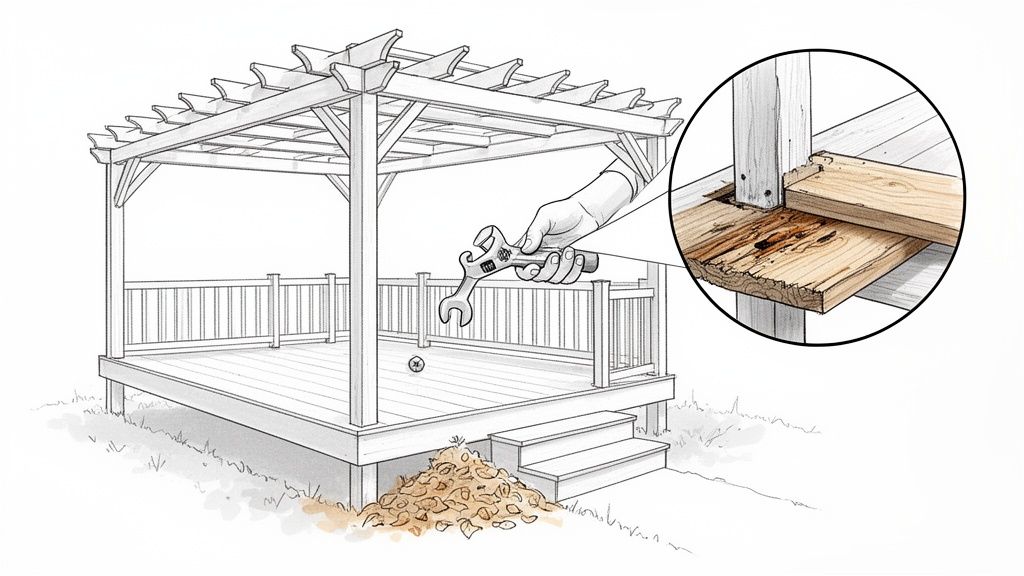
Exposure to our region's intense summer sun followed by fall moisture can cause wood to warp, split, and rot, while metal components can rust. From the sprawling custom decks seen in Granbury to the elegant pergolas that define outdoor living in Weatherford and Glen Rose, proactive maintenance is key to preserving both their beauty and their structural integrity against winter’s damp conditions.
Actionable Outdoor Structure Maintenance Tips
Incorporate these checks into your fall routine to protect your outdoor investments:
Inspect for Wood Rot: Use a screwdriver or awl to gently probe deck boards, support posts, and railings, especially in areas where water tends to pool. Soft, spongy spots indicate rot that needs immediate repair to stop it from spreading.
Tighten Hardware: Check and tighten all visible nuts, bolts, and screws on your deck and pergola. Temperature fluctuations can cause fasteners to loosen over time, compromising stability.
Check Railing Safety: Ensure all railings are secure and spindles are intact. Gaps should be no wider than 4 inches to prevent small children from squeezing through, a critical safety standard.
Clean and Seal: Clear all leaves and debris from between deck boards and from pergola tops to prevent moisture buildup and decay. If the finish on your wood deck is worn, applying a fresh coat of water-repellent sealant before winter offers crucial protection.
We always advise our clients that the longevity of a beautiful outdoor space depends heavily on material choice and consistent upkeep. Selecting the right wood for a North Texas deck and maintaining it each fall are the two most important factors in ensuring it lasts for decades.
This seasonal check-up is a small investment of time that pays significant dividends by extending the life of your outdoor structures. If you’re considering which materials hold up best in our climate, you can explore our guide to the best wood for outdoor decks in North Texas.
10. Prepare Landscape and Lawn for Fall and Winter
Your lawn and landscape are significant investments that add beauty and value to your property. Giving them the right attention in the fall is a crucial part of your fall home checklist maintenance, setting the stage for robust health and vibrant color next spring. The cooler temperatures and increased rainfall we see in North Texas from September to November create the perfect window for tasks that strengthen grass and protect plants before winter dormancy.
Neglecting fall lawn care can lead to a patchy, weed-infested yard in the spring. Compacted soil starves grassroots of oxygen and nutrients, while unpruned perennials can become susceptible to disease. Proper preparation now ensures your landscape investment, whether on a half-acre lot in Granbury or sprawling acreage in Tolar, emerges from winter strong and healthy, minimizing the work needed next year.
Actionable Landscape Maintenance Tips
To prepare your lawn and garden for the coming seasons, follow these steps:
Aerate and Overseed: Core aeration in September or October relieves soil compaction. Immediately follow up by overseeding thin areas with a quality cool-season grass blend, which thrives in our milder fall and winter climate.
Fertilize for Root Strength: Apply a fall-specific fertilizer that is higher in potassium. This nutrient strengthens root systems and improves your lawn's tolerance to cold, drought, and disease.
Prune and Mulch: After the first hard frost, cut back most perennials to about 4 to 6 inches. Apply a 2 to 3-inch layer of fresh mulch to garden beds to insulate plant roots and retain moisture, but keep it clear of tree trunks to prevent rot.
Plant for Spring: October and November are the ideal months to plant spring-flowering bulbs like tulips and daffodils. This simple task pays off with beautiful blooms come March.
We always design landscapes for our custom homes to be as resilient as they are beautiful. Fall preparation is key; it’s what ensures the vibrant curb appeal we establish on a new build in Weatherford returns stronger each spring, protecting the homeowner's investment.
Taking these steps ensures your outdoor spaces remain a healthy, attractive extension of your home. If your landscape needs more than seasonal care, our team can help you design and build a truly resilient outdoor living area.
10-Point Fall Home Maintenance Comparison
Task | Implementation Complexity | Resource Requirements | Expected Outcomes | Ideal Use Cases | Key Advantages |
|---|---|---|---|---|---|
Clean and Inspect Gutters and Downspouts | Low–Medium (ladder work; straightforward) | Ladder, gloves, scoops, trash disposal; pro for multi‑story | Clear drainage, reduced water backup and erosion risk | Homes with trees; after leaf fall; pre‑storm season | Prevents foundation/roof damage; reduces pests |
Inspect and Seal Roof for Damage or Leaks | Medium–High (roof access, safety concerns) | Safety gear, ladder, sealants, shingle materials; professional inspection/repair | Fewer leaks, extended roof life, insurance documentation | Aging roofs, post‑storm inspection, pre‑winter maintenance | Prevents interior water damage; early problem detection |
Check and Repair Exterior Caulking and Weatherstripping | Low–Medium (detail work) | Caulk, caulk gun, weatherstripping, appropriate sealant types | Improved airtightness, reduced drafts and moisture intrusion | Drafty windows/doors, older homes, before heating season | Low cost; DIY possible; lowers heating bills |
Test and Service HVAC System for Winter Operation | Medium (technical diagnostics) | Filters, basic tools, HVAC technician for service/repairs | Reliable heating, improved efficiency, fewer breakdowns | Before heating season; systems >1 year; energy‑sensitive homes | Prevents emergency failures; maintains air quality |
Inspect Foundation and Basement for Cracks or Water Damage | Medium–High (may need specialists) | Flashlight, moisture meter, concrete caulk/hydraulic cement; contractor/engineer for major issues | Early detection of structural/moisture problems; informed repairs | Homes on clay soil, after heavy rain, older foundations | Protects structural integrity; avoids costly repairs |
Clean Exterior and Inspect for Pest Entry Points | Low–Medium (labor‑intensive) | Pruners, rake, trash disposal, caulk/foam; pest control as needed | Fewer pest infestations, improved perimeter drainage and appearance | Properties with vegetation or rural settings; pre‑winter | Reduces infestation risk; inexpensive preventive action |
Winterize Outdoor Water Systems and Sprinklers | Medium (system knowledge required) | Shutting valves, drain tools, air compressor for blowout, insulation; pro for pools | Prevents frozen/burst lines and equipment damage | Irrigated yards, outdoor faucets, pools/spas in freeze zones | Avoids expensive freeze repairs; quick preventive step |
Trim Trees and Remove Dead Branches Over House | High (safety and skill required) | Chainsaw/pruning tools, safety gear; certified arborist for large trees | Reduced branch failure risk, healthier trees, safer property | Mature trees near structures; after storms; hazard mitigation | Protects structures and people; improves tree health |
Inspect and Maintain Deck, Pergola, and Outdoor Structures | Medium (structural and finish checks) | Hand tools, fasteners, sealant/stain, replacement lumber; contractor for major repair | Safer outdoor spaces, extended material life, fewer winter failures | Homes with decks/pergolas/pools; pre‑winter care | Prevents safety hazards; preserves value and usability |
Prepare Landscape and Lawn for Fall and Winter | Medium (seasonal, timely tasks) | Aerator, seed, fertilizer, mulch, pruning tools or landscaper | Better spring emergence, weed reduction, insulated plants | Lawns needing overseeding, landscaped properties in fall | Improves long‑term health and curb appeal |
Your Partner in Year-Round Home Care
Completing your seasonal maintenance is more than just a series of chores; it’s a proactive investment in the health, safety, and long-term value of your North Texas home. As we've detailed in this fall home checklist maintenance guide, each task plays a critical role in fortifying your home against the colder months ahead. This is about protecting the place where your family gathers and memories are made.
By following this comprehensive checklist, you've taken a significant step toward preventing the kinds of surprises no homeowner wants to face mid-winter, like a failed furnace during a rare Granbury freeze, a roof leak discovered during a heavy downpour, or foundation issues exacerbated by shifting soil. The effort you put in now directly translates into peace of mind, allowing you to enjoy the holiday season without the anxiety of a potential home repair emergency. This proactive approach saves you from costly repairs and extends the lifespan of your home's most critical systems.
Key Takeaways for North Texas Homeowners
Let's recap the most vital insights from our guide. Remember that in our region, from Weatherford to Glen Rose, the transition from blistering heat to cooler temperatures can be uniquely stressful on a home.
Water is the Primary Adversary: The most critical theme running through this checklist is water management. Ensuring gutters divert rain from your foundation, sealing cracks to prevent moisture intrusion, and winterizing sprinkler systems to avoid frozen pipes are paramount to preventing rot, mold, and structural damage.
Sealing the Envelope is Non-Negotiable: Your home's "envelope" is its first line of defense. Taking the time to inspect and repair caulking, weatherstripping, and roofing seals is a direct investment in energy efficiency that will pay you back on your utility bills all winter long.
Professional Expertise is an Asset: While the DIY spirit is strong in Texas, recognizing when to call a professional is the mark of a smart homeowner. Tasks involving roofing, complex HVAC diagnostics, or potential foundation problems require specialized knowledge. A small investment in an expert can prevent a catastrophic and expensive failure.
A Note on Prioritization: If your time is limited, focus on the "Big Three" for fall: Roofing, Gutters, and HVAC. Securing these three areas will mitigate the most common and costly winter-related home issues we see across North Texas.
Your Actionable Next Steps
With this knowledge in hand, the path forward is clear. Use this guide to conduct a thorough walkthrough of your property. Start with the exterior tasks while the weather is still pleasant, then move indoors. Document any areas of concern with photos on your phone, making notes of what you observed.
For every issue you identify, ask yourself: "Do I have the skills, tools, and time to fix this safely and correctly?" If the answer is no, that’s your cue to contact a qualified local professional. Acting now ensures you can get your home secured on your timeline, not during an emergency. Mastering this seasonal rhythm of proactive fall home checklist maintenance is what transforms a house into a well-cared-for, resilient home.
As builders and remodelers who have served families from Granbury to Aledo, we know what it takes to protect a home's integrity through every season. If your fall inspection uncovers a larger project or a repair that feels beyond your scope, Gemini Homes is here to provide an expert assessment and a clear path forward. Contact us for a complimentary, no-obligation consultation to ensure your home is ready for whatever the Texas winter brings.
Comments