
A Guide to the Best Wood for Outdoor Decks in North Texas
Choosing the best wood for your outdoor deck in North Texas comes down to balancing your budget, the look you want, and how much maintenance you’re willing to tackle. For a solid, budget-conscious option, pressure-treated pine is hard to beat. For timeless beauty and natural durability, Western Red Cedar is a classic for a reason. And if you demand the absolute best in longevity with minimal upkeep, tropical hardwoods like Ipe are the gold standard.
Your Guide to Selecting the Perfect North Texas Decking Wood
A deck isn't just an addition; it's a cornerstone investment for your North Texas home, creating a hub for family gatherings and enjoying our unique landscape. But here in places like Granbury and Weatherford, the intense sun and fluctuating humidity demand materials that are as tough as they are beautiful. Making the right choice from the start ensures your outdoor space remains a source of pride, not a constant chore.
Choosing your decking material is a balancing act between your budget, your desired aesthetic, and the amount of maintenance you're willing to perform. A sprawling deck in Aledo built for a growing family has different needs than a quiet, elegant retreat for retirees in Glen Rose. Understanding these trade-offs is the first step toward a successful project. For a deeper dive, our deck building materials comparison offers even more detail.
Comparing Top Decking Woods for North Texas Homes
This quick comparison breaks down the most popular decking options based on key factors for homeowners in our region.
Wood Type | Typical Lifespan | Maintenance Level | Upfront Cost | Best For |
|---|---|---|---|---|
Pressure-Treated Pine | 10-15 years | High (annual sealing) | $ | Budget-focused families |
Western Red Cedar | 15-20+ years | Medium (periodic oiling) | $$ | Classic Texas aesthetics |
Tropical Hardwood (Ipe) | 40-75+ years | Low (optional oiling) | $$$$ | Luxury & lifetime performance |
Composite Decking | 25-30+ years | Very Low (cleaning) | $$$ | Busy homeowners & retirees |
Every material has its place. A well-maintained pressure-treated pine deck can provide years of enjoyment for your family, while an investment in a hardwood like Ipe can last a lifetime, becoming a permanent feature of your rural property. This guide will help you understand which path is right for you.
Pressure-Treated Pine: The Go-To for Affordable Decks
Look around Granbury and the rest of North Texas, and you'll see one decking material more than any other: pressure-treated (PT) pine. Its popularity is simple—it’s the most budget-friendly way to build a solid, functional deck. For families wanting a great outdoor space for the kids and dog without a hefty price tag, PT pine is the undisputed starting point.
Its widespread availability at local lumber yards from Weatherford to Stephenville makes it convenient, letting projects get off the ground fast. This isn't just a local trend; PT pine makes up a massive 75% of all wood decking demand nationwide. Its dominance speaks volumes about its value, and you can explore more decking trend data to see how it stacks up.
What Makes It So Tough?
The "pressure-treated" part is key. The pine is placed in a tank where air is vacuumed out of its pores. Chemical preservatives are then flooded in under high pressure, forcing them deep into the wood fibers. This process gives PT pine its muscle against two of our biggest local headaches: rot and termites.
While older PT lumber had a classic greenish tint, many modern treatments use micronized copper for a warmer, more natural brown look. At its core, this is a workhorse material built for function and affordability, which is why we often suggest it for young families building their first custom home or for folks on rural properties needing a large, practical deck for get-togethers.
Our Take for North Texas HomeownersPT pine is a fantastic value upfront, but its survival in our climate depends entirely on consistent maintenance. Think of it less as a one-and-done purchase and more as a long-term commitment.
Lifespan and Upkeep Under the Texas Sun
With proper care, a pressure-treated pine deck in our area can last 10 to 15 years. But getting there is a hands-on job. The relentless Texas sun is its biggest adversary, baking the wood and causing it to dry out, crack, splinter, and warp if left unprotected.
To keep it looking good and feeling safe, you must stick to a maintenance schedule.
Seal and Stain Annually: Plan on cleaning, staining, and sealing your deck every 1-2 years. This creates a barrier against moisture and, more importantly, provides UV protection to fight sun damage.
Keep It Clean: Don't let leaves and dirt pile up. They trap moisture and create the perfect conditions for mildew, especially during our humid spring and fall months.
Fix Problems Fast: If a nail pops or a board splinters, take care of it right away. Small fixes prevent bigger safety issues down the road.
This routine upkeep is the trade-off for the lower initial cost. For a family in Granbury who wants to build a big deck for a playset and a grilling station, that trade-off is often a no-brainer. It puts a large, custom outdoor space within reach.
Western Red Cedar: The Texas Classic
When you’re ready to move beyond basic pine, many North Texas homeowners are drawn to the natural beauty and character of Western Red Cedar. It’s a staple in Texas design for a reason, celebrated for its rich, reddish-brown hues and a distinct aroma that makes any outdoor space feel special. For custom homes in places like Weatherford, cedar is often the first choice for creating a deck that feels warm, inviting, and connected to the landscape.
Unlike pine, which relies on chemical treatments, cedar has its own built-in protection in the form of natural oils called tannins. These oils give it an inherent resistance to the rot, decay, and insects we constantly fight in our humid climate. This makes it a fantastic, chemical-free option for families and anyone wanting a beautiful deck without harsh additives.
Aesthetics and How It Ages
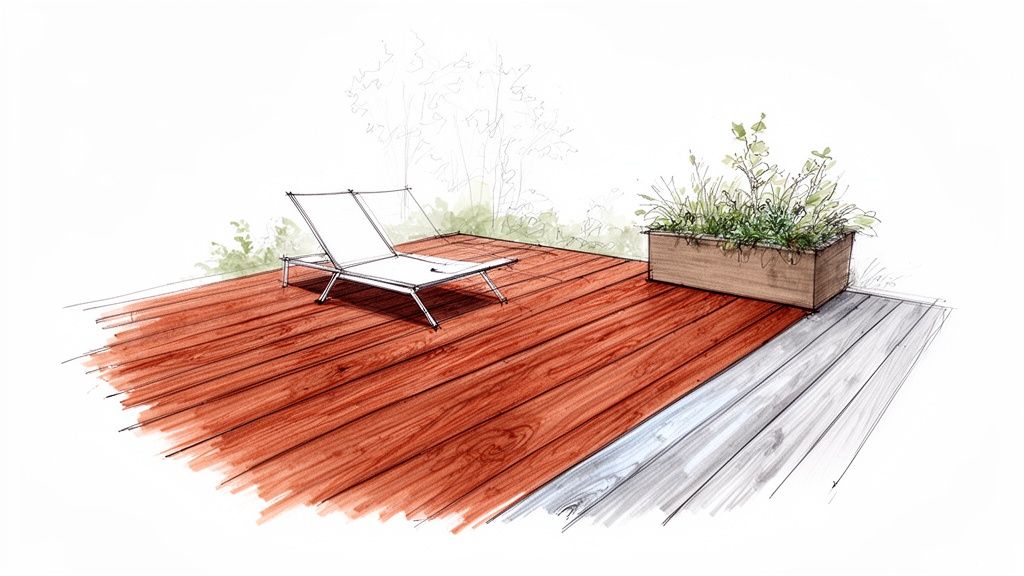
One of the most captivating things about cedar is how it weathers. If left alone, those vibrant reddish-browns will slowly fade into a beautiful, silvery-gray patina. We’ve seen this on gorgeous ranch homes around Glen Rose, where the soft gray deck blends perfectly into the natural surroundings.
But if you love that rich, warm color, you can keep it.
To Keep the Color: Apply a quality UV-protecting stain every 2-3 years. A transparent or semi-transparent finish will seal the wood from the harsh Texas sun and lock in those beautiful tones.
To Go Gray Naturally: If you prefer the weathered look, just let it be. Keep in mind, though, that even a graying deck needs a periodic cleaning and a clear water-repellent sealant to prevent cracking or splintering.
Durability and Cost Considerations
Choosing cedar is a significant upgrade from pine, both in price and appearance. Expect to pay 50% to 100% more for cedar decking compared to standard pressure-treated pine. That higher upfront cost buys you superior aesthetics, natural resilience, and a longer potential lifespan of 15 to 20+ years with proper care.
However, cedar is a softwood, meaning it’s more prone to dings and scratches. This is a crucial point for a high-traffic family deck with heavy furniture and active kids. A dropped tool or a dragged patio chair will likely leave a mark.
We often recommend cedar for homeowners creating a quiet backyard retreat or for retirees. In a lower-traffic setting, its softer nature isn't a major concern, letting its natural beauty shine without constant worry of wear and tear.
Is Cedar the Right Fit for Your North Texas Property?
Is cedar the best wood for your deck? It boils down to your priorities. If you’re looking for a mid-range material that offers a huge visual upgrade from pine and you value its natural, chemical-free properties, then cedar is an outstanding choice.
It hits that sweet spot between aesthetic appeal and solid performance. We recently finished a project in Granbury where the homeowner needed a deck to complement their stone-and-timber custom home. Cedar was the perfect material, tying the entire outdoor space together with a warm, rustic elegance that pine simply couldn't provide. It’s an investment that pays off in curb appeal and creates a truly inviting outdoor atmosphere.
Tropical Hardwoods Like Ipe for Unmatched Longevity
When a project demands a deck that will not just last, but endure for generations, tropical hardwoods like Ipe are in a league of their own. For homeowners building a legacy home on a sprawling ranch or creating a show-stopping poolside retreat in Granbury, these materials are the absolute pinnacle of performance and luxury. This isn't just a deck; it's a permanent architectural feature.
The secret to their incredible performance lies in their sheer density. Ipe, sometimes called Brazilian Walnut, is so dense it barely floats. This natural toughness makes it almost impenetrable to the moisture, rot, and insects that destroy lesser woods in our climate. The result is a deck that feels rock-solid underfoot and shrugs off daily wear and tear.

Why Ipe Is the Ultimate Decking Investment
Ipe is the undisputed gold standard of tropical hardwoods for outdoor decks, with a staggering lifespan that can hit 40 to 100 years. To put its strength in perspective, its density is about three times that of red oak. You can dig deeper into its exceptional durability with these insights on decking wood. This isn't just strong; it's a material you build with once and enjoy for a lifetime.
For a rural property owner in Glen Rose, an Ipe deck means never having to think about replacement costs again. It becomes part of the home's story, aging gracefully right alongside the family that enjoys it.
Of course, that permanence comes at a price. The upfront cost for Ipe can be three to five times higher than pressure-treated pine and at least double what you'd pay for cedar. But when you look at the total picture—factoring in its minimal maintenance needs and extreme longevity—the lifetime value often surpasses any other natural wood.
Installation and Maintenance Nuances
Working with Ipe is not a weekend DIY project. Its incredible hardness requires specialized tools and skills that many general contractors don't possess.
Specialized Fasteners: Every hole has to be pre-drilled. Standard screws will snap. We rely on high-grade stainless steel fasteners to prevent staining and guarantee a secure hold.
Blade Requirements: You'll need premium carbide-tipped blades to cut Ipe. Standard blades will be useless almost immediately.
Expertise is Key: The sheer weight and rigidity of the boards demand an experienced crew who knows how to handle the material to get a flawless finish.
Once installed, upkeep is refreshingly simple. To maintain that rich, deep brown color, you can apply a UV-inhibiting oil once a year. Many of our clients, however, choose to let it weather naturally. Much like cedar, Ipe will develop a beautiful, silvery-gray patina over time—a highly sought-after look that has zero impact on the wood's structural integrity.
Is Ipe Right for Your North Texas Home?
Choosing Ipe is for the homeowner who lives by a "do it once, do it right" philosophy and views their deck as a long-term investment.
We recently designed a multi-level Ipe deck for a custom home overlooking Lake Granbury. The client wanted a seamless flow to an outdoor entertainment area that could handle heavy foot traffic from pool parties without showing a scratch. The hardness of Ipe was the perfect solution, giving them a gorgeous, worry-free surface that will look stunning for decades.
What About Composite Decking? The Low-Maintenance Option
While nothing beats the classic look of real wood, life in North Texas can be demanding. For many of us—busy families, retirees, or anyone who’d rather be on Lake Granbury than spending a weekend re-staining a deck—composite decking has become the go-to choice. It’s the practical solution that gives you your time back.
Today's composite decking is a smart mix of wood fibers and recycled plastics, engineered to look like real wood without the tedious upkeep. Modern boards come with a tough outer shell, or "cap," that offers serious protection against stains, scratches, and our brutal Texas sun.
The Upfront Cost vs. Lifetime Value Trade-Off
The biggest selling point for composite decking is everything you don't have to do. Forget staining, sealing, or worrying about splinters. A quick wash with soap and water is all it takes to keep your deck looking fantastic. For anyone who wants an outdoor space that’s always ready for a last-minute barbecue, that’s a massive win.
High-quality capped composite decking usually lands somewhere between the cost of cedar and a premium hardwood like Ipe. But it’s a smart investment. When you add up what you save on stains, sealers, and labor over its 25 to 30+ year lifespan, the long-term math makes sense.
We often see this in Weatherford, where a family is adding a large deck around their pool. They know it's going to get heavy foot traffic from kids and pets. Going with composite gives them a safe, splinter-free surface that isn’t fazed by spilled drinks or splashes of pool water.
Will It Burn My Feet? Handling the Texas Heat
This is the number one question we get about composites, and it’s a fair one. Older, darker composite boards could get scorching hot in a July afternoon. Thankfully, manufacturers have put a lot of work into solving this.
Go Lighter: Choosing lighter colors like tans, beiges, or light grays makes a huge difference in how much heat the surface absorbs.
Cool-Deck Tech: Many top-tier composite lines now feature technology that actively reflects solar radiation, keeping boards cooler to the touch.
Think About Shade: This is only a major factor for decks in direct, all-day sun. If you’re building under mature oak trees or planning a covered patio, it becomes much less of a concern. In fact, extending your covered patio in North Texas is a great way to make any deck more comfortable.
A Style for Every Home
Composite decking isn't just about practicality—it’s about design freedom. The possibilities for colors, textures, and finishes are nearly endless. You can find a composite board to match any home, whether it’s a modern new build in Aledo or a rustic farmhouse out in Glen Rose.
You can get the rich look of Ipe, the warm tones of cedar, or the aesthetic of weathered gray driftwood, all without the maintenance headaches. It allows you to nail a specific look, from a sleek, modern deck with hidden fasteners to a more traditional style, with consistent color and texture across the entire project.
How to Choose the Right Decking for Your Lifestyle
Now that we’ve broken down the materials, which one is the best fit for your outdoor deck? The answer isn't one-size-fits-all. What works perfectly for a young family in Weatherford is completely different from what a retiree in Granbury needs.
Making the right call means being honest about how you live. For a family on a tight budget who needs a big, sturdy space for kids to run around, pressure-treated pine is the undeniable winner. Its low upfront cost makes a large deck possible, turning the yearly maintenance into a reasonable trade-off for years of family memories.
Matching Materials to Your Goals
For a retiree who wants a beautiful deck without the constant upkeep, we'd have a conversation weighing the timeless look of cedar against a top-tier composite. Cedar delivers that classic Texas Hill Country vibe, but composite offers genuine "set it and forget it" freedom—a huge advantage for anyone who’d rather spend their weekends relaxing.
Your deck should reduce your stress, not add to it. The right material fits into your life, whether that means prioritizing a low initial budget, minimal long-term work, or building a permanent structure that will last for generations.
Then you have the landowner in Glen Rose building a legacy home. The conversation shifts entirely toward longevity. In this scenario, investing in a tropical hardwood like Ipe makes perfect sense. Its 40+ year lifespan means it's a one-and-done investment for a lifetime of enjoyment that adds permanent value and character.
This simple chart puts it into perspective.
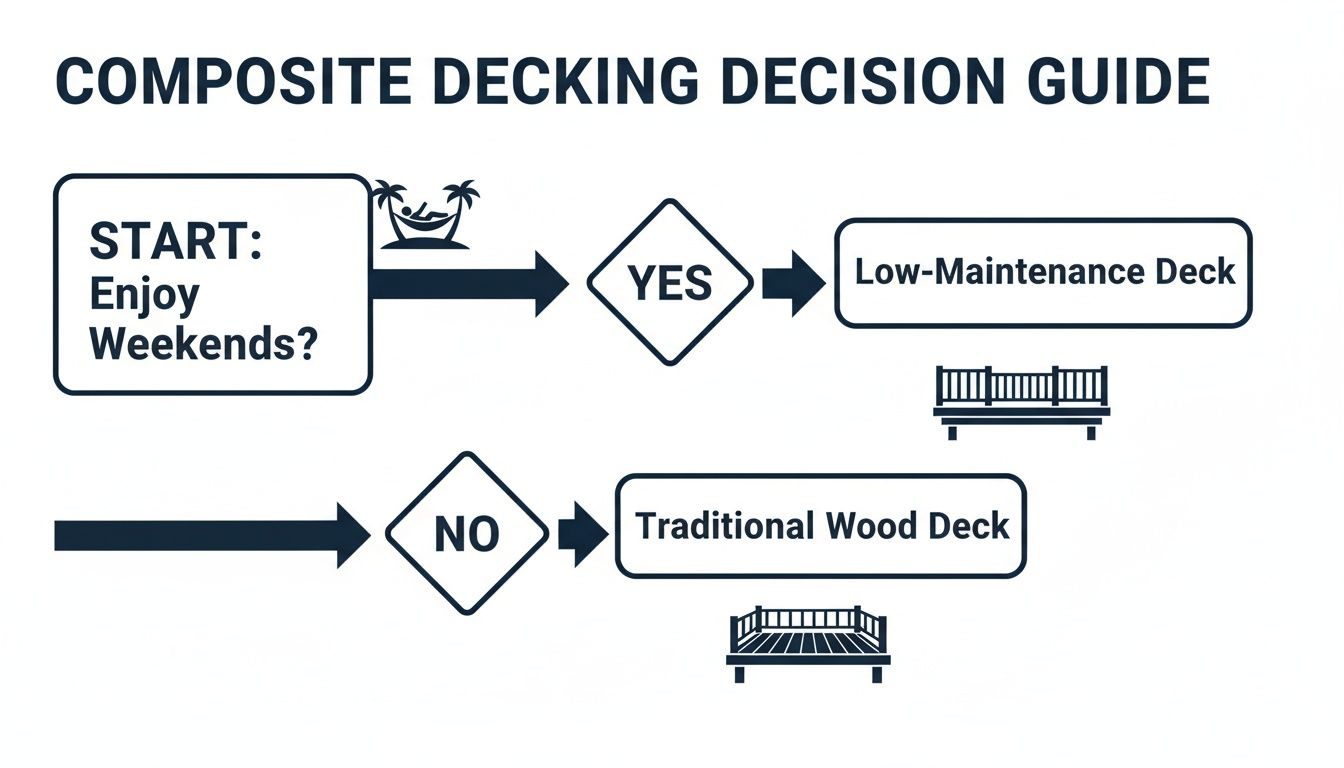
It’s pretty clear: if you value your free time, choosing a low-maintenance material is the most direct path to actually enjoying it.
Final Installation and Budget Considerations
Don't forget that your material choice affects the project's timeline and total budget. Ipe, for instance, is so dense it demands specialized tools and a much more deliberate installation process. That can extend the build time and add to labor costs compared to a straightforward pine or cedar job.
Thinking through these practical details while exploring different outdoor living space design ideas to transform your North Texas home ensures your new deck won't just look amazing—it will serve your lifestyle for years.
Answering Your Top Decking Questions in North Texas
When you're planning a deck here in Granbury or Weatherford, a few key questions always come up. Let's tackle them head-on, drawing from our experience building in the local climate.
How Does Our Climate Impact Decking Materials?
The North Texas climate is brutal on outdoor structures. The relentless sun is the biggest culprit; it will bake the life out of a pressure-treated pine deck, causing it to crack and warp unless you seal it every year without fail. Cedar is beautiful and naturally rot-resistant, but that same intense UV exposure will turn it gray in a surprisingly short time without maintenance.
For a truly low-maintenance, long-term solution in our area, tropical hardwoods like Ipe or high-end composites are the most stable options. Both are built to shrug off extreme UV rays and handle our wild humidity swings with ease.
We’ve been called out to repair pine decks in this area that were less than ten years old but looked twice their age because the maintenance was neglected. In contrast, an Ipe or composite deck we built around the same time often looks fantastic with little more than an occasional cleaning.
What's the Real Difference in Lifetime Cost?
It’s easy to focus on the initial price tag, but the real cost builds over time. A pressure-treated pine deck looks great on the invoice, but you have to factor in buying quality stain and sealer every one to two years, plus the hours you'll spend doing the work.
Cedar starts out more expensive and also demands regular upkeep. Ipe has the highest upfront cost, but with a 40+ year lifespan and next to no maintenance, it often ends up being the most economical choice when you look at the total investment over decades. It's the classic "build it once, enjoy it for a lifetime" scenario.
Can I Mix and Match Decking Materials?
Absolutely! This is one of our favorite strategies for creating a custom, high-end look while managing the budget. It’s all about being smart with where you spend your money.
A common and highly effective approach is building the unseen support structure—joists, beams, and posts—from durable and cost-effective pressure-treated pine. Then, for all the parts you see and touch, like the deck boards, stair treads, and railings, we’ll use a premium material like Ipe, cedar, or a sleek composite. This way, you get that premium feel underfoot and a luxurious look without paying for expensive materials where they’ll never be seen.
Ready to create an outdoor space that perfectly fits your property and lifestyle? The team at Gemini Homes has been building custom decks, patios, and outdoor environments across North Texas for years. We’d be happy to talk through your vision and help you choose the right materials for your home. https://www.geminihomesgranbury.com
Comments