
What Is a Pergola Structure and How Does It Enhance Your Texas Home?
At its core, a pergola is the architectural skeleton of an outdoor room. It’s designed to define a space, giving it purpose and style without completely closing it off from the elements. The most telling feature is its open-rafter or slatted roof held up by sturdy posts, a world away from a solid-roof patio cover. This design is all about creating that perfect dappled shade and adding a stunning architectural feature to your backyard.
Defining Your Outdoor Living Space
Think of a pergola as a way to create a destination on your property. It's a simple, open-air structure that can instantly elevate a plain patio or deck into a true retreat—a place you'll actually want to be for dining, unwinding after a long day, or hosting friends and family. For homeowners here in Granbury and Weatherford, a pergola is a fantastic way to lean into the North Texas lifestyle, giving you a comfortable spot to enjoy the outdoors even when the sun is beating down.
Its main job is to provide partial shade and create a "sense of place." The overhead beams cast incredible, shifting patterns of light and shadow that move with the sun, adding a dynamic, visual element to your landscape that you just can't get any other way.
A Structure with Deep Roots
This idea of blending architecture with the natural world isn't new; it's practically timeless. The concept of the pergola actually goes back over 3,400 years. The earliest garden plans we've found, from ancient Egypt around 1400 BCE, show similar structures. Back then, they were vital for creating shade and supporting fruit trees and grapevines, serving a purpose that was both beautiful and incredibly practical. You can discover more about the rich history of pergolas and how they've evolved.
That long history speaks to a fundamental human desire: we all want to create outdoor spaces that are both comfortable and beautiful.
Key Characteristics of a Pergola
So, what really makes a pergola a pergola? It all comes down to a few key features that give it its unique character.
Open Roof Design: This is its signature. The roof is made of rafters and sometimes cross-beams (called purlins). It’s not meant to be a solid, waterproof barrier; it's engineered to filter sunlight, not block it out completely.
Support Columns: The whole roof system is held up by vertical posts or columns. These establish the pergola’s footprint and give it that permanent, grounded feeling.
Defined Outdoor Area: It carves out a distinct "room" in your yard. This can be attached to your house to cover a patio or stand on its own as a freestanding feature by a pool in your Glen Rose backyard.
Ideal for Climbing Plants: That open framework is the perfect trellis for training climbing plants. Think beautiful wisteria, fragrant jasmine, or even grapevines, letting you weave living greenery right into the structure itself.
A well-designed pergola does more than just add shade. It brings structure, elegance, and serious value to your property.
The Anatomy of a Well-Built Pergola
To really appreciate the craftsmanship of a custom-built pergola, it helps to know what goes into it. A quality pergola isn't just a kit you assemble; it's a complete system where every piece has a job to do, contributing to both its strength and its style. It all starts from the ground up.
Everything truly begins below the surface with the footings. In North Texas, these deep concrete foundations are non-negotiable. The expansive clay soil we have around here in places like Granbury and Weatherford can shift dramatically, so a shallow base just won't last. Proper footings are what keep your pergola standing straight and stable for years to come.
From there, you have the posts or columns. These are the vertical workhorses that hold up the entire roof structure. The size and material for the posts are chosen based on the pergola's overall design and scale, ensuring they provide the core strength for the whole build.
The Overhead Structure
Sitting on top of the posts are the main horizontal supports, which we call beams or girders. They connect the posts and create the main frame for the roof, giving the pergola its familiar rectangular or square shape. More importantly, they distribute the weight of everything above them nice and evenly.
Running across the beams, you'll find the rafters. This series of smaller boards creates that classic open-roof look that everyone recognizes as a pergola. How far apart we space these rafters directly controls how much shade you get—a critical detail during a blazing Texas summer. If you're in a place like Glen Rose and need more sun protection, we'd simply place them closer together.
A thoughtfully designed pergola is more than just a structure; it's a functional piece of art that interacts with sunlight, provides a framework for nature, and defines your outdoor lifestyle.
This diagram breaks down the three core functions of a pergola.
As you can see, these essential parts work together to provide shade, add architectural definition to your yard, and offer the perfect climbing frame for plants.
Custom Touches and Enhancements
Once the basic framework is in place, you can add features that really personalize the look and function of your pergola.
Decorative Rafter Tails: The ends of the rafters don't have to be flat. They can be custom-cut into all sorts of designs, from a simple angle to more detailed scrollwork, giving your pergola a unique signature.
Lattice Panels: Adding lattice to a side or two is a great way to boost privacy and give climbing vines more real estate to grab onto.
Retractable Canopies: For the ultimate flexibility, a retractable fabric canopy lets you choose between full shade on a hot day or open sky when the weather is perfect.
These kinds of details are what turn a standard structure into a private retreat or the perfect open-air spot for entertaining.
Choosing Materials That Withstand the Texas Climate
Picking the right materials for your pergola is one of the most critical decisions you'll make, especially here in North Texas. A pergola needs to be tough enough to handle everything from the brutal summer sun in Weatherford to the surprise ice storms that can hit Glen Rose. Your choice directly affects how your pergola looks, how long it lasts, how much you’ll have to work on it, and what it’s going to cost.
What works best really depends on your life. A busy family might want something super durable that you don't have to think about, while a retiree building their dream home out in the country might prefer the timeless look of natural wood.
Classic Wood Choices
There’s a reason wood is such a classic choice. It has a warm, natural feel that just looks right next to almost any style of home. For our local builds, we typically lean on two fantastic options, each with its own set of perks.
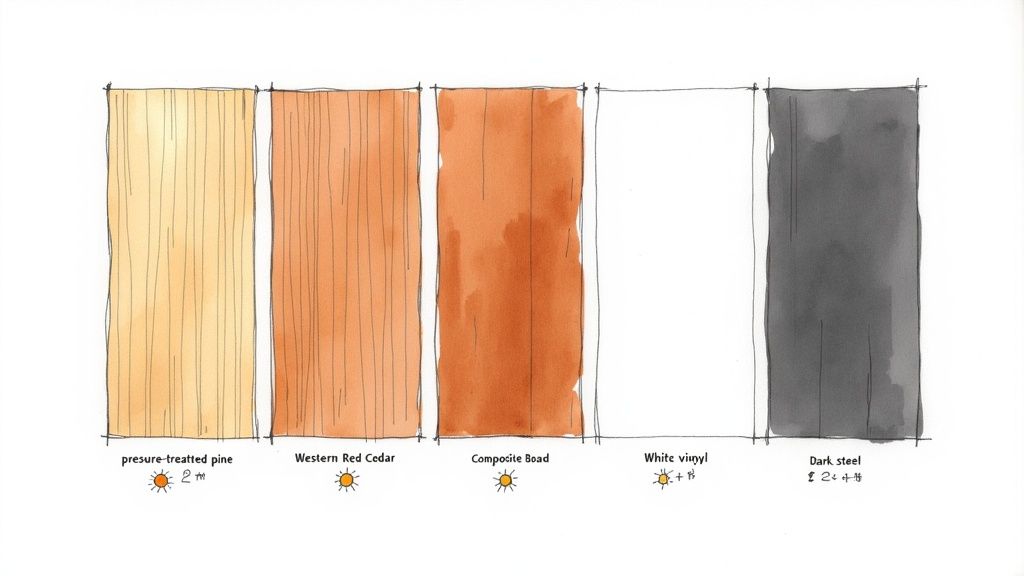
Pressure-Treated Pine: This is hands-down the most budget-friendly way to get a real wood pergola. The pine is treated to fight off rot and bugs, which is a must in our humid climate. You'll need to stay on top of staining and sealing it every 2-3 years to keep it from warping, but the lower upfront cost—usually around $15-$25 per square foot installed—is a huge draw for many homeowners.
Western Red Cedar: If you're looking for natural beauty, it's hard to beat cedar. It has a gorgeous color and contains natural oils that protect it from rot and insects, no chemicals needed. Cedar also holds its shape better than pine, so it's less likely to twist over time. It does cost more upfront, typically $30-$50 per square foot, but its durability and good looks make it a smart long-term investment.
Low-Maintenance and Modern Alternatives
What if you’d rather spend your weekends enjoying your new space instead of working on it? Modern materials are a game-changer, offering incredible durability with almost zero upkeep.
A huge factor for any build in North Texas is heat. While low-maintenance materials are great, keep in mind that darker composite or vinyl can get scorching hot in the summer sun. That's something to think about for poolside areas or any spot where you might be walking barefoot.
For anyone after a "set it and forget it" kind of structure, these materials are tough to beat:
Composite: Made from a mix of wood fibers and recycled plastic, composite is an absolute workhorse. It won’t rot, warp, or give you splinters, and it comes in tons of colors and textures that look surprisingly like real wood. Best of all? You’ll never have to stain or seal it.
Vinyl (PVC): Another fantastic low-maintenance option. Vinyl is lightweight, a breeze to clean, and completely unfazed by moisture or pests. It usually comes in white or tan, giving you that clean, classic look that fits in anywhere.
Steel or Aluminum: For a sleek, modern vibe, nothing beats metal. It’s incredibly strong, which means you can have wider, more open designs with fewer support posts. A good powder-coated finish keeps rust away, ensuring it looks sharp for years to come.
A lot of these same material considerations come into play when you’re building a deck. We break it all down in our deck building materials comparison for your North Texas home.
Comparing Pergola Materials for North Texas
Choosing a material is a balancing act between budget, style, and how much time you want to spend on upkeep. This table gives you a quick look at how the most common options stack up against the demands of our local weather.
Material | Average Cost (per sq. ft.) | Durability in Texas Climate | Maintenance Level | Best For |
|---|---|---|---|---|
Pressure-Treated Pine | $15 - $25 | Good, but needs sealing to prevent warping/cracking in the sun. | High (Seal every 2-3 years) | Homeowners looking for a classic wood look on a tighter budget. |
Western Red Cedar | $30 - $50 | Excellent; naturally resists rot, decay, and Texas insects. | Low to Medium (Optional sealing to preserve color) | Those wanting a premium, natural wood aesthetic with great longevity. |
Composite | $40 - $60 | Excellent; won't rot, warp, or fade under intense sun. | Very Low (Occasional cleaning) | Families and anyone who wants a wood look without the maintenance. |
Vinyl (PVC) | $30 - $50 | Excellent; impervious to moisture and insects. Can get brittle in extreme cold. | Very Low (Easy to clean) | A clean, traditional look with virtually no upkeep required. |
Steel/Aluminum | $40 - $75+ | Superior; withstands wind and sun without warping. Powder coat prevents rust. | Very Low (Check for scratches in finish) | A modern, minimalist style and designs requiring long, open spans. |
Ultimately, the best material is the one that fits your home, your budget, and your lifestyle. Each one has a place, and seeing them in person can make the decision much clearer.
Inspiring Pergola Design Ideas for Your Texas Home
A well-designed pergola shouldn't feel like an afterthought. It should feel like a natural extension of your home's character, blending so perfectly that it looks like it was always meant to be there. Here in North Texas, with our mix of modern farmhouses and classic ranch homes, the right pergola design can be the final touch that ties your whole property together.
The options can seem endless, but most designs boil down to two main approaches. Figuring out which one fits your home and lifestyle is the perfect place to start imagining your ideal outdoor space, whether you're in Granbury, Weatherford, or beyond.
Attached vs. Freestanding Pergolas
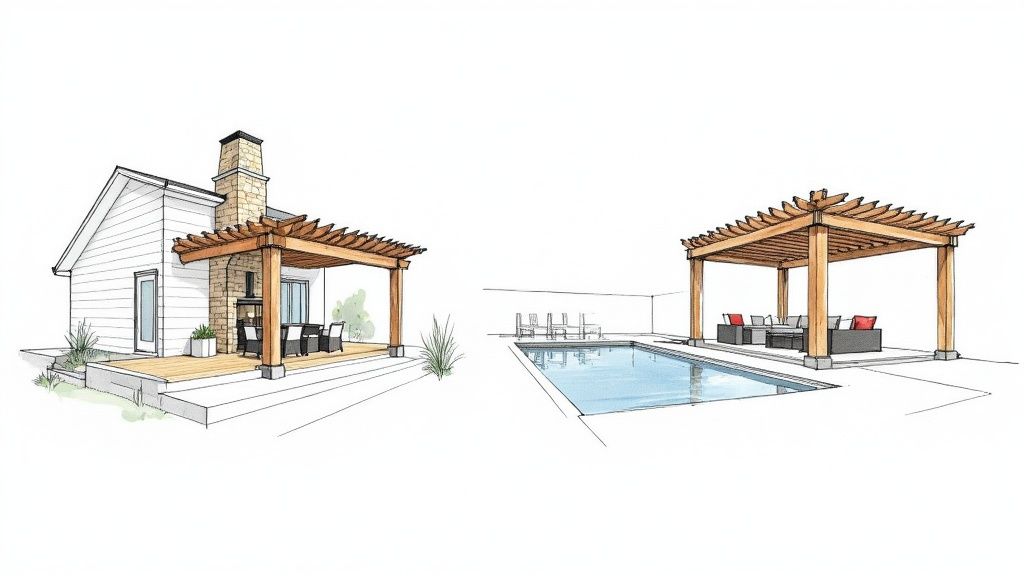
An attached pergola does exactly what it sounds like—it's built directly onto your house, usually extending over a patio or deck. This style is fantastic for blurring the line between inside and out, creating a smooth, inviting transition from your living room into the backyard. For many families, this addition transforms a basic patio into the heart of the home, perfect for weeknight dinners or just relaxing on the weekend. You can dig deeper into this in our homeowner's guide to extending your covered patio in North Texas.
A freestanding pergola, on the other hand, stands on its own. It’s a destination. This makes it a great choice if you have a larger lot or a more rural property, like many we see around Glen Rose.
A freestanding structure gives you incredible flexibility. You can use it to define a poolside cabana, create a sophisticated cover for an outdoor kitchen, or even form a stunning shaded walkway through a garden, much like you'd see on a classic European estate.
While the basic idea of a pergola is ancient, it was the Italian Renaissance that really cemented its status as an architectural showpiece. That's when pergolas went from being simple garden vine supports to elegant structures with grand stone pillars and climbing roses, masterfully blending nature with architecture. That rich history still inspires the beautiful, custom designs we create for homeowners today.
Maximizing Shade and Style
Let's be honest, for any pergola in Texas, shade is king. The real advantage of a custom build is the ability to engineer the structure specifically to combat our intense afternoon sun.
We can fine-tune several elements to make your space comfortable even on the hottest days.
Rafter Orientation: By running the rafters in the right direction—typically north-to-south—we can intercept the sun as it moves across the sky, casting the most effective shadows when you need them most.
Rafter Spacing: This is a game-changer. Simply placing rafters closer together can dramatically increase the amount of shade. On a recent project near Weatherford, we used six-inch spacing over a west-facing outdoor kitchen, and the difference in temperature was immediate and significant.
Integrating with Other Features: A pergola doesn’t have to stand alone. Imagine a rustic cedar structure with one side anchored directly to a commanding stone fireplace—the perfect cozy hub for those cool Texas evenings.
These aren't just design choices; they're strategic decisions that make your pergola both beautiful and perfectly suited for our climate. A thoughtfully designed pergola quickly becomes the place where all your best outdoor memories are made.
From Blueprint to Backyard: Budget, Permits, and Finding Your Builder
Once you've dreamed up the perfect design, it’s time to get down to brass tacks. Turning that vision into reality means figuring out a realistic budget, navigating local building codes, and finding a craftsman you can trust to get the job done right. This is where the dream of a beautiful pergola becomes a solid, tangible asset for your home.
So, what does a custom pergola cost in the Granbury area? The honest answer is: it varies. But to give you a ballpark, a standard wood pergola often lands somewhere between $4,000 and $10,000. For larger, more intricate designs using premium materials like cedar or steel, you can expect that number to climb to $15,000 or more.
What Drives the Final Cost?
Several key factors will influence the final price tag on your pergola. Understanding these from the get-go helps you match your design ambitions with your budget, so there are no unwelcome surprises along the way.
Size and Complexity: It's simple math—a straightforward 10x12 foot square design will cost less than a sprawling, multi-level structure with decorative rafter cuts and custom details.
Material Choice: As we covered earlier, pressure-treated pine is your most budget-friendly choice. On the other end of the spectrum, Western Red Cedar, composites, and steel are premium investments that come with a higher price.
Site Preparation: Is the ground ready to go? If your property needs significant grading, or if an old concrete slab needs to be jackhammered out, that extra labor will add to the overall cost.
Custom Features: This is where you can really personalize the space. Add-ons like electrical wiring for ceiling fans and lighting, built-in benches, or a retractable canopy will increase the project's scope and budget.
Navigating Local Building Permits
Before anyone picks up a shovel, you need to check the local permit requirements. The rules can be different depending on whether you're in the City of Granbury, Weatherford, or an unincorporated part of Hood or Parker County.
As a general rule, any larger pergola or a structure that attaches directly to your house is almost certainly going to need a permit. This isn't just red tape; it's a process that ensures your new addition is safe and built to last.
A seasoned local builder should handle the entire permitting process for you, but it’s always wise to ask and confirm it’s being done. This step protects your investment and makes sure your pergola is engineered to handle a classic North Texas thunderstorm.
Choosing the Right Custom Builder
Finding a qualified builder is hands-down the most critical decision you'll make in this entire process. A great builder doesn't just assemble a structure; they become your partner, offering design insights and making sure the final product is even better than you imagined.
Look for a builder with a strong portfolio of local work and deep roots in the community. Our guide on finding custom home builders in North Texas has more great tips on how to vet the pros.
When you're interviewing potential builders, ask them specifically about our expansive clay soils and how they engineer footings to ensure long-term stability. A builder who truly understands these local challenges isn't just a good find—they're invaluable.
Your Top Pergola Questions Answered for North Texas
When you start thinking about adding a pergola to your home, a lot of practical questions pop up. It’s only natural. We've built countless pergolas for homeowners in Granbury, Weatherford, and all over North Texas, and we hear the same great questions time and again. Getting clear answers to these is the first step toward a project you'll love for years to come.
How Much Shade Does a Pergola Actually Provide?
This is easily the most important question for anyone living under the Texas sun. The honest answer? It provides exactly as much shade as you want it to.
Your standard pergola, with rafters spaced about 12-16 inches apart, will give you around 40-50% shade. This creates that classic, dappled light effect—perfect for softening the sun without making your patio feel dark. But if that patio gets blasted by the afternoon sun, you'll probably want more coverage. We can easily dial up the shade by:
Tightening the Rafters: Placing rafters closer together is the simplest way to block more sun. Spacing them just six inches apart can make a huge difference.
Adding Purlins: Think of these as smaller cross-beams that run across the top of the main rafters. They create a tighter grid pattern that intercepts a lot more direct sunlight.
Installing a Canopy: For the ultimate in flexibility, a retractable fabric canopy lets you have it all. You can slide it open for full sun on a cool morning or close it for total shade during the summer heat.
It’s all about designing a structure that gives you the right amount of relief, right where you need it.
Can a Pergola Withstand Our Strong North Texas Storms?
Absolutely—when it’s built the right way. A professionally built pergola isn't some flimsy kit you pick up at a big-box store. It's a permanent, engineered structure designed to handle the high winds and wild weather our part of Texas is famous for.
Its resilience comes from a few key things working together. It all starts below ground with deep concrete footings that lock the posts into our expansive clay soil, fighting against uplift from powerful wind gusts. Then, we use properly sized posts and beams, joined with heavy-duty structural hardware. A good local builder knows the specific building codes for Granbury and the surrounding counties, which ensures your pergola isn't just beautiful, but tough and safe.
A well-built pergola becomes a permanent, resilient feature of your home. It’s a testament to the fact that quality craftsmanship isn't just about looks—it's about building things to last through whatever Mother Nature throws at us.
What Kind of Maintenance Does a Wood Pergola Require?
If you love the classic, natural look of wood, a little upkeep is all it takes to keep it looking great in our climate. The amount of maintenance really boils down to the type of wood you choose.
Pressure-treated pine is a popular and budget-friendly choice. For pine, we highly recommend staining and sealing it every 2-3 years. This is non-negotiable in Texas; that protective coat is what shields the wood from drying, cracking, and warping under our intense sun and humidity swings.
On the other hand, if you go with Western Red Cedar, you're getting a material with natural defenses against rot and insects. It doesn't need a sealant to survive, but applying one will preserve its beautiful, rich red tones. If you leave it alone, cedar will slowly and gracefully weather to a silvery-gray patina, a look that many homeowners actually prefer.
Ready to design an outdoor space that perfectly complements your North Texas home? If you're considering a custom pergola built to last, the team at Gemini Homes is here to help. We can walk you through the options and answer your questions with a helpful, no-pressure consultation.
Comments