
12 Brilliant Backyard Lighting Ideas to Transform Your North Texas Home
As the sun sets over Granbury and the Texas heat finally gives way to a pleasant evening, the right lighting can transform your backyard into an enchanting outdoor retreat. For homeowners in Weatherford, Glen Rose, and across North Texas, a well-thought-out lighting plan isn't just about visibility; it's about creating atmosphere, enhancing security, and extending the precious hours you can spend enjoying your custom deck, pergola, or pool.
A layered, intentional lighting design elevates your outdoor living experience. It’s the difference between a harsh, single floodlight and a warm, inviting glow that highlights the best features of your property, from the texture of a stone fireplace to the branches of a mature live oak. A strategic plan ensures every part of your outdoor space feels purposeful and welcoming after dark.
This guide explores 12 specific backyard lighting ideas that work beautifully in our local landscape. We'll cover everything from creating a resort-like feel around a new pool to ensuring functional safety on a rural property. You'll find practical advice, cost considerations, and real-world examples from homes right here in our community, giving you the clarity needed to illuminate your ideal outdoor lifestyle.
1. String Lights and Edison Bulbs
Nothing transforms a backyard into an inviting, festive space quite like the warm glow of overhead string lights. This classic approach uses commercial-grade strands, often featuring vintage-style Edison bulbs, to create a magical canopy of light. Popularized by upscale cafes and event venues from Dallas to Granbury, this lighting idea brings a sophisticated yet relaxed ambiance to any outdoor setting.
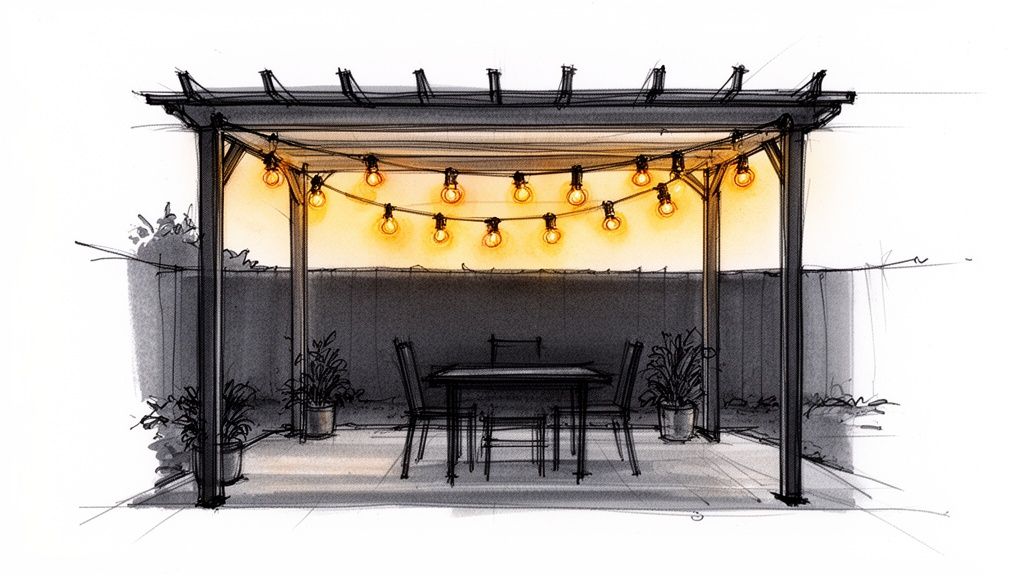
This method is ideal for defining a specific zone, such as a patio or deck, and works exceptionally well when anchored to a sturdy structure. A custom-built pergola provides the perfect framework, ensuring the lights are securely and attractively supported.
Choosing the Right Setup
Cost Factor: Professional-grade, weatherproof string light sets range from $50 to $150 per 50-foot strand. Installation costs vary, but planning for it during construction is most efficient.
Best Materials: Opt for heavy-duty, commercial-grade string lights rated for outdoor, year-round use. Look for shatterproof bulbs and weatherproof sockets to withstand North Texas storms.
Key Consideration: Securely anchor your lights to a permanent structure like a pergola, the eaves of your house, or well-set 4x4 posts. A taut guide wire will prevent sagging and protect the strands from wind damage.
Pro Tip: Install a dimmer switch to easily adjust the brightness. Go from bright, functional light for a barbecue to a soft, romantic glow for a quiet evening. Always plug outdoor lighting into a GFCI-protected outlet.
For the most professional look, we recommend running dedicated power to your pergola during construction. This avoids visible extension cords and allows for a clean, permanent installation controlled by a convenient wall switch.
2. Deck Stair and Rail Lighting
Integrating low-voltage LED lights directly into your deck's structure combines safety with high-end design. This approach embeds subtle fixtures into stair risers, underneath railings, and on posts to cast a gentle, downward glow. As seen on custom multi-level decks from Weatherford to Granbury, this technique prevents trips and falls after dark while accentuating the architectural lines of your outdoor space.
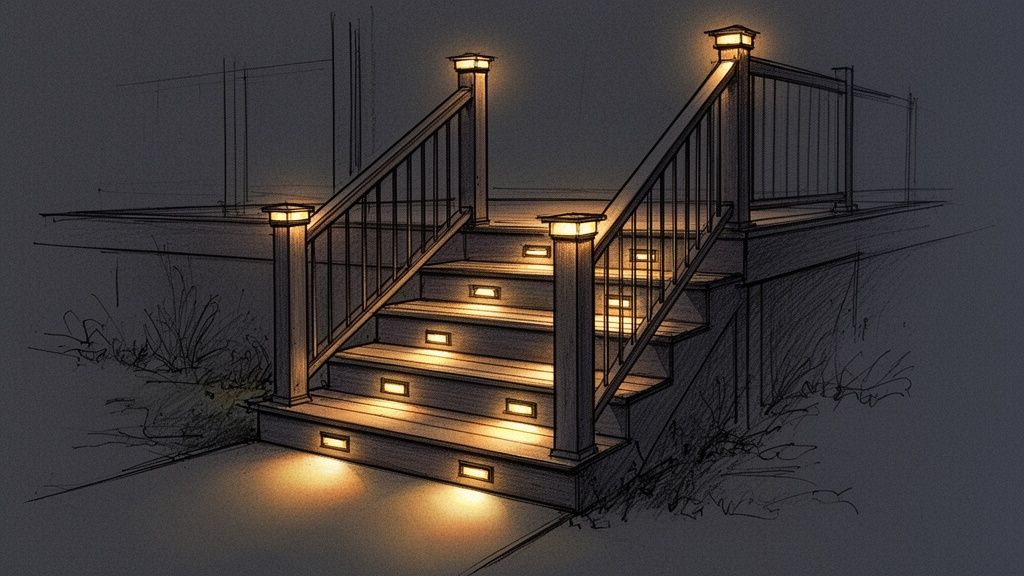
This method provides functional, ambient light without the glare of harsh overhead fixtures. By keeping the light source low and focused on walking surfaces, it preserves the dark-sky views we cherish in more rural parts of North Texas while ensuring every step is visible and secure.
Choosing the Right Setup
Cost Factor: Individual LED deck lights cost $20 to $50 per fixture. A complete professionally installed system for a medium-sized deck typically runs $800 to $2,500, including the transformer and labor.
Best Materials: Choose fixtures specifically designed for your deck material, whether it's pressure-treated pine or a composite like Trex. We can guide you in choosing the best wood for outdoor decks in North Texas.
Key Consideration for Families: This is a top safety feature for families with young children or aging parents, making nighttime navigation much safer.
Pro Tip: The best time to incorporate this lighting is during the initial deck design phase. Wiring can be hidden seamlessly within the structure for a clean, professional look. Use warm white LEDs (2700K-3000K) for a soft, inviting atmosphere.
For a truly integrated system, connect your deck lights to a timer or smart-home controller. This allows you to automate your lighting schedule, ensuring the deck is always safely lit when you need it.
3. Uplighting Trees and Landscape Features
One of the most dramatic backyard lighting ideas is uplighting, which uses ground-level fixtures to cast light upward. This technique highlights the texture and form of specimen trees, architectural stonework, and other key landscape features. By creating a play of light and shadow, uplighting adds depth, dimension, and a high-end, resort-like feel to your property after dark.
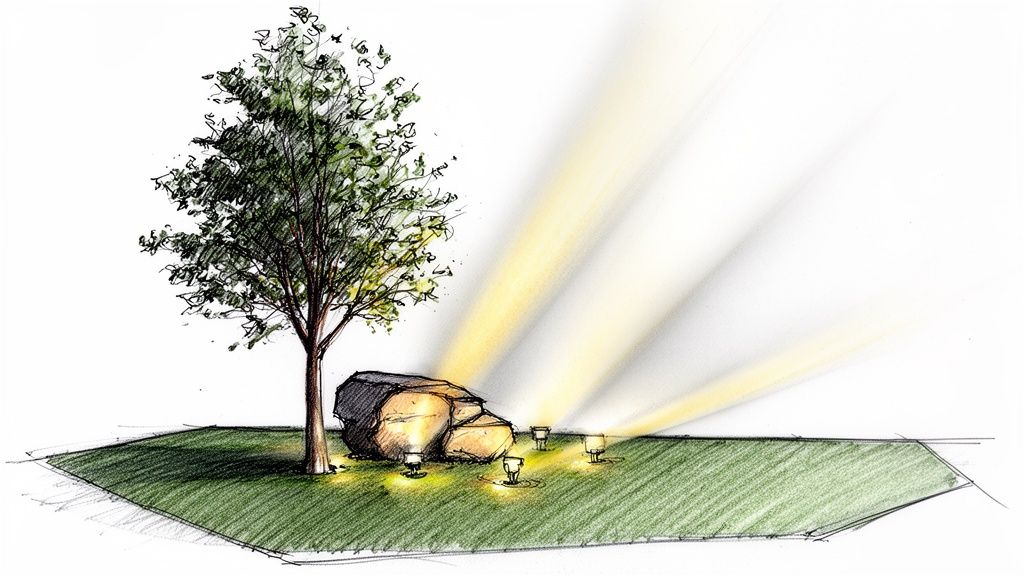
This method is perfect for accentuating the unique character of a property, from the majestic live oaks common in Weatherford to the beautiful native stone features seen on luxury estates in Glen Rose. It draws the eye outward, making your yard feel larger and more intentional.
Choosing the Right Setup
Cost Factor: Quality brass or copper LED uplights cost $75 to $200 per fixture. A professional system with 5-10 lights can range from $1,500 to $4,000 installed.
Best Materials: Solid brass fixtures are a top choice in North Texas. They are incredibly durable, develop a beautiful natural patina, and won't corrode like aluminum.
Key Consideration for Retirees: A well-lit landscape adds a significant layer of passive security, illuminating dark corners of the property without the harshness of floodlights.
Pro Tip: Use a warm white light (around 2700K) to create a natural, inviting glow that complements foliage and stone. Position fixtures at a 30 to 45-degree angle to the feature you're lighting to create soft, appealing shadows.
For the most cohesive result, integrate your uplighting plan during the initial landscape design. This ensures electrical conduit can be run discreetly and fixtures are placed perfectly to highlight your property's best features as it matures.
4. Pool and Water Feature Accent Lighting
Lighting a gunite pool or water feature transforms it from a daytime amenity into a dramatic nighttime centerpiece. This specialized approach uses submersible LEDs, fiber optics, and often color-changing systems to illuminate the water from within. For homeowners in Weatherford and Granbury, a well-lit pool not only enhances safety for evening swims but also creates a stunning visual anchor for the entire backyard.
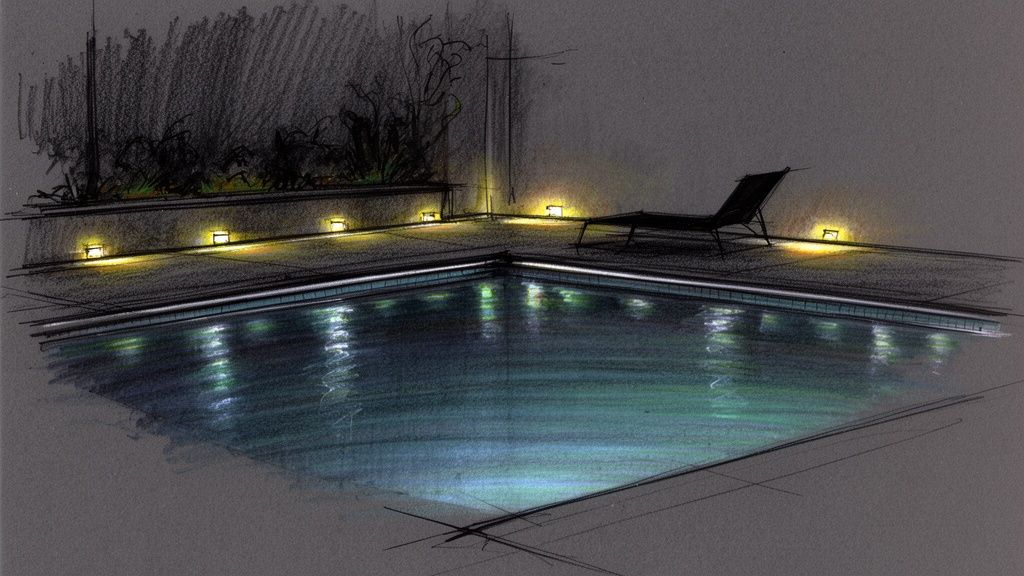
This method is essential for highlighting the custom shapes and finishes of high-end gunite pools and turning features like waterfalls or bubblers into glowing focal points. Integrating these systems during initial pool construction is key to a seamless, professional result.
Choosing the Right Setup
Cost Factor: Adding modern LED lighting to a new gunite pool typically adds $1,000 to $3,000 to the total cost, depending on the number of lights and features like color-changing capabilities.
Best Materials: Choose modern, fully sealed LED fixtures specifically rated for long-term underwater use.
Key Consideration: All pool electrical work must be installed by a qualified professional using GFCI-protected circuits to meet local codes and ensure safety. This is not a DIY project.
Pro Tip: Use a warm white light for classic, elegant everyday illumination. Reserve dynamic, color-changing options for parties and special occasions to create a festive atmosphere.
Integrating your pool lights with a timer or smart home system offers incredible convenience. You can automate schedules to save energy and ensure your pool is beautifully lit when you come home in the evening.
5. Path and Walkway Lighting
Properly illuminating pathways is fundamental to both safety and style. Path lighting uses a series of low-voltage fixtures, such as bollards or stake lights, to cast a gentle, downward glow onto pedestrian routes. This technique ensures safe navigation after dark and adds sophisticated curb appeal, guiding guests with an elegant, welcoming ambiance. From landscaped entry paths in Granbury to long walkways on rural Weatherford properties, this is a cornerstone of any outdoor lighting plan.
This approach is essential for any area with foot traffic, defining edges and highlighting changes in elevation. It creates a subtle but powerful visual journey, connecting different zones of your property, like the patio and a detached guesthouse or pool area.
Choosing the Right Setup
Cost Factor: Quality path lights range from $40 to $150 per fixture. A professionally installed system for a 50-foot walkway can cost between $1,000 and $3,000.
Best Materials: For a cohesive look, choose fixtures made from materials that match your other landscape lights, like solid brass or powder-coated aluminum.
Key Consideration: Place lights approximately 6 to 8 feet apart on straight paths and closer on curves to create overlapping pools of light, not isolated bright spots.
Pro Tip: When planning your path lighting, stagger the fixtures on opposite sides of the walkway instead of placing them in straight, parallel lines. This creates a more natural, visually interesting effect and prevents the "runway" look.
6. Pergola Post and Beam Lighting
For a truly seamless look, integrating lighting directly into your pergola’s structure is one of the most elegant backyard lighting ideas. This custom approach involves building fixtures directly into the posts and beams, creating ambient light that highlights the architecture of the structure itself. Custom pergolas in Granbury and Weatherford often feature this high-end detail, which provides functional illumination without visible wires or bulky fixtures.
This method is perfect for homeowners seeking a polished, built-in aesthetic. By concealing the light source, you create a soft, downward glow that illuminates the space below without glare, enhancing the atmosphere for dining and relaxing. This technique turns the pergola into a functional art piece, beautiful both day and night.
Choosing the Right Setup
Cost Factor: Adding integrated lighting to a new pergola typically adds $500 to $2,000 to the project cost, depending on the number and type of fixtures.
Best Materials: Select low-profile, outdoor-rated LED fixtures that match the style and material of your pergola, whether it's rustic cedar or modern painted wood.
Key Consideration: Integrated lighting must be planned during the initial pergola design. This allows low-voltage wiring to be safely and invisibly routed through posts and beams during construction.
Pro Tip: Space downlights evenly along the underside of beams, typically 4-6 feet apart, to ensure consistent, balanced illumination across your patio or deck.
Understanding what a pergola structure is and how it enhances your Texas home is the first step toward creating a stunning backyard focal point with perfectly integrated lighting.
7. Ambient Overhead Lighting and Pendant Fixtures
To elevate a covered patio into a true outdoor room, consider incorporating ambient overhead lighting and pendant fixtures. This approach provides the primary source of illumination, much like a chandelier would indoors. From statement-making rustic chandeliers over a dining table in a Weatherford home to sleek, modern pendants lining a covered patio in Granbury, these fixtures anchor the space and define its style.
This method is perfect for delivering functional, widespread light for dining, conversation, or reading. It works best within a substantial structure, such as a custom-built patio cover or a well-engineered pergola, where wiring can be safely concealed and fixtures securely mounted.
Choosing the Right Setup
Cost Factor: Outdoor-rated pendant lights and chandeliers can range from $200 to over $1,000. Installation by a licensed electrician is crucial for safety and code compliance.
Best Materials: Only use fixtures and bulbs specifically rated for outdoor or "wet" locations. This ensures they can handle the humidity and severe weather common in North Texas.
Key Consideration: Mount fixtures so the bottom hangs approximately 7-9 feet above the ground or 30-36 inches above a tabletop. This prevents glare and keeps it out of the way for taller guests.
Pro Tip: Always install a dimmer. This allows you to transition from bright, task-oriented light for cooking to a soft, ambient glow for relaxing evenings.
When planning a new covered patio, pre-wiring for overhead fixtures is a crucial step. This allows for a clean, professional installation without unsightly conduits and gives you the flexibility to add a ceiling fan with a light kit later.
8. Landscape Accent and Spotlighting
Using accent lights and spotlights to create dramatic focal points is one of the most artistic backyard lighting ideas. This technique involves strategically placing directional fixtures to highlight your property's best features, such as the rugged texture of native stone on a Glen Rose home or a striking architectural detail. It’s about painting with light, adding depth, dimension, and a high-end, curated feel to your landscape after sundown.
This method moves beyond general illumination to tell a visual story, guiding the eye and transforming ordinary elements into captivating features. It’s particularly effective in custom landscaping designs, like those seen in many Weatherford and Granbury residences.
Choosing the Right Setup
Cost Factor: A professional accent lighting package can range from $1,500 to $5,000+, depending on the number of fixtures and complexity of the installation.
Best Materials: Brass or copper spotlights are ideal for durability. Choose LEDs with a narrow beam angle (15-30 degrees) for precise highlighting.
Key Consideration: Place lights at a 30 to 45-degree angle to the feature you're highlighting. This technique, often called "shadowing," creates a more natural and visually interesting effect.
Pro Tip: Less is often more with accent lighting. Focus on highlighting 3-5 key features in your backyard rather than illuminating everything. This creates contrast and prevents the scene from looking flat or overly bright.
9. Patio Under-Soffit and Eave Lighting
For a clean, architectural look that provides excellent ambient light, installing fixtures directly into your patio’s soffits or the eaves of your home is an elegant solution. This integrated approach uses recessed can lights or discreet LED fixtures to cast a wash of light downward, illuminating your outdoor living space without visible, bulky hardware. This is one of the most sophisticated backyard lighting ideas, popular in high-end custom homes from Weatherford to Granbury for creating a seamless, resort-like atmosphere.
This method is perfect for covered patios, outdoor kitchens, and entryways where you want broad, functional illumination that feels like a natural extension of the home’s design.
Choosing the Right Setup
Cost Factor: Professionally installed soffit lighting typically costs $150 to $300 per fixture, including wiring and the light itself.
Best Materials: Select warm white (around 2700K) recessed LEDs that are rated for damp or wet outdoor locations.
Key Consideration: The best time to incorporate soffit lighting is during the construction of a new patio cover or home. This allows for clean wiring and perfect placement before fascia and trim are installed.
Pro Tip: For even coverage, space fixtures about 24 to 36 inches apart. Consider aligning them with architectural features like beams or columns for a deliberate, symmetrical look. A dimmer switch is essential for flexibility.
For a truly integrated system, plan the electrical layout with your builder from day one. Wiring soffit lights to an interior switch or smart-home system provides ultimate convenience.
10. Motion-Sensor and Smart Lighting Systems
For ultimate control and security, automated lighting systems bring your backyard into the modern age. This approach combines motion sensors, timers, and smart home integration, allowing you to control your outdoor lights based on movement, schedules, or simple voice commands. From luxury Granbury lake houses to security-conscious properties in Weatherford, these tech-forward solutions offer unmatched convenience, enhanced safety, and energy efficiency.
This method is perfect for homeowners who want to blend different lighting types into a single, cohesive system. It provides both practical security by illuminating unexpected activity and the ability to create customized ambiance with the tap of a button.
Choosing the Right Setup
Cost Factor: A basic smart lighting starter kit can cost $100 to $300. A fully integrated professional system can add $1,000 or more to a standard lighting installation.
Best Materials: Choose a system that integrates smoothly with your existing smart home platform, such as Amazon Alexa, Google Home, or Apple HomeKit.
Key Consideration: Install motion sensors at a height of 6 to 8 feet for optimal detection. Adjust sensitivity settings to prevent false triggers from roaming pets or wind-blown tree branches.
Pro Tip: Create preset lighting scenes for different activities. Program an "Entertaining" scene with bright, welcoming light, a "Security" scene with targeted illumination, and a "Night" scene with a dim, ambient glow.
Integrating your smart lighting with other home automation unlocks powerful possibilities. You can program your system so that when a driveway motion sensor is triggered after dark, the path lights turn on, the back porch light illuminates, and an interior foyer light comes on.
11. Fire Feature and Ambient Heat Lighting
The warm, dancing flames of a fire pit or outdoor fireplace provide their own unique illumination, but pairing them with a thoughtful lighting plan elevates the entire space. This approach uses subtle, ambient light to complement the natural glow of the fire, enhancing safety and extending the inviting atmosphere. It’s about balancing the raw beauty of fire with soft, functional light, creating a sophisticated and cozy gathering spot perfect for cool North Texas evenings.
This method is ideal for homeowners in places like Weatherford and Aledo who have invested in custom-built fire features. Instead of flooding the area with harsh light, it uses strategic, low-level fixtures to define the perimeter and illuminate walkways, ensuring the fire remains the star of the show.
Choosing the Right Setup
Cost Factor: Adding subtle hardscape or path lighting around a fire feature can cost $500 to $1,500 when done during the initial build.
Best Materials: Use fixtures with a very warm color temperature (2700K or lower) to mimic the fire’s natural light. The goal is to supplement, not overpower. Low-profile hardscape lights installed under a seating wall are an excellent choice.
Key Consideration for Retirees: Gentle lighting around a fire pit area significantly improves safety by clearly defining seating edges and walkways, which is especially important for evening gatherings.
Pro Tip: Uplight a nearby tree or architectural feature behind the fire pit. This adds depth and context to the scene without directly illuminating the immediate area and creating glare.
When planning a new fire feature, integrating the lighting plan from the start is crucial. We can embed lighting directly into seating walls and run conduit discreetly beneath the hardscaping for a completely seamless look. Learn more about creating the perfect covered patio with a fireplace in North Texas.
12. Barn and Outbuilding Security Lighting
For North Texas properties with acreage, lighting isn't just about ambiance; it's a crucial component of security and function. Proper illumination for barns, guest houses, and other outbuildings ensures safe navigation and deters unwanted visitors. This practical approach uses durable, high-powered fixtures like floodlights and area lights to cast wide, reliable light, making it an essential element for any rural property from Glen Rose to Weatherford.
This method focuses on creating a secure perimeter and illuminating key access points and work areas. The priority here is powerful, consistent visibility that enhances the safety and usability of your entire property, which is especially important for the expansive barndominiums and ranches common to the region.
Choosing the Right Setup
Cost Factor: Commercial-grade LED security lights range from $100 to $400 per fixture. Installation costs depend on the distance from the power source and the need for trenching.
Best Materials: Choose commercial-grade LED fixtures rated for harsh weather. Look for high IP (Ingress Protection) ratings to ensure they can handle the intense sun and storms of North Texas.
Key Consideration for Rural Property Owners: Install motion-activated lights on key entry points and vulnerable, unlit areas. This provides an immediate security alert and conserves energy.
Pro Tip: Mount fixtures high, typically 10 to 15 feet, to maximize coverage and minimize tampering. Angle them downwards to illuminate the ground and building sides without creating glare or light pollution for neighbors.
When developing a large property, plan for separate electrical circuits for each major outbuilding. This isolates any electrical issues and allows you to control lighting zones independently, which is a must for functional and safe site management.
12 Backyard Lighting Ideas Comparison
Item | Implementation Complexity | Resource Requirements | Expected Outcomes | Ideal Use Cases | Key Advantages |
|---|---|---|---|---|---|
String Lights and Edison Bulbs | Low — simple hanging and basic weatherproofing | Outdoor-rated string sets, mounting points, GFCI outlet | Warm, decorative ambient glow | Patios, pergolas, casual entertaining, weddings | Affordable, flexible placement, romantic ambiance |
Deck Stair and Rail Lighting | Medium–High — recessed installs and wiring | Low-voltage transformer, LED fixtures, professional wiring | Improved safety and subtle architectural accenting | Multi-level decks, stairways, railings | Enhances safety, seamless integration, energy-efficient |
Uplighting Trees and Landscape Features | Medium — careful aiming and fixture placement | Multiple ground fixtures, low-voltage cabling, weatherproofing | Dramatic highlights, depth and texture | Specimen trees, stone features, façades | Dramatic effect, highlights landscape, raises perceived value |
Pool and Water Feature Accent Lighting | High — underwater sealing and code-compliant wiring | IP68 submersible LEDs, controllers, certified electrician | Resort-like centerpiece, safer pool edges, color effects | Gunite pools, fountains, water features | Striking visual impact, safety, dynamic color options |
Path and Walkway Lighting | Low — easy retrofit or new installs | Stake lights/bollards, solar or low-voltage supply, batteries (solar) | Guided, non-glare navigation and entry illumination | Driveways, garden paths, entryways | Affordable, simple installation, improves safety |
Pergola Post and Beam Lighting | Medium — best planned during construction | LED strips/downlights, low-voltage wiring, integrated mounts | Layered ambient light that highlights structure | Custom pergolas, outdoor rooms | Seamless integration, enhances usability, highlights design |
Ambient Overhead Lighting and Pendant Fixtures | Medium–High — electrical mounting and support | Weather-rated fixtures, wiring, possible permits/electrician | Primary ambient/task lighting and visual focal points | Covered patios, outdoor dining, entertainment areas | Strong visual statement, adequate task illumination |
Landscape Accent and Spotlighting | Medium — strategic placement and aiming | Directional spotlights, low-voltage system, adjustable mounts | Focused accenting with seasonal adjustability | Specimen plants, architectural details, focal points | Precise highlighting, flexible positioning, controlled spill |
Patio Under-Soffit and Eave Lighting | Medium–High — concealed wiring and integration | LED strips/recessed fixtures, concealed wiring, dimmers | Clean, uniform downward task lighting | Covered patios, patio additions, integrated outdoor rooms | Integrated aesthetic, effective task lighting, low profile |
Motion-Sensor and Smart Lighting Systems | Medium — network and sensor configuration | Smart controllers, PIR sensors, reliable Wi‑Fi, app integration | Automated control, increased security, energy savings | Security-focused properties, tech-forward homes, rentals | Automation, remote control, customizable scenes |
Fire Feature and Ambient Heat Lighting | Low–Medium — coordination with fire placement | Low-intensity warm fixtures, safe spacing, durable fittings | Cozy, intimate ambiance that complements fire glow | Fire pits, outdoor fireplaces, seating areas | Enhances flame ambiance, extends evening use, intimate feel |
Barn and Outbuilding Security Lighting | Medium — robust mounting and wider coverage wiring | Heavy-duty weatherproof fixtures, motion sensors, higher lumen outputs | Improved safety and deterrence around structures | Barns, barndominiums, acreage and ranch properties | Durable, wide-area coverage, deters trespassers |
Bringing Your Vision to Light with a Cohesive Outdoor Plan
We've explored a wide range of backyard lighting ideas, from the festive glow of string lights over a Weatherford patio to the subtle safety of step lights on a Granbury deck. Each idea offers a unique way to enhance your North Texas property. The true magic, however, isn't found in a single fixture but in how these elements are woven together into a thoughtful, cohesive design.
The best lighting plans are layered. They combine different types of light to create a space that is both functional and atmospheric. This layering approach is the secret to transforming a dark yard into a captivating outdoor living environment that feels like a genuine extension of your home.
Key Takeaways for a Brighter Backyard
As you move forward with your project, keep these core principles in mind:
Layering is Essential: A successful design blends ambient, task, and accent lighting. Ambient light provides overall illumination, task lighting ensures safety, and accent lighting creates drama and highlights your favorite features.
Function First: Before you choose a fixture, think about how you use your space. Where do you entertain guests? Which pathways see the most foot traffic? Pinpointing these high-use zones ensures your lighting plan is practical, safe, and tailored to your family's lifestyle.
Plan Ahead for Seamless Integration: The most effective lighting systems are planned from the beginning. Integrating your electrical plan during the design phase of a new pergola, deck, or outdoor kitchen is far more efficient than retrofitting later. This allows for wiring to be discreetly hidden and fixtures to be perfectly placed for maximum impact.
For homes in areas like Glen Rose or on rural acreage, consider the natural landscape. Minimal, strategically placed lighting can preserve the stunning starry skies North Texas is known for, while still providing safety and security where it’s needed most.
From Ideas to Implementation
Mastering these concepts is what elevates a simple collection of lights into a sophisticated outdoor oasis. It’s about more than visibility; it’s about creating a mood, enhancing your property's best features, and extending the hours you can enjoy the beautiful Texas evenings. A well-lit backyard not only boosts property value but also creates a welcoming, secure environment for your family and friends.
By thoughtfully combining ideas like path lighting for safe navigation, uplighting for architectural drama, and smart systems for ultimate control, you craft an experience. Your backyard becomes a destination—a place for quiet relaxation after a long day or for celebrating milestones under a canopy of carefully curated light.
Ready to create an outdoor living space where the lighting is as thoughtfully designed as the structure itself? The team at Gemini Homes specializes in building fully integrated outdoor environments, from custom decks and pergolas to pools and barndominiums, with professional lighting plans designed from the start. Visit our website at Gemini Homes to see our work and schedule a consultation to discuss your vision.
Comments