
Your Guide to an Outdoor Covered Patio with Fireplace in North Texas
Picture this: a crisp fall evening in Granbury, watching the sunset from your own backyard next to a crackling fire. Or maybe it's a cool spring night in Weatherford, enjoying a glass of wine without the chill. This is the incredible appeal of an outdoor covered patio with a fireplace, a feature that’s quickly becoming a staple for North Texas living.
This isn't just about adding a slab of concrete and a roof; it's about creating a true extension of your home—a space for making memories.
Why an Outdoor Fireplace is a North Texas Necessity
Here in North Texas, our weather practically demands a great outdoor living space. An outdoor covered patio with a fireplace isn't just some fancy add-on—it’s a smart, functional way to get more use out of your property nearly year-round. A well-designed cover offers a welcome retreat from the August sun and a cozy shelter from those biting January winds.
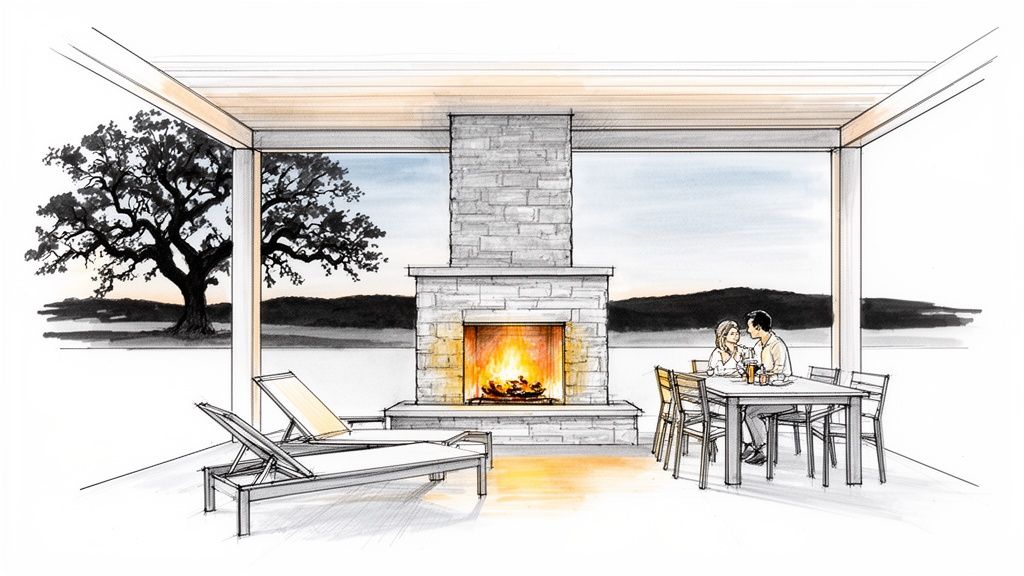
We've seen it time and again in our local builds: this kind of project transforms an underused backyard into the new heart of the home, a natural hub for family and friends to gather.
A Space That Fits Your Life
One of the best things about these outdoor rooms is how easily they adapt to any lifestyle.
For families in growing communities like Godley or Joshua, the patio becomes a safe, contained spot for kids to play and the perfect setting for weekend cookouts.
For retirees settling down in the Granbury area, it’s a peaceful escape for morning coffee or a quiet evening retreat, all while being protected from the elements.
For rural property owners out near Stephenville or Glen Rose, an outdoor fireplace adds a beautiful, rustic anchor that feels completely at home in the natural landscape. It's the perfect place to host guests after a day enjoying your land.
A thoughtfully designed outdoor living space is one of the few home improvements that genuinely enhances your daily quality of life while also adding significant, lasting value to your property.
It’s More Than Just a Project
At the end of the day, building an outdoor covered patio with a fireplace is about creating a backdrop for life's best moments. It's where you'll host friends for the big game, celebrate family birthdays, and simply enjoy a quiet weeknight with your loved ones.
It’s an investment in a lifestyle that prizes comfort, connection, and making the most of the beautiful place we call home. The unique character of our region is what makes these spaces so popular. You can discover more about what makes building here so special by exploring the unique charm of North Texas.
In this guide, we’ll walk you through everything you need to know to bring this vision to life, from the first sketch to choosing the right local builder.
Planning Your Perfect Outdoor Living Space
Before a single shovel hits the dirt, a solid plan is your most important tool. This is the crucial first step where we turn your daydream into a detailed blueprint. A little bit of thoughtful planning now is the difference between a patio you simply use and an outdoor room you truly love—it prevents costly changes and headaches down the road.
We’ll start by looking at your property with a critical eye, thinking through everything from the intense Texas sun to how you’ll walk from the kitchen to the grill.
Site Assessment and Orientation
First things first, we have to understand the canvas we're working with: your land. The orientation of your home plays a massive role in how comfortable your new space will be throughout the year.
Sun Exposure: In North Texas, a west-facing patio gets absolutely blasted by the afternoon sun, making it unusable for much of the year. We almost always recommend a north or east-facing orientation to capture gentle morning light and provide natural shade when you'll use it most—in the afternoon and evening.
Prevailing Winds: You also have to think about the wind, especially when a winter "blue norther" rolls through. We analyze the typical wind patterns on your property to position your fireplace and any walls or screens to act as a natural windbreak, keeping things cozy when it counts.
For a family in Weatherford with a big, open backyard, this might mean situating the patio to catch the morning sun for coffee while using the fireplace mass to block the strong southern winds.
Matching Your Home's Architecture
Your new patio cover shouldn’t look like it was just tacked on. The goal is to make it feel like it was always part of the home's original design, whether you live in a classic Granbury ranch house or a modern barndominium.
The roof is the key to getting this right. We'll help you select a style that perfectly complements your home’s existing lines.
Gable Roof: This is that classic A-frame design. It creates a beautiful vaulted ceiling, making the space feel incredibly open and airy. It’s a perfect match for traditional homes.
Hip Roof: With slopes on all four sides, a hip roof is known for its durability and works seamlessly with many of the modern home styles you see across North Texas.
Shed Roof: This is a simple, single-sloped roof. It offers a clean, contemporary look and is often the most practical choice when attaching a cover to an existing wall.
By mirroring the pitch, materials, and architectural details of your home's main roof, we create a cohesive, high-end look that seriously enhances your home’s curb appeal and overall value.
Defining Functional Zones
How do you actually see yourself using this space? The best outdoor living areas have distinct "zones" for different activities, which creates a natural, comfortable flow. It’s like designing a room, just without all the walls.
We'll help you map out these areas to make sure the layout just works. This usually involves planning for:
Lounging: This zone is typically centered around the fireplace, with comfy seating for kicking back and having a good conversation.
Dining: We’ll place an area for a table and chairs somewhere convenient, usually with easy access to your indoor kitchen.
Cooking: This is the dedicated spot for a grill or even a full outdoor kitchen setup.
This kind of forward-thinking extends to the utilities, too. It is so much easier and more affordable to plan for gas lines for the fireplace or grill, electrical outlets for a TV and lights, and even water lines for a sink before we start building. These are the details that create a truly functional outdoor living space.
This trend of creating complete outdoor rooms has exploded. As people began spending more time at home, the demand for these cozy setups went through the roof. In fact, sales of outdoor fireplaces in North America have climbed sharply, with the regional market projected to hit USD 1.24 billion in 2025. You can dig into the numbers behind this backyard entertaining trend in this market analysis.
Ultimately, the planning phase is all about crafting a vision that’s both inspiring and completely practical.
Choosing the Right Fireplace for Your Patio
The fireplace is the heart and soul of any great outdoor living space. It's more than just a source of warmth; it's the natural gathering spot, the focal point that sets the entire mood. Getting this choice right is critical, as it influences your budget, your design, and ultimately, how you'll enjoy those perfect North Texas evenings.
Your decision really boils down to balancing three things: the ambiance you're after, the level of convenience you need, and your overall budget. Let's walk through the three main options we build for clients, whether they're in a neighborhood in Cleburne or on a sprawling property out near Tolar.
The Classic Appeal of Wood-Burning Fireplaces
For many folks, especially in more rural spots like Glen Rose, nothing can replace the authentic experience of a real wood-burning fireplace. It’s a sensory experience—the sound of crackling logs, the distinct aroma of oak or mesquite, and the hypnotic dance of the flames. This is your go-to for a truly rustic, traditional feel.
Of course, that authenticity comes with a bit of work. You'll need a reliable source for good, seasoned firewood and a dry place to store it. There's also the ritual of building and tending the fire, not to mention the need for regular chimney cleaning to keep things safe.
Best for: Anyone who genuinely loves the classic campfire vibe and doesn't mind the upkeep. It's an ideal choice for larger properties where the smoke won’t bother the neighbors.
Cost: A full masonry build, especially with beautiful native Texas stone, can be a significant investment. You can expect to be in the $8,000 to $20,000+ range, depending on the scale and materials.
The Unbeatable Convenience of Gas Fireplaces
Want beautiful flames at the push of a button? A gas fireplace offers just that, blending stunning ambiance with ultimate simplicity. This has become the most popular choice for families in communities like Benbrook or Aledo who want instant atmosphere without any of the fuss.
They burn incredibly clean, which means no smoke, no ash to shovel out, and no worrying about embers popping onto your patio furniture. This clean-burning nature makes them an exceptionally safe and practical option for a covered space where proper ventilation is key.
We’re seeing a huge demand for gas fireplaces, especially the sleek linear models. They fit perfectly into modern designs but can also be integrated into a traditional stone hearth. This design flexibility is something a wood-burning fireplace just can't offer in the same way.
The popularity of these units is driving growth in the outdoor living industry. The global outdoor fireplace market was recently valued at USD 1.2 billion and is projected to hit USD 2.0 billion with a steady 6.1% annual growth rate. A lot of that is thanks to the convenience and design versatility of modern gas units, a trend you can read more about in this detailed market report.
Best for: Families, people who love to entertain often, and anyone who puts a premium on convenience and low maintenance.
Cost: When you factor in the fireplace insert and the cost of running a dedicated gas line, you're typically looking at a range of $6,000 to $15,000.
The Simplicity and Safety of Electric Fireplaces
If you're looking for the most straightforward and often most budget-friendly option, an electric fireplace is worth considering. The installation is a breeze because they don’t require any venting, gas lines, or a chimney structure.
While you don't get a real flame, today's electric units have come a long way with surprisingly realistic flame effects. They can also put out a decent amount of supplemental heat, taking the chill off a cool evening.
This decision tree gives a good visual of how all the initial planning pieces fit together before you even land on a fireplace.
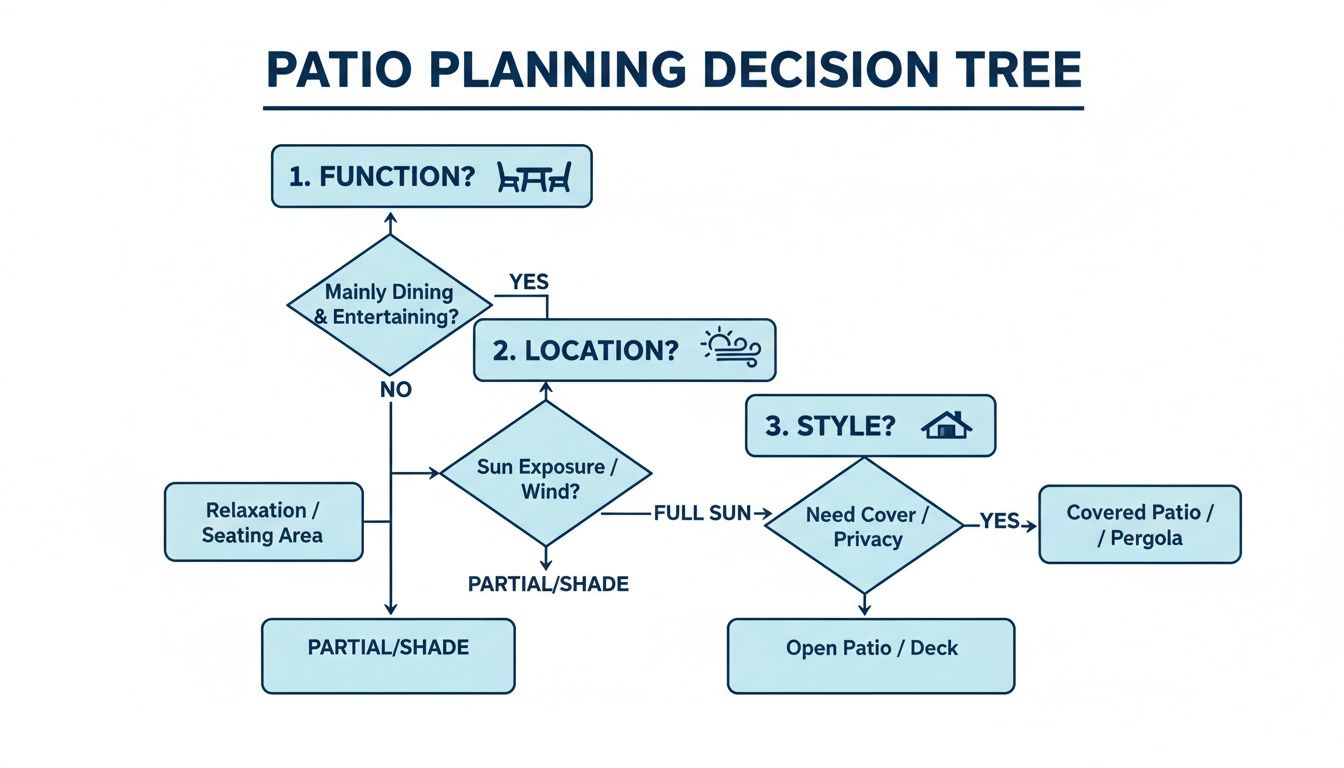
As you can see, figuring out how you want to use your patio is the first step that guides everything else, including which fireplace makes the most sense for your lifestyle.
Best for: Homeowners on a tighter budget, those with smaller or more enclosed covered patios, or anyone who wants absolute safety with minimal installation hassle.
Cost: With affordable units and simpler installation, total costs often land between $2,000 and $5,000.
A Quick Comparison
Choosing between these three comes down to personal preference, but seeing them side-by-side can make the decision much clearer. Here's a quick breakdown of what to expect from each type.
Feature | Wood-Burning Fireplace | Gas Fireplace | Electric Fireplace |
|---|---|---|---|
Ambiance | Authentic crackle, smoke, and aroma. Unmatched rustic feel. | Realistic flames with no smoke. Consistent and controlled. | Visual flame effects, often with color options. |
Convenience | Manual effort: requires starting, tending, and cleaning. | Instant on/off with a switch or remote. No cleanup. | Plug-in and play. Easiest to operate. |
Installation | Complex and heavy. Requires a footing, masonry, and a full chimney. | Requires a gas line and venting through the roof. Lighter than masonry. | Simple electrical hookup. No venting needed. |
Maintenance | High: Regular ash removal and annual chimney sweeping are a must. | Low: Annual inspection of burners and gas lines is recommended. | Very Low: Occasional dusting and bulb replacement. |
Cost | $8,000 - $20,000+ | $6,000 - $15,000 | $2,000 - $5,000 |
Best For | Homeowners who love the traditional experience and have space for wood and smoke. | Those who value convenience, safety, and modern design flexibility for frequent use. | Budget-conscious projects, smaller spaces, or where venting is not possible. |
Ultimately, the best fireplace is the one you'll actually use and enjoy. Whether it's the rustic charm of wood, the effortless elegance of gas, or the simple safety of electric, the right choice will make your outdoor patio the most popular room in the house.
Safety and Local Code Considerations
No matter which fireplace you fall in love with, safety has to be the top priority for an outdoor covered patio with fireplace. Proper ventilation is absolutely non-negotiable. Both wood and gas fireplaces must be vented correctly through the patio roof according to strict building codes to prevent dangerous carbon monoxide from building up in the covered area.
This is where working with an experienced local builder pays off. We know the specific codes for cities like Weatherford and Granbury, as well as the rules for unincorporated parts of Parker or Hood County. Your builder will ensure the chimney is the right height, has proper clearance from any wood framing, and that the entire fireplace is built on a foundation engineered to support its massive weight for decades to come.
Picking Materials That Tell a Story
The materials you choose are what give your patio its soul. They don't just determine the look and feel; they dictate how your space will stand up to our wild North Texas weather. The real magic happens when we select materials that create a seamless flow from your home's interior right out to your new outdoor living area, making it feel like it was always meant to be there.
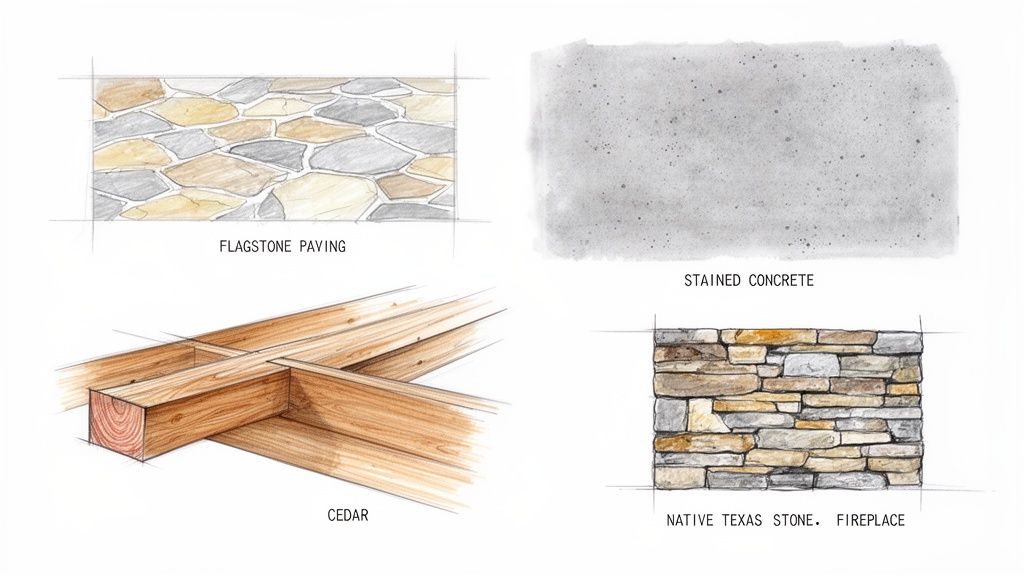
Let's walk through some of the most popular and practical choices we use in our projects across Granbury, Weatherford, and beyond. This is about finding that sweet spot between beautiful and built-to-last.
Starting From the Ground Up: Patio Flooring
The floor is your foundation, both literally and figuratively. It has to endure everything from scorching summer sun to the occasional ice storm while still being safe and comfortable underfoot.
Stained Concrete: This is a fantastic, versatile workhorse. It’s incredibly durable, relatively easy on the budget, and can be scored and stained to look just like high-end tile or stone. For a family we worked with in Glen Rose, their sealed concrete floor is a lifesaver—easy to hose down after the kids and dogs have been playing all day.
Flagstone: Nothing says "Texas" quite like native flagstone. For that classic, rustic look, it's unbeatable. Every stone has its own unique character, creating a rich, organic texture that feels right at home on a rural property. It’s more of an investment, but its timeless beauty and natural slip-resistance are huge selling points.
Pavers: Whether concrete or classic brick, pavers open up a world of design possibilities. You can go with a simple running bond pattern or a more intricate herringbone layout. They’re also incredibly practical—if a single paver cracks or gets a stubborn stain, you just pop it out and replace it. No need to redo the whole surface.
Framing the View: Materials for Your Patio Cover
The structure overhead is just as critical as the floor. It’s what provides that essential shade and really defines the architectural style of your new space.
For many homeowners here, the warm, rich look of real wood is the only way to go. Cedar is a top-tier choice for good reason; it’s naturally resistant to rot and insects, and you can't beat that distinct, pleasant aroma. For a more budget-friendly approach, properly treated pine offers excellent structural support and rustic charm.
On the other hand, for clients who prioritize easy living—like retirees we're building for in Granbury—low-maintenance composite materials are a brilliant alternative. These products give you the look of wood without ever needing to be stained or sealed. It’s a true "set it and forget it" solution.
Your material choices should tell a consistent story. We always recommend pulling materials and colors from your home's existing exterior—like matching the stone on your fireplace to a stone accent on the front of your house—to create a unified, high-end design.
The Main Event: The Fireplace
Let’s be honest, the fireplace is the star of the show. The material you choose here sets the mood for the entire patio. This is your chance to make a statement.
Native Texas Stone: A stone fireplace is the quintessential choice for an authentic North Texas feel. Using local materials like limestone or sandstone creates a rugged, natural look that connects the structure to the surrounding landscape. It’s a timeless look that adds serious character and value.
Classic Brick: If your home already has a brick exterior, echoing that in your fireplace design is a no-brainer for a cohesive look. It provides a traditional, orderly appearance that feels both classic and incredibly welcoming.
Modern Stucco: For a clean, contemporary aesthetic, a smooth stucco finish is an excellent option. It can be painted to match your home’s trim, creating a sleek and sophisticated focal point that works wonderfully with modern farmhouse or transitional-style homes.
It's no surprise that homeowners are investing more in their backyards. The global outdoor fire pits market is seeing incredible growth, jumping from USD 625.89 million to USD 685.35 million and is projected to hit USD 1,526.65 million. North America is leading the way, commanding 33.89% of the broader fireplace market, which has skyrocketed by 87.94% since 2021. You can see more details on this trend over at Global Growth Insights.
Ultimately, choosing the right materials is about balancing your personal style with your lifestyle and budget.
Budgeting for Your North Texas Patio Project
Let's talk about the money. It's often the elephant in the room, but getting a handle on the investment is the most critical part of any home project. When it comes to an outdoor covered patio with a fireplace, knowing where your dollars are going helps you make smart choices, keeps expectations realistic, and ensures you end up with a space you absolutely love—without any nasty financial surprises.
The final price tag is always a mix of your vision, what your property needs, and the materials you fall in love with. A simple 12x12 patio cover in Weatherford will have a totally different budget than a 20x30 outdoor room in Granbury with a massive stone fireplace, vaulted ceilings, and a built-in grill.
Let’s break down the key factors that actually drive the cost so you can start planning with confidence.
Key Cost Drivers for Your Patio and Fireplace
Every single project we build is unique, but the costs are always driven by a predictable set of variables. The size of your patio is the obvious starting point; a bigger footprint means more foundation work, more roofing, and more labor.
But beyond just square footage, several other big-ticket items really move the needle on the final number. Here are the main components that will shape your budget:
Foundation and Flooring: A simple concrete slab is your most straightforward, cost-effective base. If you want to step it up to stamped and stained concrete, natural flagstone, or elegant pavers, you'll see a jump in both material and labor costs.
Roof Structure Complexity: A basic shed-style roof that ties neatly into your existing home is far less complex (and less expensive) than a dramatic vaulted gable roof with exposed cedar beams and a custom tongue-and-groove ceiling. The more architectural flair, the higher the cost.
Fireplace Type and Finish: As we touched on earlier, a simple electric fireplace insert is the most budget-friendly option. At the other end of the spectrum, a full masonry, wood-burning fireplace built from native Texas stone represents a major investment. Your choice of finish—from a clean brick veneer to hand-laid limestone—will also heavily influence this part of the budget.
Utilities and Amenities: Don't forget all the things that make the space truly livable! Running gas lines for a fireplace or future grill, adding electrical for a TV and ceiling fans, and plumbing for an outdoor sink all add up and need to be factored in from the start.
Realistic Cost Ranges in North Texas
So, what should you really expect to spend? While a custom quote is the only way to get a firm number for your specific home, I can give you some solid ranges based on the projects we've built all over Hood and Parker counties.
For a professionally built, high-quality outdoor covered patio with a fireplace in our area, most folks should plan on a budget between $30,000 and $75,000+. That's a wide gap, so let's get more specific.
$30,000 - $45,000: This range gets you a fantastic, well-built, medium-sized patio (think 250-350 sq. ft.). It typically includes a standard roofline, a solid concrete slab floor, and a prefabricated gas or electric fireplace with a simple, clean veneer finish. It’s a wonderful, functional space that will instantly become the most popular room in the house.
$45,000 - $75,000+: Now we're getting into a more expansive, true outdoor living room. This budget can accommodate a larger footprint, a more complex roof structure like a vaulted gable, premium flooring like flagstone, and a custom masonry fireplace. This is also the range where you can start adding in other great features like a built-in outdoor kitchen island or integrated lighting and sound systems.
Where to Invest and Where You Can Save
If you want to make the most of your budget, my best advice is to put your money into the "bones" of the project—the foundation and the roof structure. These are the most difficult and expensive things to change down the road. A solid, well-engineered structure is an investment that will protect your home and last for decades.
You can find some savings in the finishes and features that are easier to upgrade later. For example, you could start with a beautiful stained concrete floor and plan to lay tile or pavers over it in a few years. Likewise, you could choose more modest light fixtures for now or hold off on that top-of-the-line grill for a season or two.
The key is to build a high-quality foundation that you can add to as time and budget allow.
Finding the Right Builder to Bring Your Vision to Life
Choosing the right partner for your project is, without a doubt, the most critical decision you'll make. This isn't just about hiring a contractor; it's about finding a team who can take your vision and turn it into a safe, beautiful, and lasting structure that feels like a natural extension of your home.
Here in North Texas, a great builder does more than just swing a hammer. They should be your guide through the entire maze of design, local permitting, and construction.
What to Look for in a Local Builder
When you start interviewing builders for your outdoor covered patio with fireplace, prioritize teams that are deeply rooted in our community. A local, family-owned builder from the Granbury or Weatherford area will have an invaluable, boots-on-the-ground understanding of our specific building codes, tricky soil conditions, and wild weather patterns.
Here’s how to dig a little deeper:
Scour Their Portfolio: Don't just glance at the pretty pictures. Look for projects that mirror what you have in mind. Do their past remodels and additions show a high level of craftsmanship and an eye for the small details that matter?
Check Credentials (No Excuses): Always confirm they are fully licensed and insured in Texas. This is non-negotiable. It protects you and proves they operate professionally and take their business seriously.
Read the Reviews: What are past clients really saying? Look for consistent feedback on communication, sticking to the budget, and the quality of the finished space. A few glowing reviews are nice, but a pattern of satisfied homeowners tells the real story.
The real game-changer with a local builder is direct access and accountability. When you can actually talk to the owner and see the crew on-site, you get honest answers, transparent pricing, and a team that genuinely cares about your home.
The Construction Process From Start to Finish
Once you've found the right partner, the entire process should feel like a collaboration, not a transaction.
It typically kicks off with a design consultation where you can lay out all your ideas, talk about what you need the space to do, and set a realistic budget. From there, your builder will handle creating the detailed plans, pulling all the necessary permits from your city or county, and laying out a clear construction schedule you can follow.
You should expect—and demand—regular updates as the project moves from pouring the foundation and framing the structure to the detailed masonry work and final finishes. The journey isn't over until you do a final walkthrough together to ensure every last detail is absolutely perfect. It's this hands-on, personal approach that we bring to all our custom home remodels.
Got Questions About Patios and Fireplaces? We’ve Got Answers.
When you start thinking about a new outdoor covered patio with a fireplace, a lot of questions pop up. It’s a big project! Based on our experience building custom homes and outdoor spaces all over North Texas, from Weatherford to Granbury, we've heard them all.
Here are the answers to the questions we get asked the most.
Will I Really Need a Permit for This?
More than likely, yes. The moment you add a roof structure to your home, you've crossed into permit territory. Add a fire feature with gas or electrical lines, and it’s a definite yes—whether you're in the city of Granbury or out in an unincorporated part of Hood or Parker County.
Don't think of it as just bureaucratic red tape. The permitting process is there for your safety, ensuring everything is built to code and won't cause problems down the road.
An experienced builder won't just tell you a permit is required; they’ll handle the whole thing for you. That means submitting the architectural plans, scheduling the inspections, and making sure every part of the build gets the official sign-off.
How Long Will This Take to Build?
That really depends on the scale of your project, the availability of materials, and, let's be honest, the wild Texas weather.
A simple, straightforward covered patio might be built in 4-6 weeks once we have the approved permits in hand. But if you’re dreaming bigger—say, a large patio with a full masonry fireplace, vaulted ceilings, and an outdoor kitchen—you should realistically plan for a construction timeline closer to 8-12 weeks, maybe even longer.
Your builder should walk you through a detailed schedule before a single nail is hammered.
Can I Just Add a Fireplace to the Patio I Already Have?
Absolutely. This is a fantastic way to upgrade an existing patio and completely change its feel. It's a popular project for a good reason.
But it’s not quite as simple as just stacking some bricks. A pro needs to come out and assess your current structure first.
Here’s what we look for:
A Solid Foundation: A true masonry fireplace is incredibly heavy. We have to check if your existing patio slab can handle that weight or if we need to pour a new, reinforced footing specifically for the fireplace.
Roof and Ventilation: The chimney has to go somewhere. We need a solid plan to run it through your existing roof without compromising the structure or creating a spot for leaks.
With the right planning, adding a fireplace can turn the patio you already enjoy into a cozy, year-round retreat.
Ready to stop dreaming and start planning? The team at Gemini Homes is here to answer your questions and help you design the perfect outdoor living space for your North Texas home. Let's build something amazing together. https://www.geminihomesgranbury.com
Comments