
What Is Value Engineering In Construction? A North Texas Homeowner's Guide
Value engineering in construction is a creative, systematic approach to analyzing a project, identifying the essential function of each component, and finding ways to achieve that function for the lowest possible long-term cost. The key is that it’s done without sacrificing quality, performance, or your design vision. It’s not about cutting corners; it’s about making smarter, more efficient choices to get the most out of your investment in your North Texas home.
Defining Value Engineering for Your Granbury Home
When homeowners in Granbury and Weatherford hear "value engineering," their minds often jump straight to "making things cheaper." This is the single biggest misunderstanding of the process. True value engineering is a collaborative effort that looks far beyond the initial price tag to find the absolute best value for your custom home or remodel.
Think of it like this: you’re dreaming up a beautiful outdoor kitchen for your family. The simple cost-cutting approach would be to swap your preferred high-end grill for a budget model. Value engineering, on the other hand, asks much smarter questions.
A Focus on Function and Long-Term Value
Instead of just looking for ways to slash the budget, this process digs into the function of every component. The goal is to figure out if there's a more intelligent or efficient way to achieve that function for your home.
For that outdoor kitchen, a value engineering mindset might involve asking:
Could we explore different layouts? Maybe repositioning the sink and grill could shorten the plumbing and gas lines, saving hundreds in labor and materials without changing the feel of the space.
Can we source local materials? A locally quarried North Texas stone might offer the same durability and look as an expensive import, often at a better price while supporting our local economy.
What are the life-cycle costs? A slightly more expensive composite decking might resist our intense Texas sun and hail far better, saving you the headache and cost of yearly staining and future repairs that come with traditional wood.
Value engineering is all about optimizing the project by looking at the whole picture—initial cost, long-term maintenance, durability, and aesthetics. It ensures every dollar you spend is adding real, lasting quality to your home.
This proactive approach helps you make informed decisions that protect your investment for the long haul. It's crucial to distinguish this thoughtful process from simply finding the cheapest option available.
Value Engineering vs. Simple Cost Cutting
Aspect | Simple Cost Cutting | Value Engineering |
|---|---|---|
Primary Goal | Reduce the initial price tag, period. | Maintain or improve function while reducing overall life-cycle cost. |
Focus | Price | Function and Long-Term Value |
Impact on Quality | Often leads to lower quality, reduced durability, and a compromised design. | Aims to preserve or even enhance quality and design intent. |
Timeline | Typically a last-minute reaction to being over budget. | A proactive process integrated into the early design and planning stages. |
Example | Swapping specified Pella windows for a generic, cheaper brand. | Reconfiguring a window layout to use standard sizes, reducing costs without changing the brand or quality. |
The mindset is completely different. One is a race to the bottom on price, while the other is a strategic effort to maximize value. The key is shifting your thinking from "how much does this cost?" to "what is the best possible way to accomplish this?" The answers often lead to a home that not only matches your vision but is also built smarter and stronger.
The Core Goal: Improving Function to Increase Value
At its heart, value engineering boils down to one simple idea: function. Instead of kicking off the conversation with, “How much does this cost?” we flip the script and ask, “What does this need to do?”
This shift is everything. It moves the discussion away from just finding the cheapest option and toward making smart choices that deliver real, long-term performance for your home.
Every part of your house has a job. For a new home in Glen Rose, the main function of the exterior siding is to shield the structure from our wild Texas weather—blazing sun, hard rain, and the hail we all know too well. Its secondary jobs are to help insulate the home and create beautiful curb appeal.
Analyzing Function Over Price
A typical cost-cutting approach might just point you to the cheapest siding on the market. That's simple, but it's not smart. Value engineering goes deeper by looking at the ratio of function to cost.
This forces us to ask better questions:
Will this material perform its job well over the next few decades?
Is there another material that performs the same function better, or for a lower overall cost when you factor in maintenance?
Does saving a little money upfront mean I’ll be paying a lot more in repairs and upkeep down the road?
This analysis leads to much more intelligent decisions. For example, a quality fiber cement siding might cost a bit more initially than basic vinyl. But if it stands up to hail better and only needs a new coat of paint every 15-20 years instead of every 7-10, it provides far greater long-term value. It’s doing its primary job of protecting your home more effectively while saving you thousands in future maintenance.
Applying the Concept Throughout Your Home
This "function-first" mindset applies to every decision in your project. Think about the HVAC system for a family building on rural property near Stephenville. Its job isn't just to blow cold air; it's to efficiently cool and heat the home while taming our legendary Texas humidity.
Value isn't just about the initial price tag. It’s the measure of how well a system, material, or design fulfills its purpose throughout the entire life of your home.
Instead of just grabbing the cheapest unit that meets code, a value engineering approach has us look at high-efficiency, variable-speed units or zoned systems. Yes, they cost more upfront. But their ability to slash monthly energy bills by 20-30% and deliver superior comfort represents a massive boost in functional value. This is how you protect your investment and ensure your home truly serves your family's needs.
To see how these decisions play out financially, check out our guide on maximizing your home remodel return on investment.
By focusing on the "why" behind every component—from the foundation to the kitchen faucet—you ensure every dollar is spent wisely. The result is a home that’s not just beautiful, but built to perform for years to come.
How Value Engineering Works in Practice
So, how does this actually play out on a real North Texas project? Value engineering isn't a secret process that happens behind a closed door. It's an open, collaborative conversation between you and your builder, aimed at making sure your vision and your budget are perfectly in sync. The process is structured but also highly creative, turning your big-picture goals into specific, actionable decisions.
Information Gathering and Defining Priorities
This is ground zero. My job, as your builder, is to listen and understand what truly matters to you. Are you a growing family in Weatherford who needs durable, low-maintenance floors that can stand up to kids and pets? Or are you building that forever home in Glen Rose where long-term energy efficiency is the number one priority?
This phase is all about digging into your real goals:
Must-Haves vs. Nice-to-Haves: We’ll work together to separate the non-negotiable elements of your dream home from the areas where you have flexibility.
Function First: We get clear on the primary purpose of each space. A kitchen isn't just a place to cook; for many North Texas families, it's the central hub for family life, homework, and entertaining.
Budget Clarity: We establish a realistic understanding of your budget from the very beginning, which acts as our guide for all future decisions.
Creative Brainstorming and Analysis
Once we know what you value most, the creative work begins. This is where an experienced local builder’s knowledge really makes a difference. We’ll explore different materials, construction methods, and even small design tweaks that could deliver better overall value.
For example, on a custom home build on acreage near Stephenville, this might mean analyzing the land itself. Could we reorient the house on the lot to maximize shade from existing oak trees, cutting down on summer cooling costs? Or maybe an alternative septic system design would work better with the specific clay soil common in North Texas, potentially saving thousands on both installation and long-term maintenance.
The goal here is to generate a list of smart alternatives. It’s never about compromising your vision, but about finding more intelligent ways to bring it to life while protecting both function and quality.
Evaluation and Decision-Making
Finally, we lay all the options on the table and evaluate them together. Each potential change is measured against your original priorities—cost, durability, aesthetics, and function. I'll present the pros and cons in a clear, straightforward way so you can make confident, informed choices.
This step is crucial for preventing expensive changes down the road. By vetting these ideas early, we can avoid mid-project adjustments that are notorious for derailing schedules and blowing up budgets. If you want to dive deeper into how proactive planning helps, our guide on mastering construction change order management offers some great insights.
This simple visual breaks down how the process moves from identifying costs and functions to achieving real project value.
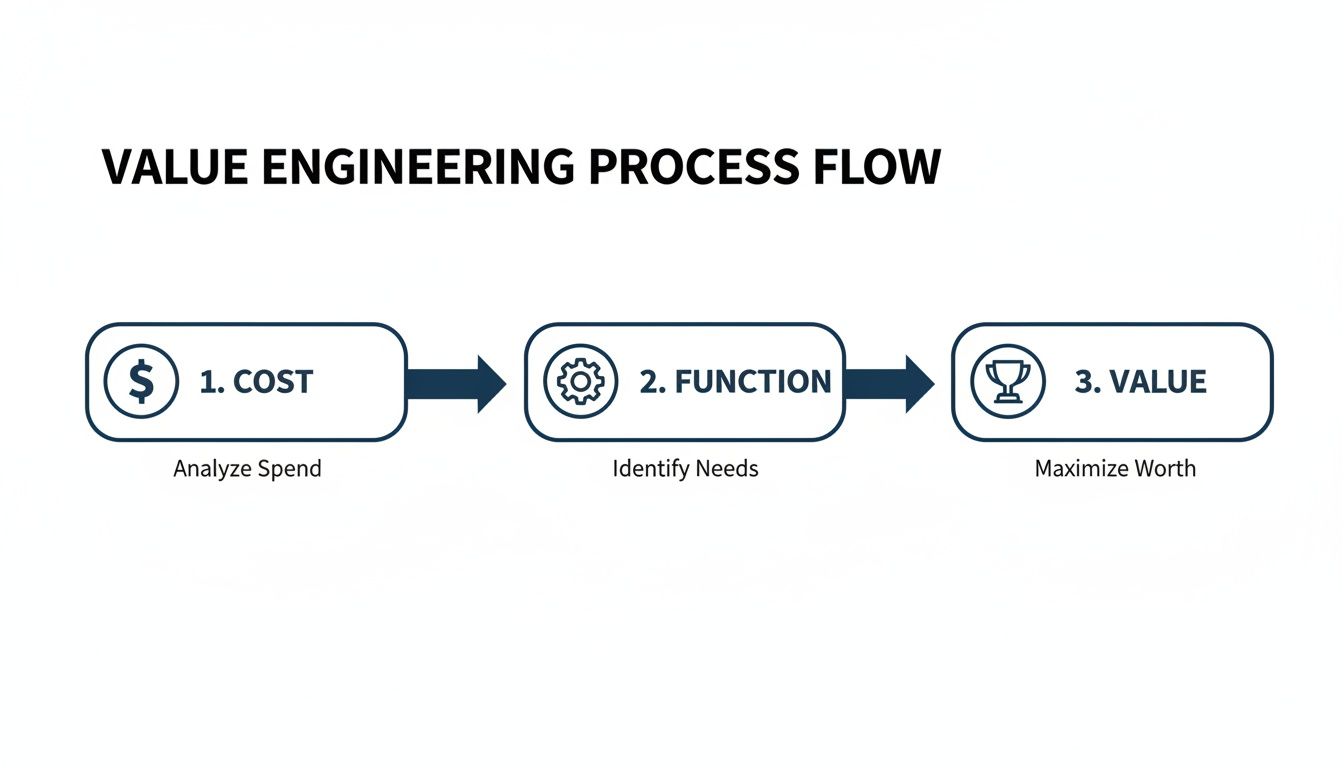
As the flowchart shows, it’s the careful analysis of both cost and function that allows a team to deliver a project that represents true, measurable value. This collaborative process turns you from a spectator into a key partner in building your own home.
Real-World Examples in North Texas Construction
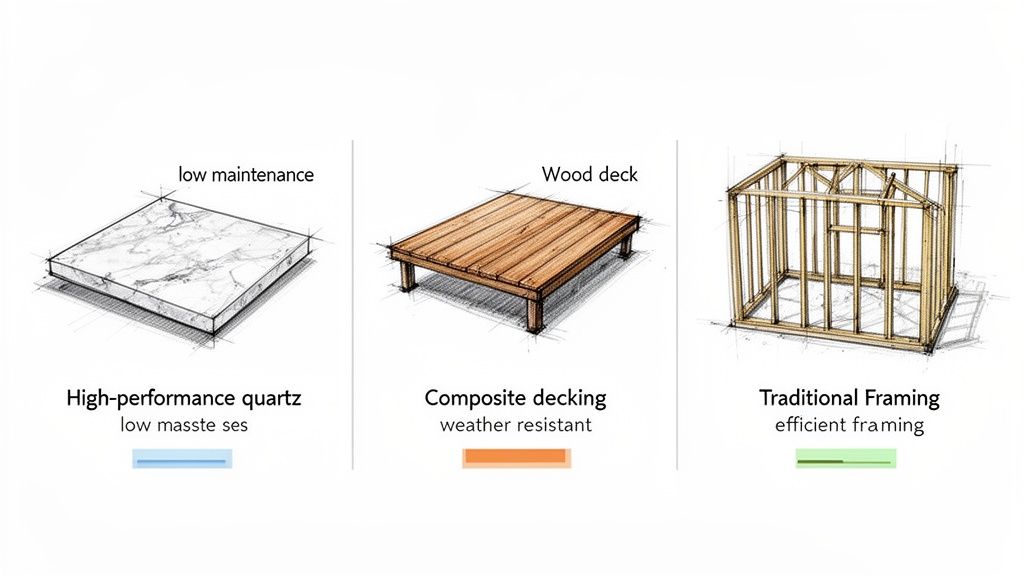
The theory is all well and good, but seeing how value engineering actually works on a North Texas job site is where it clicks. It’s about making specific, intelligent swaps that lead to big wins in performance, durability, and budget. These are practical decisions we help homeowners make every day across Granbury, Aledo, and the surrounding communities.
The Aledo Kitchen Remodel
A luxurious kitchen often brings one material to mind: marble. And while it’s beautiful, marble is also porous, stains easily, and needs to be sealed regularly—not a perfect match for a busy family kitchen.
Original Idea: Polished Carrara marble countertops. They're stunning, but come with a hefty price tag (often $80-$150+ per square foot installed) and a lifetime of high maintenance.
Value Engineering Alternative: We'd look at a high-performance quartz from a top brand like Silestone or Caesarstone. These engineered slabs provide a look nearly identical to marble but are non-porous, highly resistant to scratches and stains, and require zero sealing.
The Benefit: The homeowner gets the exact high-end look they wanted, but with far superior durability and lower lifetime costs. They could save 10-25% on the initial material and installation compared to a high-end marble, freeing up budget for other priorities.
The Weatherford Outdoor Living Space
Here in Texas, building a deck that can stand up to our blazing sun and wild storms is non-negotiable. A traditional wood deck looks great for the first year, but it demands constant work to keep it from warping, splintering, and rotting.
Value engineering shines a light on the total cost of ownership. A choice that saves money today could cost you much more in time and repairs over the next decade.
For an outdoor living project, the analysis might go like this:
Original Idea: A standard pressure-treated pine deck. This is often the cheapest option upfront, but it needs to be sealed or stained every single year to protect it from moisture and UV damage.
Value Engineering Alternative: Modern composite decking, like Trex or TimberTech. The initial material cost is higher, but these products are a blend of recycled wood fibers and plastic, making them incredibly tough against fading, insects, and moisture.
The Benefit: This is a classic "invest now, save later" decision. The homeowner avoids the annual cost and headache of maintenance, and the deck stays beautiful for 25+ years with just simple cleaning. For retirees or busy families, this low-maintenance lifestyle is a huge value.
Framing a Custom Home in Glen Rose
Even the "bones" of your home can be optimized. Advanced framing techniques offer a smarter way to build. This isn't about using weaker materials—it's about using materials more efficiently.
Original Idea: Standard framing with studs placed 16 inches apart. This is the conventional method and it works just fine.
Value Engineering Alternative: We can use advanced framing, which might involve moving studs to 24-inch spacing, using single top plates, and aligning wall studs directly over floor and roof trusses.
The Benefit: This strategic approach can reduce the amount of lumber needed by up to 30%, cutting material costs and construction waste. Better yet, it creates larger cavities between studs, allowing for more insulation. That leads to a more energy-efficient home and lower utility bills for decades—a major win in the Texas heat.
These examples show that value engineering is a powerful tool when applied correctly. In fact, studies suggest a well-run value engineering process can lead to significant savings by optimizing both initial and life-cycle expenses. To learn more, you can explore this study on the benefits of value engineering in construction.
Partnering with Your Builder for the Best Results
Successful value engineering isn’t an abstract concept. It’s what happens when there's genuine trust and collaboration between you and your builder. The process hinges on open communication and a shared goal: creating the absolute best home for your budget. The best time to start these conversations is right at the beginning, during the design phase. It's far easier and cheaper to move a wall on paper than after the foundation is poured.
Communicating Your Priorities Clearly
To get the best results, we need to understand what truly matters to you. That means being honest about your budget and crystal clear on your "non-negotiables"—those features you've been dreaming of.
Come to the table ready to discuss:
Your Budget: Be upfront about your financial comfort zone. This isn't about limiting creativity; it's about focusing it on smart solutions that honor your investment.
Your 'Non-Negotiables': Is it that gourmet kitchen perfect for big family gatherings in Granbury? Or maybe the expansive covered patio for enjoying those gorgeous Glen Rose sunsets? Knowing what you love most helps us protect it.
Your Lifestyle: How do you see your family living in this space? A family with young kids has different needs than a couple building their retirement home, and these details steer every recommendation we make.
A great builder listens more than they talk in these early meetings. Their job is to absorb your vision and then use their expertise to find the most intelligent path to get you there.
The Local Advantage
Working with a seasoned North Texas builder really pays off. We've spent years building relationships with local suppliers and trade partners, giving us deep insight into which materials hold up best in our specific climate—from the intense summer heat to those unpredictable hail storms. Our local experience allows us to suggest solutions you might not find in a design magazine but that deliver better performance and long-term savings. For more guidance on finding the right partner, you can explore our guide on how to choose a home builder in North Texas.
Ultimately, the goal is a partnership that creatively solves problems. When your project is finished, you should feel confident that you not only got the home you envisioned, but that every dollar was spent thoughtfully to maximize its quality, function, and character for years to come.
Common Questions About Value Engineering
As you think about your project, a few key questions probably come to mind. Getting straight answers is the best way to feel confident, whether you’re planning a custom home from scratch or diving into a major remodel. Let's tackle some of the most common questions we hear from homeowners across North Texas.
Does Value Engineering Mean I Get Cheaper Materials?
This is the biggest misconception, and the answer is a firm no. Value engineering isn't about finding the lowest price; it's about finding the best value. Sometimes, that might involve swapping one material for a less expensive one, but only if it performs the same job just as well—or even better. More often, it leads to smarter long-term decisions, like choosing a higher-quality material that drastically cuts down on future maintenance costs.
When Is the Best Time to Discuss Value Engineering?
As early as possible. Your biggest opportunities for making smart, impactful improvements are right at the beginning, during the design and planning phases.
For a new custom home, these conversations should happen during the architectural design stage. For a remodel, it should be a key part of your very first discussions with your builder.
Trying to apply value engineering late in the game is like trying to change the recipe after the cake is in the oven. The impact will be minimal, and the process becomes more disruptive and expensive.
Can This Apply to Smaller Projects or Insurance Work?
Absolutely. The core idea of maximizing function and long-term value scales to fit any project.
For a roof replacement after a classic North Texas hailstorm, VE could mean looking at shingles with superior impact resistance for a similar price. That one move could potentially lower your future insurance premiums.
On an insurance-funded remodel, it might involve finding clever ways to reconfigure a layout for better flow and function, all while staying within the strict budget of the insurance settlement.
No matter the size, the goal is always the same: make sure every dollar you spend delivers the maximum possible return in performance, durability, and enjoyment for your family.
At Gemini Homes, our process is built on finding the perfect balance between your vision, your budget, and long-lasting quality. If you're ready to discuss a project where every detail is thoughtfully considered, we invite you to schedule a free consultation with our team.
Comments