
How to Plan a Home Remodel: A Guide for North Texas Homeowners
Before a single sledgehammer swings, the real work of a home remodel begins with a clear plan. It’s about figuring out why you're renovating, then creating a detailed wish list that separates your absolute needs from your nice-to-haves. Getting this foundation right ensures the final space truly works for your life in North Texas.
Defining Your Vision Before You Begin
Every successful remodel we see here in Granbury, Weatherford, and beyond starts with a rock-solid plan. Long before you're looking at tile samples, the most important thing you can do is define exactly what you want to accomplish. This goes beyond looks—it’s about function, lifestyle, and your long-term happiness in your home.
Think hard about the "why" driving your project. Is your family growing, and you need an open-concept kitchen to keep an eye on the kids while you cook? Maybe you're a retiree in Glen Rose looking to age in place by adding a first-floor primary suite. Or perhaps the dream is creating that perfect outdoor living space for entertaining on a warm Texas evening. Each goal points to a completely different project.
From Inspiration to Actionable Ideas
Start gathering inspiration, but do it with a purpose. While national design sites are great for ideas, pay attention to local architecture and home styles to find ideas that feel authentic to our North Texas communities.
Once you have a folder full of images and notes, it's time to get organized. Create two simple lists:
Must-Haves: These are the non-negotiables that solve a real problem or are essential to the project's success. Think "more countertop space," "a dedicated home office," or "a walk-in shower instead of this tiny tub."
Nice-to-Haves: This is the fun list. These are features you'd love if the budget and timeline allow, like heated bathroom floors, a built-in wine fridge, or that high-end six-burner stove.
This exercise is more important than it sounds. It forces you to set priorities early on. When—not if—you have to make tough budget decisions down the road, you’ll know exactly where you can compromise without sacrificing the project's core purpose.
A well-defined vision acts as your project's North Star. It guides every decision, from the initial floor plan to the final paint color, ensuring the end result is a space that not only looks beautiful but fundamentally improves how you live.
The next step is turning those lists into something you can show a builder. You don't need to be an architect to sketch a rough layout or pull together a mood board. For those who want to get more detailed, you can even explore tools to visualize your dream home with interactive floor plans. Doing this prep work is invaluable; it means that when you finally sit down with a professional, you're starting the conversation with clarity and confidence.
Creating a Realistic Remodel Budget
Let's talk about the part of remodeling that makes most people nervous: the money. Tackling the finances can feel intimidating, but a solid, well-thought-out budget is your best tool for turning stress into confidence. A realistic budget isn't just a number you pick out of thin air; it’s the financial roadmap for your entire renovation, whether you're in Granbury, Stephenville, or anywhere in between.
So, how do you build one? It starts with understanding the major cost categories. Every project, no matter the size, breaks down into similar components. Getting a handle on these from the beginning is how you avoid nasty financial surprises down the road.
The Core Components of Your Budget
Think of your total investment as being split into a few key buckets. While the exact percentages might shift depending on your project's complexity, these categories are standard for most remodels in North Texas.
Materials and Finishes (30-40%): This is usually the biggest slice of the pie, covering everything from structural lumber and drywall to the exciting finishes like tile, countertops, and light fixtures.
Labor (20-30%): This is what you pay the skilled pros who bring your vision to life—the carpenters, plumbers, electricians, and painters.
Design and Permits (5-10%): If your project needs an architect, designer, or structural engineer, their fees land here. This also includes the cost of pulling necessary permits from your local city or county office.
Contingency Fund (15-20%): This is your non-negotiable safety net. Seriously, don't skip this. We'll get into why it’s so critical in a moment.
This is why that early planning—gathering inspiration and defining your scope—is so important. Every one of those early decisions directly impacts your budget.
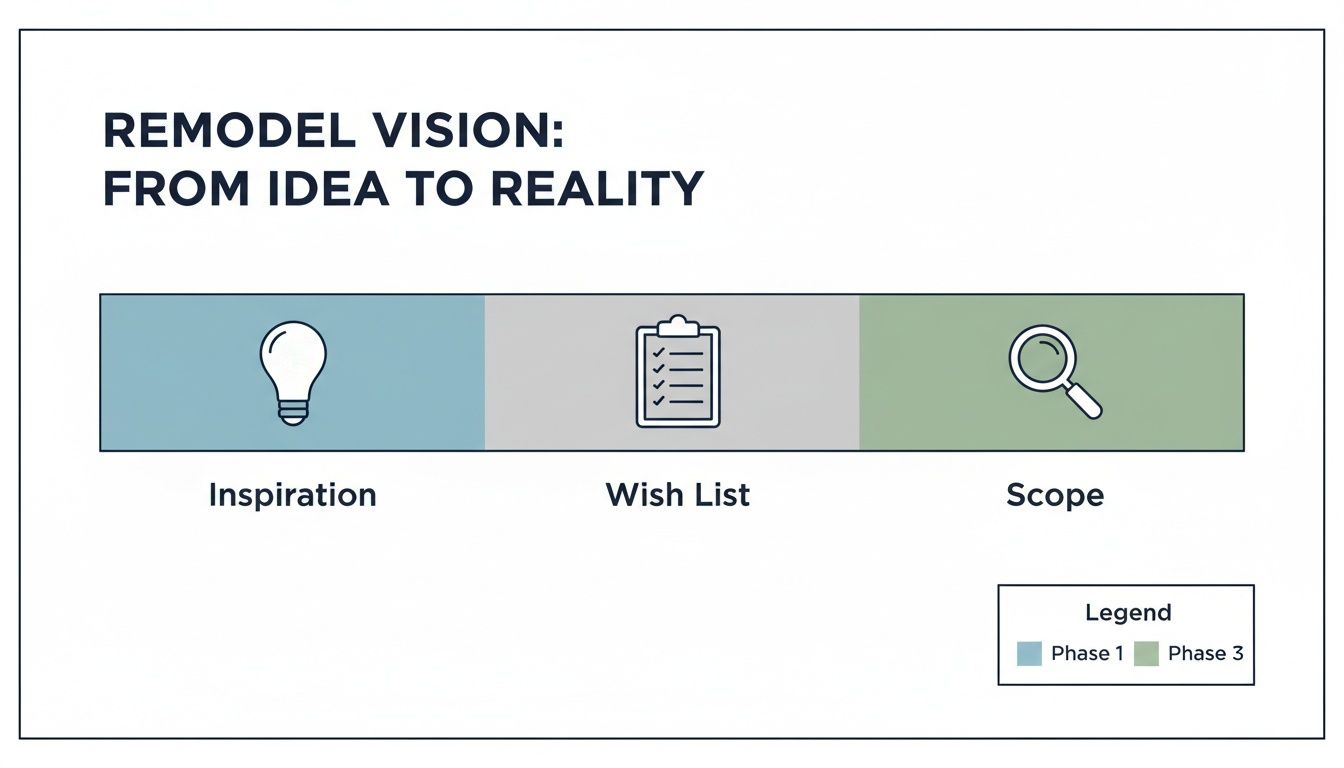
From a simple idea to a locked-in scope, each step has a dollar amount attached that needs a home in your budget.
Researching Local Costs and Getting Estimates
Once you have a decent idea of your scope, it's time to get real with the numbers. National averages you find online are fine for a ballpark figure, but labor and material costs can vary right here in North Texas. The best way to ground your budget in reality is to get at least three detailed estimates from reputable local builders.
A good estimate is more than just a final price. It should be an itemized breakdown showing you exactly what you're paying for. This level of detail is crucial because it lets you compare bids accurately and understand why one contractor's price might be different from another's.
The market for renovations is booming. You can even plan your budget with return on investment in mind. For example, a minor kitchen remodel averages $28,458 and can see a 112.9% return in our region. For more data, check out the 2025 Remodeling Impact Report.
The Power of a Contingency Fund
I'm going to say it again: never, ever skip the contingency fund. This is the 15-20% of your total budget you set aside for the unexpected. When you're working on older homes around Weatherford and Glen Rose, it’s not a question of if you’ll find surprises behind the walls, but what kind of surprises they'll be.
Think of your contingency fund as project insurance. It’s the buffer that keeps a small problem—like discovering outdated electrical wiring—from derailing your entire remodel and budget.
This money is there for things like hidden water damage, unexpected foundation issues on rural properties, or having to bring old plumbing up to modern code. Without that cushion, you’ll be forced to make painful cuts to your "must-have" list or halt the project completely.
To give you a clearer idea of how these numbers might look, here’s a sample breakdown.
Sample Budget Breakdown for a Major North Texas Remodel
Use this template to see how costs are typically allocated in a major home renovation, helping you plan your funds more effectively.
Expense Category | Percentage of Total Budget | Example Cost (on a $100,000 Project) |
|---|---|---|
Design & Permitting | 5-10% | $5,000 - $10,000 |
Materials & Finishes | 30-40% | $30,000 - $40,000 |
Labor & Construction | 20-30% | $20,000 - $30,000 |
Fixtures & Appliances | 10-15% | $10,000 - $15,000 |
Contingency Fund | 15-20% | $15,000 - $20,000 |
This table gives you a practical framework for allocating your own funds and anticipating where the major costs will lie.
Making Smart Choices to Control Costs
At the end of the day, your choices have the single biggest impact on the final price tag. In a kitchen remodel, for instance, fully custom cabinets can easily cost two or three times more than quality semi-custom or stock options. Likewise, a high-end quartz countertop is a much larger investment than a beautiful butcher block or a durable, modern laminate. This is where your "must-have" versus "nice-to-have" list becomes your most powerful budgeting tool.
If you need to finance the project, many homeowners explore a home equity line of credit (HELOC), a home equity loan, or a cash-out refinance. Each has its own set of pros and cons, so it’s always a good idea to talk with a financial advisor to figure out the best path for your situation.
With a well-researched, detailed, and flexible budget in hand, you can move forward feeling prepared and in control. A great way to kickstart this process is by sitting down with an experienced local builder to talk through your vision.
Thinking About Your Return on Investment
Any great remodel should do two things: make your daily life better and boost your home's long-term value. When planning a remodel, one of the smartest things you can do is think about the return on investment (ROI). This isn't just for house-flippers; it's about making savvy decisions that pay off, whether you plan to sell next year or stay for another twenty.
Here in the North Texas real estate market, some projects consistently add more value than others. The trick is to find that sweet spot between what you personally want and what future buyers in our area are really looking for.
Where to Put Your Money for the Best Returns
Knowing which projects have the highest ROI can completely change how you approach your budget. The 2025 Cost vs. Value Report shows a clear trend every homeowner should pay attention to: exterior projects pack a serious financial punch.
Eight of the top ten projects with the best returns are all on the outside of the house. This proves just how much curb appeal impacts a home's perceived value. Topping the list is a new garage door, followed by manufactured stone veneer, which can recoup a jaw-dropping 207.9% of its cost at resale. A minor kitchen remodel also makes the top five, bringing in a healthy 112.9% ROI.
This kind of data is gold for homeowners in communities like Cleburne and Godley. It shows that sometimes, the less glamorous updates are the ones that make the most financial sense.
Your home’s exterior is its first impression. Investing in curb appeal—from a new garage door to updated siding or stone accents—is one of the most reliable ways to increase your home's value and attract potential buyers.
Put yourself in a buyer’s shoes for a moment. When they pull up to a house with a beat-up garage door or faded siding, they immediately start tallying up future repair costs. A home that looks sharp and well-maintained from the street signals quality and care.
The Rise of Smart, Future-Proof Design
Beyond a quick sale, there's another powerful trend shaping how we remodel our homes: aging-in-place. This is all about creating spaces that are accessible, comfortable, and safe for people of all ages and abilities. This shift is a big deal, especially for retirees moving to the Granbury area or for families planning their "forever home." Incorporating accessible design is no longer a niche idea; it’s a smart, long-term investment.
Take a look at these forward-thinking updates:
Curbless Showers: Getting rid of that step into the shower not only looks sleek and modern but also removes a common tripping hazard.
Wider Doorways: Bumping interior doors to at least 36 inches wide makes a world of difference for wheelchair or walker access, adding real value for a huge range of buyers.
Main-Floor Primary Suites: In a two-story home, having a full bedroom and bathroom on the ground floor is a massive selling point for anyone wanting to avoid stairs down the road.
Lever-Style Door Handles: They're simply easier to use than round knobs, especially for someone with arthritis or limited grip strength.
These aren't just for accessibility; they're universal design principles that make a home more functional for everyone. For more ideas, check out our guide on maximizing your home remodel's return on investment in North Texas. By thinking about these things early on, you're not just remodeling for today—you're future-proofing your home and making it more appealing to more people.
Assembling Your Remodeling Dream Team
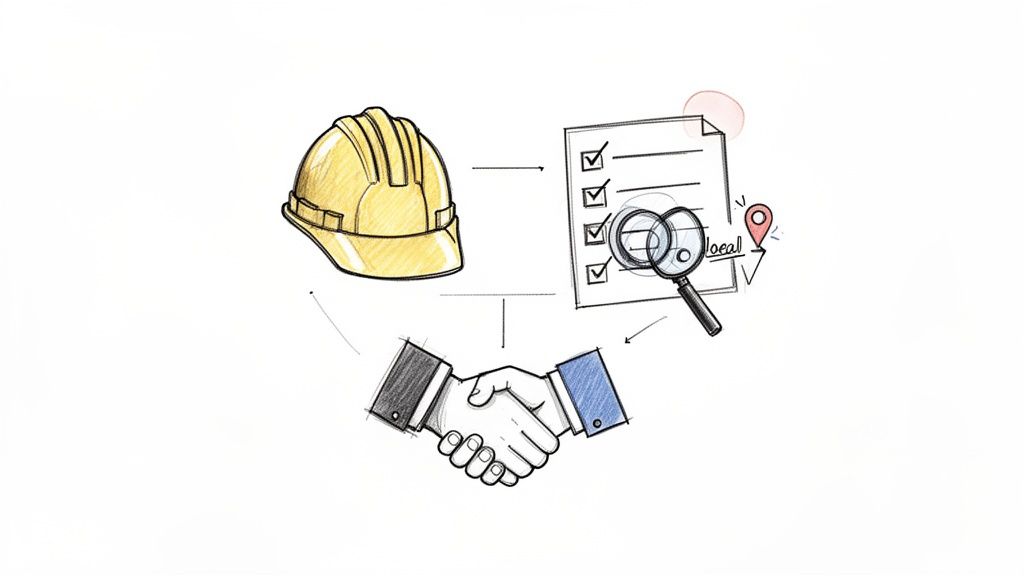
Let's be honest—the success of your remodel hangs on the quality of the people you hire. You can have the most brilliant vision and a perfect budget, but it’s your builder who brings it all to life.
Finding the right partner is the most critical decision you'll make, especially here in Granbury and the greater North Texas area. A great local builder doesn’t just bring technical skill; they bring established relationships with reliable tradespeople and a deep understanding of our local building landscape.
So, where do you start? The best leads often come from people you already know. Ask friends, neighbors, or coworkers who have had good experiences with recent remodels. You can also check with local resources like the Greater Fort Worth Builders Association to find a list of vetted professionals in our community.
Vetting Potential Partners
Once you've got a shortlist of three or four potential builders, it’s time to do your homework. This is about more than finding someone who can swing a hammer; you’re looking for a partner you can trust and communicate with effectively for weeks or even months.
Start with their online presence—check out their website and reviews, but don't let that be the final word. A quick phone call can tell you a lot about their professionalism. If that feels right, meet in person to walk them through your ideas.
A builder's communication style is just as important as their construction skill. Look for someone who listens intently to your vision, asks thoughtful questions, and explains their process clearly. This initial interaction is a strong indicator of how they will communicate throughout the project.
When you meet, have your questions ready. A true professional will expect you to be thorough and will welcome the chance to show you why they're the right fit.
Essential Questions for Your Contractor Checklist
Treat this like a job interview, because that's exactly what it is. You're hiring someone for a very important role. Here are a few non-negotiable questions:
Are you licensed and insured? Ask for proof. You need to see their general liability insurance and workers' compensation policies. This isn't just a formality—it protects you from being held liable for any accidents on your property.
Have you done projects like mine before? You want someone with direct experience. Ask to see a portfolio, and pay close attention to projects that have a similar scope and style to what you envision.
How do you manage projects and communicate? Get specific. Find out how you'll receive updates, who your main point of contact will be, and how they handle change orders.
What’s your timeline, and who are your subs? A good builder can give you a realistic schedule. It's also a great sign if they work with a consistent, trusted team of subcontractors.
Remember, this conversation goes both ways. A great builder is also interviewing you to see if you’ll be a good partner for them.
Checking References and Reviewing Bids
Never skip the reference check. A builder who is confident in their work will be happy to provide a list of past clients. When you call, ask about the entire experience. Was the project on time? Did it stay on budget? And most importantly, how did they handle problems when they popped up?
Once you’ve done your research, you'll start receiving bids. The biggest mistake homeowners make is just looking at the final number. A quality bid is an itemized breakdown of costs for labor, materials, permits, and everything in between. Compare these line by line to understand what you're actually paying for. A bid that’s suspiciously low often means corners are being cut somewhere.
You can learn more by reading our guide on what a general contractor is and why you need one for your North Texas home.
Finally, the contract is your ultimate safeguard. It needs to detail the full scope of work, a clear payment schedule, the project timeline, and the process for resolving disputes. Choosing a local North Texas builder who understands our unique climate, codes, and supplier network is a huge advantage that ensures your remodel is built to last.
Navigating the Construction Process
After all the planning, budgeting, and decision-making, it’s finally time for the dust to fly. This is where your vision truly starts taking shape. It's an exciting time, but let's be honest—it can also be chaotic. Knowing what to expect day-to-day will make the entire experience much less stressful.
Before the crew shows up, prep your home. Getting everything out of the construction zone is non-negotiable. If you're tackling a kitchen remodel in the Granbury area, that means setting up a makeshift kitchenette elsewhere with a microwave, a mini-fridge, and your coffee maker. For any project, seal off doorways with heavy-duty plastic sheeting to contain the inevitable mess.
The Phases of a Remodel
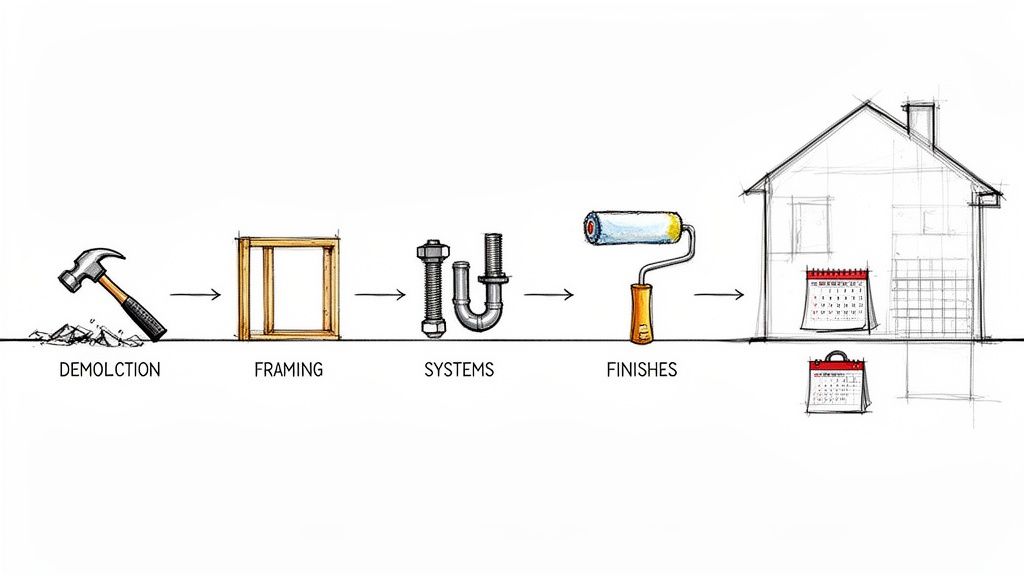
Construction isn't a free-for-all; it follows a logical sequence. Understanding these key stages helps you track progress and know what's happening. While every job is a little different, the general flow looks something like this:
Demolition and Prep: This is the "out with the old" stage where crews tear out walls, old flooring, and fixtures. It's often loud and messy, but it's also where you're most likely to find surprises hiding in the walls—which is exactly why you have that contingency fund!
Framing and Mechanicals: Once you have a blank slate, the new structure emerges. Carpenters frame new walls and openings. Right after, while the walls are still open, electricians, plumbers, and HVAC technicians run all the new wiring, pipes, and ductwork.
Drywall and Texture: With the "guts" of the walls in place, it’s time to close them up. Sheets of drywall are hung, taped, and mudded. Then comes the wall and ceiling texture, a common sight in most North Texas homes.
Finishes and Fixtures: This is the fun part where the space really starts to look like your vision. Flooring goes down, cabinets are set, and countertops are templated and installed. After painting, the final details like light fixtures, faucets, and cabinet hardware are put in place.
Keeping the Lines of Communication Open
Clear, consistent communication with your contractor is the bedrock of a successful project. Establish a rhythm for updates right from the start. Will it be a quick chat every morning, a weekly progress meeting, or a daily text? Agree on the method and frequency early on to avoid frustration.
Remember, you’re an essential part of the team. Your contractor will need you to make timely decisions on things like grout color or faucet placement. A delay on your end can create a ripple effect, potentially pushing back the entire project schedule.
A change order is the formal document for any deviation from the original contract. Whether it's a necessary fix for an unexpected issue or a new idea you want to add, always get it in writing. This document should spell out the change, the cost, and any impact on the timeline.
It also helps to understand the market you're in. The U.S. home remodeling market is now over $100 billion higher than it was pre-pandemic, and that demand can impact material lead times. For homeowners in North Texas, this means planning ahead is crucial. You can discover more home remodeling statistics to get a better feel for the industry.
The Final Walkthrough and Punch List
As the dust settles, your builder will schedule a final walkthrough. This is your chance to meticulously inspect every detail. Grab a roll of blue painter's tape to mark any minor issues you find—a paint scuff on the trim, a cabinet door that doesn’t close perfectly, a small scratch on the new floor.
This list of small fixes is called the "punch list." Any professional contractor expects this and will work through every item to make sure you're completely happy with the final result. Once that list is complete and you’ve signed off, it’s time to celebrate. You’ve successfully navigated your remodel and can finally enjoy your beautiful new space.
Common Remodeling Questions in North Texas
Even the most buttoned-up plan will have a few question marks. It's just the nature of remodeling. After years of building and renovating homes right here in the Granbury area, we've heard them all. Let's tackle some of the most common questions we get from homeowners.
How long does a typical kitchen or bathroom remodel take in the Granbury area?
Every project has its own rhythm, but we can give you a solid ballpark. For a standard bathroom remodel around here—think Granbury or Weatherford—you're typically looking at 4 to 8 weeks for construction. That's after the initial 4 to 12-week design and material procurement phase.
Kitchens are a bigger beast. A straightforward kitchen update might take 6 to 10 weeks for construction. But if we're talking a major, down-to-the-studs gut job that involves moving walls? That timeline can easily stretch to 3-5 months.
What makes the clock tick faster or slower? It boils down to three things:
The Scope: Are we just swapping out a vanity and tile, or tearing down walls and moving plumbing?
The Materials: Custom cabinets are beautiful, but they don't show up overnight. Same goes for specialty countertops and certain imported tiles—lead times are a huge factor.
The Paperwork: The permitting process has its own schedule, depending on the local city or county office.
This is where having a local builder in your corner makes a world of difference. Our relationships with local suppliers and inspectors can help smooth out potential bumps.
What is the best way to prepare my home and family for a major renovation?
Getting your home ready is all about minimizing chaos. The first step is to completely clear out the construction zone. I mean everything. Pack it all up like you’re moving.
If it’s a kitchen remodel, your new best friend is a temporary kitchen. Set up a station in the dining room or garage with a microwave, a coffee maker, and a mini-fridge. You'll also want to use plastic sheeting and painter's tape to seal off doorways to the rest of the house. Trust me, dust gets everywhere.
The most important prep work? Get the family on the same page. Talk about new (temporary) house rules, safety (especially if you have kids), and what to expect. It's also smart to establish one person as the main point of contact with your contractor. It keeps communication clear and simple.
Should I move out of my house during a whole-home remodel?
This really comes down to the scale of the project and how well your family handles disruption. For a single bathroom remodel, you can almost certainly stay put. A big kitchen renovation? It'll be a challenge, but plenty of families manage it.
But when you're looking at a whole-home remodel—one that involves foundation work, multiple rooms at once, and major overhauls to your plumbing and electrical systems—moving out is usually the best call. It’s not just about comfort. It actually lets the crew work faster and more safely, which can shorten the project timeline and give your family a break from the relentless noise and dust.
How do I handle unexpected problems or costs during the remodel?
The best way to handle a surprise is to not be surprised by it. This is why we insist that a 15-20% contingency fund is a non-negotiable part of your budget. It’s there specifically for the unknowns.
When an issue pops up—like finding termite damage when opening a wall in a classic Weatherford farmhouse—the first rule is not to panic. Your contractor should present you with a written change order.
This document isn't just a bill; it should clearly outline three things:
Exactly what the problem is.
The plan to fix it.
The specific impact on your timeline and budget.
Read it carefully before you sign anything. This is where communication is everything. A trustworthy contractor will walk you through the issue, explain your options transparently, and help you make a smart decision that works for your goals and wallet.
Planning a remodel can feel like a huge undertaking, but you don't have to figure it all out alone. If you're ready to start a conversation with a local team that prioritizes craftsmanship and clear communication, we invite you to schedule a free, no-pressure consultation to discuss your vision.
Comments