
How Long Does It *Really* Take to Build a Custom Home in North Texas?
- scott shipp
- Dec 21, 2025
- 14 min read
It’s the first question we hear from almost every family in Granbury and Weatherford: "How long does it really take to build a custom home?" While every project has its own unique path, a good rule of thumb is to plan for 12 to 18 months from the day you sign your contract to the day you get your keys.
Your North Texas Custom Home Building Timeline
Building a custom home is an incredible experience, but it’s a marathon, not a sprint. We're not following a pre-set template like production builders do; we're creating something entirely new, from the ground up, just for you. This means more time for thoughtful planning, detailed design, and precise execution are essential.
Hundreds of decisions must be made, dozens of skilled tradespeople coordinated, and multiple phases perfectly timed. Recent industry data confirms this, showing that owner-involved custom home builds averaged 15.2 months just from permit approval to completion—a good bit longer than a standard single-family home. For families building their forever home, that extra time is an investment in quality and personalization.
This infographic gives you a great visual overview of the major stages involved.
As you can see, the actual construction is just one piece of the puzzle. A smooth and timely build is set up for success during the critical pre-construction phase.
Setting Realistic Expectations from Day One
The best way to avoid stress is to understand the entire roadmap from the beginning. This lets you plan your life around this major milestone. Several key factors will influence your specific timeline:
Design Complexity: A home with an intricate, multi-gabled roofline and a massive open-concept great room will naturally take more engineering and construction time than a more straightforward design. A recent home we built in Aledo with soaring 20-foot ceilings in the living area required specialized framing techniques that added about three weeks to that phase alone.
Property Characteristics: Is your lot a raw piece of land out in Glen Rose? If so, we'll likely need to bring in utilities, install a septic system, and drill a well. These site preparations can add a few months to the front end of the schedule, with costs ranging from $20,000 to $50,000+ depending on the scope.
Decision-Making: The project's pace is often set by how quickly you make decisions on finishes like flooring, countertops, light fixtures, and paint colors.
Thinking about the build in distinct phases makes the process much more manageable. We've put together a complete guide that walks you through each step in detail.
You might be interested in our guide on how to build a custom home in North Texas for a more detailed breakdown of the process.
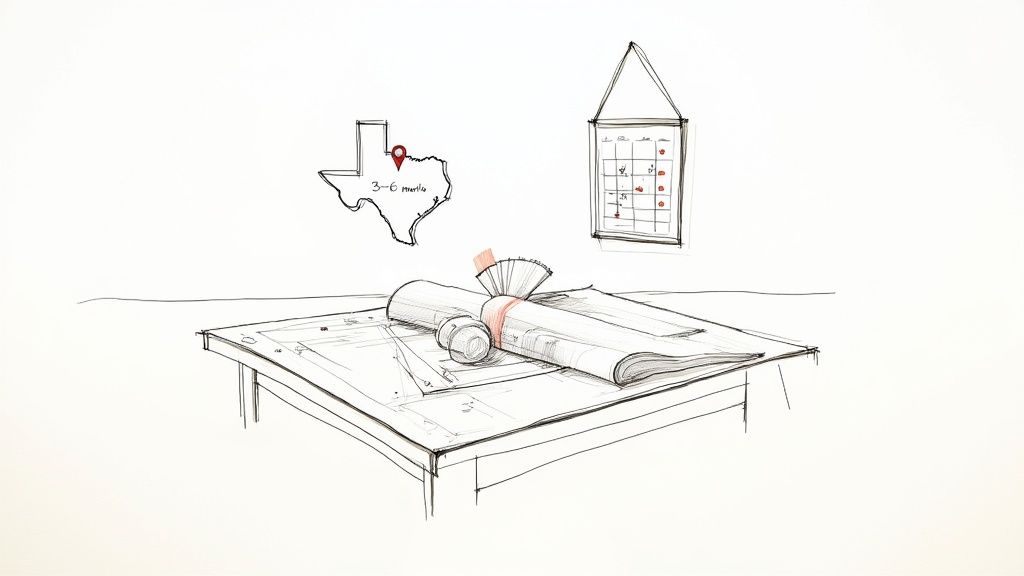
Laying the Groundwork: Pre-Construction and Permitting (3-6 Months)
Before a single shovel hits the dirt, critical work happens behind the scenes. This is the pre-construction phase, where your vision gets translated into a buildable blueprint. This is the single most important stage for keeping your project on time and on budget later. For most of our clients here in North Texas, you can expect this foundational work to take anywhere from 3 to 6 months.
This phase is like writing a detailed script for a movie before the cameras start rolling. The more thorough we are now, the fewer costly surprises and stressful changes we'll have to deal with down the road. It’s all about turning your dream home from a vague idea into a concrete plan of action.
From Dream to Detailed Blueprints (2-4 Months)
The journey kicks off with design, where you'll work side-by-side with us and an architect or designer, turning all your ideas, sketches, and Pinterest boards into precise architectural plans.
This is more than just drawing floor plans. We dive deep into the engineering to ensure it all works. For instance, that beautiful, sprawling open-concept living area you want might require large steel beams for support. Those need to be engineered correctly and ordered well in advance. A complex, multi-gabled roofline also takes significantly more planning than a simple design.
The most successful projects are born from a strong partnership between the homeowner and the builder. This collaboration ensures your vision, budget, and timeline are aligned from the very first meeting.
Making Your Selections (1-2 Months)
With the architectural plans locked in, it's time to choose all the materials and finishes that will bring your home to life. This stage involves picking nearly everything—from the big-ticket items down to the smallest details.
Common selections include:
Exterior Finishes: Siding, local stone or brick, roofing materials, and window styles.
Interior Fixtures: Faucets, sinks, light fixtures, and hardware like door knobs and cabinet pulls.
Surfaces: Flooring, countertops, and tile for kitchens and bathrooms.
Key Components: Appliances, custom cabinetry, and the perfect fireplace surround.
Making these decisions upfront is crucial. It allows us to order materials with long lead times and schedule our trade partners efficiently, preventing "decision fatigue" from stalling the project later. Having a clear process and a trusted partner makes all the difference. If you're still figuring that part out, our guide on how to choose a home builder in North Texas has some great advice.
Navigating Local Permitting (1-2 Months)
Once the plans are done and selections are made, the final pre-construction hurdle is submitting everything to local authorities for building permits. Depending on the municipality, this process can add another 1 to 2 months to the timeline.
Every jurisdiction is different. Counties like Hood and Parker have specific requirements, and knowing how to navigate that paperwork comes from local experience. We handle submitting the architectural drawings, engineering reports, and other necessary documents to ensure the approval process is as smooth as possible. Once that permit is in hand, we’re officially ready to break ground.
Breaking Ground: Site Prep and Foundation Work (1-2 Months)
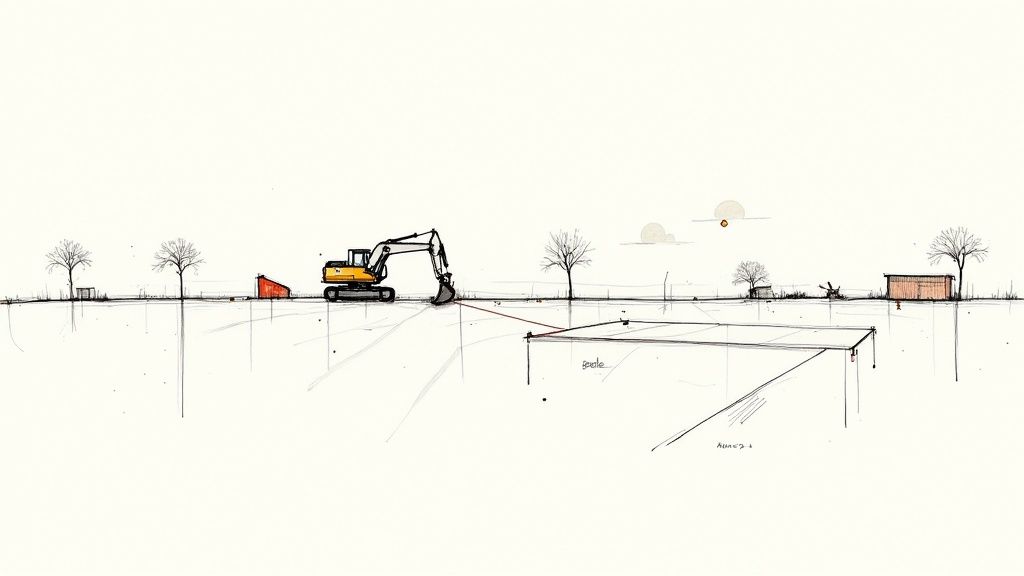
This is where your vision finally starts to take shape on the land. After all the planning, the first scoop of dirt marks the true beginning of your home's journey. This initial phase of site preparation and foundation work usually takes about 1 to 2 months.
More than any other stage, this one is at the mercy of two big variables: the specific characteristics of your property and the famously unpredictable North Texas weather.
Getting started means doing the essential site work. If you're building on a wooded lot out in Glen Rose, this could involve carefully clearing trees and brush to carve out the homesite. No matter where you are, we'll be grading the land to establish the right slope for drainage—a step that’s absolutely crucial for protecting your home's foundation.
From Dirt Work to Solid Footings
Once the land is prepped, we shift gears to pouring the foundation. Here in North Texas, you’re generally looking at two main options, each with its own timeline and benefits.
Slab-on-Grade Foundation: A single, solid layer of concrete poured onto graded soil. It's a popular choice around here because it's durable, cost-effective, and works well with our local soil. This can often be prepped and poured in a week or two, weather permitting.
Pier and Beam Foundation: This method raises the home on piers, creating a crawl space underneath. It's an excellent solution for sloped properties or for homeowners who want easier access to their plumbing and wiring. This is a more involved, multi-step process that can take a few weeks longer than a slab.
The choice directly affects the schedule. We’ll walk you through the pros and cons to find the perfect fit for your specific lot, budget, and home design.
Navigating Unforeseen Challenges
The early days on-site can uncover surprises. It's not unheard of to start digging and hit a layer of solid rock, which means bringing in specialized equipment and can add a couple of weeks to the timeline.
Then there's the weather. A particularly rainy spring in Weatherford can leave the ground saturated, putting a hard stop to concrete work. These local weather patterns are why a home building timeline in Texas looks different from one in, say, Maine. In fact, national data from the National Association of Home Builders shows that construction in New England can take over 37% longer than the U.S. average, mostly due to harsh winters. Our milder climate helps keep things moving.
An experienced local builder knows to watch the forecast. If we see a week of rain coming, we don't just sit and wait. We pivot—maybe we'll get materials delivered or line up subcontractors for interior work. It's all about minimizing downtime and keeping the project moving forward.
This kind of proactive management is what keeps a build on track. With a solid foundation cured and in place, we're ready for the really exciting part—watching the walls go up.
If you’re thinking about building on your own piece of land and want to know what to expect, our team is always happy to offer a clear assessment with no strings attached.
Raising the Skeleton: Framing and Drying In (1-2 Months)
For most people, this is the moment it all starts to feel real. Seeing the wooden skeleton of your home rise from the foundation is a truly exciting milestone. This phase, which usually takes about 1 to 2 months, is where your flat concrete slab becomes a three-dimensional structure you can walk through.
The progress here feels incredibly fast. One day, it’s just a foundation; a few weeks later, you’re looking at walls, floors, and a roofline. Our crews begin by laying the floor joists and subfloor, then the walls are assembled and lifted into place, quickly followed by the roof trusses that define the shape and pitch of your home.
How Your Home's Design Affects Framing Time
The timeline for framing is almost entirely dependent on the architectural complexity of your home. A simple rectangular home in Granbury will go up much faster than an intricate design with multiple gables and soaring vaulted ceilings.
Simple Designs: A classic, four-corner house with a standard roof pitch is the most straightforward. The cuts are repetitive and the assembly is predictable, taking as little as 3-4 weeks.
Complex Designs: Custom features like curved walls, numerous offsets in the floor plan, or rooms with varying ceiling heights demand more layout time and custom-cut materials, which can easily add several weeks to the schedule. A sprawling ranch with a complex, multi-level roof system could take closer to eight weeks.
Hitting the "Dry-In" Milestone
As framing finishes, we hit a critical milestone known as the “dry-in.” This is the point where we seal the home from the weather by installing the exterior sheathing, house wrap, roofing, windows, and exterior doors.
Reaching the dry-in stage is a major turning point. It means work can finally begin on the inside and—more importantly—continue without interruption, regardless of a rainy spring in Weatherford or a scorching North Texas summer day.
Once your home is dried-in, the focus immediately shifts to the interior systems. This is the green light for electricians, plumbers, and HVAC technicians to start running wires, pipes, and ductwork through the newly framed walls.
Your Framing Walk-Through
Before we move on, we'll schedule a framing walk-through with you. This is your first chance to walk the actual space and get a feel for the layout. It’s an invaluable opportunity to confirm window placements, double-check outlet locations, and see if the room sizes and flow feel just like you imagined. It's far easier to make a small adjustment now than after drywall is up.
Ready to start planning your own North Texas home? Let’s schedule a free consultation to discuss your ideas.
Bringing the Vision to Life: Interior Systems and Finishes (4-6 Months)
Once your home is dried in and protected from the unpredictable Texas weather, the fast-paced action of framing slows down. We now shift gears into a more deliberate, intricate phase where the house truly starts to become your home. This is often the longest part of the build, typically taking anywhere from 4 to 6 months, as we move from the home's skeleton to its heart and soul.
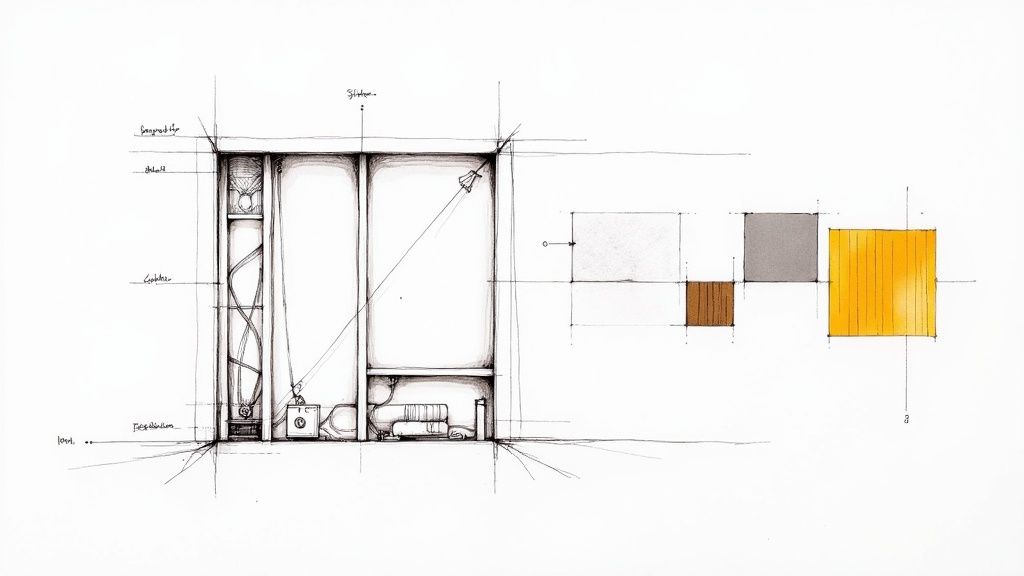
Think of this stage in two distinct parts. First, we install everything that lives behind the walls. Then, we add all the beautiful surfaces you'll see and touch every day.
The Inner Workings: MEP and Insulation
Before a single sheet of drywall goes up, a flurry of coordinated activity begins. This is the "rough-in" for your Mechanical, Electrical, and Plumbing (MEP) systems—a complex dance between specialized trades.
Mechanical: HVAC technicians carefully run the network of ductwork that will keep you cool during a blazing Granbury summer and cozy on a rare chilly morning.
Electrical: Licensed electricians pull miles of wire through the framing, mapping out every light switch, outlet, and smart home feature you’ve planned.
Plumbing: Plumbers install all the supply lines for sinks, tubs, and showers, along with the drain and vent pipes that carry wastewater away.
After the MEP systems are installed and pass their initial inspections, it’s time for insulation. This is a critical step for energy efficiency in North Texas, creating a thermal barrier that keeps your indoor temperature stable and your utility bills down. Only after insulation is in place can we hang the drywall, transforming the open maze of studs into clearly defined rooms.
From Structure to Style: The Finish-Out Stage
With the drywall up, textured, and primed, your home is now a blank canvas. This kicks off the "finish-out" stage, where all your design selections come together. It's also where material choices and their availability can influence the timeline.
The finish-out is where months of planning finally pay off. There's nothing quite like seeing the custom cabinets you agonized over get installed in the kitchen or watching the tile you hand-picked get laid in the master bath. It’s an incredibly rewarding part of the journey.
This is a period of intense, detailed work as various artisans and craftspeople bring your vision to life:
Installing Hard Surfaces: This usually starts with flooring—whether it's classic hardwood, durable luxury vinyl plank, or tile—and is followed by setting countertops in the kitchen and bathrooms.
Cabinetry and Trim Work: Your custom cabinets are set in place, followed by all the interior doors, baseboards, and window casings that give each room its unique character.
Painting and Tile Work: Walls get their final coats of paint, and our tile setters meticulously install intricate backsplashes and shower surrounds.
Final Fixture Installation: The last details are added, from faucets and light fixtures to appliances and cabinet hardware, making the space truly functional.
The availability of these materials is a huge factor. A unique tile from Italy or a high-end appliance package with a long lead time can easily create a bottleneck. We guide our clients in Weatherford and the surrounding areas to make these selections early, balancing their dream aesthetic with a practical, predictable schedule.
It’s also important to remember how the size and complexity of a home drive the timeline. Data shows that smaller homes under 2,000 square feet often take 6-9 months from groundbreaking, while larger homes over 4,000 square feet can require 14-18 months or more, especially with lots of custom features. You can see how these trends are playing out nationally on the Eye On Housing blog.
If you’re starting to imagine the finishes for your own custom home, our team can help you explore options that fit both your style and your timeline. Reach out to us for a no-obligation design consultation.
The Final Stretch: From Punch List to Move-In Day (1-2 Months)
You can almost smell the new paint and feel the keys in your hand. This is the home stretch, the final 1 to 2 months where everything comes together. We’re moving past heavy construction and into fine-tuning, focusing on the details that truly make a house your home.
This is when your property’s curb appeal takes shape. For new builds in Granbury or Weatherford, we’ll be pouring the driveway, laying down fresh sod, and installing the landscaping you’ve been dreaming of. It’s also when we put the finishing touches on outdoor living spaces—like that covered patio perfect for a Texas sunset.
Finalizing Critical Rural Systems
For those building on beautiful rural lots in places like Glen Rose or Aledo, this phase includes crucial steps. This is when we connect your newly drilled well to the house, get the septic system fully operational and inspected, and button up the last of the utility connections. These systems are the lifeblood of a country home, and we make sure they’re running perfectly before you move in.
The All-Important Punch List
Inside, the big moment is the “punch list” walk-through. This is a collaborative final review where you and our project manager walk through every room together, creating a detailed to-do list for any last-minute adjustments.
We’re talking about the tiny stuff—the details that separate a good home from a great one.
A small scuff on a baseboard that needs a touch-up.
A kitchen cabinet door that needs to be adjusted so it closes just right.
A tiny, barely noticeable scratch on a window.
An outlet cover that isn't sitting perfectly flush against the wall.
The sign of a truly dedicated builder is a very short punch list. We don't save quality control for the end. Our team is trained to spot and fix these things as we go, so your final walk-through feels more like a celebration than an inspection.
Our aim is always to present you with a home that’s already 99.9% perfect. This proactive approach means you get to spend your final walk-through getting excited about where to put the furniture, not hunting for flaws.
Getting Your Certificate of Occupancy
With the punch list complete, it’s time for the final inspections with the city or county. An inspector will do a final check to confirm that every aspect of the home—from the wiring to the smoke detectors—is up to code and completely safe.
Once we pass, the building authority issues the Certificate of Occupancy (CO). This is the golden ticket—the official document declaring your home safe and ready for you to live in. Around this same time, you'll be finalizing everything with your lender and the title company. For a closer look at that process, check out our guide to North Texas title and escrow services.
With the CO in hand, we can finally give you the keys. It’s a moment of pure joy, the finish line of a journey we’ve taken together, and the start of a new chapter for your family.
Answering Your Questions About North Texas Home Building Timelines
Even with a detailed timeline, you're bound to have questions. We’ve guided families through this journey all across Granbury, Weatherford, and the beautiful North Texas countryside, and we've heard just about everything. Here are some straight answers to the questions that come up most often.
What Are the Biggest Causes of Delays?
The three wild cards in any North Texas build are unpredictable weather, material holdups, and homeowner changes. A month of heavy spring rain can turn a new homesite into a swamp, halting all foundation work. On the other hand, supply chain hiccups for things like windows or specialty lumber can create a domino effect, backing up the entire schedule.
The other major factor? Change orders. Deciding to swap a window size or move an interior wall after construction has started might seem like a small tweak, but it creates a ripple effect. It often means ordering new materials, getting engineering updates, and completely rescheduling multiple trade partners.
Is There Any Way to Speed Up the Process?
It's natural to want to move into your new home as fast as possible, but rushing never leads to quality. The single best thing you can do to keep your project on track is to be decisive during the pre-construction phase.
Finalizing all your architectural plans and material selections before we break ground is the key to avoiding self-inflicted delays. Working with a skilled local builder also helps. Their deep-rooted relationships with reliable subcontractors and suppliers in the Granbury area are priceless for keeping things moving, ensuring crews and materials are right where they need to be, when they're needed.
An experienced builder isn’t just building your home; they are actively managing hundreds of moving parts. Their ability to anticipate bottlenecks, coordinate schedules, and solve problems proactively is what keeps a project flowing smoothly.
How Does Building on Rural Land Change the Timeline?
Building on a gorgeous piece of rural land in a place like Glen Rose or Aledo is a dream, but it adds extra steps to the timeline. Unlike a lot in a planned subdivision, that raw land is a blank slate. We have to bring in the infrastructure.
This usually involves:
Drilling a well to secure a clean water supply.
Installing a septic system to manage wastewater.
Running power lines from the nearest utility pole to your homesite.
Each of these systems requires its own permits, inspections, and specialized contractors. All told, this extra site work can easily add several weeks or even a couple of months to the front end of the project. It's crucial to account for this from the beginning.
Does a Bigger House Automatically Mean a Longer Build Time?
Yes, it does. A larger home simply requires more of everything: more materials, more labor, and more time in every single phase. It's basic math—a 5,000-square-foot home is going to take a lot longer to frame, wire, plumb, and finish than a 2,500-square-foot home.
But it's not just about total square footage; complexity plays a huge role. A smaller home packed with intricate custom millwork, complex rooflines, and high-end finishes could take just as long to build as a much larger, but simpler, home. A transparent conversation with your builder early on will help you find the right balance between your vision and a realistic schedule.
Understanding the timeline is the first step toward building the home you’ve always wanted. If you’re ready to create a personalized plan for your dream home in North Texas, the Gemini Homes team is here to help.
Comments