
10 Landscaping Ideas Design Pros Use for Stunning North Texas Homes
Creating an outdoor space that’s both beautiful and perfectly suited for life in North Texas is more than just planting a few shrubs. Whether you have sprawling acreage in Stephenville, a family home in Granbury, or a new build in Weatherford, the right landscape design transforms your property into a personal retreat. It’s about crafting an environment that reflects your lifestyle, withstands our unique climate of blistering summers and surprise freezes, and adds lasting value to your home.
This guide moves beyond generic advice to provide practical, proven landscaping ideas design strategies that work for our region. A successful landscape in Glen Rose or Aledo must be both resilient and inviting. It needs to handle intense sun and periods of drought while still providing a comfortable space for family gatherings, quiet relaxation, or entertaining guests.
We’ll explore ten distinct approaches tailored for North Texas living, offering actionable insights, local plant suggestions, and budget considerations to help you plan effectively. From ultra-low-maintenance xeriscaping that lowers your water bill to lush, family-friendly backyard designs and sustainable edible gardens, this is your playbook for creating a stunning and functional outdoor space.
1. The Smart Survivor: Native Plant & Xeriscape Landscaping
For homeowners in places like Granbury and Glen Rose, embracing our native North Texas ecosystem isn't just a trend; it's the smartest way to landscape. This approach combines native plants, which are naturally adapted to our clay soils and unpredictable weather, with xeriscaping—a water-wise method focused on reducing or eliminating the need for supplemental irrigation. Instead of fighting the environment with delicate, thirsty plants, you create a beautiful, self-sustaining habitat that offers year-round interest and supports local wildlife. It’s the ultimate low-maintenance, high-impact landscaping ideas design.
Key Elements of Xeriscaping
A successful xeriscape design is more than just rocks and cacti; it involves careful planning to create a lush yard that conserves water.
Smart Planting Zones: Group plants with similar water needs together. This allows you to water efficiently, providing moisture only where it’s needed. For example, a small, high-water-use zone can be created for a vegetable patch near the house, while the rest of the yard uses drought-tolerant species.
Soil Improvement: North Texas clay soil is notorious for poor drainage. Amending it with compost improves aeration and water retention, giving plant roots a stronger foundation. This is a crucial upfront investment that pays off for years.
Strategic Mulching: A thick layer of organic mulch, like cedar or hardwood, helps retain soil moisture, suppress weeds, and regulate soil temperature, protecting roots from the brutal summer heat.
Efficient Irrigation: If you do need irrigation, use drip lines or soaker hoses that deliver water directly to the plant roots, minimizing evaporation. This can reduce water use by over 50% compared to traditional sprinklers.
Top Native Plant Picks for North Texas
Choosing the right plants is crucial. Consider a mix of perennials, grasses, shrubs, and trees for texture and color throughout the seasons.
Perennials: Black-Eyed Susan, Purple Coneflower, and Texas Lantana provide stunning, long-lasting blooms.
Grasses: Little Bluestem and Switchgrass add movement and winter interest.
Shrubs: Flame Acanthus and Texas Sage offer vibrant color and are magnets for hummingbirds and butterflies.
Trees: Cedar Elm and Red Oak provide essential shade—a valuable asset in our climate that can also help lower home cooling costs.
2. Xeriscaping (Water-Wise Landscaping)
For homeowners in Weatherford and Granbury, embracing a xeriscape landscaping ideas design is a practical response to the North Texas climate. This sustainable method focuses on creating a stunning, vibrant landscape that significantly reduces or eliminates the need for supplemental watering. It is a smart, eco-friendly approach that conserves our precious water resources while saving you time and money on maintenance and utility bills.
Xeriscaping is a comprehensive system that involves much more than just rocks and cacti. It is about creating a resilient, beautiful outdoor space that thrives in our heat and occasional droughts. By combining drought-tolerant plants, efficient irrigation, and intelligent design, you can achieve a lush, low-maintenance yard that works with our environment, not against it. A well-designed xeriscape can increase property value while decreasing upkeep costs.
Key Elements of Xeriscaping
A successful xeriscape is built on seven core principles that work together to create a water-efficient and gorgeous landscape.
Strategic Planning & Design: Start with a master plan that considers sun exposure, drainage, and how you use your yard. This foundation ensures a functional and effective design.
Soil Improvement: Our local clay soil often needs help. Amending it with organic compost improves drainage and water retention, giving plant roots the healthy environment they need to thrive.
Efficient Irrigation: When watering is necessary, use methods like drip irrigation or soaker hoses. These systems deliver water directly to the base of the plants, minimizing loss to evaporation from the hot Texas sun.
Appropriate Plant Selection: Choose native and adapted plants that are naturally suited for our climate. These species require less water and are more resistant to local pests and diseases once established.
Practical Turf Areas: Limit traditional grass lawns to smaller, functional areas where they are most needed, such as a play space for children or pets. Replace non-essential turf with hardscapes, groundcovers, or garden beds.
Top Drought-Tolerant Picks for North Texas
Selecting the right plants is essential for a successful xeriscape. Here are a few that perform exceptionally well in our region.
Groundcovers: Creeping Thyme and Silver Ponyfoot are excellent for suppressing weeds and covering bare ground with minimal water.
Shrubs: Texas Sage, with its beautiful silver foliage and purple blooms, and Red Yucca, known for its dramatic flower spikes, are incredibly tough and visually striking.
Perennials: Blackfoot Daisy and Verbena offer continuous blooms throughout the hottest parts of the year, adding reliable color.
Trees: The Desert Willow and Mexican Plum are smaller, ornamental trees that provide light shade and beautiful flowers without demanding much water.
3. The Zen Oasis: Japanese Garden Design
For those seeking a tranquil and contemplative outdoor space, the principles of Japanese garden design offer a timeless and profound approach. This aesthetic philosophy emphasizes harmony, balance, and simplicity, creating a miniature, idealized version of nature that encourages peace and reflection. It's a landscaping ideas design focused on spiritual calm rather than showy blooms—a perfect personal retreat from the hustle of North Texas life.
Instead of a collection of plants, a Japanese garden is a carefully composed scene. It uses rocks, water, pathways, and meticulously chosen plants to create a sense of serenity. While the initial design and installation cost can be higher due to the precision required, the long-term maintenance is often focused on mindful pruning rather than extensive upkeep.
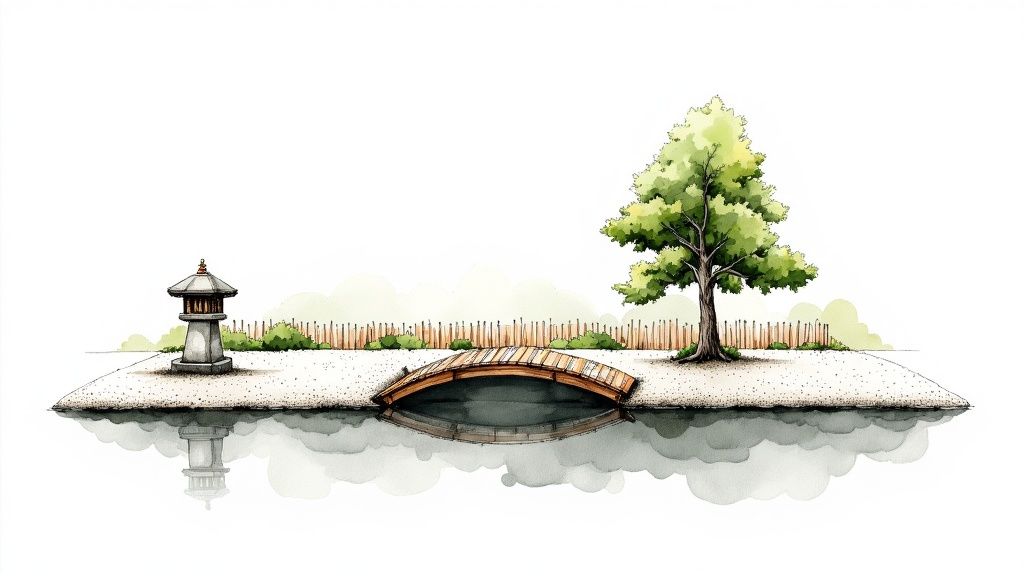
Key Elements of a Japanese Garden
A true Japanese garden is built on symbolism and intention. Each element is placed with purpose to contribute to the overall feeling of natural, unspoiled beauty.
Stone and Rock (Ishi): Rocks are the "bones" of the garden, representing mountains, islands, and shorelines. They provide structure and a sense of permanence. Groupings are often in odd numbers like three or five to mimic natural formations.
Water (Mizu): A pond, stream, or even a simple stone basin (tsukubai) symbolizes purity and the flow of life. In a dry landscape garden (karensansui), raked sand or gravel represents water.
Plants (Shokubutsu): Green is the dominant color, providing a calming backdrop. Plants are chosen for their form, texture, and seasonal interest rather than for flashy flowers. The goal is to suggest a mature, natural landscape.
Man-made Elements: Items like stone lanterns (tōrō), bridges, and bamboo fences are incorporated not just for function but to add a human scale and a sense of history to the composition.
Top Plant Picks for a North Texas Japanese Garden
While traditional plants like cherry blossoms can be challenging in our heat, many adapted species capture the desired aesthetic.
Trees: Japanese Maple (especially varieties like 'Bloodgood' or 'Emperor I' planted in a protected spot), Redbud, and Lacebark Elm can create the necessary structure and canopy.
Shrubs: Nandina, Japanese Yew, and Boxwood can be pruned to create specific forms. Azaleas, if given acidic soil and afternoon shade, provide seasonal color.
Accent Plants: Liriope (Monkey Grass) and Mondo Grass are excellent groundcovers, while Dwarf Bamboo adds texture without becoming invasive.
Moss: In shady, moist areas, encouraging moss growth on rocks and soil adds a critical sense of age and tranquility (wabi-sabi).
4. Modern Minimalist Landscaping
For North Texas homeowners with a contemporary eye, modern minimalist landscaping offers a sophisticated and uncluttered alternative to traditional garden designs. This approach strips away ornamentation to focus on clean lines, geometric shapes, and the power of negative space. It’s about making every single element count, from a sculptural ornamental grass to a perfectly laid concrete paver. This landscaping ideas design elevates form and texture over busy colors and clutter.
This style is not about emptiness; it's about intentionality. By simplifying the palette of materials and plants, you create a powerful visual statement that feels calm, orderly, and deeply connected to your home's modern architecture. This style is particularly effective for families who want a clean, usable space without the high maintenance of traditional garden beds.
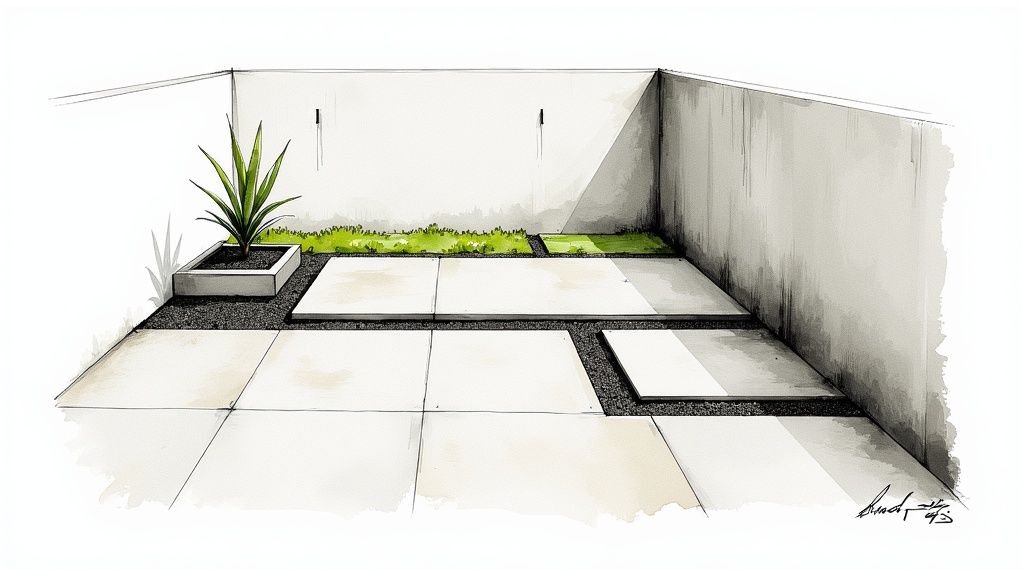
Key Elements of Modern Minimalism
A successful minimalist garden is a masterclass in restraint. It relies on a strong geometric foundation and high-quality materials to create a lasting impression.
Limited Plant Palette: Stick to a curated selection of just three to five plant species. This repetition creates a cohesive and rhythmic design. Choose plants for their form and texture, not just their flowers.
Geometric Hardscaping: The structure is everything. Use materials like poured concrete, large-format pavers, steel edging, and smooth gravel to create defined, angular patios, walkways, and garden beds.
Strategic Use of Space: Negative space (areas without planting or features) is a design element in itself. It allows the eye to rest and emphasizes the shapes of the plants and hardscape features that are present.
Monochromatic Color Scheme: A simple color palette, often using shades of green, gray, white, and black, creates a serene and sophisticated atmosphere. A single, bold color can be used as a deliberate accent.
Top Plant Picks for a Minimalist Look
Choose plants that have a strong architectural or sculptural quality. These plants hold their shape well and provide year-round interest.
Grasses: Mexican Feather Grass and Gulf Muhly offer fine textures and graceful movement that contrast beautifully with hardscape lines.
Succulents: Agave and Yucca varieties provide bold, sculptural forms that are perfectly suited to the Weatherford and Granbury climate.
Shrubs: Boxwoods can be pruned into precise geometric shapes, while Dwarf Yaupon Holly offers a tough, evergreen structure.
Groundcover: Mondo Grass or Silver Ponyfoot can create a lush, uniform carpet of green or silver that emphasizes the clean lines of the design.
5. Cottage Garden Design
For homeowners in Weatherford and Granbury looking to create a romantic, storybook setting, the Cottage Garden style offers a charming and functional escape. This approach trades formal lines and rigid structures for an abundant, seemingly informal mix of flowers, herbs, and even vegetables, all growing together in a dense, beautiful tapestry of color and texture. It is a landscaping ideas design that feels both personal and timeless.
Instead of a perfectly manicured lawn, the cottage garden celebrates nature's profusion. It creates a lush, welcoming atmosphere that engages all the senses with fragrant blooms, buzzing pollinators, and a sense of discovery around every corner. It’s about creating a productive, beautiful space that feels like it has been lovingly tended for generations, perfect for retirees who enjoy gardening or families wanting to teach children about plants.
Key Elements of a Cottage Garden
A successful cottage garden is a masterclass in organized chaos. It requires thoughtful planning to achieve its effortlessly charming appearance.
Layered Planting: Create depth and visual interest by placing taller plants like Hollyhocks or Joe-Pye Weed at the back of borders, mid-size plants like Coneflowers and Roses in the middle, and low-growing groundcovers like Creeping Phlox or Lamb's Ear at the front.
Mix of Materials: This style beautifully combines functional and ornamental plants. Weave edible herbs like rosemary and basil among flowering perennials, or let a climbing rose ramble up a rustic fence post next to your tomato plants.
Informal Pathways: Use natural materials like flagstone, brick, or gravel for winding paths that invite exploration. Allow plants to gently spill over the edges to soften the lines and enhance the romantic feel.
Structural Accents: Incorporate charming hardscape elements like a rustic arbor, a white picket fence, a birdbath, or a quaint wooden bench to provide structure and a focal point within the lush plantings.
Top Plant Picks for a North Texas Cottage Garden
While inspired by English traditions, a cottage garden in our climate must use plants that can handle the Texas heat and sun.
Perennials: Black-Eyed Susan, Antique Roses, and Salvia provide the foundational, recurring color.
Annuals: Zinnias, Cosmos, and Sweet Peas are excellent for filling gaps and providing continuous blooms. Many will self-seed, adding to the garden's spontaneous charm.
Herbs & Edibles: Lavender, Rosemary, and various mints add fragrance and are culinary workhorses that thrive in our sun.
Climbers: Carolina Jessamine and Coral Honeysuckle are tough, beautiful native vines perfect for covering an arbor or fence.
6. The Tuscan Touch: Mediterranean Landscape Design
For homeowners in North Texas who dream of a sun-drenched European escape, a Mediterranean landscape design offers a perfect blend of rustic elegance and climate-resilient beauty. This style, inspired by the coastal regions of Italy, Spain, and Greece, uses drought-tolerant plants, warm-toned hardscaping, and structured layouts to create a sense of timeless sophistication that feels right at home in our warm, dry climate.
Instead of a traditional green lawn, this approach layers textures and colors with gravel pathways, terracotta pots, and fragrant herbs. It's a landscaping ideas design that transforms your yard into a personal villa, offering a stunning, low-water alternative that thrives under the Texas sun. The cost factors here often involve quality hardscaping materials like natural stone, which provide a durable and authentic foundation.
Key Elements of Mediterranean Design
A true Mediterranean garden is a sensory experience, balancing formal structure with informal, naturalistic plantings. Careful planning is key to capturing its romantic and functional essence.
Warm Hardscaping Materials: Use materials like travertine, flagstone, and gravel to create patios, terraces, and pathways. These materials reflect heat and contribute to the style's signature warm, earthy color palette.
Strategic Use of Water: Water is a precious element in this design. Instead of vast pools, consider a tiered fountain as a focal point. The sound of trickling water provides a cooling effect and adds an element of tranquility.
Container Gardening: Large terracotta or stone urns are iconic. Use them to flank doorways, define corners of a patio, or plant with cascading flowers and culinary herbs like rosemary and basil for easy access from the kitchen.
Defined Outdoor "Rooms": Create distinct living areas using low stone walls, hedges, or pergolas. A well-placed pergola can provide essential shade for a dining area, creating a perfect spot for outdoor entertaining. Learn more about how a pergola can enhance your Texas home.
Top Plant Picks for a North Texas Mediterranean Garden
The right plants are crucial for authenticity and survival. Focus on species that love sun and can handle periods of drought.
Structural Plants: Italian Cypress trees provide vertical drama, while Olive trees (choose a cold-hardy variety like 'Arbequina') offer silvery foliage and an iconic look.
Flowering Shrubs: Lavender, Rosemary, and Texas Sage provide fragrance, color, and attract pollinators.
Perennials & Groundcovers: Santolina (Cotton Lavender) and Lamb's Ear offer soft, silvery textures that contrast beautifully with stone and terracotta.
Vines: Bougainvillea or Star Jasmine can be trained to climb walls or pergolas, adding a touch of romance and vibrant color.
7. Woodland or Shade Garden Design
For North Texas homeowners with properties graced by mature live oaks or cedar elms, a shady yard isn't a limitation; it's a unique opportunity. A woodland or shade garden design transforms these low-light areas into serene, cool retreats that mimic the lush floor of a natural forest. This style is perfect for north-facing slopes or areas beneath dense tree canopies where grass struggles to grow.
Instead of fighting for sunlight, this approach embraces the shade, focusing on the rich textures, subtle colors, and unique forms of shade-tolerant plants. It’s a sophisticated and sustainable landscaping ideas design that creates a peaceful, park-like atmosphere right in your own backyard, offering a cool respite during our hot Texas summers.
Key Elements of a Shade Garden
A successful woodland garden is a layered, living ecosystem. It requires thoughtful plant selection and soil preparation to thrive in the competitive environment under established trees.
Soil Enrichment: Tree roots are greedy, depleting soil of moisture and nutrients. Before planting, it's crucial to amend the soil with several inches of rich organic compost. This improves water retention and provides the necessary nutrients for understory plants to get established.
Strategic Layering: Mimic a forest floor by planting in layers. Use taller, shade-tolerant shrubs like Oakleaf Hydrangea or American Beautyberry as a mid-layer, with lower-growing ferns, hostas, and groundcovers filling in below. This creates visual depth and a natural feel.
Embrace Natural Mulch: Let fallen leaves from your deciduous trees remain on the garden beds over winter. They act as a natural mulch, insulating roots, retaining moisture, and breaking down to enrich the soil, just as they would in a forest.
Foliage as the Star: In a shade garden, foliage takes center stage. Mix plants with different leaf shapes, textures, and colors. The bright chartreuse of a 'Sum and Substance' Hosta or the silvery fronds of a Japanese Painted Fern can illuminate a dark corner.
Top Shade Plant Picks for North Texas
Choosing plants that thrive in dry shade is key, especially under our thirsty native trees.
Perennials: Turk’s Cap, Inland Sea Oats, and Cedar Sage are tough Texas natives that bloom beautifully in partial shade.
Ferns: Wood Fern and Southern Shield Fern are hardy choices that add delicate, feathery texture and are well-adapted to our climate.
Groundcovers: Frogfruit and Horseherb are excellent native groundcovers that can handle foot traffic and suppress weeds in shady areas.
Shrubs: American Beautyberry provides stunning purple berries in the fall, while Texas Buckeye offers early spring blooms for pollinators.
8. Contemporary Container and Vertical Gardening
For homeowners with smaller yards, patios, or a desire for flexible, artistic garden displays, contemporary container and vertical gardening offers a brilliant solution. This approach uses pots, raised beds, and living walls to maximize planting space, particularly in urban-style homes in areas like Weatherford or on compact lakefront lots in Granbury.
This landscaping ideas design is about creating lush, green focal points in areas where traditional in-ground gardens aren't feasible. It transforms blank walls, balconies, and patios into dynamic, living art installations, allowing for easy seasonal updates and controlled growing environments. This is a great option for retirees who want to continue gardening without the physical strain of working on the ground.
Key Elements of Vertical & Container Gardening
A successful design uses structure and composition to create an intentional, high-impact look rather than a random collection of pots.
Strategic Grouping: Arrange containers in clusters of varying heights, textures, and sizes to create depth and visual interest. A large "thriller" pot can anchor a collection of smaller "filler" and "spiller" plants.
Vertical Structures: Utilize trellises, arbors, or custom-built living wall systems to draw the eye upward. This is perfect for growing flowering vines, herbs, or even vegetables, adding a productive element to your design.
High-Quality Medium: Unlike garden soil, containers require a specialized potting mix that provides excellent drainage and aeration. This is crucial for plant health, especially during our hot North Texas summers.
Efficient Irrigation: Containers dry out much faster than garden beds. Installing a simple drip irrigation system with emitters in each pot is a low-maintenance way to ensure plants receive consistent moisture without daily hand-watering.
Top Plant & Container Picks for North Texas
Choosing the right plants and materials is key to a beautiful and long-lasting container garden that can withstand our climate.
Drought-Tolerant Fillers: Succulents like Sedum and Echeveria, along with tough perennials like Lantana and Pentas, thrive in pots.
Dramatic Thrillers: Consider a Yucca, Agave, or a colorful Cordyline as a stunning centerpiece for a large container.
Graceful Spillers: Sweet Potato Vine, Silver Falls Dichondra, and Creeping Jenny cascade beautifully over pot edges, softening the look.
Container Materials: Terracotta offers a classic look but dries out quickly. Glazed ceramic, fiberglass, and metal containers retain moisture better, making them a smart choice for our hot climate. The material you choose will influence both cost and maintenance.
9. Pollinator and Butterfly Garden Design
For homeowners in Weatherford and across North Texas, creating a pollinator garden is a powerful way to bring life and vibrant color to your property while supporting our local ecosystem. This ecological approach focuses on planting specific native species that provide food and habitat for essential pollinators like bees, butterflies, hummingbirds, and other beneficial insects.
This landscaping ideas design goes beyond just planting pretty flowers; it’s about creating a functional, self-sustaining habitat. By offering nectar, pollen, and host plants for caterpillars, you build a beautiful garden that buzzes with activity from early spring through the fall. It's an excellent project for families, offering endless opportunities to teach children about nature.
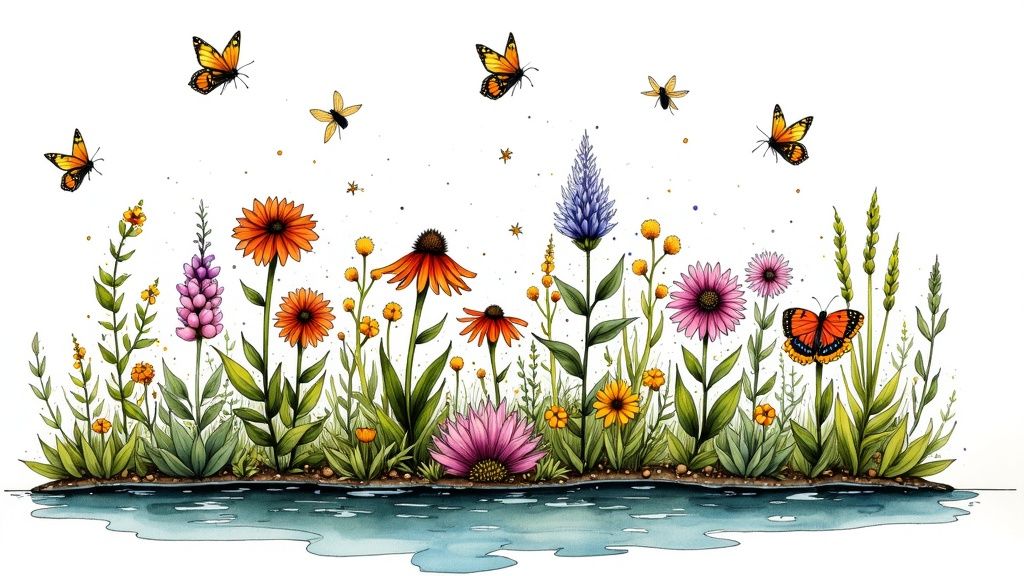
Key Elements of a Pollinator Garden
A successful pollinator garden provides for the entire life cycle of its inhabitants, requiring thoughtful planning to create a reliable sanctuary.
Continuous Blooms: Plan for a succession of flowering plants to ensure a consistent food source from spring through fall. Start with species like Texas Bluebonnets, then move to summer bloomers, and finish with fall asters.
Host Plant Integration: To support butterflies like the Monarch, you must include host plants. Native milkweed species are the only plants Monarch caterpillars eat, making them essential for a true butterfly garden.
Layered Planting: Create layers with different plant types and sizes, from low-growing groundcovers to tall grasses and shrubs. This diversity mimics a natural habitat and attracts a wider range of pollinators.
Essential Resources: Include a shallow water source, like a birdbath with pebbles, for insects to drink safely. Also, leave some patches of bare earth or dead wood for the 70% of native bees that nest in the ground.
Top Native Plant Picks for Pollinators
Selecting North Texas natives is the most effective way to attract local pollinators, as these plants are perfectly adapted to our climate and soil.
Perennials: Gregg's Mistflower (a butterfly magnet), Purple Coneflower, and Fall Aster provide nectar across the seasons.
Vines & Shrubs: Coral Honeysuckle is a favorite for hummingbirds, while Texas Sage offers abundant blooms for bees.
Host Plants: Native milkweeds (like Antelope Horns or Green Milkweed) for Monarchs, and Passionflower Vine for Gulf Fritillary butterflies.
Grasses: Little Bluestem provides shelter and nesting material for beneficial insects over the winter.
10. Sustainable Food Forest and Edible Landscape Design
Imagine a landscape that is not only beautiful but also productive, providing fresh fruits, nuts, and herbs right outside your door. This is the concept behind an edible food forest, a landscaping ideas design that transforms your yard into a self-sustaining ecosystem modeled after a natural woodland. It’s a perfect fit for property owners in places like Weatherford or on rural acreage who want to maximize their land's potential.
This approach layers plants of different heights, from canopy trees down to ground covers, to create a harmonious and productive garden. Instead of a high-maintenance lawn, you cultivate a space that nourishes both your family and the local wildlife, all while reducing your grocery bill and strengthening your connection to the food supply chain.
Key Elements of a Food Forest
A well-designed food forest is a low-maintenance, high-yield system that relies on permaculture principles to create a resilient and largely self-fertilizing garden.
Layering Plants: A food forest has multiple vertical layers: tall fruit/nut trees (the canopy), smaller dwarf fruit trees, berry shrubs, herbaceous plants (like herbs and vegetables), root crops, and ground covers.
Site Analysis: Success starts with understanding your specific North Texas location. Map out sun exposure, water flow, and existing soil conditions to place plants where they will thrive naturally.
Building Soil Health: Integrate nitrogen-fixing plants like clover or vetch as a living mulch. These plants naturally enrich the soil, reducing the need for external fertilizers and creating a healthier growing environment.
Creating Access: Design clear, mulched pathways throughout your food forest. This not only defines the space aesthetically but also ensures you can easily access your plants for harvesting, pruning, and enjoyment.
Top Edible Plant Picks for North Texas
Choosing plants adapted to our hot summers and unpredictable frosts is essential for a productive food forest.
Fruit & Nut Trees: Methley Plum, Fuyu Persimmon, and certain varieties of Pecan and Fig trees do exceptionally well in our climate.
Shrubs: Blackberries, Blueberries (in amended soil), and Pomegranates provide delicious fruit and are relatively easy to grow.
Perennials & Herbs: Rosemary, Mint, Oregano, and multiplier onions are hardy perennials that will return year after year.
Ground Covers: Sweet potatoes and strawberries can serve as excellent, productive ground covers that help suppress weeds.
If you're inspired to create a landscape that is both beautiful and bountiful, our team can help you design and implement an edible food forest tailored to your North Texas property.
10 Landscaping Design Styles Compared
Style | Implementation complexity | Resource requirements | Expected outcomes | Ideal use cases | Key advantages |
|---|---|---|---|---|---|
Native Plant Landscaping | Low–Medium (requires species research) | Low water, local plant sourcing, moderate establishment time | Reduced water/chemical use; increased local biodiversity | Regional restoration, low‑maintenance yards, wildlife corridors | Water savings; supports pollinators; resilient to local pests |
Xeriscaping (Water‑Wise) | Medium (design + irrigation + hardscape) | Drought‑tolerant plants, drip irrigation, mulch, initial hardscape costs | Major outdoor water reduction; drought resilience; lower bills | Arid/water‑restricted areas, modern landscapes | Up to 50–75% water savings; low long‑term maintenance |
Japanese Garden Design | High (skilled design and precision) | Specific plants/materials, skilled maintenance, higher installation cost | Serene, contemplative spaces with year‑round interest | Small contemplative gardens, cultural sites, meditation areas | Timeless aesthetic; promotes mindfulness; compact impact |
Modern Minimalist Landscaping | Medium–High (precision hardscaping) | Quality hardscape materials, limited plant palette, skilled execution | Clean, low‑maintenance contemporary look; organized layout | Modern architecture, small urban yards, low‑upkeep sites | Sophisticated appearance; easy to update; low upkeep |
Cottage Garden Design | Medium (informal dense planting) | Rich soil, diverse plants, regular maintenance (deadheading/weeding) | Abundant blooms, mixed ornamentals and edibles; pollinator support | Residential borders, country settings, cutting gardens | High floral abundance; supports pollinators; edible elements |
Mediterranean Landscape Design | Medium (terracing/drainage needed) | Heat‑tolerant plants, excellent drainage, stone hardscape, irrigation | Drought-tolerant, edible herbs/fruits, warm, vacation‑like aesthetic | Hot, dry climates (USDA 8–11), coastal and temperate dry regions | Thrives in heat; edible production; low water once established |
Woodland / Shade Garden Design | Medium (site‑specific planning) | Shade‑tolerant species, organic mulch, soil amendments | Cool, textured foliage displays; habitat conservation | Under tree canopies, north‑facing slopes, forest edges | Maximizes shaded areas; low maintenance once established |
Contemporary Container & Vertical Gardening | Low–Medium (modular, scalable) | Containers, high‑quality potting mix, more frequent watering, supports | Flexible, high‑impact visuals; seasonal versatility; space optimization | Balconies, rooftops, patios, urban small spaces | Space‑efficient; mobile/adaptable; suitable for small sites |
Pollinator & Butterfly Garden Design | Medium (plant selection & timing important) | Native flowering/host plants, water sources, pesticide‑free care | Increased pollinator habitat; improved pollination; abundant blooms | Conservation projects, educational gardens, wildlife corridors | Supports pollinators; enhances ecosystem services; educational |
Sustainable Food Forest / Edible Landscape | High (complex long‑term design) | Significant space, diverse perennials, water management, initial investment | Long‑term food production, improved soil health, biodiversity | Large properties, community gardens, permaculture sites | Year‑round food yield; soil regeneration; resilient ecosystem |
Bringing Your Vision to Life
You've explored a wide array of landscaping ideas design, from the water-wise wisdom of xeriscaping to the charming abundance of a cottage garden. The common thread connecting all these approaches is intentionality. A truly exceptional landscape isn't an accident; it's the result of careful planning that harmonizes your lifestyle with the specific demands of our Granbury, Weatherford, and Glen Rose climate.
The most successful outdoor spaces are extensions of the home itself. They reflect your personality, accommodate your family's needs, and respect the natural environment. Whether you're envisioning a modern minimalist patio for entertaining, a sustainable food forest for your acreage, or a vibrant pollinator garden to bring life to your yard, the foundational principles remain the same: smart design, appropriate plant selection, and quality execution.
Key Takeaways for Your North Texas Landscape
As you move from inspiration to implementation, keep these core concepts at the forefront of your planning. They are the cornerstones of a landscape that will not only survive but thrive in our unique region.
Embrace the Local Climate: Don't fight against the North Texas heat and periodic droughts. Choosing native and adapted plants like Texas Sage, Black-eyed Susans, and Red Yucca reduces water consumption, minimizes maintenance, and ensures your garden can handle the summer sun. This is the central lesson from both Native Plant Landscaping and Xeriscaping.
Design for Your Lifestyle: Your backyard should work for you. Do you host large family gatherings? Prioritize hardscaping, shade structures, and durable turf. Are you a retiree seeking a peaceful retreat? A low-maintenance Japanese-inspired garden or a quiet woodland shade garden might be the perfect fit. Your daily life should be the primary architect of your outdoor design.
Think in Layers and Zones: A dynamic landscape has depth. Combine structural elements like stone retaining walls and pergolas with a variety of plant heights: tall ornamental grasses for privacy, mid-level shrubs for structure, and low-growing groundcovers for texture. This creates visual interest and makes the space feel more immersive and thoughtfully planned.
Invest in the Foundation: Great landscaping ideas design begins from the ground up. Proper soil preparation, efficient irrigation systems, and well-constructed hardscaping are the bedrock of your investment. The cost of amending soil or installing a quality drip irrigation system upfront will pay for itself in longevity and reduced upkeep down the road.
Ultimately, the goal is to create a cohesive environment where your home and landscape feel seamlessly connected. This isn't just about aesthetics; it's about expanding your living space and enhancing your quality of life. The right design can provide a peaceful sanctuary for morning coffee, a robust play area for children, or an elegant setting for evening entertaining under the vast Texas sky. By thoughtfully applying these ideas, you can craft an outdoor masterpiece that adds significant value and priceless enjoyment to your property.
Ready to turn your outdoor vision into a stunning reality? The team at Gemini Homes specializes in creating integrated indoor-outdoor living spaces, from custom gunite pools and pergolas to complete landscape transformations that complement your home's architecture. Contact us for a consultation and let's start building the North Texas backyard you've always dreamed of.
Comments