
Your Guide to Household Flood Protection
Protecting your home from flooding isn’t just about reacting when the storm hits; it’s about creating a smart, layered defense well in advance. The best plans start with a hard look at how water moves across your property here in North Texas, from the highest point of your yard right down to the foundation.
Assessing Your Flood Risk in North Texas
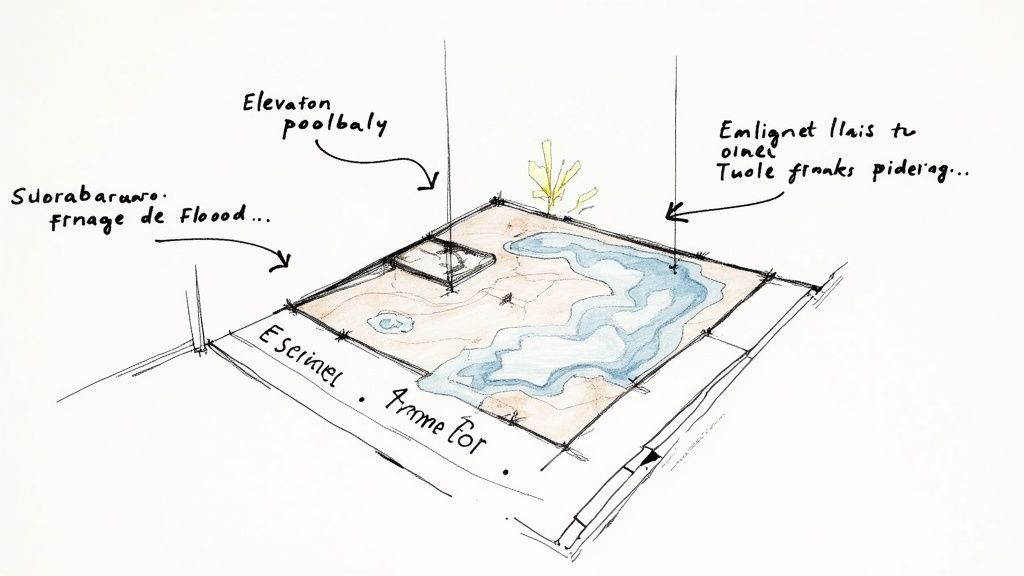
Before you can build the right defenses, you have to know what you’re up against. In places like Granbury and Weatherford, we've all seen how a sudden downpour can overwhelm storm drains, turning yards into ponds. But your risk isn't just about those big weather events; it’s often the smaller vulnerabilities that lead to water damage during a typical thunderstorm.
Globally, water-related hazards have accounted for 50% of all disasters in recent decades, with their frequency jumping by 134% since 2000. If you're curious about the bigger picture, the United Nations Office for Disaster Risk Reduction has some eye-opening data. This isn't a distant problem; it makes a personal risk assessment right here at home more critical than ever.
The Big Picture: Start with the Maps
Your first stop should be the official resources. FEMA offers detailed maps showing flood risk zones. Pop your address into the FEMA Flood Map Service Center to see your property's designation.
But—and this is important—those maps are just a starting point. They're great for a high-level view but can't capture the unique characteristics of your specific lot.
On-the-Ground Clues: Your Property Tells a Story
The real insights come from putting on your boots and walking your property after a good rain. You're looking for the tell-tale signs of trouble that a map will never show.
Lingering Puddles: Where does water hang around for hours—or even days? Pay special attention to any pooling near your home's foundation.
Washed-Out Soil: See any bare patches where the soil has eroded? That's a clear sign that water is moving too fast and with too much force.
Gutter Overload: Clogged gutters dump a concentrated sheet of water right next to your foundation, which is the absolute last place you want it.
Your home’s elevation relative to the street and your neighbors is a critical factor. In a recent Granbury home build, we found that raising the foundation slab just an extra four inches was the key to ensuring positive drainage away from the home and toward the street, completely changing the property's risk profile.
Your North Texas Flood Risk Checklist
Use this simple checklist to identify key flood vulnerabilities on your property. It's a great way to turn observations into an actionable list.
Vulnerability Area | What to Look For | Risk Level (Low/Medium/High) |
|---|---|---|
Property Grading | Does water flow toward the house or away from it? Look for low spots near the foundation. | |
Gutters & Downspouts | Are they clear of debris? Do downspouts extend at least 3-5 feet from the home? | |
Window Wells | Are they covered and free of leaves? Is there a drain, and is it clear? | |
Driveway/Patios | Do paved surfaces slope away from the house? Look for cracks where water can seep through. | |
Basement/Crawlspace | Any signs of past water intrusion? Dampness, water stains, or a musty smell? | |
Local Drainage | Is the street curb or nearby storm drain frequently clogged or overwhelmed? |
For those of us in more rural areas near Glen Rose or with property along the Brazos River, some risk factors are obvious. But even in a planned subdivision, the way your street is curbed and your lot was graded years ago has a huge impact. Truly understanding the diverse building environments across North Texas is the first and most important step in creating a flood protection plan that actually works.
Securing Your Property on the Outside

Real flood protection begins in your yard—long before water ever gets a chance to test your foundation. The most effective strategies manage water where it falls, shaping your landscape to become your first line of defense.
Your property’s slope, or land grading, is the single most important factor. Think of your yard as a gentle ramp, designed to guide rainwater safely away from your home. Ideally, you want the ground to fall at least six inches over the first ten feet moving away from your foundation. It’s something you can get a rough idea of yourself with a simple line level, string, and a tape measure.
If you notice water pooling or see that the ground is completely flat, that's a red flag. Poor grading is an open invitation for moisture to work its way into your foundation, which is the fast track to cracks, mold, and serious structural headaches.
Smart Drainage and Landscaping Solutions
With the right grading in place, you can layer in more advanced protections. Our clay-heavy North Texas soil is notorious for not absorbing water quickly, so it's critical to give that runoff a designated path to follow.
French Drains: These underground trenches filled with gravel intercept and redirect surface water. A professionally installed system might run $25 to $50 per linear foot, but for a soggy yard on a suburban lot in Weatherford, they are worth their weight in gold.
Dry Creek Beds: A great option for larger, rural properties around Glen Rose. These channels lined with river rock look like a natural creek bed but are engineered to handle heavy storm runoff. They're both functional and a beautiful, rustic landscape feature.
Native Plantings: Deep-rooted, water-loving native Texas plants like Switchgrass or Gulf Muhly are incredible at soaking up excess moisture and preventing soil erosion. In fact, a thoughtfully designed rain garden can cut down on runoff by over 30%.
A dry foundation is just one piece of the puzzle. How you design your entire property matters. Thinking about how patios and hardscaping fit into the bigger picture can make a huge difference. Exploring different outdoor living options can spark ideas for integrating features that are built to handle our region’s rainfall.
Finding the right mix of grading, drainage, and landscaping for your specific property is the best investment you can make in protecting your home long-term. For bigger jobs like re-grading a yard or installing a complex drainage system, it's always smart to bring in a local professional who understands the soil and weather patterns here in the Granbury area.
Hardening Your Home's Structure
With your landscape and grading working to keep water away, it's time to focus on the home itself. The goal is to fortify the building's structure, turning it into a resilient fortress against floodwaters. This involves permanent upgrades that seal common entry points and safeguard the critical systems that make your house a home.
Think of your foundation as the hull of a ship. Even the smallest crack can become a major leak under pressure. Walk your foundation line every spring and fall, especially after a classic North Texas dry spell. If you see cracks, seal them with a quality masonry caulk or hydraulic cement. It’s a simple, effective DIY job.
For homes in particularly vulnerable spots, especially those with basements or crawl spaces, a professional waterproof coating is a game-changer. This isn't just paint; it's a thick, rubberized membrane applied to your foundation's exterior. It's a significant investment, often running $5 to $12 per square foot, but it creates a seamless barrier that can stop water in its tracks.
Protecting Your Home’s Vital Systems
Flood damage isn't just about wet floors. The real knockout punch often comes when water destroys your home's most expensive equipment. That's why one of the first things we do in our custom builds around Lake Granbury is get those critical utilities up and out of the flood zone.
Elevate Your HVAC: Your outdoor condenser unit should be on a sturdy, raised platform, ideally at least a foot above your property's base flood elevation.
Raise the Water Heater: In a garage or basement, a simple concrete block platform or heavy-duty metal stand can lift your water heater just high enough to keep it safe.
Move Electrical Components: If you're planning a major renovation, talk to your electrician about moving electrical panels, outlets, and switches higher up on the walls. This is a smart move for many families building or remodeling near the lake.
Mechanical Defenses: Your Active Flood Fighters
Beyond sealing and elevating, you need systems that actively fight back when water starts to rise. For any North Texas home with a basement or in an area with a high water table, these aren't just nice-to-haves—they're essential.
A sump pump is your tireless sentry against groundwater. We install these in a pit at the lowest point of a basement or crawlspace, where they automatically pump out any water that seeps in. A professional installation typically costs between $600 and $1,800, depending on the pump's power and the job's complexity.
Pro Tip: Don't just install a sump pump and forget it. Test it every season before the spring storms roll in. Pour a bucket of water into the pit—you want to see that float switch kick on and the pump engage. A battery backup is also non-negotiable; floods and power outages often go hand-in-hand.
Another crucial piece of hardware is a backflow preventer valve on your main sewer line. When city sewers are overwhelmed by floodwater, the pressure can force raw sewage back up into your home through toilets and drains. It’s a nightmare scenario that this one-way valve completely prevents. This is definitely a job for a licensed plumber, but the peace of mind is priceless.
While you're thinking about protecting the lower levels of your home, you might as well make them more livable, too. For ideas on using moisture-resistant materials, take a look at our guide on finishing basement ceilings in North Texas.
Flood Protection Methods Cost vs. Impact
Protection Method | Typical Cost Range | Best For... | Professional Help Needed? |
|---|---|---|---|
Foundation Crack Sealing | $50 - $200 (DIY) | All homes, especially those with minor, visible foundation cracks. | No, usually a DIY task. |
Waterproof Coatings | $5 - $12 per sq. ft. | Homes with basements or crawl spaces in high-risk flood zones. | Yes, requires excavation and professional application. |
Elevating Utilities (HVAC, etc.) | $300 - $2,000+ | Properties with any risk of standing water around the foundation. | Yes, requires licensed HVAC technicians and electricians. |
Sump Pump Installation | $600 - $1,800 | Homes with basements, crawl spaces, or high water tables. | Yes, professional installation is highly recommended. |
Backflow Preventer Valve | $500 - $2,500 | Homes connected to a municipal sewer system in flood-prone areas. | Yes, must be installed by a licensed plumber. |
The solutions range from simple weekend projects to significant professional installations. The key is to match the right protection to your home's specific vulnerabilities.
Your Plan for an Approaching Storm
When a major storm pops up in the North Texas forecast, your focus must pivot from long-term projects to immediate, temporary defenses. What you do in these final hours can genuinely make the difference between a close call and a catastrophe.
We’re seeing weather patterns that demand this kind of rapid response. The frequency of accelerating extreme weather events means the time from warning to water at your door is getting shorter.
Setting Up Temporary Defenses
As the storm closes in, your attention should be on low-level entry points. Think like water. It's going to find its way through doorways, under the garage door, and into any low-set windows first.
Sandbags are the classic defense, but most people use them wrong.
Proper Sandbag Placement: Don't just line them up. You need to build a stable wall in a pyramid shape, at least two bags wide at the bottom. Make sure the folded ends of the bags face the direction the water is coming from.
Modern Flood Barriers: If you live in an area prone to flooding, like some neighborhoods around Lake Granbury, it’s worth looking into reusable flood barriers. These are often lightweight panels or inflatable tubes you can deploy in minutes, creating a much tighter seal than sandbags.
The goal is to divert the flow of water away from your home's weakest points, buying you crucial time.
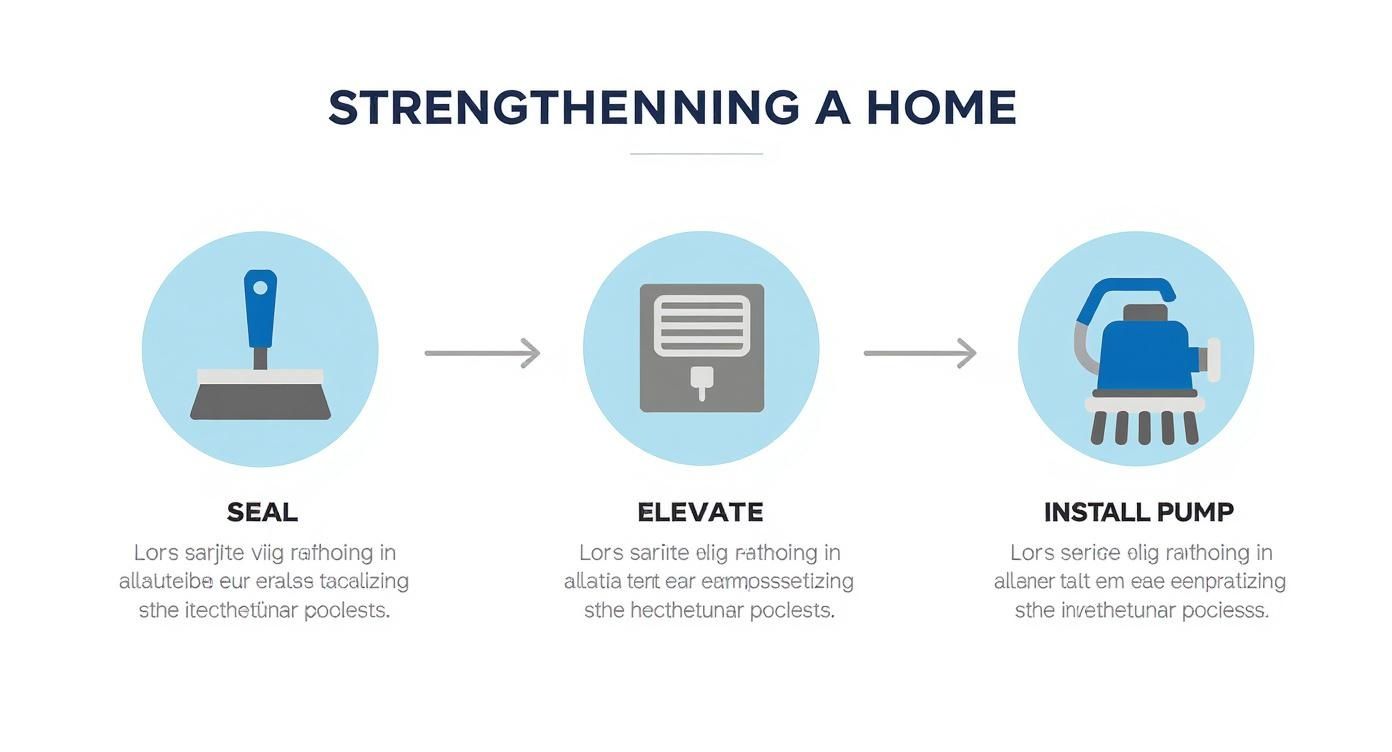
This diagram simplifies the core principles: sealing your foundation, getting utilities up high, and having a reliable pump all work in concert as a complete defense system.
Your Family Emergency Checklist
Protecting your house is one thing, but keeping your family safe is everything. Every household needs a simple, clear plan, especially if you have kids, elderly relatives, or pets.
Create a 'Go-Kit': Grab a waterproof bin and pack it with the essentials. Think critical documents (insurance policies, deeds), a first-aid kit, prescriptions, a flashlight with extra batteries, and enough non-perishable food and water for at least three days.Establish a Communication Plan: Cell service can get spotty in areas like Glen Rose during a big storm. Designate one out-of-state relative as the central point of contact for everyone to check in with.Know Your Evacuation Routes: Map out at least two ways to get out of your neighborhood. High water can easily block your main route, so a plan B is non-negotiable.
If an evacuation seems likely, start moving irreplaceable items and furniture to the highest floor in your home. If you do leave, shut off the power at the main breaker—but only if you can do it from a completely dry location. Your safety always comes first.
Navigating Flood Insurance and Recovery
Physical barriers and drainage systems are only half the battle. If you aren't financially prepared for a flood, you aren't truly prepared. This is where flood insurance comes in, and it starts with a hard truth: your standard homeowner's policy does not cover flood damage.
Whether the water comes from an overflowing Brazos River or a flash flood sweeping through a Weatherford neighborhood, you need a separate flood insurance policy to be covered.
This gap in coverage is a massive vulnerability. Nationwide, a staggering 95% of single-family homes don't have adequate flood insurance, leaving millions of families exposed. The state of flood protection in the U.S. report puts the scale of the problem into perspective.
Understanding Your Insurance Options
For most people, flood coverage comes from one of two sources: the government-backed National Flood Insurance Program (NFIP) or a private insurance carrier.
There are key differences. NFIP policies have set, federally-mandated coverage limits, which might be enough for some but not all. Private policies can often offer higher limits and broader coverage, a critical distinction if you own a larger or custom home on Lake Granbury.
Several factors will determine your policy cost:
Your Flood Zone: FEMA maps establish your base risk level.
Home Elevation: The higher your lowest floor is relative to the official Base Flood Elevation (BFE) for your area, the better your rate will be.
Foundation Type: Homes with basements or crawl spaces present more risk and typically cost more to insure against floods.
Deductible Amount: Choosing a higher deductible can lower your annual premium, but you'll pay more out-of-pocket if you file a claim.
After the Flood: Your Recovery Checklist
If the worst happens, the hours and days that follow are chaotic. Having a clear plan can be a lifeline, helping you stay focused and protect your ability to make a successful claim.
Before you do anything else, contact your insurance agent to get the claims process started immediately. After that, your next priority is documentation. Take photos and videos of everything from every possible angle—before you move or throw anything away.
Here’s a practical checklist to guide your first steps:
Safety First, Always. Do not enter a flooded home until you are absolutely certain the power is off at the main breaker. Be on the lookout for sagging ceilings or floors, snakes or other wildlife seeking refuge, and be aware that all floodwater is contaminated.
Document Everything. Create a detailed visual record. Get shots of the high-water marks on the walls, soaked furniture, ruined appliances, and any damage to the structure itself. You can't have too many photos.
Mitigate Further Damage. If it’s safe, start moving wet belongings outside to dry. Open windows to get air circulating. This shows the insurance company you're taking responsible steps to prevent mold growth.
Keep Meticulous Records. Grab a notebook and log every single conversation—with your insurance adjuster, contractors, city officials, everyone. Keep every receipt for immediate repairs, cleaning supplies, or hotel stays if you're displaced.
Navigating the claims process is a marathon, not a sprint. Being organized and persistent is your best strategy for a fair outcome.
Questions We Hear All the Time
Homeowners across North Texas often ask us the same things. Here are some straightforward answers to the questions we get asked most, designed to give you clarity and confidence.
What's the Real Cost of a French Drain in the Granbury Area?
The price tag on a professionally installed French drain definitely varies, but around here in Granbury and Weatherford, you can generally expect a range of $25 to $50 per linear foot.
What makes the price swing? A few key things:
Our North Texas Soil: Digging through our dense, heavy clay is a lot more work than dealing with sandy soil, which bumps up labor costs.
Drain Dimensions: A deeper or wider trench needs more gravel, pipe, and time to dig, which is reflected in the final quote.
Site Access: If we can get small machinery into your backyard easily, the job goes faster and costs less. Tight spaces that require painstaking hand-digging will cost more.
So, for a pretty standard suburban yard that needs about 100 feet of drainage, you're likely looking at a total cost somewhere between $2,500 and $5,000.
Should I Get Flood Vents for My Foundation?
Flood vents are a fantastic solution, but they're not for everyone. They are specifically designed for homes with enclosed crawl spaces or certain types of basements. The point is to let floodwater pass through the foundation, equalizing the pressure so your walls don't collapse from the sheer force of the water pushing against them.
However, they are completely unnecessary for the slab-on-grade foundations you see all over North Texas. If your house is on a slab, your energy is much better spent on proper grading and sealing to prevent water from getting in to begin with.
Quick tip: If you live in a designated flood zone and have a crawl space, your local building codes in Hood or Parker County might actually require you to have flood vents installed. It’s always smart to check with a local builder who knows the ins and outs of local regulations.
A Flash Flood is Coming. What Are the First 3 Things I Do?
When a warning hits, there's no time to waste. Focus on these three immediate actions:
Get to Higher Ground. Now. Nothing is more important than your safety. Go to the highest floor in your home. If you're in a one-story, that means the attic or, in a dire emergency, the roof.
Grab What You Can't Replace. Snag a waterproof bag and quickly gather irreplaceable photos, vital documents, and small valuables. Take them with you to the higher level.
Kill the Power (Only If It's Safe). If you can get to your main breaker box without stepping in water, shut off the electricity. This is crucial for preventing electrocution once floodwater starts entering your home.
At Gemini Homes, we know that a secure home is built on a solid plan. If these questions sparked others, or if you just want an expert to take a look at your property's specific challenges, we're here to help you build with peace of mind. Visit us at https://www.geminihomesgranbury.com to set up a free consultation.
Comments