
Your Essential 10-Point Building a Custom Home Checklist for North Texas
Building a custom home in Granbury, Weatherford, or anywhere in North Texas is the process of bringing a vision to life. From selecting the perfect piece of land with sprawling live oaks to designing an outdoor living area for those warm Texas evenings, the journey is filled with significant decisions. The sheer number of choices can feel overwhelming, but a clear plan transforms the process from daunting to exciting. This is where a detailed building a custom home checklist becomes your most valuable tool, providing a roadmap that guides you through every phase and prevents costly oversights.
We've designed this guide to be your definitive resource, breaking down the entire build into ten manageable stages. It’s packed with practical advice, local cost considerations for areas like Hood and Parker counties, and real-world insights from our experience building for North Texas families. We’ll cover everything from budgeting and land due diligence to navigating permits, selecting materials suited for our climate, and planning for the final move-in. This checklist ensures your path from a patch of Texas soil to your dream front door is as well-crafted and thoughtfully planned as the home itself.
1. Select a Qualified Custom Home Builder with Local Expertise
Choosing the right builder is the single most important decision in your building a custom home checklist and sets the foundation for the entire project. This isn't just about finding someone who can build a house; it's about partnering with a professional who understands the unique landscape of North Texas, from the expansive clay soils in Granbury to the specific building codes in Weatherford and Glen Rose.
A builder with deep local roots brings invaluable expertise. They have established relationships with reliable subcontractors, know the ins and outs of local permitting offices, and understand how to design homes that withstand the region's harsh sun and unpredictable weather. For example, a local builder will know which foundation engineering is required for the reactive soils common in Hood County, preventing future structural issues.

Why Local Expertise Matters
Consider a builder who has direct owner involvement. This means you aren't just a project number; you have a direct line to the decision-maker. This level of accountability is crucial when navigating complex builds like a multi-structure rural property for a growing family or an accessibility-friendly forever home for retirees. A builder with local experience will also possess specialized knowledge in popular North Texas styles, such as modern barndominiums or classic Hill Country ranches, ensuring your vision is executed flawlessly.
Actionable Steps for Choosing Your Builder
To find the right partner, you need to do your homework. A thorough vetting process will give you confidence in your choice.
Interview Multiple Builders: Schedule free consultations with at least three builders to compare their process, communication style, and cost estimates.
Check Recent References: Ask to speak with homeowners from projects completed within the last 12-18 months. Inquire about their communication, budget adherence, and final quality.
Verify Local Knowledge: Ask specific questions about their experience with your county's regulations or building on land with challenging topography.
Review Their Portfolio: Request to see examples of homes similar in style and scope to yours, whether it's a ranch house on acreage or a whole-home remodel.
To help you prepare, discover the top 10 questions to ask custom home builders in North Texas before you sign a contract.
2. Define Your Budget and Financing Strategy
Establishing a clear and realistic financial plan is a critical early step in your building a custom home checklist. Before you fall in love with a design, you must understand your total investment capacity. This involves not just the construction cost but also land acquisition, site development, permits, and a contingency fund for unforeseen expenses.
A well-defined budget serves as the roadmap for every subsequent decision, from architectural plans to interior finishes. In North Texas, costs can fluctuate significantly based on location. For example, rural properties in areas like Glen Rose or Stephenville often require additional infrastructure like septic systems and wells, which can add $20,000 to $50,000+ to the budget depending on well depth and system complexity.
Why a Detailed Budget Matters
A custom home in the Granbury area can range widely in cost, so a generic cost-per-square-foot estimate is often misleading. Your budget needs to account for specific site conditions, the complexity of your design, and the quality of materials. A detailed, line-item budget prepared by an experienced builder provides clarity and helps you allocate funds effectively, ensuring you can afford both the structure and the high-end finishes you envision. This financial planning also protects you from making emotional decisions that can derail the project.
Actionable Steps for Budgeting and Financing
A proactive approach to your finances will set your project up for success and prevent stressful surprises down the road.
Secure Pre-Approval: Meet with a lender specializing in construction loans to determine your borrowing capacity before you begin designing.
Factor in All Costs: Work with your builder to create a comprehensive budget that includes land, site work (clearing, grading), permits, architectural fees, and landscaping.
Build a Contingency Fund: Set aside 15-20% of your total construction cost to cover unexpected issues, like hitting rock during excavation, or desirable upgrades that arise during the build.
Minimize Late-Stage Changes: Finalize as many design and material selections as possible before construction starts, as changes mid-build are almost always more expensive.
For more insight into managing your project's finances, you can contact us for a free consultation to discuss your vision and budget.
3. Finalize Site Selection and Perform Due Dligence
The land you choose is just as important as the house itself and is a critical step in the building a custom home checklist. The right property sets the stage for your lifestyle and home design, while the wrong one can lead to unforeseen costs and limitations. In North Texas, factors like soil composition, utility access, and local regulations can dramatically alter your project's scope and budget.
Performing thorough due diligence before closing on a property is non-negotiable. This process uncovers potential issues that could impact construction, from drainage problems on a sloping lot in Weatherford to specific setback requirements for a lakefront property in Granbury. A comprehensive site evaluation ensures your dream home is built on a solid, suitable foundation without expensive surprises.
Why Due Diligence Matters
Imagine purchasing several acres in Hood County for a modern barndominium, only to discover a utility easement runs directly through your planned building site or that the clay-heavy soil requires a costly engineered foundation. These are common scenarios that proper investigation can prevent. An experienced builder can assist in evaluating raw land, identifying challenges like the need for a septic system and well, or navigating HOA restrictions that might conflict with a desired home style. This foresight protects your investment and ensures a smoother build process.
Actionable Steps for Site Evaluation
A systematic approach to land evaluation will save you time, money, and stress. It empowers you to make an informed decision before you commit.
Conduct Professional Surveys: Hire a local surveyor to perform a boundary survey and topographic survey, identifying property lines, easements, and elevation changes.
Order a Geotechnical Report: Soil testing is essential in North Texas. This report will determine the soil's stability and inform your builder about the necessary foundation design, a critical step for our expansive clay soils.
Verify Utility and Service Access: Confirm the availability and location of water, sewer (or septic feasibility), electricity, and internet service. The cost to run utilities to a rural site can be substantial.
Investigate Zoning and Restrictions: Check with the city or county (like Parker or Somervell) for zoning laws, building codes, and any deed restrictions or HOA covenants that could limit your home’s size, style, or placement.
Taking these steps ensures the land you buy is perfectly suited for the home you envision.
4. Create a Detailed Design Plan and Home Blueprint
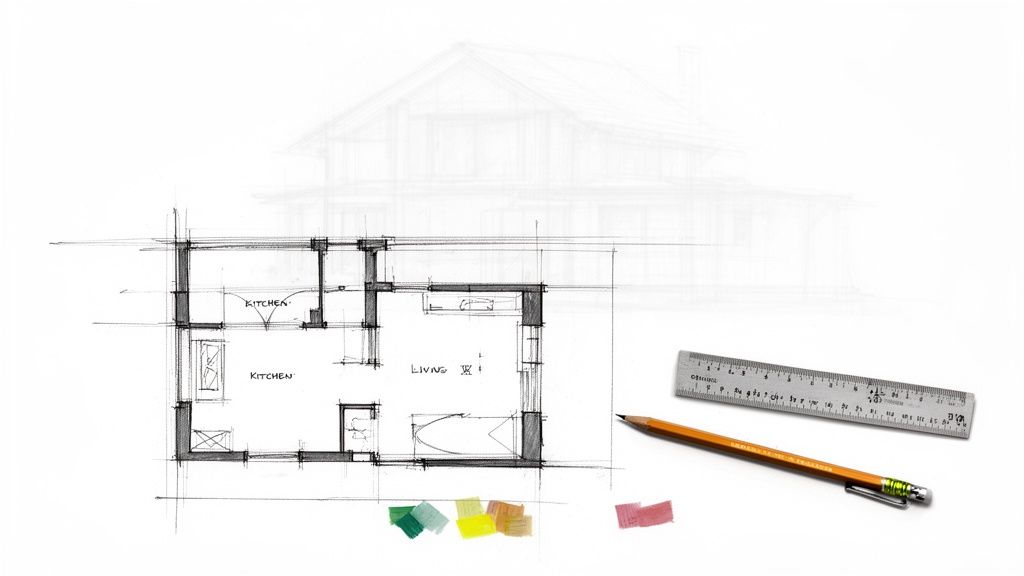
A comprehensive design plan is the critical next step in your building a custom home checklist, translating your vision into the technical documents your team will use to build. This stage moves beyond ideas and wish lists, creating detailed architectural drawings and specifications that serve as the project's official guide. It is where you and your builder finalize key decisions on everything from room dimensions to the style of fixtures.
This detailed blueprint is essential for preventing costly misunderstandings and mid-construction changes. In North Texas, a well-thought-out plan can incorporate popular features like expansive outdoor living areas to enjoy the Granbury weather or energy-efficient designs to combat the summer heat. Clear documentation ensures that every detail aligns with your expectations and budget before the first foundation is poured.
Why a Detailed Plan Matters
A thorough blueprint acts as a communication tool between you, your builder, and all the subcontractors. For specialized builds common in our area, like modern barndominiums that blend rustic style with open-concept living, the plan clarifies every structural and aesthetic detail. It also allows for the thoughtful integration of accessibility features for an aging-in-place forever home or planning the ideal traffic flow for a bustling family. Finalizing these decisions on paper saves significant time and money compared to making changes during construction.
Actionable Steps for Creating Your Blueprint
Collaborate closely with your design and build team to ensure the final plans reflect your lifestyle and priorities.
Create a Detailed Wish List: Before meeting with a designer, list your must-haves (e.g., first-floor primary suite), nice-to-haves (e.g., a dedicated home office), and absolute deal-breakers.
Review the Floor Plan for Functionality: Walk through the layout mentally. Consider daily routines, furniture placement, natural light, and how your family will use each space.
Plan for Future Needs: Discuss how the home can adapt over time, whether it's for a home office, aging parents, or a growing family. For rural properties, this might include planning for a future workshop or guest casita.
Finalize Selections Early: Choose finishes, fixtures, and materials before construction begins to lock in pricing and avoid decision fatigue later.
To see how these plans come to life, explore the Gemini Homes project gallery for inspiration on your own custom home.
5. Obtain All Necessary Permits and Approvals
Securing the proper permits is a non-negotiable step in your building a custom home checklist that legally authorizes your construction project. This critical process ensures your new home meets all local safety, zoning, and building codes. While your builder typically manages the applications, understanding the process is essential for avoiding costly legal issues and construction delays.
In North Texas, the permitting landscape can be complex, with different requirements in Granbury, Weatherford, and surrounding counties. An experienced local builder navigates these regulations efficiently, from securing a straightforward building permit to managing more complex approvals for septic systems or private wells. Attempting to build without the correct permits can result in heavy fines, stop-work orders, and even the demolition of unapproved structures.
Why Local Permit Knowledge Matters
Navigating the bureaucracy of local government offices requires established relationships and a deep understanding of specific requirements. For instance, obtaining a septic permit in Parker or Hood County involves detailed soil tests and health department approvals that vary by location. Similarly, properties outside city limits might require well permits from the Texas Water Development Board, while homes within a community like Pecan Plantation have stringent HOA architectural review boards that must approve designs before the city will even accept a permit application. A builder who works in these jurisdictions daily anticipates these hurdles and can accurately project timelines and costs.
Actionable Steps for Permit Management
Staying informed about the permitting process gives you peace of mind and keeps the project moving forward smoothly.
Request a Permit List: Ask your builder for a comprehensive list of all required permits for your specific project and location.
Verify Approval Before Work Begins: Confirm with your builder that all necessary permits have been officially issued and are posted at the job site before any ground is broken.
Understand the Inspection Schedule: Know which inspections are mandatory (e.g., foundation, framing, electrical, final) and ensure they are scheduled promptly to prevent delays.
Keep Copies for Your Records: Maintain a file with copies of all permit applications and the final approved documents for your records.
For a deeper dive into what’s required, see our guide on the permits needed to build a house in North Texas.
6. Plan Utilities Infrastructure (Water, Sewer, Electric, Gas, Internet)
Properly planning your utilities is a critical step in the building a custom home checklist, especially for rural and semi-rural properties common in North Texas. This phase determines how essential services like water, electricity, and internet will connect to your home, and failing to plan early can lead to significant budget overruns and construction delays.
For many properties in areas like Granbury or Aledo, you can't simply assume city services are available. Your plan must account for the specific needs of your land, whether that involves coordinating with municipal providers, drilling a private water well, or installing a septic system. This foundational work ensures your home is comfortable, functional, and ready for modern living from day one.
Why Early Utility Planning Matters
Consider a rural property outside of Glen Rose. The homeowner might need to drill a well, which can range from 150 to over 300 feet deep depending on the aquifer, and install a complete septic system with a designated drain field. A builder with local experience can coordinate with geologists and specialized contractors to ensure these systems are correctly sized and placed, protecting your land and investment while navigating Hood County or Somervell County regulations. They also understand the importance of planning for adequate electrical service to power a modern home with multiple HVAC units and smart technology.
Actionable Steps for Utility Infrastructure
A proactive approach to utility planning will save you headaches and unexpected costs down the road.
Contact Utility Providers Early: Reach out to local electric, gas, and water companies to confirm service availability, connection fees, and lead times.
Get Quotes for On-Site Systems: If building on acreage, obtain multiple quotes for well drilling and septic system installation to understand the costs and process.
Plan for Technology: Don't overlook modern needs. Install structured wiring for reliable internet and entertainment, and research the best broadband options, which may include fixed wireless or satellite in more remote areas.
Consider Future-Proofing: Discuss installing a whole-home surge protector or a pad-ready setup for a future backup generator with your builder. Burying utility lines is also a great option for safety and aesthetics.
By addressing these details during the design phase, you ensure your new home’s infrastructure is as thoughtfully planned as its layout.
7. Choose Quality Materials and Energy-Efficient Systems
Selecting the right materials and systems is a pivotal step in your building a custom home checklist that impacts everything from daily comfort to long-term ownership costs. This is about more than just aesthetics; it's about building a durable, resilient, and efficient home tailored to the demanding North Texas climate.
In areas like Granbury and Weatherford, materials must endure intense summer heat, sudden hailstorms, and fluctuating humidity. Energy-efficient systems are not a luxury but a necessity to manage utility bills. For example, selecting low-emissivity (Low-E) windows and using spray foam insulation can drastically reduce cooling costs during our hot summers. This phase is where you balance upfront investment with long-term value, ensuring your home is both beautiful and practical.
Why Quality and Efficiency Matter
Consider the difference between standard fiberglass insulation and spray foam insulation in a new build on rural acreage. While spray foam has a higher initial cost, its superior air-sealing properties can significantly reduce cooling costs and prevent dust and allergens from entering the home. Similarly, an Energy Star certified HVAC system paired with a smart thermostat learns your family's habits, optimizing performance and lowering monthly bills. These aren't just features; they are investments in your home's performance and your family's comfort.
Actionable Steps for Smart Selections
Making informed choices requires a forward-thinking approach. Work with your builder to understand the lifetime value of your selections, not just the initial price tag.
Prioritize a High-Performance Envelope: Invest in the best windows, insulation (like spray foam), and roofing (such as impact-resistant shingles) you can afford. These components protect your home and are the foundation of energy efficiency.
Analyze Lifetime Costs: Ask your builder to help you compare the upfront cost of an item versus its long-term operational savings. A propane tankless water heater, for example, costs more initially but provides endless hot water and lower energy usage.
Request and Review Samples: Always look at samples of flooring, countertops, and paint in your actual home's lighting conditions before making a final decision.
Focus on High-Use Areas: Allocate more of your budget to quality materials in the kitchen and bathrooms, as these areas see the most wear and tear.
If you need guidance on balancing your budget with high-performance options, contact Gemini Homes to discuss material selections for your project.
8. Plan Your Outdoor Living Spaces (Decks, Patios, Pergolas, Pools)
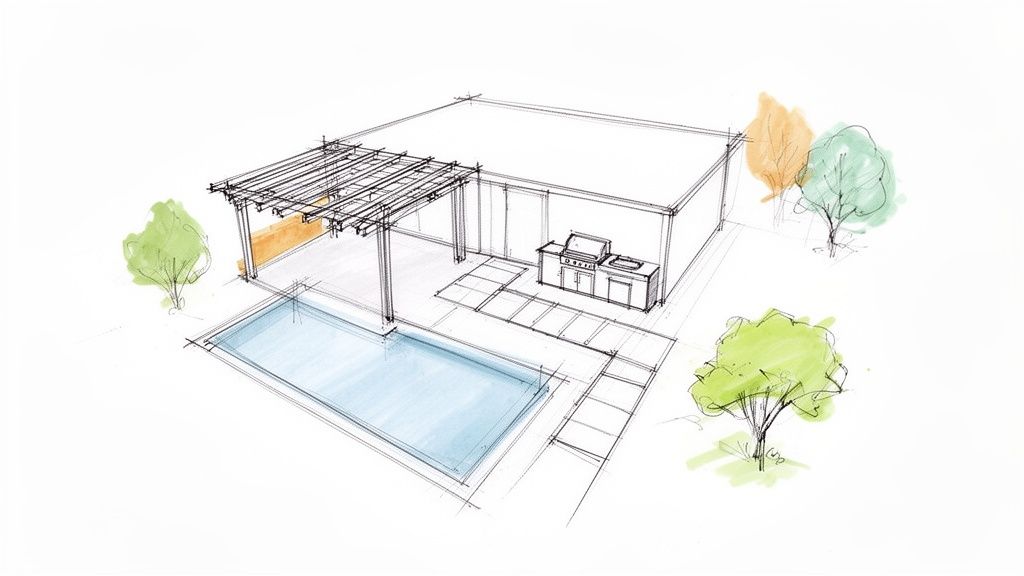
In North Texas, your living space doesn't stop at the back door. Planning your outdoor areas is a critical part of the building a custom home checklist, transforming your property into a functional and beautiful retreat. By designing these spaces alongside your home's main structure, you ensure seamless integration of utilities, proper drainage, and a cohesive aesthetic that maximizes your enjoyment of the Granbury and Weatherford climate.
Considering these elements from the start prevents costly retrofitting and ensures features like covered patios, outdoor kitchens, and pools are structurally supported and perfectly positioned. It allows you to create a fluid transition from indoor comfort to outdoor entertainment, adding significant value and appeal to your home, a must-have for families and retirees alike.
Why Early Planning Matters
Imagine a sprawling ranch-style home with a covered patio that flows directly to a custom gunite pool and a pergola-shaded seating area. This isn't an afterthought; it's a deliberate design. By planning early, your builder can pour the correct footings for a future pergola, run gas and water lines for an outdoor kitchen during the initial plumbing phase, and grade the entire lot to manage water runoff effectively. This foresight is key for rural properties on acreage, where creating defined zones for dining, lounging, and recreation is essential.
Actionable Steps for Designing Your Outdoors
A well-planned outdoor space is an investment in your lifestyle. Use these steps to integrate it into your home build.
Integrate with Home Design: Discuss outdoor living goals with your architect and builder during the initial floor plan design to map out placement, access points, and views.
Consider North Texas Materials: Choose durable, low-maintenance options suited for our climate, such as composite decking that resists harsh sun or stained concrete patios that offer a high-end look.
Plan for Utilities: Map out locations for electrical outlets, gas lines for grills or fire pits, and water spigots for convenience.
Think in Zones: Define distinct areas for different activities, such as a dining space near the kitchen, a lounge area for relaxation, and a recreation zone around a pool or lawn.
For more inspiration, explore these 10 outdoor living space design ideas to transform your North Texas home and see what’s possible.
9. Establish Clear Communication and Change Order Process
Effective communication is the cornerstone of any successful custom home project, making this a critical item on your building a custom home checklist. The construction process involves hundreds of decisions and moving parts; without a clear system for communication and managing changes, projects can easily derail into frustration and budget overruns.
A formal change order process is essential, as it documents any deviation from the original plan, detailing the exact cost and timeline impact. This protects both you and the builder from misunderstandings about scope and budget. For example, deciding to upgrade from quartz to quartzite countertops mid-project will be documented with the price difference and any potential schedule delay, ensuring full transparency.
Why a Formal Process Matters
Imagine you decide to add built-in bookshelves to your living room midway through framing. A casual verbal request can lead to confusion. A formal change order, however, clarifies the exact design, material cost, labor, and how many extra days it will add to the schedule. A quality builder integrates this process seamlessly, ensuring every decision is documented and approved before work begins, preventing surprise invoices and keeping the project on track.
Actionable Steps for Clear Communication
To maintain a smooth and transparent build, establish communication protocols from day one. This proactive approach will save you time, money, and stress.
Schedule Regular Meetings: Set a consistent weekly time for on-site or virtual meetings to review progress, discuss upcoming decisions, and address any concerns.
Insist on Written Updates: Request email summaries after key conversations and decisions. This creates a written record that everyone can reference.
Get Change Orders in Writing: Never agree to a change without a signed document outlining the specific work, associated costs, and impact on the construction schedule.
Be Prompt with Decisions: Delays in choosing finishes like tile or countertops can halt progress. Work with your builder’s schedule to make timely selections.
By establishing these clear communication channels, you transform the building process into a collaborative partnership. To learn more about our homeowner-focused process, schedule a free consultation.
10. Inspections, Quality Control, Move-In Planning and Long-Term Maintenance
Consistent inspections and diligent move-in planning are vital final steps in your building a custom home checklist that protect your investment. This phase is about verifying quality at every critical stage and ensuring a smooth transition into your new home, followed by a proactive maintenance plan to keep it in prime condition.
From the foundation pour to the final walk-through, quality control inspections identify potential issues when they are easiest and most cost-effective to correct. This process culminates in a detailed move-in plan and a schedule for long-term care, turning your beautifully built house into a well-maintained home for years to come.
Why Quality Control and Planning Matter
Think of inspections as a health checkup for your home. A pre-drywall mechanical inspection allows you and your builder to verify plumbing, electrical, and HVAC systems before they are concealed. This is far simpler than addressing a hidden leak or electrical short in a finished wall later. Similarly, a final walk-through identifies any punch list items, like a scuffed baseboard or a misaligned cabinet door, ensuring every detail meets your standards before you take occupancy in your new Granbury or Weatherford home.
Actionable Steps for a Seamless Transition and Upkeep
A methodical approach to inspections and maintenance will protect your home's value and provide peace of mind.
Attend Key Inspections: Be present for major inspections, such as foundation, framing, and pre-drywall. This is an excellent opportunity to understand your home’s inner workings.
Create a Detailed Punch List: During your final walk-through, meticulously document any remaining items that need attention. A reputable builder will work with you to complete this list promptly.
Organize Important Documents: Before move-in, gather all warranties, system manuals, and inspection reports. Store them in a dedicated binder or digital folder for easy access.
Establish a Maintenance Calendar: Create a schedule for routine tasks like changing HVAC filters, testing smoke detectors, and servicing your septic system, which is crucial for rural properties in North Texas.
By focusing on quality control and planning ahead, you ensure your custom home is not only built to the highest standards but is also maintained to preserve its integrity.
10-Point Custom Home Checklist Comparison
Item | Implementation Complexity | Resource Requirements | Expected Outcomes | Ideal Use Cases | Key Advantages |
|---|---|---|---|---|---|
Select a Qualified Custom Home Builder with Local Expertise | Moderate — vetting, interviews, reference checks | Time for interviews and reference checks; moderate budget flexibility | Personalized build, local code compliance, smoother process | Ground-up custom builds in North Texas; projects needing local knowledge | Local code expertise, subcontractor network, direct owner involvement |
Define Your Budget and Financing Strategy | High — detailed cost modeling and lender coordination | Financial documents, lender fees, contingency reserve (10–20%) | Controlled spending, financing approval, prioritized features | All projects; mandatory before detailed design | Prevents overruns; clarifies priorities; lender-ready plans |
Finalize Site Selection and Perform Due Diligence | High — surveys, soil/geotech, title work | Surveyor, geotechnical testing, title search, legal fees | Identifies constraints and hidden costs; accurate cost estimates | Buying raw land; rural or flood-prone properties | Ensures buildability; avoids legal/soil surprises; protects investment |
Create a Detailed Design Plan and Home Blueprint | High — architect/designer coordination and revisions | Architect/designer fees, time for reviews, drawings and specs | Permit-ready documents, fewer mid-build changes, accurate estimates | Custom layouts, complex features, permit-required designs | Visualizes final home; enables precise estimating; reduces rework |
Obtain All Necessary Permits and Approvals | Moderate — applications and inspection scheduling | Permit fees, administrative time, possible consultant support | Code-compliant construction, inspection sign-offs, legal occupancy | Any regulated jurisdiction; projects requiring municipal approval | Legal compliance; insurance validity; inspector oversight |
Plan Utilities Infrastructure (Water, Sewer, Electric, Gas, Internet) | Moderate to high — utility coordination and site work | Utility company quotes, well/septic costs, trenching and hookups | Reliable service, correct capacity, fewer future retrofits | Rural properties; new connections; high-demand systems | Prevents costly relocations; supports modern systems; future-proofing |
Choose Quality Materials and Energy-Efficient Systems | Moderate — research, selections, specialist installers | Higher upfront cost, warranty management, possible specialist labor | Lower operating costs, greater durability, higher resale value | Energy-conscious builds; long-term ownership; harsh climates | Energy savings; longevity; improved comfort and indoor air quality |
Plan Your Outdoor Living Spaces (Decks, Patios, Pergolas, Pools) | Variable — simple to complex (pools increase complexity) | Landscape contractors, pool builders, significant added budget ($15K+) | Extended usable space, enhanced entertaining, added property value | Entertaining homes; North Texas climate with outdoor season | Increases living area and resale appeal; tailored recreation spaces |
Establish Clear Communication and Change Order Process | Low to moderate — set protocols and documentation | Time commitment, project management tools or logs | Fewer disputes, timely decisions, documented changes | All builds; projects with many selections or changes | Transparency; accountability; reduced rework and delays |
Inspections, Quality Control, Move-In Planning and Long-Term Maintenance | Moderate — scheduling inspections and preparing punch lists | Inspector fees, time for walkthroughs, maintenance budget | Code compliance, fewer post-move issues, documented warranties | Final construction stages; preparing for occupancy and warranty period | Protects investment; identifies defects early; organized move-in and maintenance |
Your North Texas Home Awaits: Let's Start the Conversation
Embarking on a custom home build is a monumental undertaking, but it doesn't have to be overwhelming. This comprehensive "building a custom home checklist" provides a detailed roadmap, guiding you from the initial spark of an idea to the moment you turn the key in your new front door. Each step, from defining your budget and selecting the perfect piece of land in Granbury or Stephenville to navigating permits and choosing materials, is a critical building block in your future home.
The journey is a marathon, not a sprint. This checklist is designed to empower you with knowledge, helping you anticipate challenges, make informed decisions, and maintain control over the process. By breaking down this complex endeavor into manageable phases, you can focus your energy where it matters most at each stage, ensuring no detail is overlooked. This structured approach prevents costly mistakes and reduces the stress that can often accompany a project of this scale.
Key Takeaways for Your North Texas Build
Mastering this checklist isn't just about ticking boxes; it's about understanding the interconnected nature of the custom home process. The decisions you make during the initial planning phase will directly impact your design options, your construction timeline, and your final budget. Here are the most crucial insights to carry forward:
Your Team is Your Greatest Asset: The single most important decision you will make is choosing your builder. A builder with deep local roots in North Texas understands the specific soil conditions, weather patterns, and permitting nuances of communities like Weatherford and Glen Rose.
Planning Prevents Problems: A detailed plan is your best defense against budget overruns and timeline delays. Thorough due diligence on your land, a complete set of architectural blueprints, and a clear selections sheet before construction begins are non-negotiable for a smooth build.
Communication is Paramount: Establishing a clear, documented process for communication and change orders from day one is essential. This protects both you and your builder, ensuring everyone is aligned on expectations and any adjustments are handled transparently.
From Checklist to Reality: Your Actionable Next Steps
With this detailed guide in hand, your path forward is clearer. The true value of this checklist emerges when you begin to apply it. Start by focusing on the initial stages: refining your vision, defining a realistic budget, and exploring your financing options. Use the checklist to formulate questions for potential builders and architects. Ask them how they handle each phase, from site evaluation to the final punch list.
Remember, building a custom home is one of the most significant investments of your life. It’s an opportunity to create a space that perfectly reflects your family’s lifestyle, values, and aspirations. Whether it's a ranch-style home on acreage in rural North Texas, an accessibility-friendly forever home near Lake Granbury, or a modern barndominium, the principles remain the same. Diligent planning, a strong team, and clear communication are the cornerstones of success. Your dream home is not just a structure; it's the future backdrop for your family's most cherished memories.
This checklist provides the map, but a successful custom home journey requires the right guide. At Gemini Homes, we specialize in navigating the unique landscape of building in Granbury and North Texas, turning your detailed plans into a reality built with integrity and craftsmanship. If you’re ready to take the first step, we’re here to answer your questions. Contact Gemini Homes to discuss your vision.
Comments