
What Is Wainscotting? A Guide to Timeless Home Design
Ever walked into a home in Granbury or Weatherford and just felt a sense of elevated style and substance? Chances are, you were looking at wainscotting. More than just simple wall paneling, it’s a classic architectural touch that adds instant character to any room.
In simple terms, wainscotting is paneling that covers the lower portion of a wall, typically between 32 and 48 inches from the floor, though the height can vary based on the design. Think of it as built-in furniture for your walls—a feature that breaks up a tall, plain surface and introduces texture, depth, and a strong horizontal line that makes a room feel more grounded and complete.
It’s not just a decorative afterthought; it’s an integral part of a room’s architecture. For homeowners in North Texas, from Aledo to Glen Rose, it's that special touch that can make a dining room feel more formal, a hallway more durable, or an entryway more grand.
From Practical Protection to Timeless Style
Believe it or not, wainscotting wasn't always about looks. Its story begins back in the 14th and 15th centuries in Northern Europe, where it served a very practical purpose. The name comes from a Middle Dutch term, 'wagenschot,' which referred to a high-quality oak used to insulate damp, cold stone walls and protect them from everyday bumps and scrapes. You can learn more about its journey from functional use in castles to modern design.
Today, we get the best of both worlds. It still provides that original durability, but now it's a go-to feature for elevating a home's aesthetic. Here's a quick snapshot of what wainscotting really brings to your home.
Key Feature | Primary Purpose |
|---|---|
Decorative Paneling | Adds architectural character, texture, and visual interest to a plain wall. |
Protective Barrier | Shields the lower wall from scuffs, dents, and dings in high-traffic areas. |
Height & Proportion | Grounds a room by creating a horizontal line, balancing ceiling height. |
Permanent Upgrade | Increases perceived home value and signals quality craftsmanship to buyers. |
For families building on rural properties near Stephenville or retirees designing their forever home in Granbury, this blend of resilience and elegance is hard to beat. It provides:
Added Durability: The lower third of any wall takes a beating. From furniture bumps to roaming pets and active kids, wainscotting acts as a beautiful, resilient shield.
Architectural Interest: It turns a flat, forgettable wall into a sophisticated design statement, adding layers and depth that make a home feel custom.
Increased Home Value: As a permanent fixture, high-quality wainscotting signals attention to detail and can significantly boost your home’s appeal to future buyers.
Ultimately, wainscotting is a smart and beautiful investment that pays off in both daily enjoyment and long-term value.
Finding The Perfect Wainscotting Style For Your Home
Choosing the right wainscotting is like picking the perfect frame for a piece of art—it has to complement the picture without overpowering it. It’s all about finding that perfect balance between form and function for your North Texas home.
At its core, wainscotting is the ultimate multitasker, blending architectural character, wall protection, and a durable finish into one beautiful package.
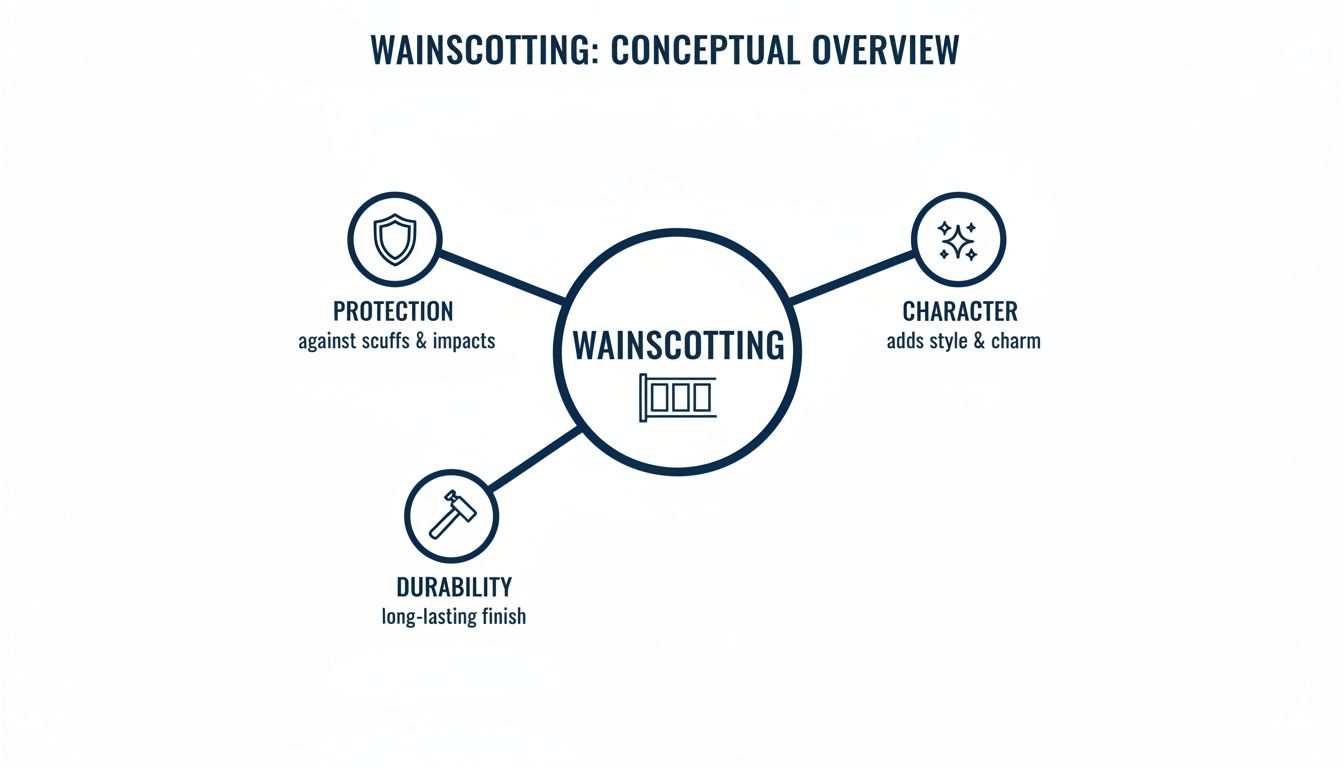
Think of it as the hardworking element that also happens to be the best-dressed feature in the room. Now, let’s explore the most popular styles we see in homes from Granbury to Weatherford.
Classic And Formal Raised Panel
When you picture a grand, traditional dining room or a sophisticated home office, chances are you’re imagining Raised Panel wainscotting. This is the gold standard for formal design. It features beautifully beveled panels set inside a frame of vertical stiles and horizontal rails, creating a deep, dimensional look that adds a real sense of substance and history to a space.
Rooted in 18th-century Georgian and Colonial architecture, raised paneling was a mark of quality and refined taste. Early American craftsmen adapted these elegant European designs using local woods like pine and poplar, creating a timeless look that remains a cornerstone of classic interior design in many historic Texas homes.
Clean And Versatile Flat Panel
For a look that's a bit more restrained and modern, Flat Panel wainscotting (often called Shaker-style) is a fantastic choice. True to its name, it uses simple, recessed panels without any decorative beveling, giving it a crisp, clean-lined aesthetic.
This style is a true chameleon, fitting in perfectly with Craftsman, modern transitional, and of course, Shaker-inspired interiors. Its beautiful simplicity allows other design elements in the room to shine without creating visual clutter.
Rustic And Charming Board And Batten
Board and Batten has become a true superstar in modern farmhouse design, and for good reason. Hugely popular in homes across Glen Rose and Stephenville, this style uses wide vertical boards (the battens) layered over larger flat panels, creating a bold, geometric pattern that brings incredible texture and warmth to a room.
Pro Tip: In a busy family home, board and batten is more than just a pretty face. Those sturdy boards offer fantastic protection against the daily barrage of scuffs, bumps, and stray toys in high-traffic hallways and entryways. It’s as practical as it is beautiful.
We often recommend this style for its durability and powerful visual impact. If you love this look, you’ll find plenty of ideas in our guide to farmhouse home design ideas for North Texas homes.
Casual Cottage-Style Beadboard
Last but not least is Beadboard. This style is defined by its narrow vertical planks, each separated by a small ridge, or "bead." It instantly evokes a casual, comfortable, cottage-like feel, making it perfect for adding a touch of charm to less formal spaces.
We see it used to great effect in so many areas of the home:
Bathrooms: It lends a clean, classic feel that holds up beautifully to humidity (when installed with the right materials and finish).
Laundry Rooms and Mudrooms: Beadboard provides a tough, easy-to-clean surface that elevates these hardworking utility spaces.
Kitchens: It works wonderfully as a backsplash or on the sides of a kitchen island for a pop of country character.
Each of these styles tells a different story. If you’re ever stuck trying to decide which one fits your home’s architecture and your family’s lifestyle, a quick conversation with a design-build expert can help bring your vision into focus.
Choosing Materials That Withstand the Texas Climate
Picking the right material for your wainscotting is a crucial decision, especially here in North Texas. Our famous humidity swings mean you need something that can handle moisture and temperature changes without failing. This isn't just a minor detail; it’s a critical choice for making sure your investment lasts.
Let's break down the best options for your home.
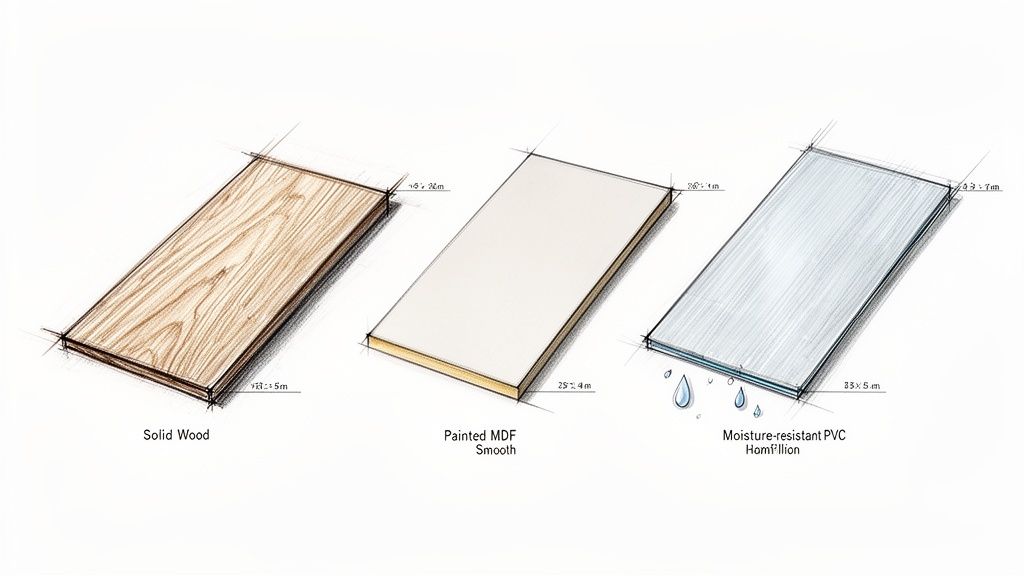
Ultimately, your choice will boil down to how the room is used, your budget, and the look you're going for. Each material brings something different to the table.
Solid Wood for Timeless Authenticity
If you're after pure, unmatched character, nothing comes close to solid wood. Materials like poplar, oak, and pine lend a natural warmth and authenticity that you just can't fake. This is what we’d recommend for creating a sophisticated feel in a formal dining room, a library, or a custom home office in a Weatherford estate.
But that classic beauty comes with a catch. Wood naturally expands and contracts with our regional humidity. To prevent warping or cracking, a skilled carpenter must acclimate, seal, and finish it properly. When done right, you get a stunning, high-value feature that can last for generations.
MDF: The All-Around Workhorse
Medium-Density Fiberboard (MDF) has become the go-to material for wainscotting, and for good reason. It's an engineered wood product that’s incredibly stable and dense, so it won’t warp or swell like solid wood often does. This makes it a smart, cost-effective choice for busy family homes all over Granbury and Godley.
MDF’s perfectly smooth surface is an ideal canvas for paint. You get a flawless, professional-looking finish that’s a breeze to clean and maintain—a must for high-traffic zones like hallways, entryways, and kids' rooms.
Moisture-Resistant Options for Wet Areas
In rooms that see a lot of moisture—think bathrooms and laundry rooms—standard wood and MDF are simply out of the question. This is where materials like PVC (Polyvinyl Chloride) or specially treated moisture-resistant MDF really shine. They are completely waterproof.
These are the only sensible choices for spaces like:
Bathrooms: They won’t rot, swell, or grow mildew, even with daily steam from the shower.
Mudrooms & Laundry Rooms: They easily stand up to wet coats, muddy boots, and splashes. If you're tackling a mudroom project, we’ve got more durable mud room wall ideas for your North Texas home right here.
While PVC might cost a bit more upfront, the peace of mind it offers in damp environments is priceless, protecting your investment for years to come.
So, What Does Wainscotting Cost in North Texas?
Let's get right to it and talk about the budget. There’s no single price tag for a wainscotting project, but understanding what drives the cost will help you make smart decisions for your home, whether you're remodeling in Cleburne or building custom in Tolar.
Think of it like commissioning a piece of custom furniture. The final investment is a mix of materials, design complexity, and the skilled labor needed to bring it to life.
Key Factors That Influence Price
Your total cost will really come down to three main things:
Material Selection: This is your biggest variable. MDF is a popular, budget-friendly choice because it’s stable and gives a smooth finish once painted. Expect to pay between $7 to $20 per square foot for materials and installation. On the other end, premium hardwoods like oak or poplar offer a classic, authentic look but have a higher price tag—often $20 to $40+ per square foot installed.
Style Complexity: A clean, simple board and batten design is less labor-intensive than the intricate cuts and joinery required for traditional raised panel wainscotting. The more detailed the style, the more time and skill it takes to get those crisp, perfect lines.
Scope of the Project: This one is pretty straightforward—how much wall are we covering? A grand, two-story entryway will naturally be a bigger investment than adding a charming beadboard accent to a powder room.
It's also worth noting that the broader market plays a role. The wood paneling industry has seen some major price swings in lumber and resins lately, and that trickles down to what builders and homeowners pay. Keeping an eye on these trends in the wood paneling market can help with budgeting.
Is Professional Installation Worth It?
While a simple beadboard project might be tempting for a seasoned DIY-er, professional installation is an investment in a flawless, durable finish. A professional knows how to handle the quirks of older Texas homes, ensuring every joint is seamless and every line is perfectly level, even when the walls aren't. It’s the difference between a project that looks "pretty good" and one that looks like it was always meant to be part of your home’s original architecture.
Smart Design Ideas for Using Wainscotting
Alright, this is where the fun really begins. Let's talk about where wainscotting can make the biggest impact in your North Texas home. Most people immediately picture it in a formal dining room, but this feature is so much more versatile than that. When done right, it can add both serious function and high-end style to almost any room.
The secret to making it look right? It all comes down to proportion.
Finding the Right Height
A classic, can't-go-wrong guideline is the "rule of thirds." Simply put, the top of the wainscotting (often the chair rail) should hit about one-third of the way up the wall. With a standard eight-foot ceiling, that puts you right around 32 to 36 inches off the floor. It’s no coincidence this is the perfect height to stop dining chairs from scuffing the paint—it just looks balanced and correct.
But rules are sometimes meant to be broken. For a bolder, more dramatic look, you can take the wainscotting up to two-thirds of the wall height, somewhere in the 60- to 70-inch range. This approach can make a primary bedroom or a home office feel grand and custom, like the walls are wrapped in beautiful millwork.
Creative Applications Beyond the Dining Room
While it’s a staple in dining rooms for good reason, wainscotting is a brilliant problem-solver that adds character all over the house.
Just think about what it can do:
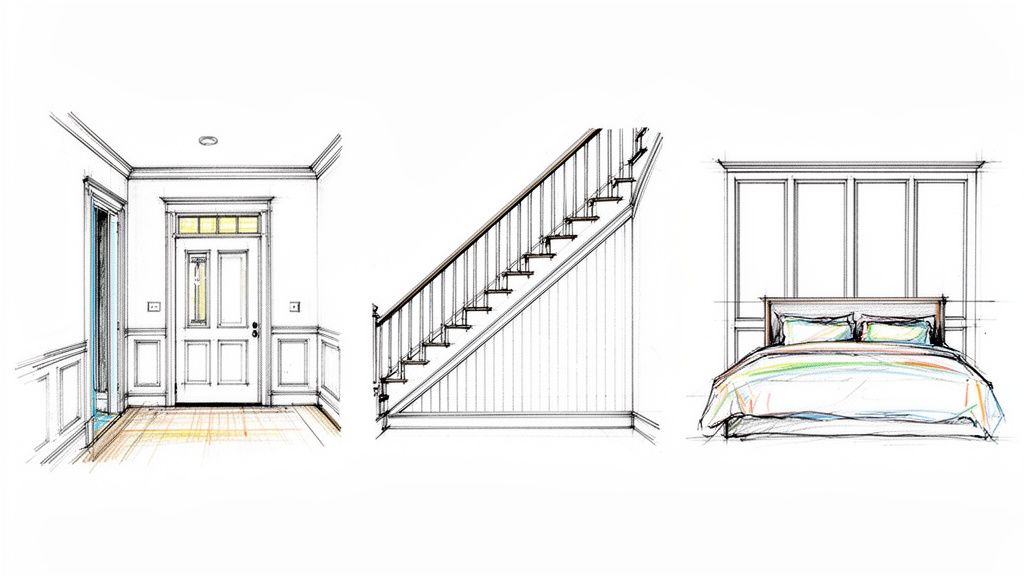
Define an Entryway: In an open-concept layout, a clean board and batten design can create the feeling of a dedicated foyer, making the entrance feel polished and intentional.
Protect a Staircase: Stairwells are high-traffic zones, taking a beating from hands, bags, and feet. Wainscotting is a tough, scuff-proof barrier that stands up to the daily grind beautifully.
Elevate a Hallway: Long, plain hallways can feel a bit like a bowling alley. Adding paneling breaks up the monotony and injects some much-needed architectural interest into a purely functional space.
Create a Unique Headboard: Want a "wow" moment in the bedroom? Install wainscotting on the wall behind your bed. It creates an incredible built-in headboard that anchors the entire room.
Tailored Ideas for North Texas Living
The real beauty of wainscotting is how we can adapt it to the way people actually live here in Granbury, Weatherford, and the surrounding areas.
Take a modern barndominium, for example. A simple, durable board and batten style in the main living area adds that perfect touch of rustic charm while also protecting the walls in a space that sees a ton of activity. Or for a couple building their forever home, classic raised paneling in the primary suite adds a layer of quiet luxury and timeless sophistication.
The best applications solve a problem and look beautiful doing it. Whether it's adding durability for a growing family or a touch of elegance for a quiet retreat, wainscotting is a practical and beautiful solution.
Deciding Between DIY and Professional Installation
You’ve picked a style and you're excited to see that beautiful wainscotting in your home. Now for the big question: do you tackle this yourself, or do you call in a pro? The right answer really hinges on the project's complexity, your own skills, and the level of finish you’re aiming for.
A straightforward project, like installing beadboard panels in a small, square powder room, can be a great weekend warrior task. If you’re already familiar with a miter saw, a level, and a nail gun, you might find it rewarding.
But let's be honest—installing wainscotting perfectly is often much trickier than it looks on TV.
When DIY Makes Sense
A do-it-yourself approach can be a great fit under the right circumstances. It’s often best for:
Simple Styles: Beadboard or a basic board and batten design are generally the most forgiving styles for someone learning the ropes.
Small, Simple Rooms: A room with straight walls and very few obstacles (think windows, doors, or outlets) is the ideal training ground.
Homeowners with Experience: If you’ve tackled finish carpentry before, you’ll have a much better feel for the precision this kind of work demands.
When to Call a Professional
For most situations, particularly in a custom home build or a major remodel, hiring a professional is the smarter investment. A skilled trim carpenter isn’t just an installer; they're a craftsperson who ensures every mitered corner is flawless and every seam is invisible.
Hiring a pro is almost always the right call for:
Complex Styles: Anything intricate like raised panel or detailed picture frame wainscoting requires serious skill to get the joinery perfect.
Older Homes: Many of the beautiful older homes in Granbury or Weatherford have walls that are anything but straight. A pro knows exactly how to scribe the wood to the wall for a seamless, custom fit that hides imperfections.
Large-Scale Projects: Installing wainscotting across multiple rooms or down a long hallway requires an expert eye to maintain consistency and flow.
Ultimately, professional installation isn't just a cost—it's an investment in craftsmanship. It guarantees the wainscotting adds true architectural value to your home, saving you from the frustration of a project that doesn’t quite meet expectations.
Working with an experienced builder ensures the project is managed correctly from start to finish. If you want to understand more about that relationship, you can learn all about what a general contractor does for your North Texas home in our detailed guide.
Your Wainscotting Questions, Answered
When homeowners in North Texas think about adding wainscotting, a few key questions always seem to pop up. Whether it's about upkeep or design rules, let's clear up some of the common uncertainties so you can plan your project with confidence.
How Do I Keep My Wainscotting Looking New?
Honestly, the best way to care for wainscotting is to treat it just like the other high-quality trim in your home. Most of the time, a quick wipe-down with a damp cloth is all you need to handle everyday dust and minor scuffs.
If you run into a tougher spot, a little bit of mild soap and water will do the trick. The real secret is in the paint—a durable semi-gloss or satin finish creates a tough, easy-to-clean surface that can handle the reality of a busy family home in Granbury.
Is Wainscotting a Smart Investment?
Without a doubt. When it’s designed well and installed by a professional, wainscotting isn't just decoration; it's a permanent architectural upgrade that seriously boosts your home's perceived value.
It immediately signals quality craftsmanship to anyone who walks through the door, making a house feel more substantial and custom-built. And unlike fleeting trends, its classic appeal is timeless, making it a rock-solid, long-term investment in your home's character and worth.
Can I Put Wainscotting in My Bathroom?
You absolutely can, but your choice of material is everything here. Standard MDF or even solid wood is a recipe for disaster in a humid North Texas bathroom—it will warp, swell, and eventually fail.
For any room with high moisture—think bathrooms, laundry rooms, or mudrooms—you have to use a material that can handle it. We always recommend a completely waterproof option like PVC or a specially treated, moisture-resistant board. This is the only way to guarantee your wainscotting stays beautiful for years to come, with zero risk of water damage.
Does Wainscotting Always Have to Be White?
Not at all! While crisp, classic white is always a beautiful choice, painting your wainscotting is a fantastic way to inject personality into a room.
Imagine a dining room with a dark, moody wainscotting to add a touch of drama, or a bedroom with a soft greige for a more serene, calming feel. A really sophisticated look is to paint the wainscotting the same color as the walls but in a different sheen (like a satin wainscotting with matte walls) for a subtle, textural effect.
Bringing a timeless feature like wainscotting to life requires real craftsmanship and a keen eye for detail. If you’re ready to explore how this classic element could elevate your custom home or remodel in Weatherford, Glen Rose, or the surrounding areas, our team is here to help. Feel free to schedule a free, no-pressure consultation to talk through your ideas.
Comments