
How to Remodel a Bathroom: Your North Texas Homeowner's Guide
Thinking about remodeling your bathroom? It’s an exciting project that goes far beyond just swapping old tile for new. A truly successful bathroom remodel creates a space that works seamlessly for you and your family every single day. The secret isn't in the demolition; it's in the careful planning that happens long before the first tile is ever removed.
Planning Your North Texas Bathroom Transformation
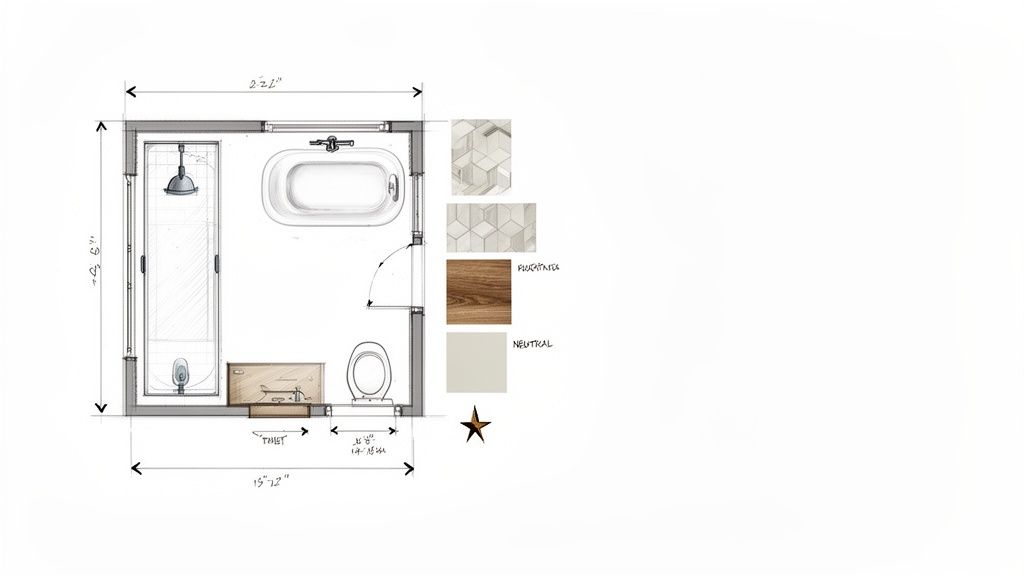
Before a single hammer swings, the most important work happens with a pen and paper. A great remodel starts with a crystal-clear vision and a solid understanding of your "why."
Are you trying to create a spa-like retreat in your Granbury home? Or maybe you need a more functional, bulletproof space for a growing family in Weatherford? The goal is to design a bathroom that solves your current frustrations and that you’ll love for years to come.
Think about what drives you crazy about your current bathroom. Is it the cramped shower? The total lack of storage? That one vanity that's way too low? Pinpointing these pain points is the best way to kickstart a design that actually improves your daily life.
Define Your Primary Goals
First, identify the main driver behind this remodel. Your answer will steer every decision you make, from the layout down to the cabinet pulls.
Improving Functionality: This is a big one for most families. It could mean adding a double vanity to stop the morning gridlock, installing better lighting over the mirror, or finally getting some smart, accessible storage.
Modernizing the Style: Maybe you're just tired of looking at that 90s tile. This goal focuses on replacing dated finishes—like old vinyl floors or that cultured marble countertop—with a look that feels right for North Texas, whether that's modern farmhouse or a more classic, traditional style.
Increasing Accessibility: This is crucial for retirees in Glen Rose or anyone planning their "forever home." It means thinking ahead with features like a walk-in, curbless shower, grab bars, and wider doorways. You can learn more by checking out our guide to wheelchair-accessible bathroom design.
Adding Value: A well-done bathroom remodel is a solid investment. The North American bathroom remodeling market was valued at USD 72.23 billion in 2024, which shows just how many homeowners see the financial benefit in updating these critical spaces.
Create Your Wish List
Once you know your primary goal, it's time for the fun part: dreaming up all the details. I always advise clients to divide their ideas into two simple categories; it makes budgeting so much easier down the road.
Pro Tip: As you think about your layout, pay close attention to the "wet wall"—that's the wall with all the main plumbing lines for the sink, toilet, and shower. Keeping your new fixtures along this existing wall can seriously cut down on plumbing costs, which is a huge chunk of any remodel budget.
First, make a "must-have" list. These are your non-negotiables. For a family with young kids in Weatherford, this might be a durable bathtub and easy-to-clean porcelain tile. For someone building a quiet retreat near Stephenville, it could be a massive window to let in that beautiful natural light.
Next, create your "nice-to-have" list. This is where you put the features you’d absolutely love if the budget allows—things like heated floors for those chilly North Texas winter mornings, a stunning freestanding tub, or a high-tech smart shower system. Having both lists ready makes it much easier to make smart decisions when it’s time to finalize the plan.
Setting a Realistic Remodel Budget
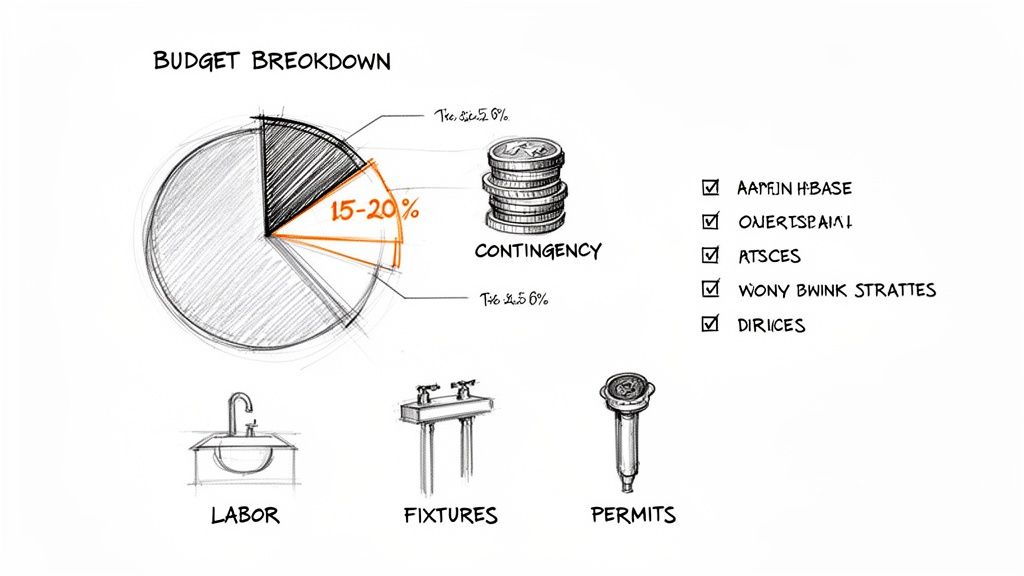
Let's talk numbers. This is often the most intimidating part of any remodel, but it doesn't have to be. Having a solid financial plan from the start is the key to turning anxiety into confidence, whether you're in Granbury, Stephenville, or anywhere in between.
Think of your remodel as more than just an expense—it's a direct investment in your home's function and future value. A well-executed project can seriously boost your property's worth. In fact, a mid-range bathroom remodel recoups, on average, around 74% of its cost when you sell. Considering the national median for a major renovation is now $22,000, getting the budget right is mission-critical.
What Does a Bathroom Remodel Cost in North Texas?
So, what should you really expect to spend? The final price tag is a direct reflection of your bathroom's size, the quality of materials you choose, and how much labor is involved.
Here’s a general breakdown of what we see in our area:
The Cosmetic Refresh ($5,000 - $12,000): This is all about surface-level upgrades. We're talking fresh paint, new light fixtures, an updated vanity and faucets, and maybe a new toilet. The key here is that the layout and major plumbing stay exactly where they are.
The Mid-Range Remodel ($15,000 - $35,000): This is the sweet spot for most homeowners. It includes all the cosmetic stuff plus bigger-ticket items like new flooring, a new tub or shower with a full tile surround, and often a new vanity with a quality countertop.
The Full Gut-and-Rebuild ($40,000+): This is where we take the space down to the studs and start fresh. It's for projects that involve moving walls, relocating plumbing, and installing high-end features like a freestanding tub, a custom walk-in shower, and luxury materials.
These numbers give you a ballpark, but let’s look at what really moves the needle on cost.
Key Factors That Drive Your Budget
Some choices have a much bigger impact on the bottom line than others. Understanding these cost drivers helps you decide where to splurge and where you might save.
A common mistake we see is underestimating the cost of labor. In a typical mid-range remodel, labor can account for 40-60% of the total budget. This covers the expertise of plumbers, electricians, tile setters, and carpenters needed to do the job right and up to code.
Here are the biggest budget influencers:
Changing the Layout: Moving a toilet even a few feet can be a major undertaking. Any time you have to re-route plumbing supply and drain lines, the labor costs and complexity jump significantly.
Electrical Upgrades: If you live in an older Weatherford home, you might need to add dedicated circuits for things like heated floors or a new jetted tub. Bringing everything up to modern GFCI safety codes is also a common and necessary expense.
High-End Materials: The cost difference between standard porcelain tile and natural marble is substantial. The same goes for choosing custom cabinetry and designer fixtures over quality stock items.
Proper Waterproofing: We're big believers in doing it right the first time. Using a top-tier waterproofing system in the shower, like Schluter-Kerdi, adds cost upfront but prevents catastrophic water damage and future repairs.
To help visualize where the money goes, here's a typical cost breakdown for a mid-range project in our area.
Bathroom Remodel Cost Breakdown North Texas Estimates
Expense Category | Percentage of Budget | Example Components |
|---|---|---|
Labor | 40-60% | Plumber, electrician, tile setter, painter, carpenter |
Fixtures | 15-20% | Toilet, sink, faucet, showerhead, tub |
Cabinetry & Countertops | 10-15% | Vanity, storage cabinets, stone or quartz tops |
Tile & Flooring | 10-15% | Floor tile, wall tile, shower tile, grout |
Lighting & Ventilation | 5% | Sconces, overhead lighting, exhaust fan |
Permits & Contingency | 10-20% | City permits, unforeseen repairs, changes |
This table provides a great starting point for understanding how your budget will likely be allocated.
Finally, one of the most critical line items in any budget is the one you hope you never use: your contingency fund. For older homes in North Texas, we always recommend setting aside an extra 15-20% of your total budget. This is your safety net for the unknowns—like discovering hidden water damage behind the old shower wall. For a deeper dive into budgeting, check out our guide on maximizing your home remodel return on investment in North Texas.
Untangling Local Permits and Building Codes
Dealing with permits and building codes is nobody’s favorite part of a remodel. But in North Texas towns like Cleburne, Godley, and Tolar, it's a step you absolutely can’t skip. This isn't just bureaucratic red tape; it’s about making sure your new bathroom is safe for your family and that your investment is protected.
A question I get all the time is, "Do I really need a permit for this?" If you’re doing anything beyond painting or swapping out a faucet, the answer is almost always yes.
You'll definitely need to pull a permit for projects that involve:
Moving walls: Even if it’s not a load-bearing wall, changing the footprint of your bathroom is a structural alteration.
Rerouting plumbing: Shifting the toilet, moving the sink, or converting a tub into a walk-in shower all require a plumbing permit.
Altering electrical work: Adding outlets, moving a light switch, or running a new circuit for a heated floor or jetted tub falls squarely into this category.
Trying to bypass the permit process can lead to long-term pain. You could get hit with fines from the city, and worse, unpermitted work can become a massive obstacle when you try to sell your home.
North Texas Building Codes You Should Know
Beyond the permit itself, the actual work has to meet a whole host of safety standards. These rules are designed to head off common problems we see in our local climate, from moisture damage to serious electrical risks.
GFCI Outlets: This is a big one. Any electrical outlet in a bathroom must have Ground Fault Circuit Interrupter (GFCI) protection. It's a critical safety device that shuts off power instantly if it detects a fault, which is crucial in wet areas.
Proper Ventilation: With our Texas humidity, a bathroom without good ventilation is a recipe for mold and mildew. The code demands either a window that opens or a mechanical exhaust fan. We always push for a quality fan that’s properly ducted all the way to the outside of the house—never just venting into the attic space.
Accessibility Planning: While it might not be a strict code requirement for your specific remodel, thinking about accessibility is just plain smart. This is especially true if you're in a community like Glen Rose and planning for this to be your forever home. Simple things like adding wood blocking inside the walls for future grab bars can make a world of difference later on.
We once had to tear open a beautiful, newly tiled wall on a project because the previous homeowner’s DIY electrical work was a major fire hazard hidden behind it. Fixing it added unexpected time and money, a perfect lesson in why doing it right the first time is so important.
Navigating all of this is what a professional is for. We’re familiar with the specific requirements in each city, from Granbury to Weatherford. We handle the paperwork, coordinate the inspections with the city, and make sure every detail is safe, up to code, and built to last.
Choosing Materials and Fixtures That Last
This is where the vision for your bathroom really starts to take shape. The materials you select define the room's character, how it feels on a chilly morning, and, most importantly, how it holds up to daily life in our unique North Texas climate. It’s all about striking that perfect balance between beauty and brawn.
Making smart choices here ensures your bathroom will look just as good in ten years as it does the day we finish. It means investing in durability where it counts and understanding which materials can handle the humidity and lifestyle here in places like Granbury and Weatherford.
Smart Flooring for North Texas Bathrooms
Your bathroom floor has a tough job. It needs to fend off water, humidity, and constant foot traffic. While the options seem endless, a few clear winners consistently emerge for our region.
Porcelain Tile: This is the undisputed champion for bathroom floors. It's incredibly dense, making it virtually waterproof and highly resistant to scratches and stains. With a huge variety of styles—from realistic wood-look planks to elegant large-format stone designs—it can easily match any look.
Luxury Vinyl Plank (LVP): Modern LVP has come a long way. It's 100% waterproof, feels warmer underfoot than tile, and is often a more budget-friendly option. It's a fantastic choice for family bathrooms where comfort and hardcore durability are the main goals.
Natural Stone: Materials like travertine or marble offer an unmatched, timeless luxury. The trade-off? They're porous and require regular sealing to prevent stains and water damage. It can be a stunning choice for a primary suite, but it's probably too high-maintenance for a busy kids' bathroom.
One of the biggest mistakes we see is choosing a material based on looks alone. We once had a client who fell in love with a beautiful, porous natural stone for their shower floor. Without the proper sealing and upkeep, our local hard water quickly caused discoloration—a common headache in North Texas. A high-quality porcelain look-alike would have delivered the same style without the long-term hassle.
The right floor really comes down to your family's lifestyle and how much maintenance you’re willing to take on.
Comparing Popular Bathroom Flooring Materials
Material | Pros | Cons | Best For |
|---|---|---|---|
Porcelain Tile | Extremely durable, waterproof, huge style variety, low maintenance. | Can be cold underfoot, grout lines require cleaning, harder surface. | Any bathroom, especially high-traffic areas and showers. |
Luxury Vinyl Plank | 100% waterproof, softer/warmer feel, budget-friendly, easy to install. | Can be dented by heavy objects, lower perceived value than tile. | Kids' bathrooms, guest baths, and budget-conscious remodels. |
Natural Stone | Unmatched high-end look, unique patterns, increases home value. | Porous (requires sealing), expensive, can be slippery when wet. | Primary bathrooms and powder rooms where luxury is the priority. |
As you can see, the "best" choice really depends on the specific room and your priorities.
Vanities and Countertops That Perform
The vanity is often the bathroom's main focal point, so it needs to deliver on both style and storage. For countertops, you need a surface that can shrug off water, toothpaste, cosmetics, and the occasional dropped item.
Two materials consistently outperform the rest for bathroom counters:
Quartz: This engineered stone is a workhorse. Made from crushed quartz and resin, it's non-porous, which means it never needs to be sealed. It's incredibly durable, a breeze to clean, and comes in a massive range of colors that flawlessly mimic natural stone.
Granite: As a natural stone, granite offers truly one-of-a-kind patterns and classic durability. While it's very tough, it is porous and will need to be sealed periodically to keep it protected from stains. It remains a popular and beautiful choice in many Glen Rose and Stephenville homes.
Dealing with a smaller bathroom? A wall-mounted or "floating" vanity can make the entire room feel larger by keeping the floor clear. If you're looking for more ways to open up a tight space, check out our guide on smart bathroom remodel ideas for small spaces in North Texas.
Where to Invest and Where to Save
A successful remodel isn't about buying the most expensive everything. It’s about being strategic.
Invest Here for Longevity:
Waterproofing System: This is non-negotiable. A top-tier, professionally installed system behind your shower walls, like a Schluter-Kerdi system, is the single most important investment for preventing leaks and water damage.
Shower Fixtures: The real magic happens inside the wall. Investing in a quality shower valve from a reputable brand ensures reliable, worry-free performance for decades.
Ventilation Fan: A powerful yet quiet exhaust fan, properly ducted to the outside, is your best defense against mold and mildew in our humid climate. Don't skimp on this.
Save Here Without Sacrificing Quality:
Lighting: You don’t need a designer-brand price tag for great lighting. There are tons of stylish and affordable sconces and fixtures that provide excellent illumination.
Toilets: A basic, well-made toilet from a reputable brand will perform just as reliably as a high-end designer model that costs three times as much.
Decorative Hardware: Cabinet pulls, towel bars, and robe hooks are the jewelry of the bathroom. They're easy and relatively inexpensive to swap out later if your style evolves.
If you focus on durability and function first, you'll always be heading in the right direction.
From Demolition to Done: The Remodeling Process
Once your plans are set and materials start arriving, the real fun begins. A professional remodel isn’t chaos; it’s a carefully choreographed process. Our job is to conduct this orchestra of plumbers, electricians, and tile setters, making sure everyone comes in at the right time to keep your project moving smoothly and minimize disruption to your daily life.
The First Steps: Demolition and Rough-In
Everything kicks off with demolition. This is a precise, strategic removal of the old—fixtures, tile, drywall, and flooring. Our crew is meticulous about protecting the rest of your home from dust and debris, setting up containment barriers and cleaning the site daily. This is also when we often find surprises, especially in older North Texas homes, and that’s exactly what your contingency fund is for.
With the space stripped down to the studs, we move into the "rough-in" phase. This is all the critical work that happens behind the walls.
Plumbing: Our licensed plumbers run new water supply and drain lines for your shower, tub, toilet, and sinks.
Electrical: Electricians run new wiring for outlets, switches, lighting, and ventilation fans, bringing everything up to the latest safety codes, including essential GFCI protection.
HVAC: If the new layout requires it, we'll adjust heating and cooling ducts to ensure your new space is comfortable.
Before any walls get closed up, this rough-in work gets a crucial inspection from the city—whether you're in Glen Rose or Cleburne—to certify that everything is perfectly up to code.
Building It Back Better: Insulation to Waterproofing
After the city gives us the green light, we start putting the room back together. First comes insulation, a game-changer for both temperature control and sound dampening. Then, we hang new moisture-resistant drywall, which gets taped and mudded to create flawlessly smooth walls.
The single most important step in this phase is the waterproofing. In a humid climate like ours, a professionally installed, high-quality waterproofing system in the shower and tub area is non-negotiable. It's the invisible shield that protects your home's structure from moisture, preventing leaks, rot, and mold for decades to come.
This painstaking prep work is what makes all the beautiful finishes that come next possible—and durable.
The Finishing Touches: Tile, Paint, and Fixtures
Now for the part everyone loves! This is when your material selections finally get installed. We generally work from the top down to protect newly installed elements from damage.
Painting usually happens first. Then comes the tile—we start with the floors and then move to the shower or tub surrounds. Once the tile and grout have had time to fully cure, the vanity and countertops are set in place.
Finally, the plumber and electrician return for the "trim-out." They’ll install your new faucets, showerheads, toilet, light fixtures, and the exhaust fan. It’s when the room really starts to feel like a bathroom again.
The process for installing the key materials that define your bathroom's style generally follows this flow:
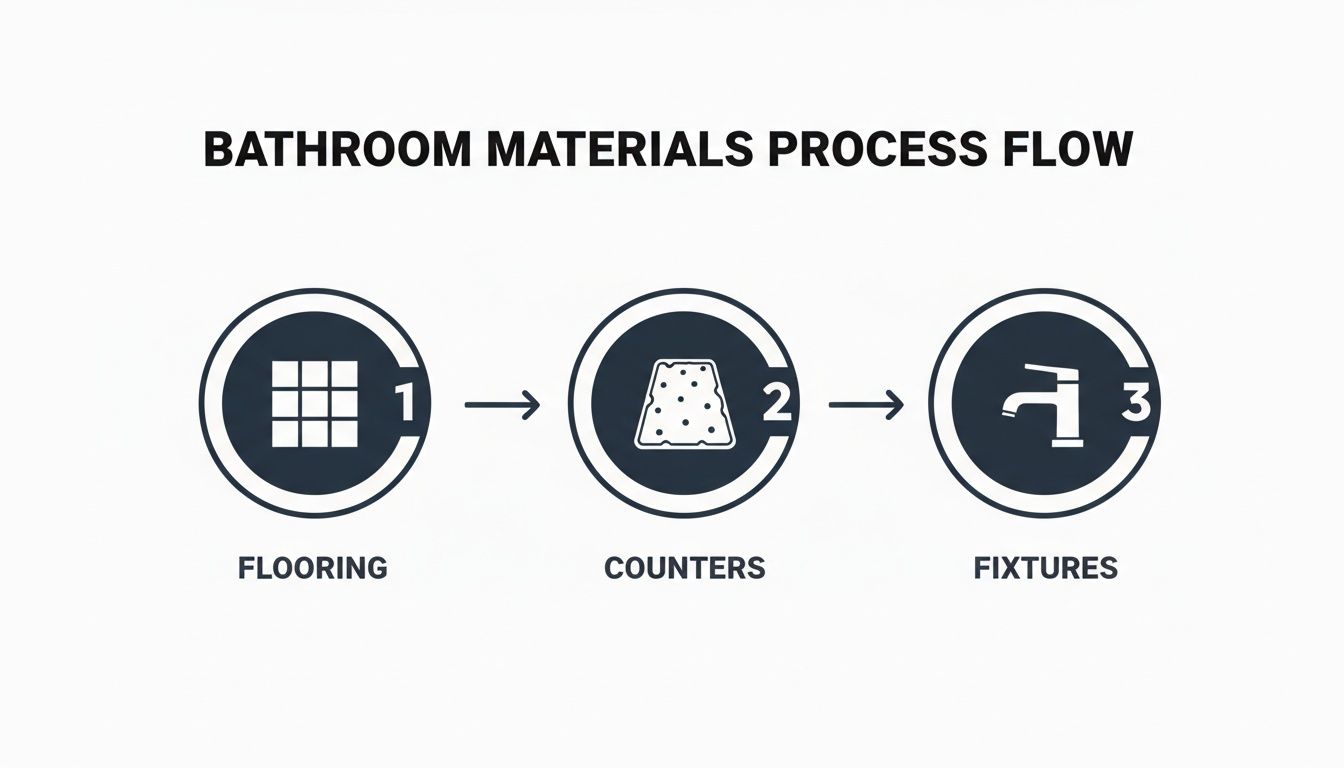
This logical, ground-up progression ensures every new piece is installed on a solid, finished surface.
It's no surprise that bathroom and kitchen remodels are the most popular home improvement projects. In fact, 84% of homeowners hire pros for their bathroom renovations, and 45% of those choose a general contractor to manage it all. It just goes to show that most people prefer to leave these complex projects to an experienced team. You can find more remodeling industry statistics and trends that back this up.
The last few steps involve installing the mirrors, towel bars, and other accessories before we bring in a professional cleaning crew. From there, we do a final walkthrough with you, making sure every last detail is perfect.
Answering Your Bathroom Remodeling Questions
After years of helping homeowners across the Granbury area bring their bathroom visions to life, we've pretty much heard it all. Let's get right to it and answer some of the most common ones we hear.
How Long Does a Bathroom Remodel Actually Take?
This is always the first question, and the honest answer is: it depends entirely on the scope of work.
A simple cosmetic refresh—fresh paint, new light fixtures, and swapping out the vanity—can often be wrapped up in just 1 to 2 weeks.
A more substantial, mid-range project that involves tearing out old tile and installing a brand-new shower should be planned for about 3 to 5 weeks from demolition to final walkthrough.
For a full gut renovation in your Weatherford home—where we're moving walls and rerouting plumbing—the timeline naturally extends. These larger projects typically take 6 to 10 weeks, sometimes more, especially when factoring in custom orders or city inspection schedules.
Can We Stay in Our House During the Remodel?
Absolutely. In almost every situation, you can live comfortably in your home while we handle the renovation. We get it—we're visitors in your space, and our crew treats your home with respect.
We take great care to contain the work zone, using plastic barriers and dust control systems to keep the mess from spreading. At the end of every day, we clean up the site. If the project involves your only full bathroom, we'll work with you on temporary solutions to minimize disruption to your family's routine.
Our goal is to make the entire process feel organized and under control, not chaotic. For us, clear communication and a clean worksite are non-negotiables, whether we're remodeling a small powder room in Tolar or a sprawling primary suite in Glen Rose.
It's this level of care that makes the whole experience as smooth as possible.
What Are Some Common Mistakes to Avoid?
Having guided hundreds of projects from a rough idea to a beautiful finished space, we’ve seen where things can go wrong. Knowing the common pitfalls ahead of time can save you a world of frustration.
Here are the mistakes we see most often:
Forgetting a Contingency Fund: The biggest oversight is not setting aside a 15-20% contingency budget. This is your safety net for the unknowns that hide behind walls, like discovering old, corroded pipes that need immediate replacement.
Skimping on Ventilation: Here in North Texas, humidity is a real issue. An undersized or poorly installed exhaust fan is an open invitation for mold and mildew, which can cause serious long-term damage.
Choosing Trends Over Function: That stunning vessel sink you saw online might be a showstopper, but is it practical for a high-traffic family bathroom? A great design strikes the perfect balance between style and real-world usability.
Ignoring Storage Needs: A lack of storage is a top reason people remodel. Ending up with a gorgeous new bathroom that still doesn't have enough smart, accessible storage is a huge missed opportunity.
Partnering with an experienced builder helps you navigate around these common mistakes, ensuring your new bathroom isn't just beautiful on day one, but perfectly functional for years to come.
Is a DIY Bathroom Remodel a Good Idea in Texas?
The thought of saving money on labor is tempting. But a full bathroom remodel is one of the most complex home improvement projects you can take on. Some parts, like painting or installing a new vanity cabinet, are certainly DIY-friendly for a handy homeowner.
However, the guts of a bathroom—the plumbing, the electrical, and most critically, the waterproofing—demand professional expertise. A tiny, slow leak from a poorly waterproofed shower can go undetected for years, quietly causing thousands of dollars in structural rot. And when you mix water and electricity, any mistake can become a serious safety hazard.
For any project here in Granbury or the surrounding areas, hiring licensed professionals ensures everything is done right, meets local building codes, and ultimately protects your home's value and your family's safety.
Ready to stop wondering and start planning? The Gemini Homes team is here to answer your questions and guide you through a clear, straightforward process. Let’s talk about your project today: https://www.geminihomesgranbury.com.
Comments