
A Practical Guide to Interior Design for Country Homes in North Texas
Designing a country home in North Texas is about capturing a feeling—a blend of comfort, durability, and a genuine, lived-in character. It's about creating a space that’s not just beautiful, but deeply connected to the land it sits on. The goal is to use natural materials like wood and stone to create a seamless transition from the outdoors in, crafting an interior that feels like it grew right out of the Texas landscape.
Defining Your North Texas Country Home Style
Before you think about paint swatches or countertop materials, you need a vision. The best country homes feel intentional. A sprawling ranch in Weatherford has a different spirit than a cozy cottage tucked away in Glen Rose, and your interior design should honor that unique character.
While "country" is a broad term, a few specific styles just feel right for our way of life in North Texas. Understanding what makes each one tick is the first step toward building a home that feels cohesive and tells your family's story.
This diagram shows how the most popular styles in our area all stem from a common root but branch out in their own unique directions.
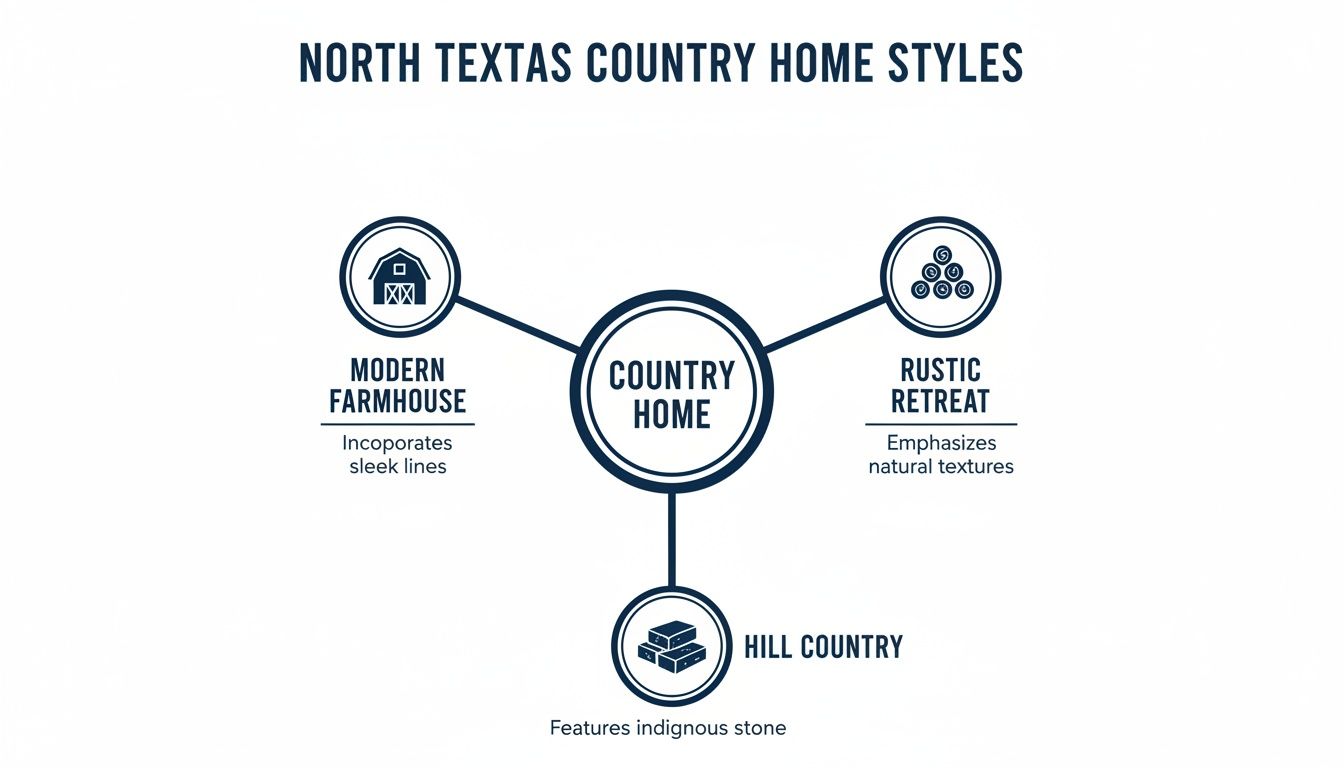
As you can see, whether it's a Modern Farmhouse or a Rustic Retreat, each style interprets that central "Country Home" idea with its own distinct materials and philosophy.
Finding Your Perfect Match
Homeowners are more invested than ever in creating a space that feels just right. In 2023–2024, the global interior design market was valued between USD 134–138 billion, with new home construction making up a staggering 75.9% of that. People are building and remodeling with a clear vision in mind, and that all starts with choosing a style.
To help you find the right fit, here is a quick comparison of the styles we see thrive across North Texas.
Comparing Popular Country Design Styles
Style | Key Elements | Color Palette | Best For |
|---|---|---|---|
Modern Farmhouse | Shiplap, board-and-batten, clean lines, apron-front sinks, matte black or brushed metal fixtures. | High contrast: classic white, black, gray, with pops of natural wood tones. | Families looking for a fresh, bright, and updated take on classic country living. |
Rustic Retreat | Exposed wood beams, natural stone fireplaces, reclaimed wood, leather, and heavily textured fabrics. | Warm and earthy: deep browns, muted greens, tans, and charcoal. | Those who want a cozy, cabin-like sanctuary that feels rugged and deeply connected to nature. |
Texas Hill Country | Native limestone, mesquite or pecan wood, wrought iron accents, Saltillo tile, and wide porches. | Warm and inviting: terracotta, cream, soft yellows, and deep wood stains. | Homeowners building on a rural property who value regional authenticity and durable, natural materials. |
This table is a great starting point, but let’s look a little closer at what makes each of these styles so special.
Modern Farmhouse: This is the perfect marriage of classic comfort and modern simplicity. Think shiplap walls, bold black-and-white palettes, and sleek metal lighting. It’s a favorite for families building in communities around Granbury who want that timeless farmhouse feel without the fuss. For a deeper dive, check out our guide on essential farmhouse home design ideas for your North Texas home.
Rustic Retreat: If you’re drawn to the raw, unpolished beauty of the outdoors, this is your style. It’s all about celebrating natural materials as they are—heavy timber beams, a commanding stone fireplace, and warm, earthy colors. It’s less about perfection and more about creating a cozy, primal sense of shelter.
Texas Hill Country: This style is uniquely ours. It takes its cues from the historic German stone homes you see throughout Central Texas, emphasizing local materials like Austin limestone, mesquite wood, and forged iron. The aesthetic is warm, welcoming, and built to stand the test of time, making it ideal for a custom home on a few acres.
The key is to choose a style that supports your lifestyle. Consider how your family uses your home daily—do you need durable surfaces for kids and pets, or are you creating a peaceful retreat for retirement? Your home’s architecture and the land it sits on should be your guides.
Choosing Materials That Embrace Country Living
The soul of a country home lies in its textures—the materials you feel underfoot and touch every day. Selecting the right materials means picking things that not only look good but can handle the realities of North Texas life, from dusty boots to big family get-togethers. These choices ground your design and make it feel authentic.

A sleek, polished marble that looks incredible in a Dallas high-rise would feel out of place on a Granbury ranch. The goal is to lean into materials with an honest, natural quality—wood, stone, and metals that look even better with a little age and wear.
Grounding Your Home with the Right Floors
Flooring is a major investment that sets the tone for every room. In the country, durability is as important as looks. You need floors that can stand up to dirt, dogs, and daily life.
Wide-Plank Hardwood: The classic choice for a reason. Wider planks (5 inches or more) have a more rustic, substantial feel. White oak is popular for its durability, but using locally sourced pecan or mesquite adds a uniquely Texan vibe.
Texas Limestone: Nothing connects a home to its surroundings like native stone. A beautiful limestone floor in an entryway or kitchen is tough as nails and helps keep the house cool during our brutal summers. Sourcing it from quarries near Glen Rose or Weatherford guarantees an authentic look.
Luxury Vinyl Plank (LVP): Today’s LVP offers shockingly realistic wood and stone looks with unbeatable water resistance and scratch protection. It's a smart, practical choice for high-traffic spots like mudrooms, delivering great style on a friendlier budget.
Your flooring choice directly impacts your daily cleaning routine and long-term maintenance costs. Hardwood might run $8-$25 per square foot installed, while LVP often lands in the $5-$12 range, which can mean significant savings across a large home.
Adding Character with Wall Treatments
Plain drywall is fine, but walls are an opportunity to add texture and architectural interest. Moving beyond a simple coat of paint can transform a room from a plain box into a space with depth and a sense of history.
Shiplap and Board and Batten: These classic treatments instantly say "farmhouse" or "cottage." The horizontal lines of shiplap can make a room feel wider, while the vertical lines of board and batten add traditional charm.
Exposed Stone: An interior stone wall, whether as a massive fireplace surround or an accent in the dining room, adds incredible texture. Using the same local limestone from your exterior is a powerful way to connect the indoors and outdoors.
Reclaimed Wood: Finding old barn wood from suppliers around the Stephenville area can create a feature wall that's a true one-of-a-kind. The wood’s natural patina tells a story that new materials can't.
Choosing Countertops for the Country Kitchen
The kitchen is the heart of the home, and its countertops need to be hardworking and beautiful. The perfect material balances aesthetics with the maintenance you're willing to do.
Butcher Block: The warmth of wood countertops is hard to beat, a perfect fit for a farmhouse aesthetic. However, it requires regular sealing to protect against stains and water damage.
Soapstone: This natural stone has a soft, matte finish that develops a beautiful patina over time. It's non-porous and heat-resistant but is softer than granite and can scratch.
Durable Quartz: For families who love the look of natural stone without the upkeep, quartz is a fantastic solution. It's engineered to be non-porous, scratch-resistant, and stain-resistant, available in countless designs that mimic everything from marble to concrete.
By thoughtfully layering these authentic, durable materials, you create a home that feels both timeless and deeply personal—a space ready for every season of life in North Texas.
Creating Functional Layouts for Rural Life
A country home needs to work as hard as you do. While an open floor plan is popular, the real magic in country design is creating smart, hardworking spaces built for a rural lifestyle. This is about shaping a layout that anticipates your family's needs, from dealing with muddy boots to hosting large holiday gatherings.
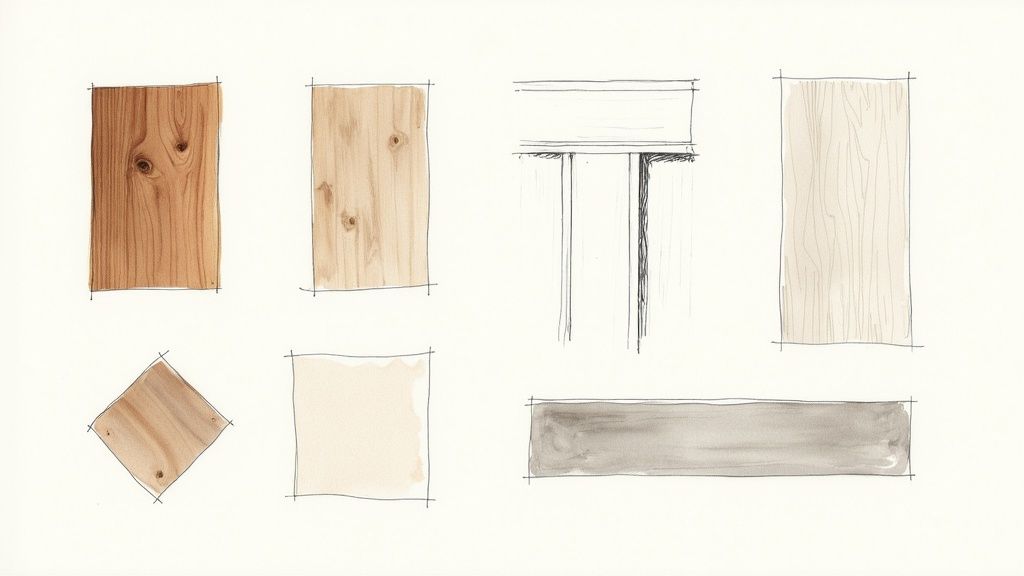
In a rural setting, functionality is everything. Your home’s layout should be a practical partner, designed to make daily life smoother and more organized.
Designing the Essential 'Drop Zone'
Here in North Texas, life happens outside. A well-designed mudroom, or "drop zone," is often the most valuable room in the house, acting as a critical buffer between your land and your clean living spaces.
A great mudroom needs a few key elements to be a real workhorse:
Durable Flooring: You need something that can handle mud, water, and constant foot traffic. Slate, rugged tile, or luxury vinyl plank are fantastic, easy-to-clean choices.
Built-in Storage: Custom cubbies for each family member, plenty of hooks for coats and hats, and a solid bench are essential for containing clutter before it enters the home.
A Utility Sink: A deep, hardworking sink by the door is a game-changer for washing hands, rinsing vegetables from the garden, or pre-soaking grass-stained clothes.
A well-planned mudroom isn’t an afterthought; it’s a strategic command center. In a new build, dedicating an extra 50-75 square feet to this space can completely change how your home functions.
The Kitchen as the True Heart of the Home
Country kitchens are magnets for family and friends. They need to be big enough for multiple cooks and generous enough to handle a summer garden's bounty.
A massive central island is practically a must-have. It can be a casual spot for breakfast, a prep station for canning season, or a buffet line for family dinners. We recently worked on a remodel in Weatherford where we designed a 10-foot island with a second sink and tons of storage, instantly making it the most functional feature in the home. A spacious, walk-in pantry is just as important for storing small appliances, bulk buys, and canning supplies, keeping countertops clear.
Connecting with the Outdoors
One of the best parts of living on a piece of land in Granbury or Glen Rose is the view. Your home’s layout should honor that connection to the landscape through thoughtful window placement and seamless indoor-outdoor transitions.
Frame the View: Position large windows or glass doors to capture the best vistas—a majestic old oak, a rolling pasture, or the sunset. Your windows should feel like living artwork.
Embrace the Porch: A deep, covered back porch is essential for enjoying the North Texas climate. It extends your living area and provides a shaded spot for morning coffee or watching a summer storm. Plan for ceiling fans and good lighting to make it a true three-season room.
By designing a layout that supports the rhythm of country living, you create a home that is an effortless and joyful place to live.
Bringing Your Vision to Life with Furnishings and Lighting
With the architectural bones and functional layout set, it’s time to layer in personality. Furnishings, lighting, and textiles transform a house into a warm, inviting country home, expressing your unique style.
These elements soften hard surfaces, provide a warm glow, and offer a comfortable place to land after a long day. The goal is to choose pieces built for the realities of rural life here in North Texas.
Selecting Furniture with Style and Stamina
In a country home, furniture needs to be both stylish and durable enough for family gatherings and muddy paws. Prioritize solid construction and resilient materials without sacrificing comfort. Your furniture should feel substantial and inviting—nothing delicate or fussy.
The Go-To Sofa: Start with a deep, comfortable sofa with a solid frame. Performance fabrics, quality leather, or a durable cotton blend are great choices. Slipcovered sofas are incredibly practical for families, making cleaning a non-issue.
The Solid Wood Dining Table: This is where holiday dinners, homework, and late-night talks will happen. A table made from solid oak, pecan, or reclaimed pine will develop a beautiful patina and handle decades of use.
Heirloom-Quality Case Goods: For dressers, sideboards, and bookshelves, look for solid wood construction and classic details that won’t feel dated. A single well-made piece can anchor an entire room.
Investing in foundational pieces that last is key. A well-built dining table or sofa may have a higher upfront cost, but it will outlive cheaper alternatives, saving you money in the long run.
Illuminating Your Space with a Layered Plan
Lighting is a powerful tool that can change a room's mood and function. A great lighting plan uses multiple sources to create a warm, layered effect, avoiding the flat, shadowy feel of a single overhead fixture.
We think in terms of three distinct layers:
Ambient Lighting: This is the room's general illumination. In a great room, this might be a large, rustic iron chandelier. For a recent project in Granbury, we installed a wagon wheel-style fixture that provided beautiful, even light while reinforcing the home's modern farmhouse aesthetic.
Task Lighting: This is focused light for specific activities, like pendant lights over a kitchen island, a floor lamp next to a reading chair, or under-cabinet lighting.
Accent Lighting: This final layer adds depth and drama, highlighting features like a piece of art or the texture of a stone fireplace. For inspiration, check out our post with creative ideas for decorating blank walls in your North Texas home.
Adding Warmth with Textiles
Textiles are the finishing touch, adding softness, color, and texture that make a house feel like a cozy home. Natural fibers feel authentic and align with a rustic, comfortable design.
Rugs: An area rug defines a space, adds warmth, and absorbs sound. Wool, jute, and sisal are classic, durable choices that bring wonderful natural texture.
Curtains: Simple linen or cotton drapery panels soften windows without blocking natural light, adding a touch of privacy and a finished feel.
Pillows and Throws: This is your chance to easily inject color and pattern. A chunky knit throw, plaid wool pillows, or simple linen cushions all send a clear message: get comfortable and stay awhile.
Thoughtfully layering these elements builds a home that is as functional and durable as it is beautiful—a true sanctuary for country living.
Budgeting Your Project and Finding North Texas Pros
A beautiful design vision is only as good as its execution. Turning your ideas into reality requires a practical budget and the right team. Thoughtful planning and careful vetting in places like Granbury or Weatherford will keep your project on track.
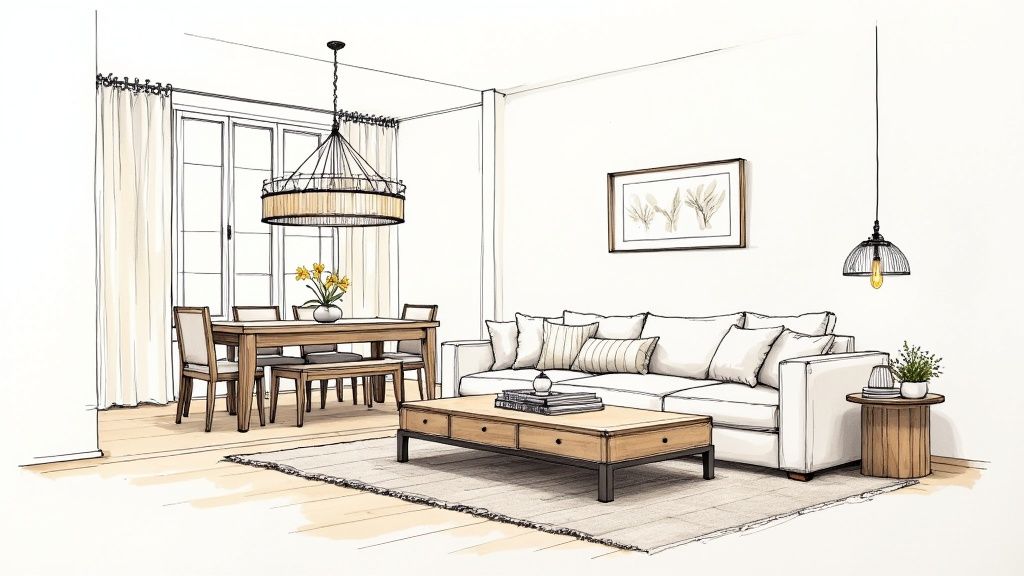
Creating a realistic budget isn’t just about a final number; it's about understanding where every dollar is going. This helps you make smart decisions on where to invest for the biggest impact.
The demand for lifestyle-focused renovations is huge right now. In fact, North America accounted for about 33.8% of the global interior design market in 2023, largely driven by the country and farmhouse styles popular here. You can dig into the data in this market report from Grand View Research.
Breaking Down the Costs of Your Country Home Project
A few key factors will shape your total investment. Understanding them early helps you allocate funds wisely.
Scope of Work: A simple cosmetic refresh costs far less than a full-gut remodel. Moving walls or altering plumbing and electrical systems will increase the price.
Material Quality: The price gap between builder-grade vinyl and custom-milled white oak flooring is substantial. Decide where to splurge (like durable countertops) and where to save (perhaps on decorative light fixtures).
Labor Rates: The skill of your craftspeople is a major line item. Local rates in towns like Stephenville and Glen Rose will vary, but remember: excellent craftsmanship is an investment that prevents costly fixes later.
Pro Tip: Always set aside a contingency fund of 10-15% of your total budget. Surprises like old termite damage or hidden plumbing issues are common in remodeling. This buffer ensures a small hiccup doesn't derail your project.
Sample Budget Allocation for a Country Kitchen Remodel
This table provides a general framework for allocating funds. Your percentages may shift based on your priorities and the existing condition of the space.
Cost Item | Percentage of Budget | Key Considerations |
|---|---|---|
Cabinetry & Hardware | 30-35% | This is usually the single biggest investment. Custom or semi-custom cabinets offer the best long-term functionality. |
Labor & Installation | 20-25% | Covers everything from demo to installation, including licensed plumbers and electricians. Don't skimp here. |
Appliances | 10-15% | Prices vary wildly. Focus on reliability and the features your family will actually use day-to-day. |
Countertops | 10% | Durability is essential. Quartz and natural stone are popular choices for a reason—they stand up to heavy use. |
Flooring | 5-7% | You need something that can handle high traffic, spills, and mud. Hardwood or luxury vinyl plank are great options. |
Fixtures & Lighting | 5% | A thoughtful lighting plan—with pendants, under-cabinet, and ambient lights—makes all the difference. |
This breakdown shows how foundational elements like cabinetry and skilled labor often consume more of the budget than the more visible, "fun" items.
Finding and Vetting Your North Texas Team
With a budget mapped out, it's time to assemble your crew. Finding a builder who understands the nuances of country homes in North Texas is non-negotiable. You need a partner who knows a mudroom is a necessity and that a porch has to be deep enough to offer real shade from our summer sun.
Start by asking for referrals, then dive into online portfolios. Look for examples of work that match your desired style, whether Rustic Retreat or Modern Farmhouse.
Once you have a shortlist, ask these critical questions:
Are you licensed and fully insured? This is the baseline for protecting yourself and your property.
Can you provide recent client references? Talking to past clients is the best way to learn about a builder's communication and process.
How do you handle project management? You want a team that provides regular, clear updates.
What does your warranty cover? A reputable builder stands behind their work. Get the details in writing.
Choosing the right partner is about finding a team you trust to bring your vision to life with skill and integrity. For a deeper dive, check out our guide on finding custom home builders in North Texas.
Common Questions We Hear About Country Home Interior Design
Starting an interior design project can feel like a huge undertaking. It's normal to have questions as you create a home that's a perfect fit for your life here in North Texas.
We've pulled together some of the most common questions we hear from homeowners in Granbury, Weatherford, and beyond to give you clear, practical answers.
How Can I Make My Home Feel "Country" Without It Looking Dated?
The secret to a modern country look is to focus on authenticity and texture, not themes and kitsch. Forget rooster decor and heavy, dark furniture. Instead, think about what country living is really about: simplicity, natural materials, and things built to last.
The best approach is to blend classic country elements with clean, modern lines:
Marry reclaimed wood with sleek metal. Pair a rustic, wide-plank wood floor with simple, matte black light fixtures. The contrast feels fresh.
Keep your color palette light and airy. Start with a base of classic whites, soft grays, and warm neutrals. This creates a modern canvas that lets natural materials like stone and wood shine.
Prioritize function over fuss. Modern country design is wonderfully uncluttered. Choose furniture that is comfortable and well-made with simple silhouettes. The aim is a space that feels genuinely lived-in, not like a staged showroom.
What’s the Best Way to Mix Different Country Styles?
Many people find themselves torn between styles, like the clean look of Modern Farmhouse and the rugged feel of a Rustic Retreat. The good news is you don’t have to choose just one. The trick to blending them is to find a common thread, usually your color palette or your materials.
For example, if you want a massive stone fireplace but also the bright feel of a modern farmhouse, choose a light-colored Texas limestone and paint the surrounding walls a soft white. The rustic texture is there, but it doesn’t overwhelm the room.
Another strategy is to keep core architectural elements (flooring, walls) consistent with one style, then introduce other styles through furniture and decor, which are easier to change later.
A great rule of thumb is the 80/20 principle. Let one style dominate about 80% of your design choices to give the space a cohesive foundation. Then, layer in the remaining 20% with accents from a second style you love. This creates personality without visual confusion.
How Do I Choose a Style That Fits My Family’s Needs?
Your home’s design should be a backdrop for your life, not an obstacle. Think about the practical realities of your household before falling in love with a look.
For families with young kids or pets: Durability is everything. A style like Modern Farmhouse is a fantastic choice with its easy-to-clean materials like performance fabrics, LVP flooring, and quartz countertops that resist stains.
For retirees or empty-nesters: You might prioritize comfort, accessibility, and hobby spaces. A Texas Hill Country style, with its focus on single-story layouts and easy indoor-outdoor living, can be a perfect fit. This is a great time to invest in heirloom-quality pieces.
For those who feel a deep connection to the land: A Rustic Retreat style can be incredibly meaningful, especially when it incorporates materials sourced from your property or local suppliers in places like Glen Rose.
Does My Home’s Exterior Have to Match the Interior Style?
While it’s not a strict rule, a home feels most complete when there’s harmony between the inside and out. Your home’s exterior sets the tone for the story inside. A striking, black-and-white barndominium feels right when it opens into a clean, contemporary space.
They don't need to be identical, but they should speak the same design language. If you have a classic Texas limestone exterior, carrying that same stone inside for a fireplace creates a powerful, seamless connection. Ultimately, your home should tell one consistent story from the curb to the back door.
Navigating these decisions is the first step toward creating a country home you’ll be proud of for years to come. If you're ready to explore what's possible for your new build or remodel in the Granbury area, our team is here to help you turn that vision into a beautiful, functional reality. We invite you to schedule a free, no-obligation consultation with our team to discuss your project.
Comments