
8 Types of Shiplap for Your North Texas Home in 2026
Shiplap has become a cornerstone of modern Texas style, moving far beyond the simple white walls popularized on TV. For homeowners in Granbury, Weatherford, and across North Texas, it offers a way to add texture, character, and authentic charm to any space, from a rustic barndominium to a sophisticated custom home. But not all shiplap is created equal. The material you choose dramatically impacts the look, durability, maintenance, and overall cost of your project.
Understanding the different types of shiplap is the first step toward making a smart investment that reflects your vision and stands up to our local climate. Choosing the wrong material can lead to warping in our humid summers or maintenance headaches you didn't sign up for. Whether you're planning a full remodel, a new accent wall, or building your dream home from the ground up, this guide breaks down the most popular shiplap options to help you choose with confidence. We’ll cover everything from classic pine and premium hardwoods to modern, low-maintenance composites, with real-world examples and practical advice tailored for North Texas living.
1. Traditional Wood Shiplap (Pine & Softwood)
When you picture classic farmhouse charm, you're likely thinking of traditional wood shiplap. Milled from softwoods like pine or spruce, this is the most authentic and historically accurate of all the types of shiplap. Each board features a special overlapping "rabbet" joint that creates the signature shadow line, or "nickel gap," between the planks. This detail adds texture and dimension, bringing warmth and character to any space.
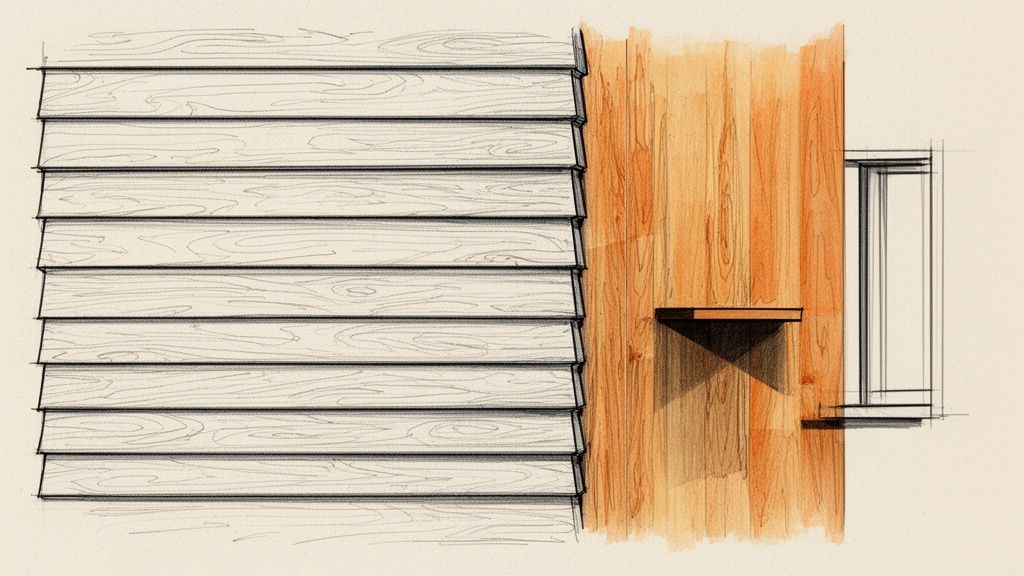
This style is a favorite for custom home builds in communities like Granbury and Weatherford. It’s perfect for creating a cozy, inviting atmosphere in everything from a family great room to a retiree's quiet study.
Best Uses and Implementation
The versatility of wood shiplap makes it suitable for numerous applications. We often see it used in modern farmhouse kitchen remodels in Granbury, master bedroom accent walls in Aledo, and throughout barndominiums across North Texas. It’s also an excellent choice for adding texture to ceilings or creating a unique half-wall effect similar to wainscoting. If you’re considering different wall paneling styles, exploring a guide to wainscoting can provide helpful design context.
North Texas Installation & Cost Considerations
Acclimation is Key: North Texas humidity fluctuates significantly. Allow the wood boards to acclimate inside your home for at least 72 hours before installation to prevent warping and shrinking.
Moisture Barriers: In kitchens, bathrooms, or laundry rooms, always install a moisture barrier behind the shiplap to protect the wood and your walls.
Finishing: For maximum durability, use a high-quality primer and paint. In high-moisture areas, a satin or semi-gloss finish will provide better protection than a flat or matte one.
Cost: Natural wood shiplap typically costs $2.50 to $7.00 per square foot for the material alone, with pine being one of the more affordable options. Professional installation costs will vary based on project complexity.
2. Tongue and Groove Wood Shiplap
While technically a different profile, tongue and groove is often used to achieve a shiplap look with a tighter, more robust connection. Instead of a simple overlap, these boards interlock, creating a superior fit that improves structural integrity and provides better protection against air and moisture infiltration. This enhanced connection results in a more seamless installation that is incredibly durable.
This is a premium choice for custom home builders in communities like Weatherford and Stephenville who want the timeless shiplap aesthetic combined with superior performance, especially in spaces that transition from indoors to out.
Best Uses and Implementation
The strength and tight seal of tongue and groove make it ideal for high-traffic or semi-exposed areas. We frequently recommend this option for hardworking mudrooms in Granbury family homes, as feature walls in kitchens, and for ceiling applications on covered porches and pergolas across North Texas. Its ability to resist shifting and gapping makes it a reliable investment for areas that experience temperature and humidity changes.
North Texas Installation & Cost Considerations
Precise Fastening: A pneumatic nailer is essential for driving fasteners consistently through the tongue of each board, which hides the nail heads for a clean, professional finish.
Substrate Prep: Ensure the wall or ceiling surface is flat, clean, and dry. Proper ventilation behind the boards is crucial, especially in semi-exterior applications like a covered deck.
Adhesive Boost: For maximum hold, apply a bead of high-quality construction adhesive to the back of each board before nailing it in place.
Cost: Due to the more complex milling process, tongue and groove boards generally cost slightly more than traditional shiplap, typically ranging from $3.00 to $9.00 per square foot for materials. The enhanced durability often justifies the added investment.
3. Engineered Wood Shiplap (Plywood-Based)
For homeowners who love the shiplap aesthetic but need enhanced durability, engineered wood shiplap offers a modern, high-performance alternative. This product is constructed from layers of wood pressed together to form a stable plywood or MDF core, often finished with a veneer face. This multi-layered design makes it highly resistant to the warping and splitting that can affect solid wood in our humid Texas climate.
Engineered wood provides the visual warmth of real wood with reduced maintenance. Its consistent manufacturing process ensures uniform board thickness and straightness, simplifying installation. This reliability makes it a popular choice for homeowners in communities like Cleburne and Godley who want the modern farmhouse look without the upkeep concerns.
Best Uses and Implementation
Engineered shiplap excels in areas where solid wood might struggle. Its stability makes it ideal for kitchen remodels where durability is a priority, bathroom accent walls (with proper ventilation), and even covered patios. We often recommend it for investment properties and rental homes across North Texas, as its resilient surface can better withstand wear and tear from families and tenants.
North Texas Installation & Cost Considerations
Staggered Joints: For the most secure and visually appealing installation, always stagger the joints between boards. This technique reinforces the wall and enhances the classic shiplap pattern.
Pre-Finished Options: To save time and ensure a flawless, consistent finish, consider using pre-primed or pre-painted engineered shiplap. This eliminates the need for on-site painting and reduces labor costs.
Edge Treatment: When a board end is visible, use quality edge trim or a careful paint application to conceal the plywood or MDF core for a professional finish.
Cost: Engineered wood shiplap typically costs $2.00 to $8.00 per square foot for materials. The price varies depending on the core material (MDF vs. plywood) and the quality of the finish.
4. Hardwood Shiplap (Oak, Hickory, Maple)
For a truly premium and enduring finish, hardwood shiplap offers unmatched durability and elegance. Crafted from dense woods like red or white oak, hickory, or maple, this high-end option elevates the shiplap style from charmingly rustic to exceptionally sophisticated. Each plank showcases beautiful, authentic wood grain patterns, providing a rich, organic texture that can’t be replicated.
This luxurious material is a favorite among high-end custom home builders in luxury markets like Granbury and Aledo. It’s one of the types of shiplap that adds immediate and lasting value, making it a statement feature in upscale ranch properties and contemporary estates.
Best Uses and Implementation
Hardwood shiplap is reserved for high-impact spaces where its beauty can be fully appreciated. We often install it as a dramatic feature wall in the master suites of luxury builds, as a warm, inviting backdrop in an upscale kitchen, or to bring rustic elegance to a custom wine cellar. Its robust nature makes it an excellent choice for areas that need to be both stunning and resilient, aging gracefully over decades.
North Texas Installation & Cost Considerations
Extended Acclimation: Hardwoods are dense and require a longer acclimation period to adjust to North Texas humidity. We recommend allowing the boards to sit in the climate-controlled space for at least 7-10 days before installation.
Professional Installation: The density and cost of hardwood demand precision. It is best to invest in experienced craftspeople who understand how to cut, fit, and finish these premium materials to avoid costly mistakes.
Natural Finishes: To highlight the stunning natural grain, use a high-quality clear, water-based sealer or a light stain. This enhances the wood's inherent beauty without masking it.
Cost: As a premium material, hardwood shiplap is a significant investment. Expect material costs to range from $8.00 to $15.00 per square foot or more, depending on the wood species and grade.
5. Fiber Cement Shiplap (Hardieplank-Style)
For homeowners seeking the classic look of shiplap without the maintenance of wood, fiber cement is the high-performance solution. Made from a durable composite of Portland cement, sand, and cellulose fibers, this material is engineered for extreme durability. It flawlessly mimics the texture and shadow lines of wood while offering superior protection against moisture, rot, pests, and fire.
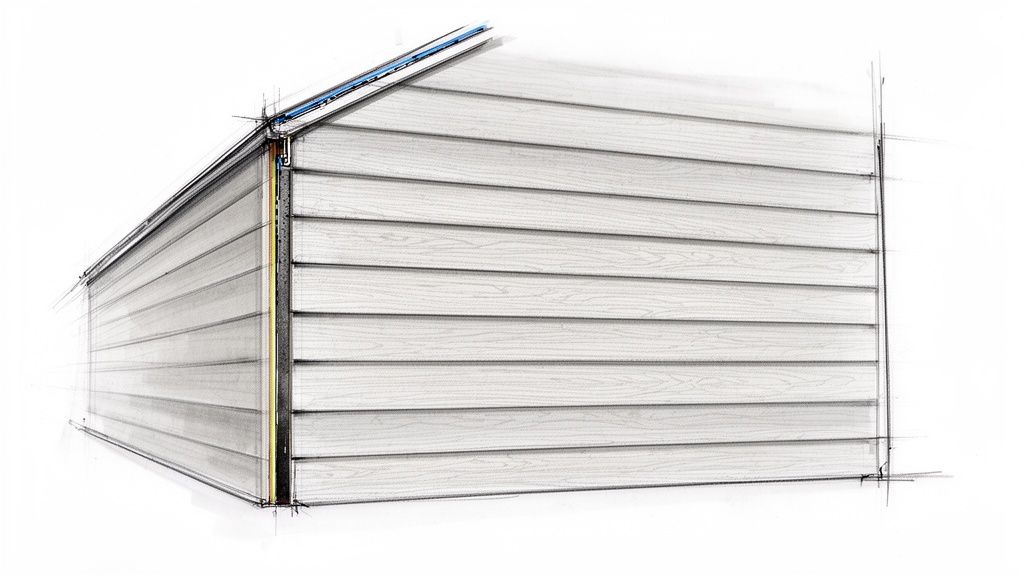
Popularized by industry leaders like James Hardie, fiber cement shiplap has become the gold standard for high-performance building. It's the perfect choice for ranch owners in Granbury and Weatherford who need a material that can withstand intense sun, hail, and temperature swings without compromising on style.
Best Uses and Implementation
Fiber cement shiplap excels in exterior applications where durability is paramount. We frequently use it for siding on barndominiums across North Central Texas, as it provides a modern farmhouse look with commercial-grade resilience. It’s also an excellent choice for finishing covered patios, outdoor kitchens, and even high-moisture interior spaces like mudrooms. If you're looking for wall materials that can handle the daily wear and tear of an active family, exploring durable mud room wall ideas can provide more inspiration for using robust materials indoors.
North Texas Installation & Cost Considerations
Professional Installation Recommended: Fiber cement is heavy and requires specialized tools, like carbide-tipped saw blades, for cutting. For a precise and secure installation that will last, professional handling is strongly advised.
Proper Fastening: Use corrosion-resistant screws or nails designed for fiber cement. Pre-drilling holes near board edges can help prevent cracking and ensure a tight fit.
Ventilation and Drainage: A proper air gap and drainage plane behind the siding are critical in the humid Texas climate to prevent trapped moisture.
Cost: As a premium, long-lasting material, fiber cement shiplap costs between $5.00 and $12.00 per square foot for materials. While the initial investment is higher, its longevity and low maintenance offer significant value over time.
6. Reclaimed and Barnwood Shiplap
For those seeking unparalleled authenticity and a direct link to Texas history, reclaimed and barnwood shiplap offers a story no new material can match. Salvaged from old barns, historic homes, and agricultural buildings across North Texas, each plank is rich with character. Natural weathering, nail holes, saw marks, and a deep patina give this shiplap a truly one-of-a-kind texture that brings immense warmth and a sense of legacy to a custom home.
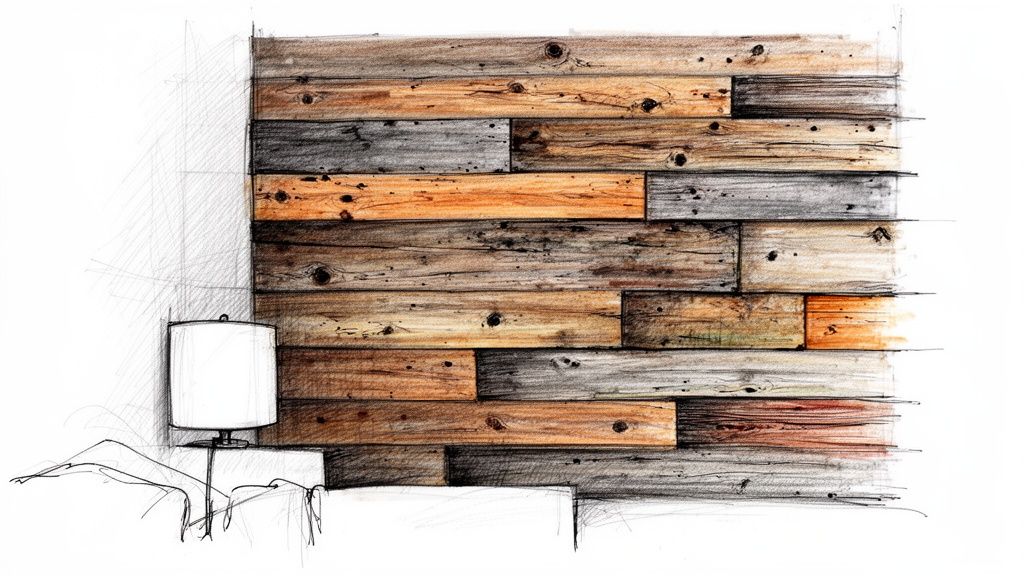
This premium option is a favorite for high-end custom homes and historic renovations where preserving regional heritage is a priority. It's a sustainable choice that repurposes beautiful, old-growth wood, preventing it from ending up in a landfill and adding a powerful narrative element to your home's design.
Best Uses and Implementation
Reclaimed shiplap is perfect for creating a dramatic focal point. We often use it for master bedroom accent walls in Granbury luxury builds, to wrap a high-end kitchen island, or throughout the living spaces of barndominiums across Parker and Hood counties. Its robust character makes it an ideal fit for historic ranch renovations or as a feature wall behind a fireplace, where its texture and history can be fully appreciated.
North Texas Installation & Cost Considerations
Sourcing is Crucial: Partner with a reputable salvage company in North Texas to ensure the wood's authenticity and history. Ask about the source and document its story to add value to your home.
Inspect Every Board: Antique wood requires thorough inspection for pests, rot, and structural integrity. It may also need professional cleaning or treatment before installation.
Expert Installation: Reclaimed boards are often irregular in size and thickness. Hire an experienced installer who is familiar with custom fitting antique materials.
Cost: As a premium, specialty product, reclaimed shiplap is the most expensive option. Expect to pay $12 to $25 per square foot or more for the material, depending on its rarity, age, and condition.
7. Vinyl Shiplap (PVC Composite)
For homeowners who love the classic shiplap look but need a solution that stands up to moisture and requires minimal upkeep, vinyl shiplap is an excellent modern alternative. Manufactured from durable polyvinyl chloride (PVC), this synthetic option is engineered to mimic the appearance of real wood, complete with grain textures and the signature nickel gap. It delivers the farmhouse aesthetic without the vulnerability to humidity, rot, or pests.
This budget-friendly material is a practical choice for North Texas homeowners seeking durability without sacrificing style. Its resilience makes it a popular feature in high-moisture environments and spaces that demand easy-to-clean surfaces, offering a set-it-and-forget-it solution.
Best Uses and Implementation
Vinyl shiplap’s greatest strength is its water resistance, making it the perfect choice for bathrooms, laundry rooms, mudrooms, and even covered patios. We often recommend it for bathroom remodels in Weatherford and Cleburne properties where humidity is a constant concern. It’s also a smart installation for utility spaces in family homes and basement finishing projects where moisture control is key.
North Texas Installation & Cost Considerations
Choose Quality: Not all vinyl is created equal. Opt for a high-quality product with a realistic wood-grain texture to avoid a plastic-like appearance.
Proper Fastening: While lightweight, it's crucial to use the manufacturer-recommended adhesive and fasteners to prevent sagging or separation over time, especially with North Texas temperature shifts.
UV Exposure: Most interior-grade vinyl shiplap is not UV-stable. Avoid installing it in areas that receive intense, direct sunlight for prolonged periods, as it may fade or yellow.
Cost: As one of the most affordable types of shiplap, vinyl typically costs $2.00 to $5.00 per square foot for materials. Its ease of installation can also lead to lower labor costs compared to heavier materials.
8. Shiplap Profile Variations (Beadboard, V-Groove, Shaker-Style)
Beyond the classic flat-faced board, shiplap comes in several decorative profiles that introduce distinct architectural styles. These variations alter the edge of the board to create unique shadow lines and textures. The most common profiles include beadboard, with its delicate rounded bead for a cottage feel; V-groove, which features an angled cut for a crisp, linear look; and the clean, understated lines of Shaker-style shiplap.
These specialized profiles allow for a more tailored design approach, enabling homeowners in communities like Weatherford and Glen Rose to achieve a specific aesthetic, from traditional charm to modern minimalism. Choosing a distinct profile is a powerful way to add custom character to a room.
Best Uses and Implementation
The beauty of profile variations is their ability to define a room's style. We often use beadboard for wainscoting in traditional Granbury kitchen remodels or to add vintage charm to bathrooms and laundry rooms. V-groove shiplap makes a stunning statement on vaulted ceilings or as a dramatic accent wall in modern farmhouse living rooms. The subtle elegance of Shaker-style profiles is perfect for serene master bedrooms or refined home offices. If you're looking for other ways to elevate a room, exploring creative ideas for decorating blank walls can offer complementary inspiration.
North Texas Installation & Cost Considerations
Proportion is Key: Consider the scale of your room. Wider V-groove planks work well with tall ceilings, while the tighter lines of beadboard are ideal for smaller spaces or wainscoting applications.
Prefinish for Precision: For the cleanest look, it's best to paint or stain profiled shiplap boards before installation. This ensures the grooves and beads have a uniform, professional finish.
Installation Direction: While horizontal is classic, installing V-groove shiplap vertically can make a ceiling feel higher, a great trick for rooms with standard-height ceilings in Aledo or Granbury homes.
Cost: The cost for profiled shiplap is slightly higher than standard planks due to the extra milling required. Expect to pay $3.00 to $9.00 per square foot for materials, depending on the wood species and the complexity of the profile.
8 Shiplap Types — Quick Comparison
Shiplap Type | Implementation complexity | Resource requirements | Expected outcomes | Ideal use cases | Key advantages |
|---|---|---|---|---|---|
Traditional Wood Shiplap (Pine & Softwood) | Low–Moderate; simple on-site cuts | Softwood boards, primer/paint, basic tools | Warm, authentic farmhouse look; regular upkeep | Accent walls, kitchens, bedrooms in traditional homes | Affordable, customizable, easy to install |
Tongue and Groove Wood Shiplap | Moderate–High; precise milling and fit | Interlocking milled boards, skilled installer, pneumatic nailer | Tighter seal, improved moisture and air protection | Semi-exterior spaces, mudrooms, covered porches, kitchens | Better stability and moisture resistance |
Engineered Wood Shiplap (Plywood-Based) | Low; uniform panels, easier install | Engineered boards, edge trim, proper substrate/ventilation | Stable, consistent appearance with low maintenance | Rental properties, kitchens, modern farmhouse interiors | Dimensional stability, consistent finish, lower upkeep |
Hardwood Shiplap (Oak, Hickory, Maple) | High; skilled installation and acclimation | Premium hardwood, experienced craftspeople, longer lead times | High-end, durable finish that can be refinished | Luxury custom homes, master suites, feature walls | Superior durability, rich grain, increases home value |
Fiber Cement Shiplap (Hardieplank-Style) | Moderate–High; special tools and techniques | Fiber cement boards, carbide blades, professional labor | Extremely durable, weather- and fire-resistant exterior | Exteriors, barndominiums, covered porches, storm-prone sites | Minimal maintenance, rot/insect/weather resistant |
Reclaimed and Barnwood Shiplap | High; irregular boards need custom fitting | Salvaged boards, inspection/treatment, expert installers | Unique patina and historic character; variable sizing | High-end remodels, historic renovations, barndominiums | One-of-a-kind authenticity, sustainable reuse |
Vinyl Shiplap (PVC Composite) | Low; DIY-friendly, simple handling | PVC panels, adhesive/fasteners, basic tools | Affordable, maintenance-free look (less authentic) | Bathrooms, basements, rental/investment properties | Moisture-proof, low-cost, very low maintenance |
Shiplap Profile Variations (Beadboard, V‑Groove, Shaker‑Style) | Moderate; precise alignment and finishing | Profiled boards (various materials), careful planning | Distinctive textures and shadow lines; stylistic variety | Wainscoting, accent walls, kitchens, bathrooms | Wide stylistic options to match design language |
Choosing the Right Shiplap with an Expert Partner
From the classic, rustic appeal of traditional pine to the modern durability of fiber cement, there is a shiplap solution for nearly every design vision and functional need. As we’ve explored, the various types of shiplap are not just about aesthetics; they represent a strategic choice in materials, durability, and long-term value for your North Texas home.
The journey from a simple design idea to a beautifully finished wall requires a thoughtful evaluation of your home’s specific environment and your family's lifestyle.
Key Takeaways for North Texas Homeowners
Making the right selection means balancing several critical factors unique to our region. Here are the most important considerations to remember:
Climate is King: Our hot, humid summers in areas like Granbury and Glen Rose demand materials that resist warping. While traditional wood is beautiful, engineered wood, vinyl, or fiber cement often provide superior performance, especially for exterior applications or in moisture-prone areas like bathrooms.
Location Matters: A reclaimed barnwood accent wall can bring incredible character to a rural ranch home, but vinyl shiplap might be the more practical choice for a covered patio in a Weatherford neighborhood, offering easy cleanup and weather resistance. The context of the installation is just as important as the material itself.
Profile Defines Personality: The profile you choose, whether it's the clean lines of a V-groove or the traditional look of a nickel gap, fundamentally shapes the room's character. Consider how the shadow lines and texture will interact with your home's lighting and overall architectural style.
Expert Insight: The most successful shiplap projects are those where the material choice is perfectly aligned with the installation environment. For example, using fiber cement shiplap for a poolside cabana ensures it will stand up to both the Texas sun and splashes from the water, protecting your investment for years to come.
Ultimately, understanding the different types of shiplap empowers you to make an informed decision that enhances both the beauty and the functionality of your home. It’s about creating spaces that are not only visually stunning but are also built to last, reflecting your personal style while respecting the practical demands of our local climate.
Ready to translate your vision into a stunning reality? The team at Gemini Homes has extensive experience helping North Texas homeowners select and install the perfect shiplap for their custom builds and remodels. Schedule your free, no-obligation consultation with us at Gemini Homes to discuss your project and discover the ideal materials for your dream space.
Comments