
Your Guide to North Texas Home Builder Warranties
Think of a home builder warranty as your builder's handshake promise—a commitment that they stand behind the quality of their work on your new North Texas home. It’s a protection plan that comes with the house, designed to give you peace of mind long after you’ve unpacked the last box.
Your Builder’s Promise of Quality
Building a custom home, whether in Granbury or on a rural lot in Weatherford, is one of the biggest investments you'll make. A builder's warranty is your safety net, holding the builder accountable for their materials and craftsmanship. This isn't just a document you file away; it’s a formal agreement that they will fix specific construction issues that might pop up.
It’s important to know this is different from a home warranty you might buy for an older house. Those are service contracts, more like insurance for your appliances. A builder’s warranty covers the home itself—the fit and finish, the hidden systems, and the structural bones of your new build.
The Standard 1-2-10 Warranty Structure
Here in North Texas, most builders follow a standard structure, often called the “1-2-10” warranty. The numbers represent a timeline of protection that covers different parts of your home for different lengths of time.
1-Year Workmanship: Think of this as the "bumper-to-bumper" coverage. For the first year, your warranty typically covers defects in materials and labor. This is for the things you notice as you live in the home, like a cabinet door that doesn’t close right, a nail pop in the drywall, or sloppy paint touch-ups.
2-Year Systems: This next layer protects the major systems humming along behind your walls. We're talking about the plumbing pipes, electrical wiring, and the HVAC system's ductwork. If something goes wrong with the delivery of these core services due to faulty installation, this coverage kicks in.
10-Year Structural: This is the big one. For a full decade, you’re protected against major structural failures. This covers the essentials that hold your house together—things like a failing foundation, collapsing roof framing, or cracking support beams.
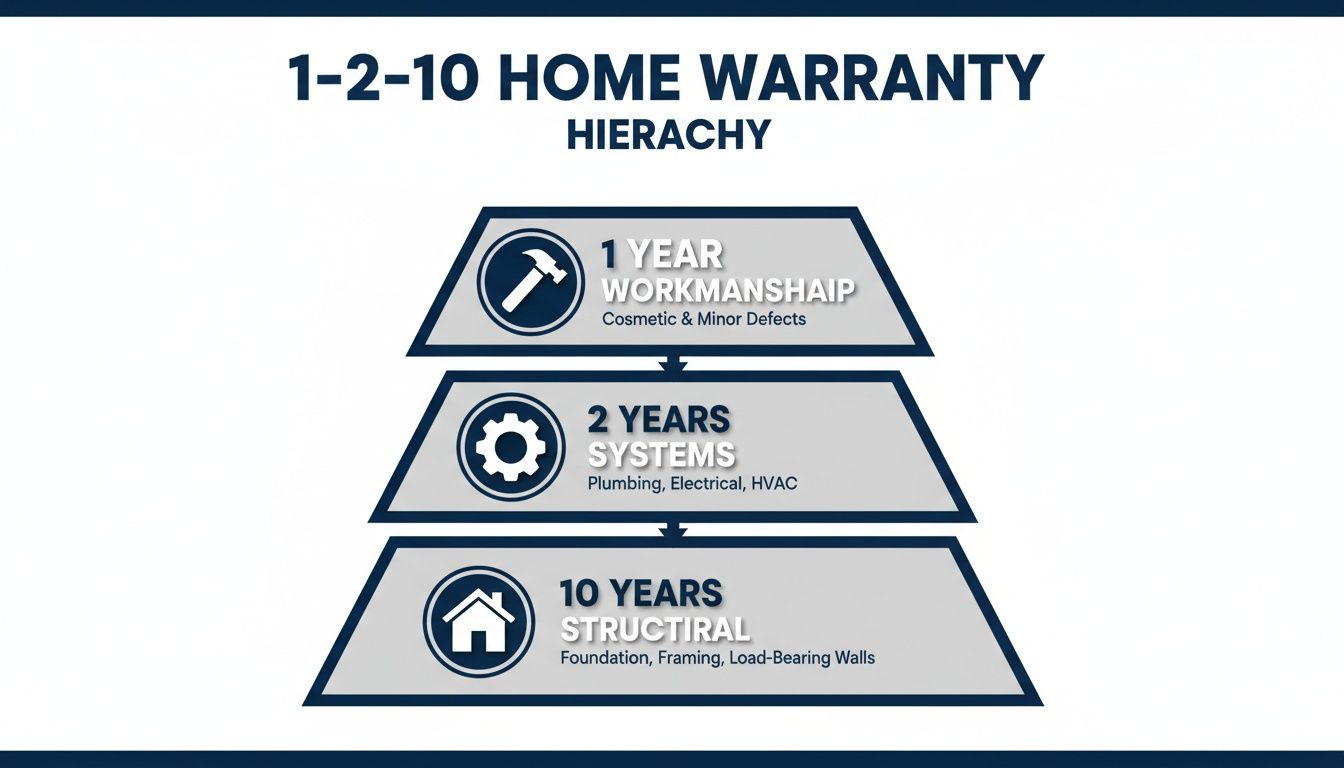
The '1-2-10' Warranty Structure at a Glance
Warranty Type | Typical Duration | What It Covers |
|---|---|---|
Workmanship | 1 Year | Siding, drywall, paint, flooring, trim, doors, and other "fit and finish" items. |
Systems | 2 Years | Electrical wiring, plumbing pipes, and HVAC ductwork (not the appliances themselves). |
Structural | 10 Years | Foundation, framing, load-bearing walls, roof trusses, and other core components. |
A builder who offers a 1-2-10 warranty and explains it clearly is showing confidence in their work. It's a sign that they build homes meant to last, which is especially important for families planning to put down long-term roots.
The First-Year Workmanship Guarantee
That first year in your new North Texas home is an exciting time. You're settling in, hanging pictures, and starting to live in the space. It's also the most critical period for the one-year workmanship portion of your home builder warranty. Think of it as the most comprehensive, 'bumper-to-bumper' coverage your new house will have.
This warranty is all about the fit and finish—the details that make a house feel truly complete and well-built. It’s designed to catch hiccups in materials or the installation process.
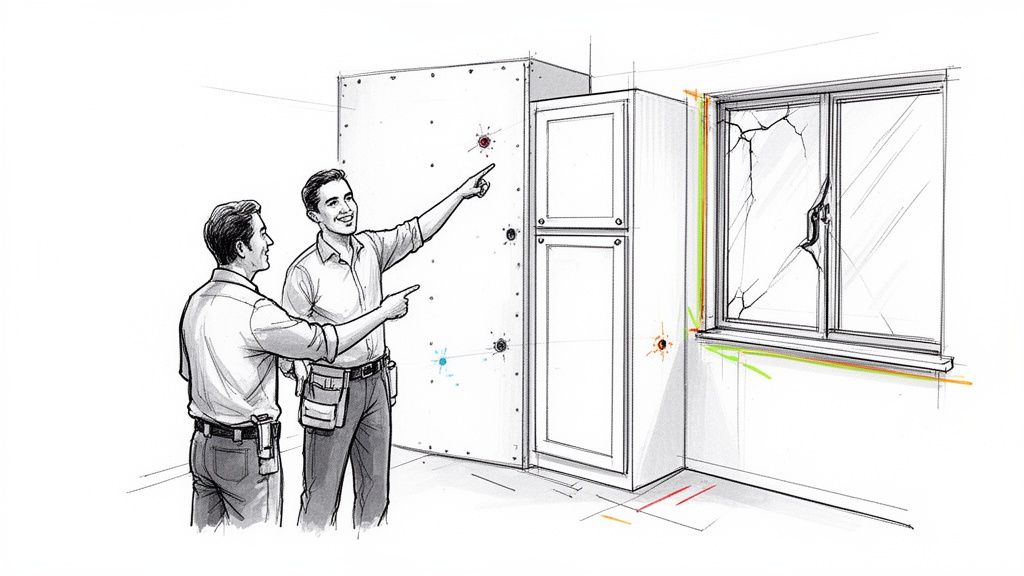
We're not talking about major structural problems here. Instead, this covers the quality of craftsmanship you see and interact with every day.
What Does Workmanship Mean in Practice?
A "workmanship issue" is a tangible flaw that doesn't meet professional quality standards. For example, in a recent Granbury build, a homeowner noticed the grout lines in their master shower were uneven. That's a classic workmanship claim.
Keep an eye out for these common examples covered by a typical first-year warranty:
Drywall Flaws: A new home settles, so it's normal for small things to appear. Nail pops (where the fastener pushes through the paint and mud) or minor cracks along drywall seams are classic examples your builder should address.
Cabinet and Door Adjustments: Is that new cabinet door in your kitchen hanging a bit crooked? Does a bedroom door refuse to latch without a hard push? Those are clear workmanship items.
Flooring Defects: This could be anything from a tile that was cracked during installation to a piece of hardwood flooring that starts to lift at the edges.
Caulking and Trim Issues: Gaps in the caulking around your sinks or sloppy paint on the baseboards are small details, but they matter.
It's crucial to know the difference between a true defect and normal wear and tear. A scratch on the hardwood from dragging a sofa isn't a warranty issue. But a floorboard installed with a deep gouge already in it? That absolutely is.
Documenting and Reporting Issues
For homeowners in Glen Rose, Granbury, and beyond, the best strategy is to keep a running list. As you notice non-urgent issues, jot them down in a notebook or a note on your phone.
Most builders schedule a final warranty review around the 11-month mark. This allows them to tackle all your outstanding items in one efficient visit, which saves time for everyone.
Understanding this first-year guarantee helps you know what to look for. It ensures all those important finishing touches live up to the standard of quality you deserve.
Understanding Your Two-Year Systems Coverage
After the first year, your home builder warranty shifts its focus from the surface to the vital systems humming away behind your walls. This is where your two-year systems coverage comes in, protecting the critical delivery networks that make your North Texas home comfortable and functional.
Think of these systems as the arteries and nerves of your house. This warranty isn't for the appliances themselves—your AC unit or water heater will have their own manufacturer's warranty. Instead, it covers the distribution systems that connect everything, ensuring the builder installed these complex networks correctly.
What Systems Are Actually Covered?
This part of your warranty is all about the major mechanical systems your builder installed. If a problem arises from shoddy installation or defective materials, you’re covered.
For a custom home in Granbury or Weatherford, this typically includes:
Plumbing Systems: We're talking about the pipes and drains. For example, if a PEX pipe fitting behind the drywall in your laundry room wasn't crimped properly during the build and begins to leak, that repair would fall under your systems warranty.
Electrical Systems: This covers the wiring. A classic example is a faulty connection inside a junction box that causes an outlet to suddenly stop working.
HVAC Systems: This is for the ductwork and refrigerant lines. If your HVAC can’t seem to cool an upstairs bedroom in your Weatherford home because the ductwork was poorly sealed during installation, that's a problem the builder is responsible for.
The crucial thing to remember is installation vs. equipment. If your air conditioner unit itself fails because of a bad compressor, that's a claim for the manufacturer. But if it fails because the builder installed undersized ductwork, that's a claim for your builder’s systems warranty.
The Growing Importance of System Warranties
Homeowners are realizing how vital it is to protect these core systems. The global home warranty service market is projected to hit $17.23 billion by 2034, with North America driving much of that demand. This highlights how valuable these protection plans are, especially for families in North Texas planning future projects like a kitchen remodel or adding a pool—projects that tap into complex systems. You can discover more insights about this growing market and what it means for new homeowners.
Knowing what your two-year systems coverage includes gives you confidence. It draws a clear line, showing you whether to call your builder for an installation problem or the manufacturer for an equipment failure.
Your Ten-Year Structural Warranty Explained
When you get the keys to your new North Texas home, you also get a powerful promise from your builder: the ten-year structural warranty. Think of this as the ultimate safety net, the major medical insurance for the house itself. It’s a full decade of protection for the very core of your home—its skeleton.
This isn’t about small stuff. Your ten-year warranty steps in for big-ticket issues, covering the essential load-bearing components that keep your home standing strong and safe. A structural defect isn't just an inconvenience; it's a significant failure that could compromise the integrity of the entire house.
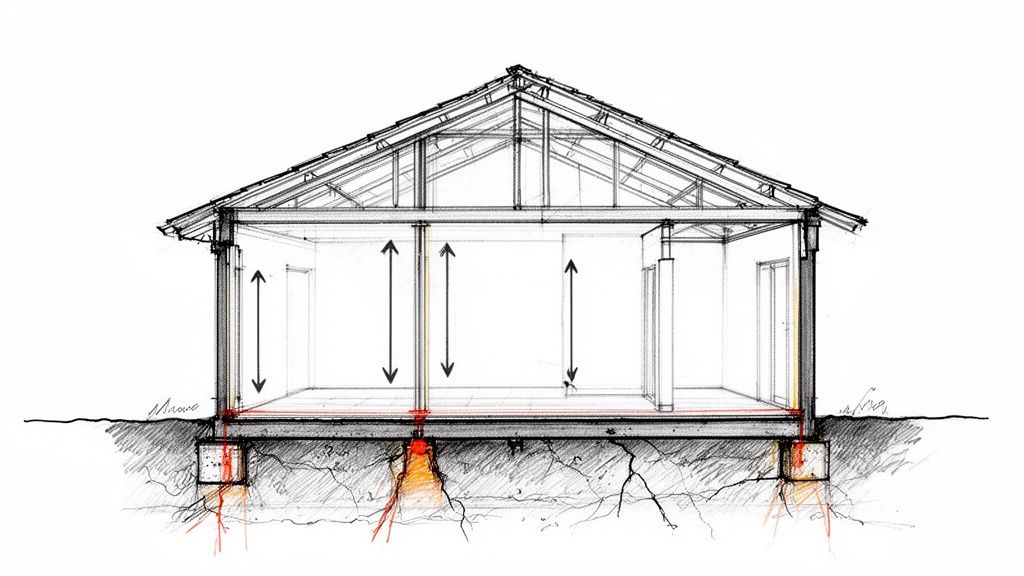
What Is a Structural Defect?
A structural defect is a physical problem with a load-bearing part of your home that makes it unsafe or unlivable. These are the heavy hitters forming the backbone of the structure.
Your ten-year warranty is designed to cover failures in these critical areas:
Foundation: The concrete slab or pier-and-beam system that your home is built upon.
Beams and Girders: The main horizontal supports carrying the weight of floors and roofs.
Columns: Key vertical supports that transfer that weight down to the foundation.
Framing: The load-bearing walls and roof trusses that give the home its shape and strength.
A major crack in your foundation that makes it unable to properly support the house is a classic structural defect. Another example would be a roof that starts to sag due to failing trusses. These are serious, fundamental problems, and that’s precisely what this warranty is for.
Settling vs. Structural Failure in North Texas
Here in North Texas, our region is famous for its expansive clay soil, which swells and shrinks with moisture. This leads to a crucial distinction every homeowner needs to grasp: the difference between normal settling and a genuine structural failure.
Normal settling is the natural process of a new house sinking slightly into the ground. It’s expected and often causes minor cosmetic issues like hairline drywall cracks—things typically handled by your one-year workmanship warranty. A structural failure, on the other hand, is a far more serious problem that threatens the home's stability.
For retirees or anyone building on rural property, ensuring the builder has deep experience with local soil conditions and foundation engineering is paramount. Understanding this difference brings peace of mind, knowing that while you can expect minor cosmetic shifts, the most vital parts of your investment are protected for the long haul.
Navigating the Warranty Claim Process
Knowing your home builder warranty covers an issue is one thing, but getting it fixed is another. The good news is that the claims process isn't meant to be difficult. It just requires organization and clear communication.
The second you spot a problem, start documenting everything. Take clear, well-lit photos of the issue from a few different angles. Jot down detailed notes, including the date you first noticed the problem and exactly what you're seeing. The more information you provide upfront, the better.
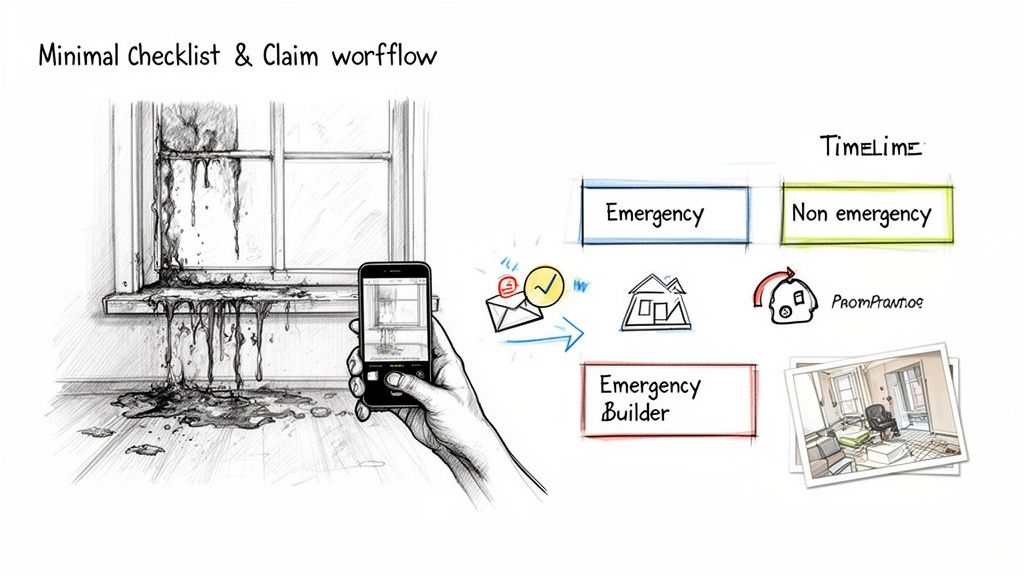
Submitting Your Claim Correctly
With your evidence in hand, it's time to officially submit your claim. While it's tempting to just pick up the phone, you must follow up in writing.
Always use written communication, like email, for warranty claims. This creates an official, time-stamped paper trail that protects both you and the builder. It cuts through any "he said, she said" confusion and clearly lays out the problem.
Your warranty paperwork will tell you exactly who to contact and what their response time should be. Follow those instructions to the letter.
For example, a homeowner in Glen Rose finds a window leaking after a big storm. They should immediately email the builder with photos of the leak. This written record helps the builder figure out if it's a workmanship issue or potential storm damage—a critical distinction for both warranty and insurance. If you're trying to figure out that difference, our guide on handling insurance claims after storm damage can be a huge help.
Emergency vs. Non-Emergency Claims
It's also important to understand that not all claims are created equal. Some issues need attention right now, while others can wait.
Emergency Claim: This is something that puts you or your property in immediate danger. Think a major plumbing leak flooding your kitchen or your heat going out completely during a Granbury freeze. These demand an immediate phone call to your builder.
Non-Emergency Claim: This covers most other things—a door that sticks, a single cracked tile, or a nail pop. Bundle these issues together and submit them in writing, following your builder's standard process.
Knowing the difference ensures you get the fast response you need for true emergencies while allowing your builder to handle routine fixes efficiently.
Asking the Right Questions About Your Builder's Warranty
Before you sign contracts for your new home in Granbury or Weatherford, it's time to have a serious talk about the home builder warranty. A builder’s transparency here speaks volumes about their confidence in the homes they build. You're not just buying a house; you're investing in their promise of quality.
Key Questions for Your Builder
Is the warranty backed by a third-party insurer? This is one of the most critical questions. A warranty is only as good as the company backing it. If your builder retires or their business closes, a self-backed warranty can become worthless. An insured warranty, however, means a separate company guarantees the coverage, especially for that crucial long-term structural protection.
Who is my point of contact for a warranty claim? When a problem comes up, the last thing you want is a runaround. A clear, direct process is key. Knowing exactly who to call or email streamlines everything and ensures your issue gets addressed without delays.
What’s the process for handling a dispute? Even with the best builders, disagreements can happen. A reputable builder will have a clear, pre-defined process for mediation or resolving conflicts. This shows they’ve thought things through and are committed to finding a fair solution.
The point here isn't to be adversarial. It's about confirming your builder has a professional, well-structured warranty program. This is a huge indicator that they plan to be around for the long haul, protecting both their reputation and your investment.
Asking these questions upfront helps you partner with a builder who truly stands behind their craft—a non-negotiable step when planning your North Texas custom home build.
Building Your North Texas Home with Confidence
A home builder’s warranty is more than just a piece of paper. It’s a clear window into their character. It shows how much they trust their own materials, their team's craftsmanship, and their entire process. For anyone building a home in Granbury, Weatherford, or anywhere else in North Texas, that warranty is your foundation of trust.
Knowing what your warranty covers is empowering. It turns a dense legal document into a practical shield for your investment, letting you settle into your new home without that little voice of worry in the back of your mind. A top-notch North Texas builder won't just hand you a strong warranty; they'll sit down and walk you through it, making sure you understand what every clause means for you.
A Partnership Built on Peace of Mind
The best builders understand what it means to build here. They know our notorious expansive clay soils and have experience with our intense summer heat. Their commitment to quality is evident in how willing they are to stand behind their work for years. This is the kind of assurance that transforms the potentially stressful process of building into the exciting journey it’s supposed to be.
Think of your warranty as your builder's handshake promise. It’s their way of saying they’re not just putting up a structure; they’re building a lasting home and a long-term relationship based on accountability. As you start planning, make sure you find a partner whose warranty is as solid as the foundations they pour. If you are considering new home builds in the North Texas area, this should be at the very top of your checklist.
At Gemini Homes, we believe building with confidence starts with straight talk and an unwavering commitment to quality. If you have questions about what a solid home builder warranty looks like or you're ready to start mapping out your dream project, our team is here to help. Contact us today to start the conversation.
Comments