
Cost to Build a Pergola: A North Texas Homeowner's Guide
Thinking about adding a pergola to your North Texas home? That's a fantastic idea. The first question on everyone's mind is always, "What's this going to cost me?"
The honest answer is: it depends. We’ve seen simple DIY kits come in around $1,500, while a large, custom-built cedar pergola with all the trimmings in Granbury can easily top $10,000.
Your Quick Guide to North Texas Pergola Costs
The final price tag for your new outdoor oasis comes down to a handful of key decisions. It's like building a custom truck—the base model is one price, but the engine you choose, the trim package, and all the add-ons determine the final sticker. For homeowners in places like Weatherford or Stephenville, the main cost drivers are materials, size, design complexity, and local labor rates.
Getting a handle on these elements helps you set a realistic budget. A prefabricated kit can be a great way to get functional shade on the patio. But a fully custom design? That's your chance to create a true, seamless extension of your home's living space.
Key Factors Driving Your Pergola Budget
Let's break down the big-ticket items that will shape your project's total cost.
Materials: This is the biggest chunk of your budget. A pergola built from pressure-treated pine will be much easier on the wallet than one crafted from premium Western Red Cedar.
Size & Complexity: It's simple math—a standard 10x10 foot square design costs less than a sprawling 16x20 foot structure. The more complex it gets, with intricate rafter cuts or an attached solid roof, the more the cost will climb.
Labor & Installation: Are you a weekend warrior ready to tackle this yourself, or are you bringing in the pros? Hiring a local expert in a town like Glen Rose ensures the structure is built to code, set on proper concrete footings, and assembled to last.
Custom Features: This is where you personalize the space. Want electrical for a ceiling fan and string lights? A privacy screen or a polycarbonate roof to keep the rain out? These upgrades add to the final cost. You can get a better sense of how these features transform a space by reading our guide on what a pergola is and how it enhances your Texas home.
To give you a clearer picture, industry data shows a professionally installed, prefabricated pergola kit averages between $1,450 to $5,750. For a custom wood pergola built from scratch in your backyard, expect that range to be closer to $4,300 to $9,400. That difference reflects the skilled craftsmanship and higher-grade materials in a custom job. For more national cost averages, HomeGuide is a helpful resource.
North Texas Pergola Cost at a Glance
Here’s a quick-reference table breaking down typical costs you can expect in our local area. This should give you a solid starting point for your budget.
Pergola Type | Average Size | Estimated Cost Range (Installed) |
|---|---|---|
Pressure-Treated Pine | 10' x 12' | $3,500 - $6,000 |
Cedar (Standard) | 12' x 12' | $5,500 - $8,500 |
Large Custom Cedar | 16' x 20' | $9,000 - $15,000+ |
Aluminum (Kit) | 10' x 10' | $2,500 - $5,000 |
Keep in mind, these are ballpark figures. The only way to know for sure is to get a detailed quote based on your specific project.
How Materials Shape Your Pergola Budget
The single biggest decision you'll make is choosing the right materials. Think of it like picking the engine for a truck—it dictates performance, longevity, and a huge chunk of the final price. Here in North Texas, that choice is even more critical. Our intense sun, surprise hail storms, and humid summers can do a number on the wrong materials.
The best material strikes a balance between the look you want, the maintenance you’re willing to do, and your budget. For a family building on a rural property near Glen Rose, something that resists pests and moisture might be top priority. For a retiree in Granbury, low-maintenance is often the name of the game.
To give you a clear picture of how these options compare, here's a chart breaking down the general costs for DIY kits versus professionally built custom pergolas.
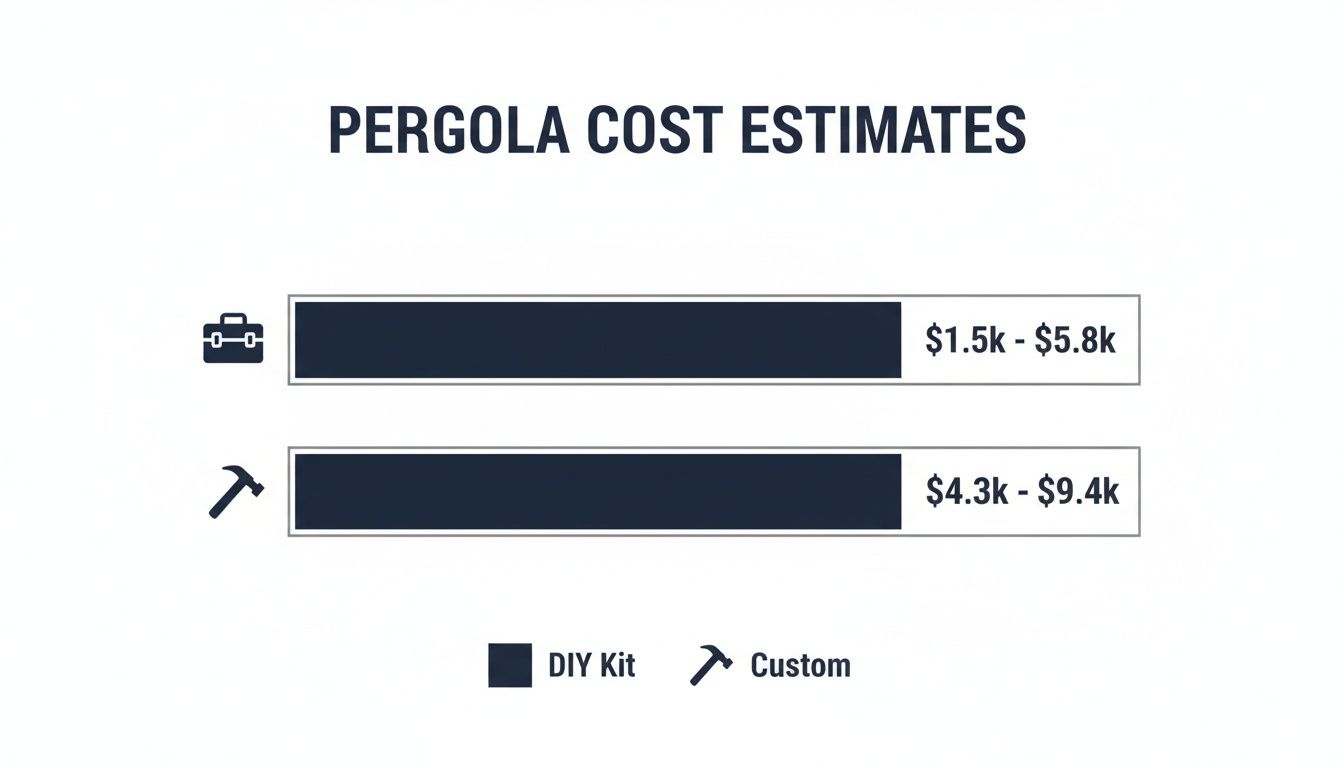
As you can see, a kit can be a wallet-friendly route. But a custom-built structure opens up a world of possibilities, reflected in the higher investment in quality materials and true craftsmanship.
Comparing Pergola Materials for Your Texas Home
To help you sort through the options, here's a quick comparison of the most common materials we use for pergolas in the Granbury area.
Material | Average Cost per Sq. Ft. | Pros | Cons |
|---|---|---|---|
Pressure-Treated Pine | $25 | Most affordable wood option; readily available; treated for rot/insects. | Requires annual sealing/staining; can warp or crack over time. |
Cedar | $30 - $35 | Naturally resists rot and insects; beautiful color; durable and stable. | Higher upfront cost than pine; requires some maintenance to keep its color. |
Premium Woods (Teak) | $55+ | Extremely durable and weather-resistant; stunning appearance. | Very high cost; can be difficult to source. |
Aluminum | $30 - $60 | Extremely low-maintenance; won't rust, warp, or crack; modern look. | Higher initial cost; limited color options; can dent. |
Vinyl | $20 - $40 | Very affordable; easy to clean; zero maintenance required. | Can look less "natural" than wood; limited customizability. |
Ultimately, the best material is the one that aligns with your lifestyle, your home's style, and your financial comfort zone. Thinking through these options is the most important step in creating a pergola budget that works for you.
Classic Wood Choices for Texas Homes
Wood is the go-to choice for pergolas around here for a reason—it offers a timeless, natural beauty that feels right in a Texas backyard. But not all wood is created equal, especially when it comes to cost and durability.
Pressure-Treated Pine: This is your most budget-friendly wood. It’s been chemically treated to stand up to rot and insects, but it needs your help. You’ll have to be diligent about sealing or staining it every year or two to keep it from cracking and warping under our sun. It's a solid choice if you're hands-on and don't mind the upkeep.
Cedar: A favorite for custom builds in Weatherford and Granbury, cedar is a significant step up in quality. Its natural oils make it inherently resistant to decay and insects, and its rich color adds instant character. While it costs more than pine upfront, many homeowners find the reduced maintenance and superior longevity are well worth the investment.
In fact, your material selection can eat up as much as 80% of your total project cost. For a standard 10x10 structure, basic pine can run about $25 per square foot, while cedar often falls in the $30-$35 per square foot range.
Choosing between pine and cedar often comes down to a simple trade-off: upfront cost versus long-term maintenance. Investing more in a durable wood like cedar can save you a lot of time, money, and headaches down the road.
Low-Maintenance Pergola Materials
If the thought of annual staining already makes you tired, some fantastic modern alternatives are built to handle our climate with minimal fuss. These are great options for busy families or anyone who prefers to spend their weekends relaxing, not working on home maintenance.
Aluminum: Lightweight, incredibly strong, and completely rust-proof, aluminum is a top contender for a hassle-free pergola. It won’t warp or crack, and its powder-coated finish holds up beautifully against punishing UV rays. This makes it an ideal choice for properties around our local lakes and rivers.
Vinyl: Known for its affordability and clean look, vinyl is another "set it and forget it" solution. It requires little more than an occasional wash-down to look its best. While it doesn't offer the rustic charm of wood, its durability and low cost make it a practical choice for many North Texas homeowners.
These materials often come in kits that make installation simpler, though custom designs are available too. Their main benefit is peace of mind. For a deeper dive into how different materials perform outdoors, check out our deck building materials comparison for North Texas homes.
The Real Cost of Labor: Why Professional Installation Matters
While materials are a big part of your pergola budget, labor is what truly brings the project to life. It’s the difference between a structure that looks good for a season and one that stands strong against North Texas weather for decades.
Think of it like building a house. You can have the best lumber and finest shingles, but if the foundation is weak, none of it matters. A professional builder invests time in critical steps a casual handyman might overlook, ensuring your investment is built to last.
Laying the Groundwork for a Lasting Pergola
Here in North Texas, the ground can change dramatically, from the sandy loam in Weatherford to the heavy clay soil around Granbury. This is why proper site preparation and solid footings are non-negotiable for any permanent structure.
A professional crew gets this. Their process involves more than just digging a few holes.
Proper Layout and Squaring: They ensure every post is perfectly placed, so the final structure is level, square, and visually perfect.
Digging to Code: Post holes are excavated to the correct depth—often below the frost line—to prevent shifting during winter freezes and thaws.
Pouring Concrete Footings: Setting the posts in concrete provides the unshakeable stability needed to handle our notorious high winds. This single step is vital for long-term structural integrity.
This meticulous groundwork is the signature of a professional job. It’s what prevents your pergola from leaning or sagging after a few years of battling our harsh Texas seasons.
Handyman vs. Professional Builder: What’s the Difference?
It can be tempting to hire a general handyman to save a few bucks. While many are skilled, building a structurally sound outdoor addition requires specific expertise. A dedicated builder, like our team at Gemini Homes, brings a level of precision that makes all the difference.
For a standard 12x12 custom cedar pergola, a professional builder might spend 30-40 hours on installation. A less experienced installer might rush the job in half that time, often by skipping critical steps like proper footing installation or precise notching of the joints.
Here’s where that expertise really shines:
Structural Integrity: Professionals understand load-bearing principles. They ensure rafters and beams are correctly sized and secured to handle their own weight and withstand severe weather.
Precision Craftsmanship: Custom designs often require intricate cuts and joinery for a clean, high-end finish.
Safety and Code Compliance: An experienced builder knows the local building codes in places like Stephenville or Cleburne, ensuring your pergola is both beautiful and completely safe.
Labor costs for a skilled, insured builder in our area typically range from $75 to $125 per hour. This rate reflects years of experience, proper insurance, and the right tools for the job. You're paying for the peace of mind that comes with knowing the job was done right the first time.
Investing in professional labor isn't an expense—it's an investment in quality, safety, and the long-term value of your home.
How Size and Custom Features Shape Your Final Pergola Cost
This is where things get exciting. We move beyond basic lumber and labor to what makes a pergola your pergola. The size of the structure and the custom features you choose are what define its final price tag and turn a simple frame into a true outdoor living room.
A standard 10x10 foot pergola is a great starting point. But if you're dreaming bigger, say of a 12x20 foot structure, don't assume the cost just doubles. A larger footprint demands more materials, beefier footings, and more labor. The bigger the dream, the more it takes to build it right.
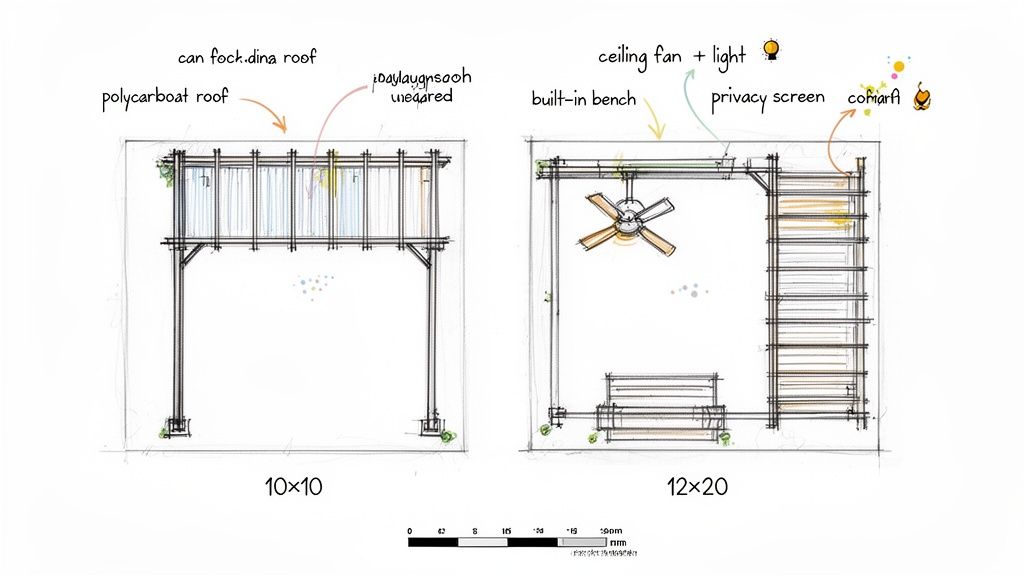
Personalization happens in the details. A family in Weatherford planning an outdoor kitchen needs a large, attached pergola with specific functional upgrades. A retiree in Godley might just want a simple structure to shade a quiet garden corner. Every vision brings a different set of features and a different budget.
Popular Upgrades and Their Price Impact
Custom add-ons elevate a pergola from a simple shade structure to a year-round retreat. It’s crucial to understand how each choice affects the bottom line.
Here are some of the most popular upgrades we handle for homeowners across North Texas, along with a ballpark idea of what they might add:
Integrated Electrical Work ($1,000 - $3,000+): This is a game-changer. Adding power allows for ceiling fans (a must for Texas summers), stylish string lights, sconces, and handy outlets. The cost depends on the complexity of the wiring and the number of fixtures.
Solid or Polycarbonate Roofing ($15 - $30 per sq. ft.): A traditional slatted roof is beautiful, but a solid one gives you protection from rain and intense sun. Clear or tinted polycarbonate panels block harsh UV rays but still let in natural light, making your pergola usable even on a drizzly afternoon.
Privacy Screens or Walls ($500 - $2,500+): Need to block a neighbor's view or shield your patio from the west-facing sun? Privacy screens are the answer. The price varies depending on the material—wood lattice is on the lower end, while custom metal panels are more of an investment.
Built-in Seating or Benches ($600 - $2,000+): Custom benches are a brilliant way to maximize seating without cluttering your patio with furniture. The cost is driven by the length and type of wood used.
Every one of these additions directly influences the overall cost to build a pergola, taking it from a basic structure to a highly functional outdoor room.
Your pergola’s final cost is a story told by its features. A simple shade structure is the opening chapter, but adding lights, fans, and a protective roof turns it into a space where your family can make memories all year long.
Planning for Today and Tomorrow
When budgeting for custom features, think about how you'll use the space five years from now. It is far cheaper and easier to run electrical conduit during the initial build than to add it later.
I often think of a young family we worked with on their rural property near Stephenville. They prioritized a durable roof to create a shaded play area for their kids. But they knew that down the road, they'd want lights for evening get-togethers. By planning for that future electrical work from day one, we saved them a lot of headache and money.
An open conversation with your builder about your long-term vision is key. A good contractor will help you prioritize features that fit your current budget while planning for future additions in a smart, cost-effective way.
Looking Beyond the Obvious: What Else Goes Into Your Pergola's Cost?
It’s natural to focus on materials and construction costs. But a well-planned project—one without surprise expenses—accounts for the essential steps that happen before and after the first post goes in the ground.
These aren't "hidden costs." They're the practical necessities of building a safe, beautiful, and long-lasting structure here in North Texas. Think of it like buying a boat for Lake Granbury. The price of the boat is your starting point; you still need to factor in the trailer, registration, and safety gear. It’s the same idea here.
Permits, Site Prep, and Getting the Ground Ready
One of the first things that can catch homeowners off guard is the need for a building permit. Here in Hood and Parker counties, if your pergola is attached to your home or is over a certain size (typically 200 square feet), you’ll likely need one. This isn't just red tape; it's a safety check.
The permit fee itself might only be $50 to $500, but the real cost is in the planning. Your builder needs to provide detailed drawings for the city's approval, a process that requires time and expertise.
Next, we have to look at the land itself. Your backyard might look ready, but a professional eye often sees work that needs to be done.
Site Preparation: Is your yard sloped? Leveling the ground through grading and excavation is often necessary and can add $500 to $2,000 or more to the budget, depending on how much dirt we need to move.
Demolition: If there's an old concrete patio or a worn-out deck where the pergola needs to go, it has to be broken up and hauled away. That's a separate job that will be itemized on the quote.
Material Delivery: For heavy-timber custom pergolas, getting materials to your home in Aledo or Weatherford requires special handling, which often includes a delivery fee.
The Final Details That Make All the Difference
Once the structure is up, the job isn't quite done. The finishing touches protect your investment from our Texas weather and turn a structure into a true outdoor living space.
Staining and sealing a wood pergola isn't just about color; it’s a critical shield against the sun and humidity. Having your builder handle this typically adds $2 to $5 per square foot, but it's money well spent to prevent your beautiful cedar from deteriorating.
And don't forget lighting! A few strategically placed lights can completely change the atmosphere. For some great examples, check out our guide on brilliant backyard lighting ideas for your North Texas home.
By talking through all these potential costs with your builder from the beginning, you can create a realistic budget that leaves no room for surprises.
Real-World North Texas Pergola Costs: Three Examples
Theory and averages are one thing, but seeing how a budget comes together for a real project is where it all clicks. To give you a better feel for how materials, labor, and custom touches add up, let's walk through three different pergola projects we might see right here in North Texas.
Each scenario paints a picture of how different priorities—from entertaining a crowd in Granbury to creating a quiet escape in Glen Rose—shape the final cost.
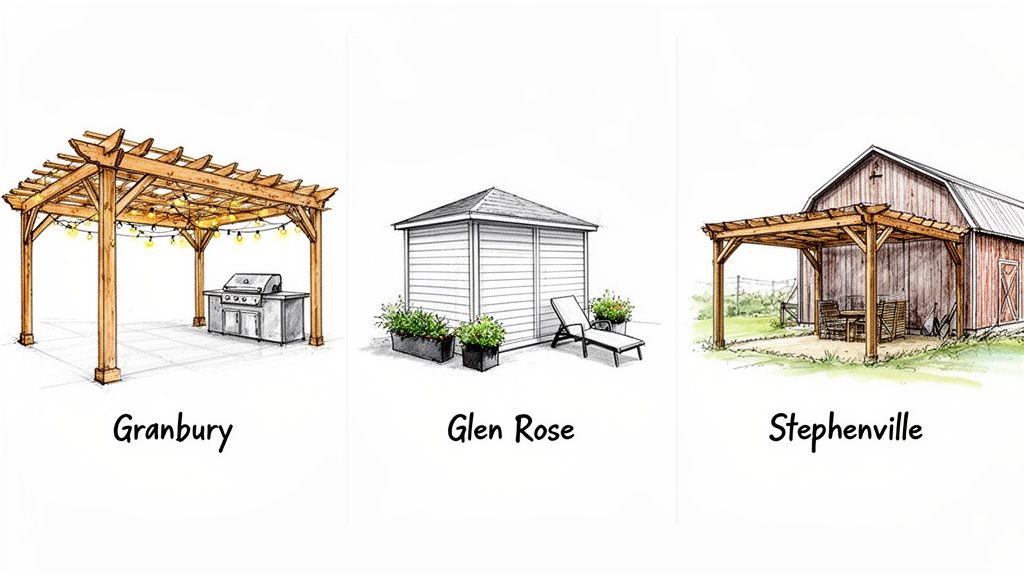
Scenario 1: The Granbury Family Entertainer
A family near Lake Granbury wants to create a true outdoor living room for cookouts and parties. They need a massive 16x24 foot attached pergola to cover their patio and house an outdoor kitchen. It must feel like a seamless part of their home.
They’ve picked premium Western Red Cedar for its stunning looks and its natural ability to stand up to local humidity and pests.
Here’s what their budget looks like:
Cedar Materials (16' x 24'): A pergola this size needs hefty 6x6 posts and substantial beams. (Estimated: $7,500 - $9,000)
Professional Labor & Installation: This is a big job. Attaching it securely to the house takes a skilled crew several days. (Estimated: $4,000 - $5,500)
Custom Features: They want the works: electrical for two ceiling fans and recessed lighting, plus a tinted polycarbonate roof cover for rain protection. (Estimated: $3,000 - $4,500)
Permits & Site Prep: An attached structure this scale will require a building permit from Hood County. (Estimated: $300 - $500)
Total Estimated Project Cost: $14,800 - $19,500This investment creates a high-end outdoor room that dramatically increases their home's usable living space and is built to last for decades.
Scenario 2: The Glen Rose Garden Retreat
In Glen Rose, a retired couple wants a peaceful spot in their garden for coffee and reading. They don't need a huge structure, just a well-defined space. Their number one priority is low maintenance.
They choose a freestanding 10x12 foot vinyl pergola kit. The clean white finish is perfect for their garden, and they love the idea of never having to stain or paint it.
Their budget is all about simplicity and ease:
Premium Vinyl Pergola Kit (10' x 12'): The kit comes with all the pre-cut pieces and hardware. (Estimated: $3,500 - $4,500)
Professional Installation: They hire a pro to ensure it's perfectly level and anchored securely into concrete footings. (Estimated: $1,500 - $2,000)
Site Preparation: The spot in the yard needs to be leveled before the posts are set. (Estimated: $400 - $600)
Total Estimated Project Cost: $5,400 - $7,100This project shows how a smaller footprint and smart, low-maintenance materials can create a beautiful, functional retreat for a more modest price.
Scenario 3: The Stephenville Ranch Addition
On a rural property near Stephenville, a barndominium owner needs a tough, rugged shade structure. The goal is a covered spot off the workshop to kick back after a day's work, and it has to handle the wide-open country winds.
He goes with a heavy-duty, 12x16 foot timber-frame style pergola built from pressure-treated pine. The design calls for oversized 8x8 posts and beefy beams to give it a commanding, rustic look that matches the barndo.
The budget is focused on strength and value:
Pressure-Treated Pine Materials (12' x 16'): Using treated pine keeps the material cost reasonable, while oversized lumber delivers the powerful look he’s after. (Estimated: $3,000 - $4,000)
Professional Labor: Working with massive timbers is hard work that requires expertise to cut the strong, notched joints that define this style. (Estimated: $3,500 - $4,500)
Finishing: He'll have it stained a dark color to match the barndominium’s trim, adding another layer of weather protection. (Estimated: $600 - $900)
Total Estimated Project Cost: $7,100 - $9,400This build shows how you can get a high-impact, super-sturdy structure built tough for Texas ranch life without breaking the bank.
As you can see, the final cost to build a pergola comes down to your personal vision, the materials you choose, and the features you can’t live without.
Got Questions About Your Pergola Project?
It's normal to have a few questions before you start a project like this. Getting clear, honest answers is the best way to feel confident about your investment. Let's tackle some of the most common questions we hear from homeowners around the Granbury area.
How Long Does It Take to Build a Pergola?
This comes down to the complexity of your vision. A straightforward, pre-designed kit going onto an existing patio can often be done by a skilled crew in just 2-3 days.
On the other hand, a large, custom-built cedar pergola with electrical for lights and fans, a protective roof, and maybe even a new concrete slab is a different story. That timeline is closer to 1-2 weeks from start to finish. We always map out a clear schedule so you're never left guessing.
What Kind of Maintenance Does a Wood Pergola Require?
Here in North Texas, the sun is no joke. To keep a beautiful wood pergola looking its best, a little upkeep goes a long way.
We recommend re-applying a high-quality stain and sealant every 2-3 years. Think of it as sunscreen for your pergola—it protects the wood from UV rays and moisture that can cause it to turn gray, crack, or warp. It’s a manageable task that will dramatically prolong the life and look of your outdoor space.
Will a Pergola Actually Add Value to My Home?
Yes, without a doubt. In a market like ours in Weatherford or Aledo, where everyone wants to enjoy the outdoors, a well-built pergola is a huge plus. It extends the livable footprint of your home by creating a true outdoor room.
This is a powerful feature that catches the eye of potential buyers, making your home more desirable and often delivering a great return on your initial investment.
Ready to take the next step? The team at Gemini Homes is here to answer any other questions you have. We can discuss your vision and create a clear plan to bring it to life with a free, no-pressure consultation for your property. Learn more and schedule your consultation at https://www.geminihomesgranbury.com.
Comments